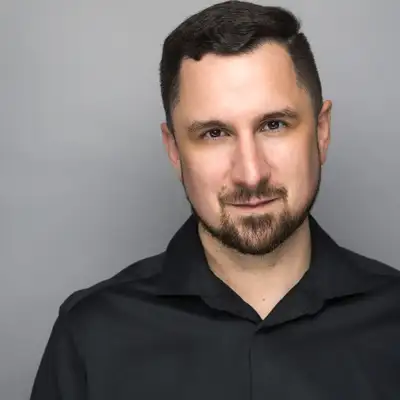
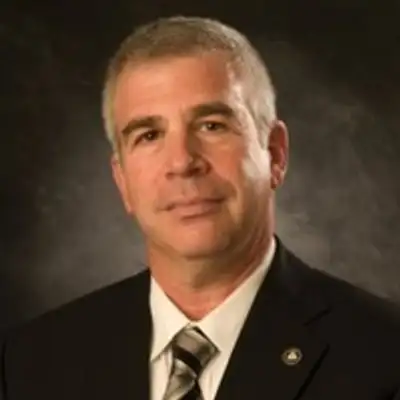
Ep. 333: Rich Brody - The Myths And Realities Of Fraud In Modern Society
Welcome to Count Me In. I'm Adam Larson. And on today's episode, I'm joined by fraud and crime expert, Rich Brody. We'll break down what white collar crime really means, how it's evolved, and why it's often misunderstood by public and the media. Rich also reveals how these nonviolent financial crimes sometimes escalate into violence, introducing us to the concept of red collar crime and discuss the challenges facing law enforcement.
Adam Larson:Plus, we'll explore how technology keeps changing the landscape and what we can do to protect ourselves and our organizations. So get ready for practical advice, real stories, and eye opening insights into the world of fraud and financial crime. Well, Rich, thank you so much for being on Count Me In, and we're gonna be sitting here talking about fraud and different types of white collar, red collar types of crime. And I wanted to start off with the well, maybe we can start off the definition of white collar crime because I'm sure people hear it all the time. They've heard it in news forecast.
Adam Larson:They've heard it in, you know, TV movies that they've seen about it, but maybe you can start off by defining it.
Rich Brody:Yeah. And there's multiple ways to define it, and and some people get into more technical definitions. What what I like to say is when we talk about white collar crime is it's some type of fraud committed by someone that doesn't involve violence. And we could get into more detailed definitions, but that's what I generally think of, you know, that that most people are thinking white collar crimes are typically financial type crimes. Now we have all kinds of cybercrime and things like that that would would also fit.
Rich Brody:But but generally speaking, it would be these types of crimes that don't involve any type of violence.
Adam Larson:And the the white collar comes from because of corporations and people always used to wear white shirts. Right? Is that that that white collar part comes from?
Rich Brody:Well, you know, the the definition goes back to Edwin Sutherland way back when. And when he came up with the definition for white collar crime, and he's the one that defined it, he basically used the idea that it was people of high social status. So that's where part of it came from. And he was really kind of the first one to talk about these crimes not just being committed by low level criminals. They the high social status of people in their in their occupation.
Rich Brody:And over the over the years, that definition has developed and been, you know, modernized, I guess would be the word. Because as we know, white collar crime isn't just committed by corporate executives, and it's not just committed in the course of your business. So we have lots of street criminals committing white collar crime, and, you know, it doesn't have to be related to the job. When we think of embezzlement and things like that, sure, that that does. But what about people with Ponzi schemes and things like like that?
Rich Brody:So the definition has definitely evolved over the years.
Adam Larson:Do you think with the rise of, you know, movies like Wolf of Wall Street among among a bunch of other movies and a lot of the media, do you think it's kind of romanticized these these types of crimes?
Rich Brody:Well, to a certain extent, it has. I mean, people you know, Wolf of Wall Street is a good example. People watch the movie, and they think it's a great movie, and they don't really focus on all the victims. And Yeah. When I was teaching my fraud class, I used to say that, you know, you you don't wanna you don't wanna always think about things in ways that aren't common.
Rich Brody:But I would say something like, you know, a brain surgeon, you know, if they screw up, their victim is one victim, and it's terrible that that that person may have have died or become incapacitated. But when you think about the Madoff scandal and other big financial scandals, Enron, thousands and thousands of people were were victimized. So, you know, to kinda put it in perspective, even if there isn't violence involved, the number of victims can be really excessive, and the dollar amounts involved can also be just extraordinary when we put the whole picture together.
Adam Larson:And it seems like a lot of times the focus becomes on the person who did the crime as opposed to the people who it affected.
Rich Brody:Absolutely. And and, you know, that's one of the things that that I've written about is that there there are third party victims often in these cases, and it's very, very difficult to to focus on them at times. May may not be as exciting, but, you know, just the the Madoff scandal alone, so many victims and so many people's lives were affected by that. And it is important to remember that it's not just the perpetrator of the fraud who's impacted by the crime he or she has committed.
Adam Larson:Yeah. That I think that's what struck me when I read your article and and and you talked about that because it was it was one of those things where I think I've gotten caught up when I think about the different frauds. You get caught up in the the maybe the romanticization of it, especially when you watch the movies, you see the the documentaries, you focus so much on the person who did it, and you forget that there's so much there's so many there's a lot of other collateral damage almost.
Rich Brody:Absolutely. And and the problem is, and I think this is generally a societal problem, is when we talk about white collar crime, people don't realize the reach that it can have and the impact on their life. So I always come up with this idea that if if the sheriff showed up at your door and said, hi. We're hiring new people in your area. Where would you like us to put our new deputies?
Rich Brody:And, you know, how far down on the list would you have to go until white collar crime was ever mentioned? It probably wouldn't be mentioned. And that's not to downplay the importance of, you know, drugs and gangs and crimes against children and things like that, but in a lot of cases, they're related to white collar crime and people just don't look at it that way. They view it as a victimless crime that doesn't impact them, but that would change dramatically if you talk to someone who actually was a victim.
Adam Larson:Yeah. I I think it also probably plays into the fact of, you know, because they look that that person who committed the crime just looks like my neighbor down the street. He would never do anything. And then I think that plays into that that thought of, like, what a criminal supposedly looks like.
Rich Brody:Absolutely. And and, you know, that that's a great point. And it's very, very relevant because we talk about the challenges in prosecuting a white collar criminal, and one of the challenges is that if there's a jury, the jury's looking at this person thinking that person looks just like me or just like my neighbor, and there's no way they did this horrific crime that's being discussed. So on top of all of the other challenges associated with prosecuting a white collar criminal, you know, that's one that really stands out when you start thinking about juries and how they respond to these types of issues.
Adam Larson:And also something I've noticed too is that there's never a perfect they always want the perfect victim. You know, the jury will be like, well, that victim didn't I didn't believe this part of their testimony. Like, the victim has to fit a perfect profile in their head, and I think that's part of the problem too.
Rich Brody:Absolutely. And and the other problem is, you know, we call it the CSI effect. People want, you know, forensic evidence. And
Adam Larson:Yeah.
Rich Brody:What people don't realize is lots and lots of of of trials and convictions are are not based on forensic evidence. And juries have just come to expect this from TV. It's hard enough to prove a white collar case, you know, in in a murder, you've got a victim, you've got a body, you've got all kinds of evidence. A lot of these white collar cases, sometimes it's circumstantial evidence, which again is perfectly good evidence for a jury to consider to convict someone, but it's, you know, it's a paper trail and sometimes the connections aren't quite as strong. It might be, you know, one of the reasons we don't see a lot of prosecutions of these cases.
Rich Brody:The the individuals involved typically get, you know, good high priced attorneys, and the other side is probably, you know, a DA's office or something like that. They don't have the resources, and they typically don't have the training. You could even extend that to law enforcement. A lot of law enforcement officers are not given training in white collar crime. So when they're doing their interviews, especially their initial interviews, they may not be asking the right questions or getting the evidence that they need that could be available that they're just not thinking that way.
Adam Larson:So in that in that same chain, at what point do the law enforcement bring in the fraud examiners and the and the auditors to kinda look at these things? Do they come in a lot later, and so do things get missed that way?
Rich Brody:Well, I, you know, I think it probably depends on the jurisdiction, you know, where did the crime take place, how much money is involved. You know, you're not gonna call the FBI over a, you know, $500 fraud. People do show up at the FBI office on a regular basis. You know, here's this email I got, and I I gave my bank account information, and all my money's gone. So you need to get my money back for me.
Rich Brody:And, you know, we we know that's just not gonna happen. But law enforcement in general, in my experience working with, you know, a DA's office, Maybe they have an economic crimes person, maybe, but they're focusing on the higher profile cases, maybe the cases that are gonna get media attention. But I really feel like it's it's more a function of it's a losing battle for them. They don't have the expertise. It's hard to convince a jury.
Rich Brody:So most cases really don't go to trial. Most are settled
Adam Larson:Mhmm.
Rich Brody:At least in my experience, except for the really, really big cases that make the news. Those may get settled as well, but, you know, it's it's just an issue of having the expertise and the training and the resources available. And this gets back to the whole idea of where do you want the police department and sheriff's departments to spend their resources? And, again, I don't know how far down you'd have to go until white collar crime ever came up.
Adam Larson:Yeah. That's a that's an interesting thought because, you know, what if we taught our the police officers about the white collar crime things? You know? Because I feel like those are more widespread. You know?
Adam Larson:You have your it goes back to what you can see and what you can't see. The white collar crime sometimes, it's the, like, quote, unquote, victimless crime, like you said, and that's a and that's a huge problem because those people are probably more affected for a longer period of time as opposed to other smaller things.
Rich Brody:I mean, it can be done, and I won't name the jurisdiction where I was working. Some people will be able to figure it out, but I actually when I started working with the police department, they had a white collar crime detective, and he, pretty much on his own, developed a manual to train police officers. And it was it was broken down almost into a checklist that if you show up on a call and it's a financial crime, here are the questions that you ask. Just follow this manual. And we actually created an internship program where I would send some of my grad students to work with law enforcement.
Rich Brody:And, you know, the students were not law enforcement professionals, but the law enforcement professionals were not fraud experts. So it was a really good marriage. It worked really well. But, unfortunately, what it comes down to is the DA's office had to be willing to prosecute these cases. And I don't think it's just particular to the one that I was dealing with that they really didn't wanna do that.
Rich Brody:But between the students and the detective working on the case, a very strong case could be put together before it even goes to the district attorney. But the law enforcement agencies have to be willing to make that commitment. And I get where they're coming from. If they only have so many resources, they're gonna focus on the violence and the drugs and things like that, not the white collar. So I think that's another big part of the problem is the resources just are not available or they're not being chosen given the scarce resources that are available.
Adam Larson:That makes sense. Now when you first defined white collar crime, you said, you know, some sort of crime, you know, that it's nonviolent. But can what happens when it becomes violent? Because there's been some very, very high level cases that have been in the news. They made a Netflix documentary about the most recent know?
Adam Larson:And so maybe we can talk a little about when does it, you know, when does it turn violent? How often does that happen?
Rich Brody:So we've got all these different colors now associated with with crime. And some are better than others. Some may be more a little bit of a marketing effort, but we have red collar crime. And red collar crime is basically white collar criminals who engage in violent acts to quiet someone who has the ability to expose their fraud. And in many, many of these cases, we're talking about murder.
Rich Brody:And so you're you're probably referencing the Murdoch case, which is a super high profile case of you know, and people wanna know why would this guy kill his wife and one of his sons. Well, we know he was committing very large levels of fraud, so there was a concern, I guess, that his family could expose him. His case was a little odd because I think part of it was also he wanted to get the attention off of him. So murdering his his wife and son was an attempt, I think, to redirect people to something else, maybe also get more sympathy for himself. But there are many cases.
Rich Brody:You know, we don't read a lot about red collar because the term isn't used by many people because they're not aware of it. You know, I I present all over, and I presented to Homeland Security, the NSA, you know, the FBI, the Secret Service. I mean, I've worked with a lot of these organizations. And when you ask a room of people how many of you are familiar with red collar crime, it's usually zero. And so not understanding what it is is a big part of the problem because it's way more common than people think.
Rich Brody:You know, I try to document some of these cases on my LinkedIn page so that people can see it. And, you know, the Murdoch case was a biggie. But, again, if you read all those articles about read about the Murdoch case, I don't think you'll see one that uses the term red collar crime.
Adam Larson:So it's interesting because as you were talking about that, it made me think about again, I go back to movies where some some person is trying to find out about some corporation and they find out and then suddenly that person ends up dead. And then it make goes to make you think, like, that would be technically kind of like a red collar crime. And that happens again, another thing glorified in movies, like, well, I'm gonna take care of the problem. My fixer is here. And, you know, those fixers, like, how is that something that is actually happening all the time in corporations?
Adam Larson:Like, is it happening more than we realize?
Rich Brody:Yeah. And then it's not limited to corporations by any means, and it has been around a long time. Now I'm kinda drawing a blank. Maybe I haven't had enough coffee this morning, but there was a very famous case in New York City many, many years ago that they made a movie and a book, and it was a red collar crime. It was a jeweler who was stealing from his business, and his bookkeeper had figured it out.
Rich Brody:So he hired hitmen, and they attempted to I think it was called the CBS Murders, actually. And very high profile. The hitman apparently wasn't super competent, so spraying bullets in a parking structure in Manhattan. But but that goes, you know, way back. And so I think it's just a matter of people weren't aware of it, and now we can look at lots of cases and define them as red collar crimes or potential red collar crimes.
Rich Brody:It's just like when law enforcement shows up on a scene, sometimes they make snap judgments. And I'm certainly not being critical of law enforcement, but just because it looks like a suicide doesn't mean it's a suicide.
Adam Larson:Yeah.
Rich Brody:Kind of extended the red collar definition to include suicide. So instead of committing a violent act against another person, maybe you commit that violent act against yourself. And there are several high profile cases that were called suicides that I mean, I'm not a forensic investigator with medical background, but but some of these cases potentially, there was more evidence available, and these judgments can be made, oh, this is a suicide, without really thinking about all the other implications surrounding the situation. You don't have all the evidence, you know, and you you're not just looking for blood and fingerprints. Maybe you should be looking for financial documents or bank statements or things like that.
Rich Brody:The challenge in red collar crime, though, is that the victim is often not even related to the red collar crime. So I'll give you an example. Let's say I steal from my employer, and it starts to eat me up inside, and I feel like I need to tell somebody, and I choose you. I'm gonna tell you what I did. Adam, I stole from my employer.
Rich Brody:I feel terrible about it. I'm never gonna do anything like this again. And, oh gosh, I feel better letting you know. Well, now a couple months down the road, I my thought process is a little bit different. I've become less rational, and I think I told Adam I stole from my employer.
Rich Brody:He's gonna turn me in, and my life's gonna be ruined. I need to fix this situation, and my, you know, decision is I'm gonna take him out, then he can't turn me in. So, you know, very narrow minded, short minded, short term decision here, but that's what a lot of these red collar crimes are. So imagine you're an investigator, and let's say I I throw your body in the woods. You know, the police show up.
Rich Brody:They find your body in the woods. Where's the connection between you and me? And remember that the fraud took place months ago. So it's a very difficult area. And again, sometimes the linkages aren't there or they're not obvious.
Rich Brody:And without thinking about other potential explanations, in many of these cases, they're they're kind of open and shut just because on the surface, they look like what they're saying happened.
Adam Larson:And then they can never connect it back to the fraud that happened that is why they did it.
Rich Brody:Right. Now, we do have some cases where they can bring it back. You know, the Murdoch case is one of those examples. There are others, and there are also others that involve accounting people. And my coauthor and I wrote a paper about a woman named Sally Rohrbach, and Sally was an insurance auditor in the state of North Carolina.
Rich Brody:Most of us would say, you know, not the most, you know, dynamic job ever, but someone has to do it. And Sally was interviewing an owner of an insurance agency where it was pretty apparent that he was embezzling. So he was collecting premiums from his clients and not applying them to the policies. And Salliette was asking him these questions, and sadly, he murdered her. And when they found her body and they traced it back to him, that's backwards.
Rich Brody:They they talked to him because they knew she was there, and he led them to the her body. But when they asked him why he did it, he said she was asking too many questions. So, you know, the relevance of this red collar idea is very significant. Anybody who is working in a field that involves fraud, whether it be law enforcement, an accountant, a forensic examiner, You know, these people may get information that someone doesn't want them to have. And in those situations, people can do very irrational things, you know, murder being the worst of them here.
Rich Brody:But again, there are lots of examples of this happening. It's not just with accounting people. We're finding it with caregivers, which is really scary. You know, lots of people, they've got aging parents. They don't always live near them.
Rich Brody:They they hire a caregiver to assist. The caregiver realizes how easy it is to steal from that person. And, again, eventually, what can happen is this irrational thought of, oh my gosh, this elderly person is gonna tell his or her family or turn me in and my life's gonna be over, so they commit murder. And I've written a bunch of articles that document cases and provide details if if anybody's really interested in the specifics. There's a lot out there that documents these cases over time, and it's very scary.
Rich Brody:It's very scary to think that a caregiver, you know, can't be trusted. And, you know, it's not just the financial aspect of it, but sometimes it's too late. You figure out there's financial stuff going on, but the bad deeds have already been done. So, you know, awareness and education are a good starting point for this. You know, I try to give these elder fraud presentations, and they can't really be given to the elderly people.
Rich Brody:They need to be given to their kids. They need to be given to people who are watching them. It's very sad that you become very cynical about people when you spend so much time dealing with fraudsters, whether they're violent or nonviolent.
Adam Larson:Yeah. I I was just thinking about that. Like, you're in this and researching these things and and either, like, writing about them or actually you're, like, you're examining those frauds and and prosecuting them, how does one stay kinda stay balanced when like, how do you trust anybody when you know that these things can happen? Like, how how do you manage that?
Rich Brody:I mean, the honest answer for me is I don't trust anybody. You know? It it's the safer way to go. I mean, I I try to teach my my son not to trust people. He's very kind, caring, trusting individual, but, you know, that's who these criminals look for.
Rich Brody:They look for people like that. You know, basically, when you when you take on forensic engagements, you try really hard to separate yourself from the people Yeah. Involved. I had a pretty good consulting practice, which really helped in the classroom because I was able to talk about cases and, you know, civil cases and criminal cases and things like that. But, ultimately, you try to be objective.
Rich Brody:It's not easy to be objective, and you try to separate your emotions from the case, and you try to remember that you're you're not hired to win or lose. I mean, you're hired to provide in most cases, you're hired by the attorney, and you're providing guidance, and you're putting materials together for them. Ultimately, the the jury and the judge decide guilt or innocence. And, you know, I've had cases where I technically lost, and I took it personally. And, you know, when you find out, well, why did you lose?
Rich Brody:I mean, it's typically not something that I've done. It's just it's the way it played out in court.
Adam Larson:Yeah. And I just realized, like, we can't really have this conversation about fraud and and the different types of crime. How has technology played a role in as technology has advanced, like, how has that affected, like, how these people are able to get around laws and and and do their crimes?
Rich Brody:Well, probably one of the biggest is just, you know, the the growth of cybercrime.
Adam Larson:Yeah.
Rich Brody:You know, we don't we kind of do know where these people are. I mean, they're typically not in The United States. They could be in Eastern Europe. They could be in Nigeria. It's a thriving industry for people because there's really no cost involved.
Rich Brody:So when we when we think about the growth of cybercrime, you know, I always think about, like, a room with like a boiler room with people sitting at their desks with computers, and they're just sending out tons of emails, and they don't need a lot of hits to make money. Certainly their profit percentage is extremely high, but but again, I think a lot of it comes down to education. Those those phishing emails that we all get, they still work with people. It's still a big industry. In fact, some of the research that I've done has shown that they don't often use proper English, proper grammar, and we know that.
Rich Brody:And for a lot of us, we say, oh, this is so silly. I mean, this is can't be a real person if it's got all the these errors in it. But they almost do that on purpose because they wanna limit the size of the fish that they get, the pool. Yeah. If everything was perfect, they'd have more victims, and they're already getting enough victims.
Rich Brody:So the types of crimes have expanded dramatically from probably from what we're used to. It's a big industry for these fraudsters. And, again, if the likelihood of going to prison is so low, you know, and there's no barriers to entry, it's why we see it happening. I used to tell my class actually, I didn't tell them this the first time, but I learned to tell them, we're gonna talk about frauds, and we're not talking about them so you can go out and do them. We're talking about them so you can understand them.
Rich Brody:But the reason I had to tell the class that is because I I gave a lecture one time. This is several years ago, maybe earlier in my fraud career, talking about here's a really easy way for all of us to become rich without doing very much. And I went through a process of what we could do. And the next class period, a guy came in, and he was getting ready to do it. And and I said, are you crazy?
Rich Brody:You can't do that. He said, well, I was gonna tell them afterwards that it it was just for for a class. So then I had to tell people not to do it, but it really is pretty easy. Unfortunately, there's a lot of gullible people out there. You know, we see all these romance frauds that that have become even more popular.
Rich Brody:And, you know, the criminals are smart. They know who to target. You know, people post so much stuff on social media that it makes it easy as a criminal to figure out what to say. Now we have all the deepfake stuff, and and Mhmm. And we don't know is this a legitimate video or not a legitimate video.
Rich Brody:We have the grandparents scam where, you know, the grandparent doesn't think about calling people before sending money to her his or her poor grandchild who who who's in a prison in another country. So the criminals has kinda figured it out. And, you know, as we move ahead with things, they figure out more. You know, we've got got all kinds of issues with cryptocurrency, so that's another new area for fraud. Probably not even that new anymore.
Rich Brody:But the criminals seem to be one step ahead of everybody else.
Adam Larson:Yeah. So, you know, I think this has been a, you know, a great conversation, you know, kinda covering all these elements. And so if somebody's listening to this and say, what are some things that we can do, you know, personally or within organizations to kinda help avoid these frauds?
Rich Brody:Well, prevention is the cheapest way to go. You know, I always say in my speeches that if you don't you know, everybody has fraud. Every organization has fraud. Some are lower level fraud, some higher level fraud. But I'll ask the audience, you know, how many of you think your organization doesn't have fraud?
Rich Brody:And, typically, a few hands will go up, and I'll say, well, your organization probably has double or triple the fraud of anybody else's organization if you don't think you have fraud. So, you know, having somebody come in and do a fraud speech, which, you know, I do regularly for a lot of organizations. There's no charge involved. It's a community service for me. There are lots of professional speakers out there who come and speak about fraud, and these organizations are probably thinking, oh, I'm not gonna pay their speaker's fee.
Rich Brody:That that's insane. But if you think about the Association of Certified Fraud Examiners report to the nations, they consistently come out with their fraud estimate as being 5% of revenue. And you could go to any organization, profit, nonprofit, governmental. You're probably not gonna have to spend anywhere near 5% of your revenue to have a fraud expert come in. So, again, to me, it's all about education, Whether it's corporate, whether it's personal, it's important to understand these things and to spend the time to learn about them.
Rich Brody:And again, using cost as an excuse is is just not a good decision. It's not just the money that organizations lose. It's reputational effects and things like that, time and effort involved in prosecuting. There's so much more involved that it doesn't make sense not to learn more about it. And, you know, that could be having people in your organization go to training or having you know, my argument is most fraud is gonna be uncovered by a tip, not by your auditor, not by your internal auditor.
Rich Brody:And the best way to get tips is to educate the employees about what they need to be looking for. You know, we we sometimes forget that a lot of workers don't have the same background that we have and the same education that we have, and they might not know anything about fraud. So if you don't teach them about it and tell them what to do and give them a way to we could spend the next hour talking about hotlines and how to properly have a hotline. But, ultimately, people need to know what to look for and what to do if they see something.
Adam Larson:Definitely. Well, Rich, I wanna thank you so much for coming on Count Me In. We're definitely gonna have to have you back because there's so much more to talk about, but this has been a great, great conversation, and, thank you so much.
Rich Brody:Well, thank you for hanging me. I appreciate it.
Announcer:This has been Count Me In, IMA's podcast, providing you with the latest perspectives of thought leaders from the accounting and finance profession. If you like what you heard and you'd like to be counted in for more relevant accounting and finance education, visit IMA's website at www.imanet.org.