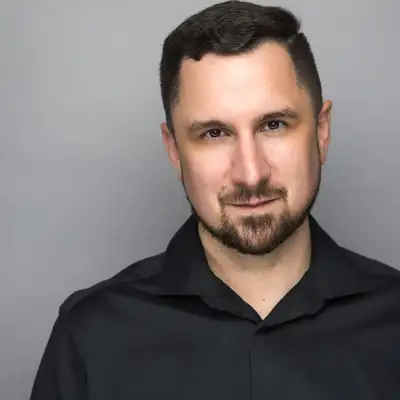
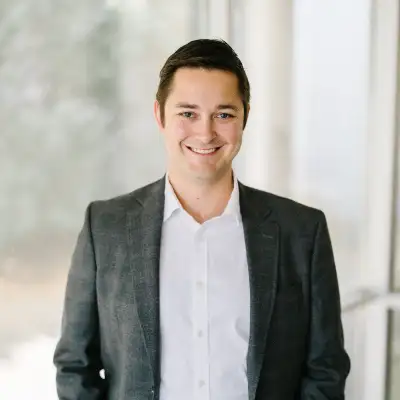
Bonus | Count Me In at SuiteWorld 26: Featuring Connor Wray
Hey everyone, recently Count Me In was invited back to SuiteWorld. We had an amazing time interacting with the attendees from all over the world and hearing about how AI is taking a front seat in NetSuite's platform. And if you remember from last time we were there, we again got to record some amazing episodes for you live on site in Las Vegas.
Adam Larson:So over this next conversation, you'll hear from some leaders of the industry, learn their stories, and talk about how technology is changing the way finance and accounting teams work. Let's get started. Well, Connor, thank you so much for coming on the Count Meeting Podcast. It's really exciting to have you here. And I wanted to kind of go back to your story because, you know, you're a founder and you're building something great, but how does like a group of college students who start something grow to where it is today? Like what is that like?
Connor Wray:The answer is one brick at a time. You build it up.
Connor Wray:We are in the fortunate position to have had the opportunity to work on this business and this opportunity now almost 14 years. So you know, the nature of growth is kind of an exponential phenomenon.
Connor Wray:And so, you know, from the outside looking in, it sometimes feels, especially for a consumer brand, where you it kind of feels like you hit this inflection point and things become an overnight success, but the reality is it's anything but there were years of farmers markets and years of operating at a very modest scale in local grocery chains and regional grocery chains and then years of being w in you know larger partners and still not having those breakthrough moments and momentum that come with you know some of the more recent years of getting to a broad national scale.
Connor Wray:So that's a little bit of a commercial perspective, but behind the scenes, We also had to do the methodical work of building up the infrastructure and the capacity and the capabilities brick by brick. We are not only a brand, we are also a manufacturer of our products.
Connor Wray:So we've had the real physical work at every step of the journey of how do we make more products as we expand the portfolio, how do you make different products, and then how do you bring the entire organization behind that? And we've bootstrapped it along the way. You know, we had early days of our journey when we were on spreadsheets and QuickBooks and NetSuite became a part of our journey several years in and we're now a little bit over seven years into our journey with Net Suite as is a is a major core backbone in our back office capabilities.
Connor Wray:And you know, not every path turns out to be the right one. Some of them are dead ends, but on that methodical journey, you know, it takes time. We took the time, we bootstrapped it, we figured it out. And in the same way that that's true out in the marketplace with our products, you know, we had to figure it out behind the scenes.
Connor Wray:And some of that's a personal journey for myself and my business partner. You know, as we were college students, we had to figure out how to make a product, how to sell it to consumers, and you know, what we have to learn today is a little bit different because we're grappling with the challenges of running you know, a larger organization, working with bigger partners, whether that's on the you know, on the vendor side with partners like Oracle Net Suite or that's on the commercial side with our large retailer and distribution partners.
Connor Wray:We're still every day we show up and we keep learning and figuring it out.
Adam Larson:That's awesome. Well and I noticed like as a co-founder you're also like you you're now like your major role is like the CFO. What was that like deciding like, hey, what's my role gonna be as a founder in an organization?
Connor Wray:Yeah, being a founder is a very interesting journey. Yeah. When you're when you're starting from nothing, There's just the simple reality that any founder, any small business owner in America knows, which is you're gonna have to wear a lot of hats because the work just needs to get done. Of course. Or you don't have a business.
Connor Wray:And so that provides an opportunity to try on for size a lot of different things. And, you know, there's a bunch of different frameworks you could look at, whether you look at communication styles or strengths finders or Myers Briggs, you know, people have an inherent set of you know skills and encodings and things that they gravitate towards and I think one of the things any good team needs, certainly I would make the strong argument a founding team needs is a little bit of a yin and a yang and people have to find how they fit together so that all of the bases can be covered, all the hats can get worn.
Connor Wray:And ideally sit on different people's heads, right? The alternative is conflict or people shoehorned into things that they maybe aren't a great fit for, and inevitably that creates some conflict or gap in capability over time. And so, you know, being able to start with the all the work has to get done, wear all the hats, try them on, see what really fits.
Connor Wray:I think we got fortunate in the fact that, you know, my skill set, my passion gravitated towards the types of accountabilities that come especially more today than ever with the CFO seat, which isn't just make sure that, you know, cash gets dispersed and the books get closed. It still is that. I mean that's critical.
Connor Wray:You can't you can't fumble the foundations, but also how does finance serve as a strategic partner to moving the organization forward and whether that's some of the more traditional strategic finance work of how do we plan our business and support decision making and access capital partners. How do we address the scaling and the transformation and the technological shifts that are also coming?
Connor Wray:So those things have always been passions of mine and, you know, fortunately, being in a finance leadership role in a rapidly scaling organization always came with more flavors of CFO responsibility than just please make sure our cash is taken care of and our books get closed, in a way that, again, I think you're seeing more and more today, but was always a kind of part and parcel of it. And that particular passion and skill set for me dovetailed very nicely with the other skills that we had on the team.
Connor Wray:So you know, y I don't know if there's a way to preordain that on any team. You you've gotta you've gotta get yourself there, but that that's how we found our fit and how I found my fit.
Adam Larson:That's really cool because you were able to like look at all your skills that you had and say what's working best, especially when you're starting at the groundwork. Cause sometimes when you come into organization, you have to have all that stuff laid out, but you're coming from the from the beginning.
Connor Wray:It's very cool.
Adam Larson:Yeah. It's very unique, right?
Connor Wray:Your normal process of getting hired into a role typically comes with a yes, we have a perspective in mind. Now I think that great organizations adapt to what the strengths of their teams are to help find that right fit. But also, you know, back to kind of the it's a blank slate, it's what you make of it, extremely terrifying. Really cool, really terrifying.
Adam Larson:That's awesome. Yeah, it's crazy. Well, and when your company's growing that fast, what was that like as you were kinda it was stretching because I know that as you're growing you have to you have to get new systems you have to do all these different things and what was that like navigating those walls especially as a co-founder and the CFO because you're navigating kind of both roles in that sense.
Connor Wray:Yeah the benefit of wearing both of those hats is I guess a level of organizational stewardship, right? As well as understanding and continuity, right? I have the context all the way back to the beginning of what is the thesis of the business's mission and vision? How does our broader organizational strategy and our financial strategy fit together?
Connor Wray:And in any scaling organization, arguably potentially any organization, but certainly, you know, one like ours that's evolving rapidly, you have a target rich environment for good ideas to go execute on. And that just means that there's more to do than what can actually be done in this moment.
Connor Wray:And so really ensuring that you deliver clarity for yourself and your team on which is the issue we are going to solve now and which are the ones that albeit good ideas they would make us better we just have to say we're gonna let those sit for a minute while we address the critical item first.
Connor Wray:So that sequencing of not a is it a good idea, which is, you know, I think a lot of a lot of work goes into sometimes an analysis of can we get things that are brought forward, business case opportunities, into buckets of good or bad? Yeah.
Connor Wray:And in a deeply target rich environment, you have to get very comfortable with we are going to be setting aside things that are far into the good idea category so that we can take on the absolute most important things to move the business forward in this moment. Yeah. And we gotta be comfortable with that.
Adam Larson:You have to be comfortable with that, because it is, it can be unnerving when things aren't set. Like you say, it's scary when you're growing like that and trying to make sure that everybody's in the same mission. And when I was reading about your organization, you know, you have like full time employees, seasonal employees, and you like production never stops. What does it look like? Like how do you keep people connected to the mission when they might be accompanied coming in for a small period of time?
Connor Wray:That's a really great question. And it's one that I think our approach has evolved a little bit on over time because when you're a team of 10 or you're a team of 20. Yeah. And you're growing rapidly. And so maybe you add five people, maybe you add 10 people, but percentage-wise, that's still a good bit, but you can almost count on osmosis to do the work of sharing your ethos, your mission, your vision, your values. What are we about? How do we work?
Connor Wray:And it's a small enough group and it's a close enough cohort that it i people can just absorb it.
Adam Larson:Yeah.
Connor Wray:That does not happen automatically of its own accord when you're an organization of hundreds of people that also still has a meaningful growth rate. So of course are a hundred people and you're adding 50 or you're 200 people and you're adding 60. Like those are really big numbers spread out across locations, spread out across shifts in their time of day.
Connor Wray:And so our approach has had to become much more intentional in creating ways of working, whether that's in an onboarding process or throughout the day to the daily, weekly, monthly, quarterly, and annual rhythms that we have as an organization, to be really intentional and clear about who are we, what do we stand for, how do we think about our business so that we can maintain that level of alignment. And We've had to change our approach, and of course that you know forces you to grapple with is this really a great use of time and energy?
Connor Wray:Now it is, it's not just happening, it's a it's an intentional effort. Is it worth it? And for us that answer is absolutely yes. If anything, we are more convinced today than we were at the beginning when admittedly we were we were new to everything, let alone managing teams, managing people, leading an organization, that giving the team that level of alignment is critical to organizational performance, clarity, satisfaction, you know, all the things that really matter.
Connor Wray:We want a team that's performing at a high level. We want a team that's deeply satisfied in their work and achieving their most actualized, you know, best selves as a part of what they do. And that requires delivering that. And delivering that at scale is a very different challenge than, hey, there's a five of us sitting around a table just, you know, just figuring out what we're gonna do tomorrow.
Adam Larson:Yeah. Well, and when you introduce things like new technology, like all the things that have been announced here at SuiteWorld, it's really interesting, you know, what does that what does that really change for you as you lead your team and kind of guide them through this mess of so many different changes and trying to keep everybody on the mission and on board?
Connor Wray:I mean it means a l- it means a lot because it serves as that grounding agent. And I think we believe that our organization is well suited to accommodate a technological change like we're seeing today with the emergence and acceleration of AI technologies because our growth rate and evolution over the last decade and a half has already put our organization in a state of rapidly adapting to change.
Connor Wray:Now it hasn't always been technological in nature. It has at times, you know, we've been through ERP and other, you know, technology implementations and evolutions. We've been through operational transformations of moving into new facilities or installing new lines and technologies and capabilities, product extensions. So this is for us just the most recent.
Connor Wray:reinvention, change event that we've had to lead the organization through. And we feel like there are tools in our toolkit to help us work through it. But it really comes back to how do we keep people grounded in the core of what we do and why it's important so that they can pair the things that are changing with the things that must stay the same to sift through how do we apply it?
Connor Wray:How do we remain confident that this is that this is something that is going to accelerate our ability to get our best work done, not take that away from us. And focus not just because, oh, someone in the business will figure it out, but because we're being given tools that we can and we understand what is important to driving the business forward.
Connor Wray:So we have the empowerment to apply those tools to our work. access the resources and other things and technologies that are necessary to help us do that in the best way possible, but be empowered to drive that as a collective, not just as a as a but there's someone over in IT that'll tell me of course what I'm supposed to do, how that change is gonna affect me, right? We don't want people sitting on their heels. We want them on the balls of their feet figuring you know, figuring it out every day.
Adam Larson:So how is AI like really changing the way your tea you and your team work every day?
Connor Wray:I said, yeah, we could have this conversation every day.
Adam Larson:Yeah.
Connor Wray:And I would probably have new answers for you every day because it's evolving extremely rapidly. Things that are possible today, you know, and we're here at SuiteWorld, there are things that I now know are possible today within purely the Oracle Net Suite and Next Ask Oracle environment that 36 hours ago I wouldn't have told you I understood to be possible and true within that framework.
Connor Wray:But holistically, you know it is how do we empower our team to think less about this is my this is my closed checklist I need to get these tasks done I'm driving the bus from point A to point B and more I am helping to understand the process manage the process and set up the tools to move as much of the work forward as possible as we can I'm less of a sitting in the orchestra playing an instrument and I'm more of a conductor making sure that the music is coming out the way that it's supposed to.
Connor Wray:And how do we get people into a place where that skill set exists for them, the tools support that work in the right way. And you know as any change to how work is done, people are also getting the, you know, the sense of satisfaction and progress out of that change that we want everyone to have.
Connor Wray:And we see that evolution happening sometimes extremely rapidly and sometimes we have to put a pin in something and say that you know it may not be possible today, let's circle back in a month and you know when a new model comes out or when a harness gets an incremental feature added to it, you know, maybe we can maybe we can do that.
Connor Wray:But doing all that through the lens of, well, we are in a phenomenal industry making better tasting, better for you frozen treats. We make great products. We deliver them to consumers in an extremely fortunate position because there's absolutely nothing about AI or other disruptive technologies that are going to change the reality of people are going to wake up, they're going to eat three meals a day, and they're going to continue to want great tasting products. that they enjoy, that bring them joy with their friends and family.
Connor Wray:And so that, again, mission, vision, keeping people grounded in the what matters for our business, that's not gonna change.
Adam Larson:Yeah.
Connor Wray:And the goal of all of these other technologies, tools, and process is how do we make more of that possible? Because we're not under threat of the thing that really is core to our business changing. It's how can we do more of it? How can we focus the time and energy that's being freed up. by the technology into making that mission go further and go faster.
Adam Larson:Alright. Well, Connor, this has been a great conversation. Thank you so much for coming on Count Me In here live at Sweetworld. It's really been a pleasure.
Connor Wray:Yeah, I really appreciate it. Thanks for having me.
Announcer:This has been Count Me In, IMA's podcast, providing you with the latest perspectives of thought leaders from the accounting and finance profession. If you like what you heard and you'd like to be counted in for more relevant accounting and finance education. Visit IMA's website at www.imanet.org.