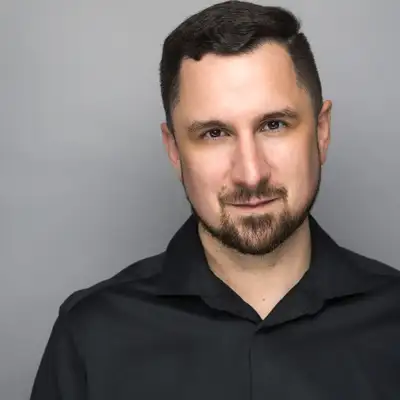
Bonus | Count Me in at IMA26: Featuring Bret Hood
Hey, welcome to Count Me In. This year at IMA26, I had the privilege of recording live on the podcast stage in Tampa, Florida. Throughout the conference, I sat down with a lineup of presenters who took time out of their schedules to share their passion and expertise in a range of topics. So I'm excited to bring you these special Count Me In episodes featuring some of the brightest voices from IMA26. So without further ado, let's get started.
Adam Larson:At Count Me In, we're here at IMA26 recording live on stage, and I'm excited to have you here because you bring a different approach to ethics, which I really appreciate. And so we're gonna get into that, but you started, you were twenty five years with the FBI. And at what point did you start noticing how people thought about themselves when they were when they were doing things that were bad?
Bret Hood:The common perception is that people believe that fraudsters, criminals are bad people. Yeah. They believe that in their mind, have consciously chosen to do something wrong when in reality, that's that's not what happens. Okay. In reality, what happens is, especially in white collar crime, financial crime, they convince themselves to take one little small step down this slippery slope.
Bret Hood:One little transgression, and then it becomes a second one, and then it becomes a third one. Yeah. And what happens is people don't even realize they're doing it until it's too late. Mhmm. So, you know, twenty five years in the FBI, what I learned is that there are good people.
Bret Hood:There are normal people Mhmm. Who make mistakes. Yeah. And then they compound those mistakes by making a second one and a third one. While the whole time, their brain is telling them you're doing the right thing.
Bret Hood:You can recover from these things. Eventually, you're gonna make it back to zero and everything's gonna be fine. Yeah. When in reality, it doesn't happen that way.
Adam Larson:So at what point do you think that snowball begins? It begins pretty early. Okay.
Bret Hood:I'll give you an example. Yeah. Alright. So there was a guy named Dave, and Dave received $50,000 from an investor. Didn't really want it, but the investor saw what he was doing, and he's like, you know what?
Bret Hood:I think you can make some money for me. So he provides him $50,000. Mhmm. Immediately, Dave takes 25,000. Yeah.
Bret Hood:He uses it for personal expenses, things that he's he needs to pay. But he says in his mind, I'm gonna make that much money this month. Mhmm. And so he trades the remaining $25,000. And at the end of the month, he's lost 15.
Bret Hood:Oh, wow. So you do the accounting real quick. He's only got 10,000 left. And as he's thinking about, what am I gonna do? Because now I'm supposed to tell this investor that you've given me 50,000.
Bret Hood:I stole 25. Mhmm. I've lost 15. I only got 10,000 left. That's not gonna work.
Bret Hood:And so what he does, he starts giving creating a story that he tells himself. And the story is, you know what? As I look back in hindsight, I see that I made some mistakes that I normally don't make. Mhmm. And said, and if I hadn't made those mistakes, then I would have actually made $35,000.
Bret Hood:And his balance would be 60,000 Yeah. And everything would be fine. And so with the magic of Microsoft Word, we put in there beginning balance 50,000, investment profit 10,000, ending balance 60,000. Yeah. We provide that to the investor and what do you think he does?
Adam Larson:Gives more money.
Bret Hood:Here's another 50,000.
Adam Larson:Yeah.
Bret Hood:And we get going. In the next month, the same thing happens. Yeah. We convince ourselves through these stories. As human beings, we thrive on stories.
Bret Hood:Yeah. And just because of our human nature, we have to see ourselves positively. Okay. And so when we see ourselves positive like that, it's easy for us to create a story that doesn't exist, but still makes us look favorable. And that's what he did.
Bret Hood:The fraud eventually turned into a 150,000,000.
Adam Larson:Oh my goodness. That snowballed quickly.
Bret Hood:It did. It took about eight or nine years, but it just grew exponentially and grew, and he kept stealing money. And he kept telling himself the same old story. I'm going to pay everybody back.
Adam Larson:So when that happens, like, do you think all of us are kind of telling ourselves that story internally? We don't realize it. Like, how do you how do you kind of what questions can you ask yourself to say, am I telling myself that story? And I I just haven't like, have I been lying to myself
Bret Hood:so I did a TED talk okay right and in the TED talk it's called are you an honest person yeah and so real quick I'll ask your viewers ask you answer this question for me are you an honest person
Adam Larson:I'd say so. I feel pretty honest, mostly.
Bret Hood:And most people say yes. Yeah. Right? But then if you watch the TED Talk, you'll get bingo because the person that we lie to the most is who? Ourselves.
Bret Hood:Absolutely. Okay. So what we do is we continually tell ourselves, we give us the best version of ourself. Mhmm. When in reality, we make mistakes.
Bret Hood:Yeah. We make a lot of them, but we compound them. We tell us a story that I won't make that same mistake twice. And so the best way to kinda track yourself is to have somebody who is willing to tell you the unfiltered truth no matter what. Okay.
Bret Hood:And that's hard because sometimes we don't wanna hear what that person has to say. Yeah. The other thing I found, and this comes from a mistake that that I made, there was a group of eight people. Actually, none. Eight of them actually did the execution.
Bret Hood:It's a counterfeit, check scheme. They basically created these fictitious checks, went around to different banks throughout Southwest Florida, and cashed them. Mhmm. Alright? And so I got the case.
Bret Hood:I started looking through it, and before long, they had $500,000. And what I love about criminals is that, you know, it's not that the FBI is all that smart. Yeah. It's that sometimes they're very stupid. Okay.
Bret Hood:And who did the criminals make the checks payable to? Themselves.
Adam Larson:Themselves. Yeah.
Bret Hood:So Yeah. It was really easy for me to track it down. Mhmm. And I remember I came across this one guy, we and did some background on each and every one. And his name was Matt.
Bret Hood:And so as I looked at Matt, it just so happened that he worked for a bank. And the checks, they started cashing them the day after statements came out, which showed some sophistication. Yep. Yep. Some familiarity with the banking system.
Adam Larson:Yeah.
Bret Hood:So as I look at the apes, I start focusing on Matt.
Adam Larson:Mhmm.
Bret Hood:Because Matt has to be the mastermind. Yeah. I mean, he knows he works at a bank. He knows how it works. So I gather the evidence.
Bret Hood:I gather the checks. I see his name on it. Some of the tellers who cashed the checks actually took his driver's license. So I had copies of his driver's license. I had videos of him coming into the bank.
Bret Hood:And I'm like, I got this guy. Alright? He worked at a bank. I knew the security officers. So I called her up.
Bret Hood:I said, hey. Can I have a conference room? Let me talk to Matt. Yeah. Yeah.
Bret Hood:She said, sure. So set it up. Like, on a Thursday, 02:00. Matt comes in the room. He has no idea who I am or why I'm there.
Bret Hood:And I interview him for about two hours. He denies everything, which is not uncommon. I mean, most people, when confronted with evidence that they've done something wrong, they lie. That's our initial response. Of Don't think about a time when your mom yelled at you.
Bret Hood:Deflection is natural.
Adam Larson:Of course.
Bret Hood:So I'm used to that. But a lot of times, people break down. Matt never did. He kept insisting to me. He said, I know everything.
Bret Hood:It looks like I did it, but I didn't do it. And by that time, I'd been in seven, eight years. Yeah. I'm accustomed to people lying to me. And so I just said, yeah.
Bret Hood:Because some people carry the lie to the very end. Of course. And I said, alright, Matt. He says, you know what? He says, if that's the way you're gonna play it, I'll be back.
Bret Hood:He said, the next time I come back, I'm bringing handcuffs. And I remember the look on his face, it was very sad, dejected and he says I understand and I walked out and it kind of kind of made me feel a little bit different about him something wasn't right yeah And I looked at him. I said, alright, Matt. If I'm wrong, I'll come and apologize to you. And so I go back to my office, work on some other things.
Bret Hood:About three days later, I get, the secretary calls me up and says, hey. There's somebody here to see you. I look at my calendar. I don't have anybody on my schedule. So I'm like, who is it?
Bret Hood:And it was one of the other eight people. Oh. He had learned that I've been out asking questions. He decided to be the first one to come in to see if he could get the best deal. Mhmm.
Bret Hood:So I go up there. I interview him. We spend about two hours. He outlines everything
Adam Larson:Yeah.
Bret Hood:Except for Matt. And I'm, like, looking at him, like, waiting. We get done. He says, that's it. I'm, you forgot something.
Bret Hood:He's, like, no. And I said, you forgot Matt. Pushed across a picture of Matt across the table. And he looks at me and he says, oh, yeah. That's not Matt.
Bret Hood:That's Mike. And I'm like, what? And he says, that's Mike. And gave me Mike's name. I started looking up Mike, got a picture of Mike and guess what Mike and Matt look exactly the same.
Bret Hood:Oh wow. They're not related.
Adam Larson:Okay.
Bret Hood:They just they look like twins and so I go back into the room and I ask him I said how did Mike get Matt's driver's license? And he said I remember. He said we're over on Fort Myers Beach I'm walking in between two cars I happened to look down at the driver's seat of this one I see a driver's license. I said, Mike, this looks just like you. So he comes over, reaches into the car, windows down, picks it up, puts it in his pocket.
Bret Hood:Six months later, they decide to do this counterfeit check scheme. Yeah. And he says, make mine payable to Matt. Interesting. And so very next day, I go into the bank.
Bret Hood:It was kind of funny. As I walk into the bank, Matt sees me. He goes, oh, no. And I'm like, no. No.
Bret Hood:I'm here to apologize. Yeah. And he I asked him specifically. I said, why didn't you tell me you lost your driver's license? He said, that could have helped you.
Bret Hood:Mhmm. And he said, I was so stressed. I completely forgot. Interesting. And what it taught me, and and I think it applies to ethics a lot Mhmm.
Bret Hood:Is that we have to reframe things. Okay. We have to look at it from a different perspective. And so what I was doing was I was looking only for the evidence of guilt. Mhmm.
Bret Hood:And I needed to look equally as hard for the evidence of innocence. Interesting. And that's called the framing bias.
Adam Larson:Okay.
Bret Hood:It's where we frame things a certain way, and we discount the other frame. It happens to you all the time. For example, do you like peanut butter?
Adam Larson:I love peanut butter.
Bret Hood:Peanut butter is amazing, isn't it? Yeah, is. Love it. It's great. It goes on everything.
Bret Hood:Yeah. Right? But let's say this. Let's say you're walking down the grocery store aisle and you see your favorite peanut butter jib, pita pan, whatever it is. Yeah.
Bret Hood:Alright, you look on the label and the label says 25% less fat than the leading brand. You scoop that up because I'm like yeah this is healthy this is good for me but my question is with framing why don't they put on the label 75% as fat as a leading brand. Oh interesting yeah And so the way we look at things, how we frame these things, we frame ourselves as good people. Mhmm. And we convince ourselves, our stories, that we're good people.
Bret Hood:And even though we're doing something wrong, it's okay because the situation calls for it.
Adam Larson:Yeah.
Bret Hood:If you stop, you pause, you think, and you say, what if I thought about it from the opposite angle? Mhmm. What if I thought about it from a different perspective? Or what if I had somebody who argued the exact opposite than what I think? And when you do that, it opens up all these different possibilities.
Bret Hood:It opens up angles that you haven't thought of, you haven't looked at. Yeah. And by doing that, you can make a more complete and better decision.
Adam Larson:That's amazing. I I think one thing I wanna to pick on is how quickly we as a society, if somebody does something wrong, wrong according to society standards, we label them a criminal or a bad person, and then that label just gets put upon you forever. Yes. It you can never let go of it. How can we as a society, as humans, do better at, okay.
Adam Larson:This person did that one thing, and it could be one thing that it snowballed into a lot of things, but it also could just be one thing that they did, and somehow they're just labeled that for the rest of their lives. How do we overcome that as a as a society?
Bret Hood:It's difficult. Yeah. Because I mean, you know, think about this. How many times have you met a stranger and within five seconds you decided who they were? But let's say in some situation like let's say that you met someone and you said oh this person's awful yeah only to spend a few more minutes with them and realize well okay they're not as bad as I thought yeah or vice versa how many of you have met somebody and thought they were amazing only spend another five minutes and find out that they're not who you thought they were unfortunately there's a lot of people that married that person
Adam Larson:of course
Bret Hood:of course and so we like to identify people. Our brains don't like just situations where we don't understand. Yeah. So we're quick to put labels on people and we're hesitant to remove those labels. And what we're going to discuss in our class today is you may not be as ethical as you think.
Bret Hood:You might be capable of doing the exact same things that you label someone else as a criminal.
Adam Larson:So how do you how do you get people to get to that point to recognize, hey. I might not be as ethical as I think.
Bret Hood:It's hard because we don't wanna see ourselves that way. Yeah. And so what I'm gonna do in class today, and and I'll certainly do it with your podcast people, is on a scale of one to 10, with one being absolutely unethical, 10 being absolutely ethical, five in the middle, what number would you give yourself? First
Adam Larson:reaction, I'd say an eight.
Bret Hood:An eight. Okay. And I've done this with 5,000 people. Yeah. And almost everybody says seven or above.
Bret Hood:Okay. Right? Because we like to think of ourselves that way. We like to think of ourselves as good people. But in reality, I'm a three.
Adam Larson:Interesting. How do you get to the three?
Bret Hood:Because I'm not nearly as ethical as you think I am, and neither are you. Okay. What's going to be fun about the class we're going to do today is that with just a few questions that I'll ask and get feedback from the audience. You're going to find out that you are three as well.
Adam Larson:Okay. That's interesting. So you mentioned something. I want to dig into that a little bit. But you mentioned something called psychological distance, that we put ourselves, we distance ourselves from decisions How we does one recognize that they've done that?
Adam Larson:And then how do you improve yourself? Like, because do you ever get yourself above a three as an ethical person?
Bret Hood:At times, you know, it depends on it. At times, we are tens. Okay. At times, we're once. Yeah.
Bret Hood:So it sounded like a sliding scale. But if you overall average, and I'm going refer you to a book called Thinking Fast and Slow by Daniel Kahneman. Yeah. Alright. It's a classic book.
Bret Hood:He does a little exercise, and so I'll run you through this exercise in the book real quick. Yeah all right so let's say this we're in Tampa right there's a body of water Tampa Bay right outside the door here right
Adam Larson:yep
Bret Hood:all right so let's say this we get on a lunch break you walk off the set you go get a fresh breath of air outside and you just so happen to look out into Tampa Bay and you see a five year old child drowning. Are you going jump in and try to save that child?
Adam Larson:If I can. I'd try to.
Bret Hood:If you can, yeah. And you're not you're wearing a nice suit and stuff like that, and if there's no time, you're like you're still jumping in anyway, aren't Sure. If I can do it, I'll do costs me money. Yep. Right?
Bret Hood:Conman brings that up and says most people, if they can swim, will jump in and try to save that child. Yeah. He also contrasts that with let's say that, what we've seen these these ads on TV. Mhmm. If we donate a dollar a day, we can save 20 children in third world countries.
Bret Hood:But yet we don't do that. And part of the reason behind that is what you mentioned, psychological distance. Yeah. That's the mental distance between our decisions and the consequences of our decisions. Okay.
Bret Hood:So if we look at, you know, especially with unethical behavior Mhmm. Says what we do is we manage to create this mental distance between us and the actions that we take. One of the classic examples comes from a business executive. He laid off, I think it was 50,000 people in one day. And of course, press media asked him questions.
Bret Hood:Said, did you just lay off 10,000 people? He's like, no. No. No. I did a human capital surplus correction.
Bret Hood:And that's what we refer to as a euphemism. Yeah. Right? But it's a softer way of saying what happens. And so if you look inside his his brain, he doesn't wanna be the person that took away 50,000 jobs.
Adam Larson:Yeah.
Bret Hood:You know, made 50,000 people, just all of a sudden, no income, and now they're struggling. And so what your brain does is it starts to massage these things because I want to be a good person, and it creates a story. I did a human capital surplus correction instead of firing 50,000 people because that sounds better to me.
Adam Larson:Makes you feel better. Makes you sleep better at night, maybe.
Bret Hood:Yeah. Even though the bottom line is you laid off 50,000 people. Yeah. And think about it with psychological distance. If he knew each and every one of those people, would it be even mentally more difficult Of to do course.
Bret Hood:But there are 50,000 people on the spreadsheet. And so that's how we get away with this. The way to beat psychological distance is to start thinking about what effects does it have on the person. Or if I were in the same situation, would I like it against me?
Adam Larson:Yeah, that's really cool. What about things like motivated blindness? Where like you're you're you're blinding yourself to it, you're pretending it's not there. Is there a difference between that and psychological?
Bret Hood:Yeah, with psychological distance, you get the mental distance between your decision and the consequences. With motivated blindness, you kind of recognize the consequences, but you're motivated not to see them, right? And so it's a process that we reason. Going back to Thinking Fast and Slow by Daniel Kahneman, he uses a system that it doesn't apply to all decisions but it kind of gives you a basis for how the brain works. Okay.
Bret Hood:He calls it system one and system two. System one is reactionary brain, right? You just react to certain things. System two is more your thinking brain. Yeah.
Bret Hood:So what those studies show is about 95% of our decisions are made with that reactionary brain.
Adam Larson:Okay.
Bret Hood:Which is not a bad thing. No. I mean, because there's certain insulations where your gun instinct is correct. Right? But when motivated blindness happens, that's reconstructing reality in such a way that you see what you're motivated to see.
Bret Hood:Okay. Alright. So I'd like for example, walking through the the vendor room out there, the I saw all kinds of doughnuts, and they look good. I'm a law enforcement officer. You know how law enforcement officers feel about donuts.
Bret Hood:Yes. But I'm on a diet and so what would have been easy for motivated blindness to take over is like I want that and I'm going say well it'll be okay just this one time even though I'm on a diet and I'm not supposed to eat them so it's like same thing happens in the workplace I see something that is incorrect something that's unethical but I really want it and so here's here's a great way to explain motivated blindness have you ever had something an expensive toy or an expensive device something that you really wanted but you couldn't really justify
Adam Larson:yeah many times
Bret Hood:right and so I'm a visual guy right? So I like looking at things. So I get me out my notebook, make two columns, reasons to buy, reasons not to buy.
Adam Larson:Pros and cons, right?
Bret Hood:Yes, pros and cons. Yep. And so then I just brainstorm, write things down, then eventually system two looks at my thinking brain and I see I've got two reasons to buy and five reasons not to buy. Now I'm supposed to stop right there, because technically I just did a cost benefit analysis and it's not worth it. But that's when motivated blindness creeps in because I look at it and I say two reasons to buy, five reasons not to buy, system one pops up and I'm like, well I got to fix that.
Bret Hood:Yeah. And all of a sudden I got seven reasons to buy, five reasons not to buy, I'm like, well, look. The cost benefit analysis says I should buy it. Yeah. Right?
Bret Hood:And that's motivated blindness. Okay. It makes us do things that we ordinarily wouldn't do because that's what we want. For, like, David. Yeah.
Bret Hood:David knew what he was doing was wrong. Yeah. But he also knew that I wanted to live a good life. I needed to pay off these bills. Mhmm.
Bret Hood:So I'm motivated. He says, I'm gonna take this money, and I'll I'll make up for it later. Yeah. Right? And that's when he just he convinced himself and to the tune of a 150,000,000.
Adam Larson:And he I'm sure he never paid it back, did he?
Bret Hood:Never paid it back.
Adam Larson:Yeah. So for accounting and finance professionals who are listening to this, what are some are there some factors or some key indicators that they can recognize in themselves? Hey, I might be going this direction. I might be starting down this road that we can inwardly look to recognize that because I'm sure nobody really wants to start walking down that road.
Bret Hood:Yes, the thing is we make approximately 35,000 decisions per day. Yeah and our brains get tired it's like a cell phone the more you stay on your cell phone quicker the battery dies yeah well when your thinking brain dies system one takes over okay and so now if you've been in the workplace you've have worked all day long, you get to this point where you are just tired and that is when your brain can take over and do some of these nasty things. Oh, interesting. Other times you want a certain outcome. Most people want to be successful.
Bret Hood:We don't like failure.
Adam Larson:No. I'm a huge competitor.
Bret Hood:I hate losing. But in the accounting finance field, losses can be changed with a single accounting entry
Adam Larson:Mhmm.
Bret Hood:A single change of document or change in numbers, and that's what makes it so easy. And the thing is most people don't even consider the possibility that they can convince themselves to do such a thing. Yeah. And we all can. It's easy.
Bret Hood:In fact, you won't even realize it's happened. And so what I tell people is you have to slow down before you do it and say, do I really want to take this step? One of the biggest things in psychology that you can find is that if people make what they call a pre commitment. And so what that means is I'm going to anticipate, like, so whatever industry you're in, whatever business, Yeah. Think about the potential possibilities of situations that could arise where you're gonna be tempted to act unethically.
Bret Hood:Yeah. And then you say to yourself, it's more powerful if you write it down. It's more powerful if you say to somebody else. If this situation arises, I will not do this. Oh, okay.
Bret Hood:Because if you commit to that behavior before it happens, then you're more likely to follow through with it. And the commitment, especially if you make it aware to everybody else, not just yourself, because like we said, who's the person we lie to the most? Ourselves. Ourselves. Yeah.
Bret Hood:But if you make that commitment in writing, you show it to somebody else, or you make a verbal commitment to somebody else, then there's a person to hold you accountable. Yeah. And so if you make that commitment to integrity then you're more likely to follow through.
Adam Larson:I like that making that commitment out loud whether to a person or writing it down so that you are putting it out there, you are verbally saying it, as opposed to just keeping it inside. Because I think sometimes we get lost in our own minds, get lost in our head, and then that is how we convince ourselves that something is okay that is probably not.
Bret Hood:Yeah, there is another great book out there. It is called Blind Spots by Max Baeserman and Anton Brunsell. Okay. And they describe us in two different ways. They call us the should self and the want self.
Bret Hood:Yep. Today, when I do my session, almost everybody in the session is going to be in the should self. Yeah. We know what we should do. Of course.
Bret Hood:Right? I I love people that give ethical scenarios to their classes. Mhmm. Because if we're gonna be honest, we can figure out how we're supposed to answer about halfway through reading the ethical scenario. And we say, oh, this is what I'm gonna do.
Bret Hood:Yeah. But Tim Brunson and Bezeman countered that with the want self. That is the one where you're under pressure Mhmm. You're under stress, or desire is strong. Yeah.
Bret Hood:And what their research has found is that although we think we will behave in a certain way when actually presented with the situation Mhmm. We do not behave in the way that we expect.
Adam Larson:Yeah. So somebody who's in that they're listening to this conversation, well, I'm in a high pressure moment. I'm in a high pressure situation. How do you like, you already mentioned one scenario. Like, when I'm in this situation, I'm gonna make this decision.
Adam Larson:But if, like, you haven't had the moment to do that and, like, like, tried that, but, like, my boss is still saying, just change the number. It's that simple. But we can't like, you're you can't do that. Having good internal controls, good accounting practices, that's not okay. Like, how what would you say to that person who's like, I just I I need to find a way to get past this for high pressure situation.
Bret Hood:But what I would do is I'd take a personal inventory and almost create an ethics and value list. Okay. Right? And I'd put that list somewhere where either in a desk drawer or on top of my desk Mhmm. Or on my computer and says, these are my values.
Bret Hood:Yeah. Right? There was a poor woman named Betty Vincent happened to work for MCI. Okay. Alright?
Bret Hood:And my young people here, we're not gonna recognize what MCI is. MCI was this phone company that got involved in some fraudulent accounting and
Adam Larson:Just a little bit.
Bret Hood:Yeah. And eventually, you know, a bunch of people went to jail. Yes. Including Betty. Yeah.
Bret Hood:And so if you look at Betty, amazing, really, really nice woman. Mhmm. What I understand, what I've read, never met Betty, but what I understand under is that she was the main breadwinner for the family. Oh, okay. And her job provided the insurance.
Adam Larson:Yep.
Bret Hood:All the things that we all need and all rely on. Sitting at work, never done anything wrong, never, you know. Sitting at work, she's a, if I remember correctly, a mid level accounting manager. Okay. Right?
Bret Hood:And all of a sudden, her boss, CFO, or somebody way up high comes up to her and says, I need you to make these accounting entries.
Adam Larson:Mhmm.
Bret Hood:Betty's a smart accountant. And so she starts looking at them, and she realizes these are fraudulent. And she says, I can't do it. Yeah. And the boss says gives her some excuse saying, like, you know, said, well, we're just gonna do it this one time.
Bret Hood:It's, you know, it's something that it it'll reverse itself next month. It'll be fixed. And Betty needs her job. Her boss is telling her. Yeah.
Bret Hood:And she does it. And what do you think happens next month?
Adam Larson:Same thing.
Bret Hood:Here comes the boss again.
Adam Larson:Mhmm.
Bret Hood:Right? She ends up going to jail for, I think, was, like, two two and a half years because she did these false accounting entries. Yeah. I had another similar case down in Fort Myers where mortgage company. They brought in there was two people that ran the mortgage company, male and female.
Bret Hood:The female hired her sister as the chief accountant. Yep. And so one night, the sister realizes that she forgot her purse at the at the business office. So she's like, doesn't live that far away. It's 7PM, 8PM.
Bret Hood:Kids are asleep, and she says, I'm gonna go back and get my purse. Yeah. Drives five minutes. Lights are on. She looks in and says, okay.
Bret Hood:Walks in. There's her sister frantically working. She's like, what are you doing? And she says, I'm falsifying these mortgages. Oh, wow.
Bret Hood:And she's like, what? She's like, look. She says, if we don't do this, everything is gonna collapse, and it'll be fine. Everything will be okay. We'll we'll do it.
Bret Hood:Right? And so she says, can you help me? It's my sister. Yeah. Yeah.
Bret Hood:And so she does. She starts falsifying all these mortgages, satisfy the investors Mhmm. And life goes on. About a year later, we need more mortgages falsified. Mhmm.
Bret Hood:Sister is dead. She passed away. Okay. The other guy comes into her office and says, I need you to falsify these mortgages. And she says, no.
Bret Hood:I'm not gonna do that. I did that one time. I'm not gonna do it again. And he doesn't pressure her or anything like that. He just stands in the doorway, looks at her, says, okay.
Bret Hood:That's fine. Says, you don't have to do it. I certainly don't want you to do anything you don't wanna do. Mhmm. Says, but just, let me tell you what's gonna happen.
Bret Hood:Says, tomorrow, we're gonna miss our debt payment. Says, the investors are gonna be angry, And they're gonna start coming in here. They're gonna start going through stuff. Eventually, they're gonna call the FBI. Boss tells me to do something unethical.
Bret Hood:I'm going to say no. I'm gonna stop. But that's not just it's not you do things because somebody asked you to. And you don't even realize it's happening.
Adam Larson:And it just it overwhelms you and compounds and you don't even realize the decision you're making or the consequences of the decision you're making.
Bret Hood:Yes. It's like you know you think about it do we do work for fun? No. Maybe there's some level of fun in our Sure. But for the most part, most of us do work because we need money.
Bret Hood:We have mortgages to pay, children to feed, retirements to support. Yeah. Right? And so we think that the boss comes to us and asks us to do something wrong, we'll just stand up and say, no. Mhmm.
Bret Hood:And in some cases, people will. But in a lot of other cases, that wants self starts to creep in because we need the job. And when they assure you it's going to be one time, it's just going to correct, it makes it a little bit easier to rationalize, and here we go.
Adam Larson:Yeah. So what about people who say I'm doing the wrong thing for the right reason? You you see those movies, the vigilantes, the Robin Hoods. You know, what about people who are saying they're doing that because they feel like, hey, I'm doing it for the right reason, so it's okay.
Bret Hood:And that's more of a form of motivated blindness. Okay. Okay. Right? Because I mean, you're telling yourself, what you're doing is you're creating a story.
Bret Hood:Gotcha. Right? And, you know, it's like anytime you go if you look in the history of wars
Adam Larson:Mhmm.
Bret Hood:Each side believes that they're doing the right thing.
Adam Larson:Yeah. Yeah.
Bret Hood:But it depends on your values, your culture to decide what's there. Mhmm. And finance and accounting says, you might think, well, I'm doing this because it's just gonna correct itself. Yeah. Yeah.
Bret Hood:Right? So income smoothing is another classic one. Mhmm. Right? Where we just falsify the income.
Bret Hood:We just make it fit where it's consistent over time even though it's not accurate.
Adam Larson:Mhmm.
Bret Hood:So but what I'm saying, who's getting hurt? Yeah. Insider trading, who's really getting hurt? But if you were the victim of it, if you invested in those companies and you learned that the accounting was fake, says and you lost money. Is that fair?
Bret Hood:Especially if I've got all my money tied up in this company, my retirement, even though I shouldn't. I know better. Mhmm. But if I've got all my money tied up in this and I find out the accountants falsify this information Yeah. Then that hurts.
Adam Larson:That does.
Bret Hood:And that's one of the problems we, see in in society today. We think that financial crime doesn't have victims. For example, I'll give you this. Let's say that you go in and you rob a bank. Yeah.
Bret Hood:And most bank robbers, back back in the day I was in, I think the average bank robbery got about 2,000. Well, that person who robs a bank is gonna get eight years in jail. But I can work at a bank, steal $500,000, and get probation. That doesn't make sense. That's the way the rules are set up because bankruptcies are perceived as violent.
Bret Hood:Okay.
Adam Larson:And some are. Some are, yeah.
Bret Hood:Right? But others are, somebody just gives them a note, the teller gives them the money, they take off. He says, but when I steal from working inside, he says, that's not violent. That's just theft, embezzlement. And so we don't see that as dangerous as somebody going in and robbing a bank.
Adam Larson:Mhmm. But it still affects people.
Bret Hood:Absolutely. It does. Right? Whether it be an investor, whether it be the bank itself, the people of the bank. Yeah.
Bret Hood:You think about some of the the fraudulent companies, the CEOs construct this fraud. There's all kinds of people down the chain that rely on them to get a paycheck. Mhmm. So when the the organization collapses, all these people are out of a job. Yeah.
Bret Hood:And then now you've got this pool of people who are jobless and trying to get a job. Mhmm. That puts a low, a pressure that moves the salaries lower because now there's more people applying for it.
Adam Larson:Yeah.
Bret Hood:So it has broad effects. We just we don't think about those things.
Adam Larson:Maybe we don't have the right justice for when these crimes are, and that could be why people continue to do it because they're like, I'll just get six months or it's not so bad.
Bret Hood:There's some good debates about it a lot because, like, let's say, some people say they should be punished.
Adam Larson:Mhmm.
Bret Hood:But other people say that they should be let out of prison so they can go work and let allow people to recover some of that money. Yeah. I can tell you from my experience that most people, once you're victimized by fraud, you don't recover near what you put in. Nope. You don't.
Bret Hood:Right? And it's it's sad, but it's where do we find the equation? I don't know the answer to that one.
Adam Larson:Yeah. Yeah. Well, Bret, this has been an amazing conversation. Thank you for bringing your unique perspective to this. I've enjoyed it, I hope our audience has enjoyed it as well.
Bret Hood:Thank you for having me. I really appreciate it.
Announcer:Profession. If you like what you heard and you'd like to be counted in for more relevant accounting and finance education, visit IMA's website at www.imanet.org.
Creators and Guests