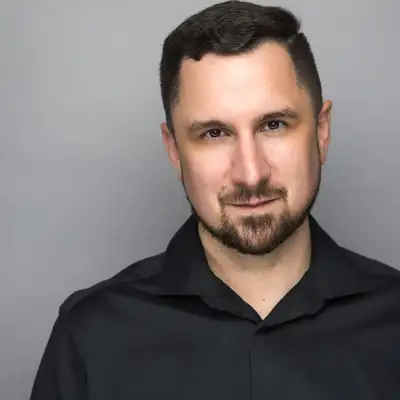
Ep. 386: Guffy Wright - How to Overcome Friction and Guide Teams to Confident Business Choices
Welcome back to Count Me In. I'm your host, Larson, and today I'm joined by Guffy Wright, best selling author, owner, partner, and national sales leader at the Mahoney Group. We dive into key concepts from Guffy's newest book Attach High and unpack why even the most experienced professionals sometimes miss real issues in decision making, focusing on the wrong problems or not understanding what really matters to others. Guffy shares real life stories and game changing advice on how you can align with people's true values, create safe environments for honest conversations, and use curiosity and vulnerability to unlock better decisions. So whether you're in the c suite, a finance professional, or simply looking to sharpen your leadership edge, these insights will help you clear the friction, find true alignment, and make courageous choices in today's fast paced world.
Adam Larson:Let's get started. Well, Guffy, thank you so much for coming on the podcast. I'm really excited to chat with you today and especially in reference to your book Attach High, I'm excited to talk about some of the subjects in that. But what I wanted to kind of start our conversation with is maybe you can take me back to a moment when you... That first made you realize that people were solving...
Adam Larson:That they were solving the wrong problem when a deal or something that they needed to close, a decision needed to be made. Because that's kind of like the essence of your book is like making better decisions.
Guffy Wright:Exactly. And for your CPA listeners and C suite, we have the same job, just different roles. We want to guide others to make even better decisions. And when I first learned that I was solving the wrong problem is when I was $2,000,000 cheaper on an insurance premium and I lost. I was so confused by this that I went down to their headquarters after and asked them, I want to understand why you didn't select our team.
Guffy Wright:We had better coverage, more expertise, and obviously $2,000,000 cheaper. And they said, well, we're happy to tell you. They said, we're going public in six months. We need to raise $250,000,000 to do that. This other broker team that we met with, yeah, they're $2,000,000 more expensive than you, but they have access to family home office money, capital, venture capitalists, they have a wealth arm in their organization.
Guffy Wright:And that's what we value. And it hit me, wow, I really need to understand what the person I'm guiding them to make a decision, I need to understand what their future ambitions are. So then I can either tie my value to that or not. But if you continue to talk to people and try to help them make decisions based on what you value, you're going be frustrated.
Adam Larson:You really are going to be frustrated. And I think that comes back to like one of the topics that you talk about in the book is friction. Friction is kind of that real thing standing between, you know, the value and the decision. Maybe we can understand what that looks like when you're sitting across from someone and trying to figure out what that friction is.
Guffy Wright:Yes. I say friction is not failure, it's information. And because of that, there are three main friction points that you can take any stalled decision after the value is clear. Any stalled decision can come down to three friction points. Not clear, not safe, not aligned.
Guffy Wright:Any one of those three, you can think of a deal you're working on or think of something you put on your CEO's desk or anything like that. You're thinking, what is happening here after the value is clear? And the biggest friction a lot of times is not clear. We know too much as professionals, as CPAs and insurance people, we know too much about our own specific niche and that actually ends up hurting us in some ways because we try to show expertise or demonstrate expertise when really we need to be asking them what they value and then tying our expertise to their future ambition. So getting clear on what they value is extremely important.
Guffy Wright:Yesterday, was in a meeting with a CEO and a CFO and he said, My goal, and soon as he said my goal, I leaned in really hard. Wanna listen to what his future goal is. And he said his goal is he wanted to build multifamily units. Well, I did not know that before this meeting. I happened to just come from a meeting that they're looking for a JV partner as a GC, a construction person, to come in and build apartments for them.
Guffy Wright:Yeah. Well, now I'm not focused on insurance. I'm focused on how I can connect him with his future ambition, which is to build apartments. So if you're guiding C suite members, sometimes a CEO just needs to be strong in their decision. That's all they need.
Guffy Wright:They don't need more data. They don't need another spreadsheet. They just need to know that, Hey, this is the right move based on our strategic initiatives. What else do you need for me to get aligned? And when we're advising people to make decisions, oftentimes we get frustrated because we feel like we're clear.
Guffy Wright:We feel like there's trust, but yet things still stall. And the reason because of that is because you're missing the last piece, which is alignment. Trust is not the currency of decision making. It enables movement and is foundational through the framework that I have in the book called V3. But what actually moves decisions is alignment.
Guffy Wright:Trust gets people in the room. Alignment is what gets people out of the room to go execute. And if we can focus more on alignment, then we can proving we're right or, Hey, are we aligned here or not? And if you're not, that's great too. That's good information.
Guffy Wright:That's friction. That's good information to know. And so those are some of the challenges people have with friction and they get confused. They get confused. And those are the three types though.
Guffy Wright:Not clear, not safe, not aligned. I'm a little more academic in the book on what those mean and how to remove it. But then if you flip those three frictions, so not clear, the opposite of that is clarity. The opposite of not safe or fear is safety. And the opposite of misaligned is alignment or direction.
Guffy Wright:So how do you obtain clarity, safety, and direction in helping somebody make decisions? Well, that's the thesis of the whole book. That's what Attach High is all about.
Adam Larson:Yeah. I love that because I think when we were first talking, said, and I think you wrote this in the book too, is like trust gets you in the room, but alignment is what moves the decision. And I think that that's something that stuck with me. I kept thinking about that because you could really trust somebody. Like I could say, hey, I trust you with this, this, that or other thing.
Adam Larson:But then it's like, hey, let's make a decision together and you might not be able to go forward. And those are two different things. And I think people need to really understand that because you might have known somebody for years, you have a business contact or you've known the CEO for years and then you want it like, like, okay, let's make a decision. And you guys are in completely different sides. But like, I thought we trusted each other.
Adam Larson:And so like moving, moving trust, like trust is there. It's good. It's good. You have trust. You can have that connection, but that alignment is the biggest thing.
Adam Larson:And it's like a, it's almost like a currency that kind of gets you going. And so like, how do you, cause like sometimes like when you're trying to make decisions or you're trying to close a deal, things stall out and there's this like invisible thing that's not there. Because like if you can figure it out, like the conversations you were saying, if you can get to the bottom of it, maybe you can figure out how to get to alignment. What if there's, what about when there's like those invisible things that you can't see that you just can't seem to get to? What do you do when those situations happen?
Guffy Wright:Curiosity is undefeated, but they're not going to tell you the truth if you are more attached to your desired outcome than you are their best decision. That's what creates a lot of pressure. Because if I showed up to you and any of the people listening on this call, you guys are all buyers in some way, shape or form, let's say you're buying insurance, And I show up and say, Hey, C Suite, I'm just here to do what's best for you. That is commission breath. That is not going to help move the ball along and help make a decision.
Guffy Wright:But if I lead with value, help solve a problem to your future ambition, and then I release the outcome by saying, Hey, this is what I would do if I were you, even if you decide not to go with us. Then you start uncovering some of that emotional friction or some of those things that you need in order to get aligned. Because a lot of people will put their defenses up on purpose because they don't want to share everything with what's going on. They don't know how much they can trust you. They don't even know if you're any good at your job yet.
Guffy Wright:And so I used to get frustrated with the C suite I just thought that they were always lying to me. Like, hey, you said we were gonna go. You said we're gonna do this. What, what? You said if I came here, we would go with like, don't share my stuff.
Guffy Wright:And they share it. Like, what the heck? And I would blame the C suite until I realized one day, this is not there. I haven't created a safe enough environment. This is on me.
Guffy Wright:I'm more attached to my outcome than I am their best decision. So I need to detach from my commission and attach to their future ambition. Because what I've learned in decision making and helping guide others to make even better decisions is that the more you attach to someone's future ambition, what they actually care about, the more likely you are to secure yours. So how do you release that outcome? Oh, I really want this promotion.
Guffy Wright:I really want to do this acquisition. I really want to do this. How do you release yourself from that trap of attachment? And that's something that is extremely important to understand about yourself and how others make decisions.
Adam Larson:That's interesting because you have to, there's a bit of emotional intelligence that's required to release yourself from that, like you were saying. But like, do you kind of walk in that of walk in direction to say, Hey, this is the way I want to make decisions going forward? Because it's not like tomorrow you can say, I'm doing it this way. Because it takes a bit of a process.
Guffy Wright:It's a daily practice, even before this podcast, but before I meet with any C suite member, I did this yesterday, before I meet and have a meeting, say I'm here in my mind, kind of what I repeat is, I'm here to deliver value. I'm here to see if I can tie my expertise and value to their future ambition. Even if they decide not to go with me, I gotta meet another human today. I'm sure I'll learn something cool. I have to tell myself that daily, daily.
Guffy Wright:And ultimately what happens is people start deciding they wanna do business with you at a more rapid pace because you're released from the outcome. One of the most interesting quotes in the book is Nick Saban, the best college coach of all time, says, Outcomes are a distraction. Outcomes are a distraction for the most successful college football coach of all time. And I thought a lot about that and what he meant. And it's about attaching to the standards, the priorities, to that future ambition of the team, and not any one individual outcome.
Guffy Wright:And so, yeah, it's a daily practice. It's not easy. I'm not a natural empath, Adam. So for me, it's been a skill I've had to learn over time. I used to just gain value and then boom, alignment.
Guffy Wright:Value and alignment. And then you talked about closing. I don't think you can close somebody. I think you gotta create the conditions where the close is just something they finally say out loud, but it's a feeling they already have. It's a condition, not a moment.
Guffy Wright:I don't build up to a specific moment in sales till all of a sudden it's like fiftyfifty, what are they gonna do? It's like, no, I've created the condition where we wanna make the decision obvious and then whether they go with it or not, that's nothing that you can control in a way that will compound a relationship over time.
Adam Larson:Yeah, that makes me think about so many different things because it's so interesting because it's putting the importance on the journey and not the final destination where the final destination is just an endpoint somewhere in the future, but what you're doing today and what you're doing tomorrow and what you're doing the next day are almost more important than what happens all the way at the end. Is that what I kind of hear you saying?
Guffy Wright:Yeah, and it's hard for a top performer or somebody that has their identity based in goals. I've been setting goals since I was 10 years old. Went in my dad's office every six weeks. We went over our goals since I was 10, so thirty years here of practicing writing goals. And I've accomplished most of my goals until I didn't.
Guffy Wright:And that messed with my identity really badly because, okay, well if I can't accomplish these goals anymore, you know, who am I? Does my wife love me? It just messes with you. It flips you all upside down. And so what you bring up is something I feel strongly about is to absolutely pursue something massive, something that gets you excited, a big goal, but that goal can't be fixed.
Guffy Wright:It can't be finite. It's almost like a horizon where that's the ideal you're chasing towards. As you're going towards that horizon, you're stopping it. You have a lot of destinations and you're taking it all in.
Adam Larson:Yeah. So I wanna touch on something a little more personal from the book that you talked about. Cause the title of this book came from like some very hard times in your life. Maybe you can share a bit about what happened and kind of what shaped you in this and where that
Guffy Wright:title came from. Yeah, the title is Attach High and it did not come from a marketing meeting. It came from grief. My dad passed away and I had this stagnant relationship with him about a year after he passed away because I was holding onto that loss and it was stagnant. And I wasn't, I was getting really nervous that I was losing him even more and more every day and it wasn't growing.
Guffy Wright:And so I thought I had this moment. I need to attach to a higher version of him. One that's living, breathing and guiding me today. And I thought attach high, detach low. That's it.
Guffy Wright:And it just came over my whole body, head to toe chills. And really since then, have felt just such a closer relationship with him than I had after his passing. And so that's number one. Number two, it's called attach high because when you attach to someone's best interest and detach from your desired outcome, that's when the magic starts really happening. That's also why attach high.
Guffy Wright:And then the third reason, if you're still following is, it didn't come from failure, it came from four years of stagnation. Which I argue is worse than failure. Because failure gives you clarity. You know, you did a merger and acquisition, you lost a million bucks. Well, that's failure and you know what it costs.
Guffy Wright:Stagnation is you're just in this constant level of confusion and lack of safety and lack of direction. And you're stagnant and you're wondering, man, how can I be aggressive? How can I make a good decision? Stagnation will take everything from you. So that's where Attach High was born.
Guffy Wright:And that's why I'm really proud of the book because it's hard for someone like me to get personal. And in the book, the framework of V3, the second V is vulnerability. And how could I write a book with vulnerability in it to help people make decisions if I myself wasn't vulnerable?
Adam Larson:Yeah. And I appreciate you sharing that. It is hard to share those things. Grief is something that kind of really takes you out of your normal day to day things and kind of really shakes your core foundation, especially when you lose someone so close like a parent or a spouse, you know, when you lose that, it just, it takes everything out of you. And you're really, you're really required to kind of almost reset in order to keep going forward because you can't keep doing things the way you were before.
Adam Larson:And it's, it's, it's, it's really difficult. But once you do that, like you kind of find this new discipline, this new way. And I love your attach high, detach low and applying it to things, not just grief, but also with life, with decisions and stuff like that. So I think that's a really, that's really powerful to be able to say that.
Guffy Wright:So I appreciate that. I appreciate you recognizing it. And if anyone has lost a parent, the most surprising thing that I was not prepared for, you know losing someone you love is gonna be tough. That's not a shocker. What is tough is losing somebody that loves you unconditionally.
Guffy Wright:There's only a few out there in the world that love you unconditionally. There's not very many. You can treat your parents and you can treat yourself as bad as you want and your parents will still love you unconditionally. And I was not prepared for that, losing someone that loved you unconditionally. And so that's where the book kind of, it was a good healing process and grief, yeah, my dad helped me make some excellent decisions and wanted to share that with the world really.
Adam Larson:Yeah, no, I appreciate you sharing that. You know, and so getting back to decisions for business people, you know, since that's what our topic is today.
Guffy Wright:Yeah. We got too personal. Let's let's get back.
Adam Larson:We got too personal. Too much. Too much. No. But I appreciate that because we're all human and we're all human side of things and we all lose things and it's okay to grieve things and grieving in a healthy way, it's...
Adam Larson:And it's hard because grief hits you when you're not expecting it. It does.
Guffy Wright:CFOs have feelings too. They do. CPAs have feelings too, Adam.
Adam Larson:Yep, all, you know, CMAs, CPAs, all have feelings. So like, you know, a lot of our listeners who are... Who listen to this podcast are probably people who are either guiding a decision or helping make a decision, you know, whether it's budget, a new hire, a strategic call. What would you tell them to look for in themselves to make sure they're not the ones creating the friction without realizing it?
Guffy Wright:All progress starts by telling the truth. What are you currently attached to? Okay. What do you need to detach from? That is gonna be the level of impact you have inside your organization.
Guffy Wright:What are you attached to and what do you need to detach from? So when you're helping someone make a decision, need to get really clear on what is at stake and what people value. Otherwise, there'll be cognitive friction. I like to use the example of if I say, think of a dog, what kind of dog are you thinking of, Adam? Golden retriever.
Guffy Wright:You're a golden retriever. I'm thinking of a chihuahua. Someone that's listening to this might even be thinking of a hot dog. So first, we need to get clear on what kind of dog we're talking about. How about a three legged dalmatian with a red handkerchief scooting across the park?
Guffy Wright:That's football pitcher. We're all thinking of the same dog. Now, if I'm attached to a specific outcome more than I am about guiding someone's best decision, that automatically is gonna create friction. Automatically. And as human beings and high performing teams, that's where friction comes up the most.
Guffy Wright:And so it's really important to gain clarity, safety, and direction. And there's a lot of human psychology components to it, but ultimately I would just start on getting aligned on the same page and then trying to identify, okay, this deal is stalling. Am I not clear? Am I attached to the outcome too much? And are we clear on a direction?
Guffy Wright:I would do that three self diagnosis right there and try to figure it out.
Adam Larson:Yeah, I think that I like that approach, but I think sometimes, like what are some, maybe are there some practical examples you can give? Because I feel like sometimes like... Because when that happens, you could be asking those questions and then having other people ask, but there's that one person who's like, well, I'm still focused on Beethoven. I don't care about your three legged Dalmatian. I want Beethoven.
Adam Larson:You know? And so like there's certain people like they get so focused and sometimes, sometimes especially at the sea level, they're so focused on the outcome, but I want this outcome and they don't realize that they have to come back off that. So like, and so what are some ways to kind of help navigate those types of waters?
Guffy Wright:I think that's a very real situation, something that we all deal with. And it's important to drive results and outcomes. Like I'm not saying sunshines, rainbows and lollipops here. But how you get there does matter. And how people feel on how they get there does matter.
Guffy Wright:And so if somebody's gonna say, I care about Beethoven. I had this the other day, somebody said, I'm not signing anything. And I got real curious and I said, Really? Have you had an experience in your life where you signed something and you got burned? Tell me about that.
Guffy Wright:And they ended up telling me, now I understood what that person values. They don't like to sign stuff unless everything's laid out clear and done. Well, I wouldn't have known that if I wasn't curious. And so if somebody says, I'm focused on this, maybe they're really stressed out and somebody is putting pressure on them to meet a certain outcome. Maybe they had a fight with their spouse that morning.
Guffy Wright:Maybe their son is in the principal's office. We have no idea what people are going through on a specific day. But typically when they freak out about something, it has less to do with what they're freaking out about and more to do with the symptoms underneath. And so I think being curious and not judgmental is step one. Okay, it sounds like you're stressed out.
Guffy Wright:Why is this outcome so important to you? And you can help them. Then if it is important to them, see if you have the value to deliver on that. You may not. If I have a specific niche on the type of clients I work with and if they don't fit that niche, I can't give them value.
Guffy Wright:So they need to talk to somebody else that can. And so that's what I would advise people on. There's some specific examples in the book and some we can get into like really deep, but I would just say be curious, understand why people are trying to act a certain way. And the principle I live by is all decisions make sense with enough information. So why are people making these decisions?
Guffy Wright:Why are they acting this way? There's reasons for it. You just need to uncover what they are so you can help guide them through it.
Adam Larson:Yeah, you do. One of the quotes I was just looking for while you were talking because at the end of one of the chapters, you had a quote by you Clement Stone, small hinges swing big doors. And that that, what you were talking about kind of made me think about that. There's that one person who's focused on Beethoven. They don't want to talk about the three legged dalmatian on wheels and...
Adam Larson:But it's that small hinge that is making the big door not move or swing at the same time. It's a really... That's what it of made me think of that. I just wanted to share that because it is important to create that safety that you talked about because that's one of the three levels of safety. Because if somebody doesn't feel safe, they won't be able to have that.
Adam Larson:Like that conversation that you described, somebody wouldn't be able to have that conversation if they didn't feel safe in that moment to share with you why they got burned. And so maybe we could talk a little bit more about like creating that safety in those, in the room for making these decisions, because that's not an easy task either because you know, in business, a lot of times we don't want to get personal. We don't want to get it, dig into things, but maybe somebody's just having a bad day and you just need to give them five minutes to just calm down. And then he can come back and actually have a good conversation. Like sometimes it's that simple, but sometimes it's not.
Guffy Wright:Yeah, I think having a cadence on checking in on your people is really important. A practice that we have that I copied from a guy named Michael Mahoney is he asked his team how they're doing personally and professionally from one to 10 and no sevens are allowed.
Adam Larson:Why no sevens?
Guffy Wright:Because everyone's just, it's fine or it's mediocre or, you know, we don't want sevens. I'd rather deal with a three or a four than a seven. And so people sometimes are doing great professionally, not personally. Sometimes they're doing great personally and not professionally. And so I think it's important to check-in on your people regularly, but the people are only going to be as vulnerable as the leader.
Guffy Wright:Somebody has to trust first. And I don't mean just walk, wake up in the morning and just talk about everything in your life that's going on, but somebody has to trust first. Somebody has to be vulnerable first. And the speed of vulnerability only moves at the speed of the leader. They're not gonna out vulnerability you.
Guffy Wright:And what's fascinating is I lead 70 salespeople here at the Mahoney Group and I give these trainings that I just think are amazing. Blocking and tackling, you guys do this, it'll change your life. I don't know, just do it, right? Well, almost after every training, do one a month, someone comes up to me and says, Guffy, I really liked how you shared when you were struggling. I really liked how you shared that you failed at this.
Guffy Wright:I really liked how you shared that when your dad died, you didn't know what you wanted to do with your career. Because that vulnerability piece, it makes people connect to you, it makes you human. And now they understand like, okay, you become approachable. So vulnerability is extremely important to create that safety. But if it's just a safe space and everybody's failing, that's no place to be either.
Guffy Wright:No. So what comes after safety, what comes after vulnerability, the third V, is the least understood term in business and human psychology in my opinion, is validation. Validation is not cheap affirmation. It's not external cheerleading. The root word of validation is validus.
Guffy Wright:It means to make strong. So think about how do you make somebody strong in their decisions? Just give them more data. No, that doesn't work. Help them feel safer.
Guffy Wright:Yeah, that helps, but okay, they feel really safe. They still need strengthening. Every human being values something, fears something and needs strengthening. And that strengthening piece is the validating part. So when you're guiding a CEO, we've ran the model, we've ran the numbers, our team's on board.
Guffy Wright:What else do you need from us for alignment to execute this? They may say nothing. They may say, need to pause. I need to think about this. Okay, we thought about this.
Guffy Wright:This is the conclusion we came to. Is this the wrong conclusion? Do we need to redo this? So you do that in sequence and you have yourself a really, really healthy environment because when you asked about how to create more safety, when you help somebody make an excellent decision, human connection expands and safety expands. That is how you help have more safety.
Guffy Wright:You help people make excellent decisions around you and you care more about their desired outcome than yours.
Adam Larson:I like that. There's something you said, you probably say it in the book too and I might have missed it, but like we were talking and you were like, we make 35,000 decisions a day, but like only like 15 or like where you end up or what you're doing. And I wanted to kind of touch on that a little bit because making decisions is a daily task. Like obviously I decided to sit down here and turn this on so that we could have this conversation. That was a decision.
Adam Larson:I decided to get out of bed this morning. Can we talk about a little bit about applying this maybe bigger than our offices, bigger than our daily jobs? Because I feel like these principles could really be applied in a grander scale. So that way, we are making them in our daily jobs, it's a no brainer because we've put it into practice in every aspect of our lives.
Guffy Wright:Sure. We make around 35,000 decisions a day. We breathe around 20,000 times a day. Right? With that knowledge, know that our brains are designed for two primary functions, safety and energy management.
Guffy Wright:And it's doing that 35,000 times a day through the lens of, is this safe? And how much energy is this gonna take? That's what your brain is constantly doing. Okay, fine. Now that we know that, we have a couple decisions that we need to make every day that are important.
Guffy Wright:And definitely one of them is how we treat people. But to go back to your earlier point on this importance of decision making, we all are advisors or guides in some way. Not only to make our own decisions, we're guiding ourselves through this life, but to help other people make even better decisions. So it's really important to know what your decisions are leading to. Otherwise you're just in default operating stagnant mode.
Guffy Wright:Because we all know if I diet and exercise, I'm gonna feel better. Well, how's that worked out for everybody over the last thirty years in America? Not great. So it's not about just having value and making things obvious. It's about understanding, okay, if I make these decisions today, what am I, what is this gonna yield in the future?
Guffy Wright:But to also have the knowledge that my brain wants safety and energy and everything's taking energy out of me every day. And I don't know what risks I'm willing to take in my risk tolerance. It's about knowing thyself and really, really understanding and put in practice, here's the best decisions I think our people can make here. Deciding what to say no to. Saying yes is a default for humans.
Guffy Wright:Adding more, saying yes, or maybe you'll do it later, or justifying. When you say the word no, I'm not working with this client. I'm not working with these people. I'm not going to allow people to treat me this way. When you actually say no and you're committed to that, that's when the power of your decision making actually starts bearing fruits.
Guffy Wright:That's when your body, your brain knows you're serious about the decisions that you're making and what ultimately it'll lead to. Think about the word no, how powerful that is. We've built prisons in other countries because people say no. We also, and if too, if you've ever asked your, for the men listening, if you've asked somebody to marry you, you get on one knee, you have no power. The ability to say no is a powerful thing.
Guffy Wright:And hopefully in your teams you have enough safety to tell your CEO, no, I don't think this is wise. I'll do it anyways because you pay for my salary, but I think this is the wrong decision. But you can still get aligned after the fact, but you gotta be able to say no. Does that help you? Does that help you, you think, what you were asking?
Adam Larson:I think so, yeah. Because it's... I feel like sometimes in our lives, there are times where we can get paralyzed by decisions, where we can't seem to make a final decision, especially on big things. And, you know, there's the old adage analysis by paralysis, where you're constantly analyzing things and you never actually do anything with that analysis. And, you know, I just, I think I just want our our audience to kind of walk away with some just pointers and just like, hey, to make better decisions, like do this.
Adam Larson:And whether it's whether it's something as small as like, hey, what should I have for lunch today? Don't spend third, you know, like, but that's that's such a small decision, but it is a decision that you're making. But have the confidence and the and the ability to say no, you know, the courage to say no. In the midst of something crazy, everybody else is saying, yeah, we can do that. And then one person's like, well, actually it takes this, this, this, this, this to get that done.
Adam Larson:Do we really have the capacity to do that? Be the courageous one to go against that. And I think that's, I think that's what I'm thinking of because it's really hard to make decisions some days. Some days it's really easy to make decisions, other days it's really hard. And so like I want to encourage our audience to say, you can make good decisions and you can make better decisions every single day.
Guffy Wright:Confidence feels amazing. Courage feels terrible. Yeah. Right? Just because you're feeling terrible about something doesn't mean it isn't the right decision.
Guffy Wright:It could mean it's the absolute right decision. You know you should make it and you've been delaying making that decision. So just, I think what you said is very valuable, is to be courageous, be able to say no. Also something for your audience to take away is I work with a lot of C suite people and for me, yes, they overanalyze on the CPAs and the CFOs. And I'm just like, wow, you guys are getting me confused with all of your, with a lot of the analysis.
Guffy Wright:I would just say, and this is what I say in the book, this is how I train my team. Don't be the waterfall, be the well. The well is where people go when they're thirsty, when they need life, when they need water, and it's there for them. And the waterfall performs. The waterfall is just, it's good, great to look at and you'll have a 100 tabs and it's great.
Guffy Wright:It makes you feel good about your life. But it doesn't really provide the value for a village that the well does. So instead of adding more information, take things away. Try to understand the two or three priorities. Gain clarity.
Guffy Wright:Gain clarity. And then you'll know if the place is safe enough to make decisions or not. It may not be. And you need to decide if you want to continue to stay there or not, because why are you spending forty, fifty hours a week of your life not safe? Get out of it.
Adam Larson:No, I appreciate that. And I think that's a great place to end it. Guffy, thank you so much for coming on the podcast. I encourage everyone in the audience to go check out Guffy's book. There'll be a link in the show notes and, you know, connect with us and continue this conversation about making better decisions.
Adam Larson:And Guffy, again, thank you for coming on the podcast.
Guffy Wright:Thank you. This was a treat.
Announcer:This has been Count Me In, IMA's podcast, providing you with the latest perspectives of thought leaders from the accounting and finance profession. If you like what you heard and you'd like to be counted in for more relevant accounting and finance education, visit IMA's website at www.imanet.org.
Creators and Guests