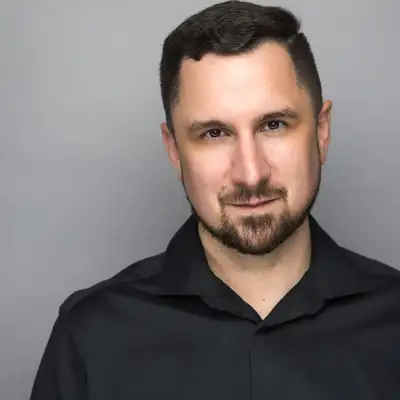
Ep. 383: Dr. David Rock - Good With Humans: The Science of Better Work Relationships
Welcome to Count Me In. I'm Adam Larson, today I'm excited to sit down with Dr David Rock, author, co founder, and CEO of the Neuro Leadership Institute. Doctor. Rock is a true innovator at the intersection of neuroscience and leadership, and he's here to share how understanding the brain can transform how we work, lead and connect.
Adam Larson:In this episode, we'll discuss the practical science behind leadership, including Doctor. Rock's widely used SCARF model. We'll also dive into how AI is changing professional life and why developing human core skills like communication, judgment, and motivation matters more than ever. So whether you're managing a team, building your business skills, or simply aiming to work better with people, you'll find real inspiration and actionable insights in this conversation. Let's get started.
Adam Larson:Well, David, I'm really excited to have you on the podcast today, and you've built a career at the intersection of neuroscience and leadership, which isn't exactly like a well worn path. Maybe you can walk me back to the beginning. What pulled you toward an understanding how people's brains actually work at work?
Dr. David Rock:Yeah, there were several things. I mean, hindsight, it's incredibly obvious and I couldn't believe no one was thinking about it because when you look at leadership, leadership, like if you're, you know, like a fly on the wall or an alien that came down to earth and you're watching leaders, right, with no context, what you'd see is they were busy thinking and then they were busy communicating to influence other people's thinking. Right? They were not chopping wood. They were not like flying airplanes.
Dr. David Rock:Right? They were thinking and communicating to influence other people's thinking. And the field that studies thinking and, you know, other people's thinking and influence and all that is neuroscience. So was like, fundamental act that is the core of the work, no one's thinking about studying that from the people who actually study it. The other insight I had there were sort of three insights.
Dr. David Rock:The second insight I had was I was working on another book and I was just looking at lots of books and lots of successful books. I was horrified to discover there's over a million books on leadership. Right? But it was terrifying to discover that they all basically said the same things. And you could do that.
Dr. David Rock:You could find that out yourself now with AI, like just with a good prompt, you'll have an existential crisis about the field of leadership. Or you'll have an existential insight, which is that they all seem to be talking about the same basic phenomena that biological and kind of hard to grasp. And everyone's sort of struggling to explain something that's biological. Because if you get a book on educational leadership in India and it says the same things about organizational leadership in small business in Africa, you're like, there's something happening here. Right?
Dr. David Rock:And so anyway, that was the second insight that all leadership research seems to basically point to a very small set of phenomena. And there's no more than maybe a dozen kind of key ideas. And I've got it down to three, basically. There's sort of three fundamental challenges of leadership that every leadership scholar, author, writer, thought leader, whatever, you know, like tries to address. Right?
Dr. David Rock:Three quirks of the brain. That was the second insight. The third insight was a very of in the moment one that I had around 2003, 2004. I was on faculty at NYU. I'd set up the coaching programs at NYU for business and personal coaching.
Dr. David Rock:And it a training program there. And I remember being in the classroom, about 70 people, terrible ventilation, poor lighting. But we were supposed to be there for like three days teaching coaching. And I was running this program a few times a year at the flying over from Australia where I'm from to do it. And anyway, long story short, I decided at one point in the program in like the second or third round to just include like two or three photocopies of some brain stuff seemed incredibly relevant.
Dr. David Rock:At the time it was from like The User's Guide to the Brain by John Racy, who's a big fan of. A couple of other books I'd been reading privately. And I'd been studying the brain privately literally since my teens, just like trying to understand it, reading everything, reading papers. Anyway, was like, I just want to innocently... I'm going to bring a few handouts to 70 people, photocopy them just like these insights and just kind of see what people think because they they seem really relevant to what we're teaching here.
Dr. David Rock:And it wasn't a leadership program director, it was a coaching program, but those have a lot of parallels. And what happened was the room woke up and started... And it was an afternoon. I remember the first time I did Despite the poor lighting and ventilation, the room just like started sparking. Like, oh, this explains this and this connects to this and this.
Dr. David Rock:Like this kind of explains so much. People were having what I now know as insights. Right? Connecting all these things together. Anyway, I went from like three or four handouts to like the next course, like a dozen handouts to the next course, like a few months later.
Dr. David Rock:You know, pages and pages and pages of handouts. In fact, it got so overwhelming in the end that I ended up putting a book together just so that I didn't have to photocopy the handouts called Coaching with the Brain in Mind. It's still out. It's a textbook. It's not a very big selling textbook or anything, but it's used in some schools and whatever.
Dr. David Rock:But it evolved from there really quickly from coaching to realizing that understanding the brain in leadership was just as or even more helpful. And what was sparking things was basically taking a very conceptual sort of intangible idea, which means it's hard to hold in your working memory, and making it more tangible. And when you make something more tangible, when you can literally picture what someone's saying, you can connect it to your other knowledge. Right? Mhmm.
Dr. David Rock:Taking really conceptual ideas, making them much more real in the real world, which means people's brains could hold them, which means they could connect them to all sorts of other things they couldn't connect to before. That principle turns out to be really, really useful for the human side of leadership. Right? You're making soft skills more tangible in the real world. People can process them, understand them, consider them, reflect on them.
Dr. David Rock:So those are sort of the three insights that I had. And I started slowly just... It literally went from three or four handouts to like kind of a book to kind of in 2007, just to running a conference, the world's first year leadership summit, writing a journal, starting a journal the next year to, you know, now some twenty years later, we've helped 20,000,000 people be more effective by understanding their brain across about two thirds of the Fortune one hundred and more. So it just... It started with these these sort of three insights around the same time that maybe there's something here.
Dr. David Rock:Maybe there's something. It turns out there was.
Adam Larson:That's really interesting because it's it's like you're looking at one thing that's, you know, people have, like, neuro neuroscience, right? And then you have leadership and they've always been two segregated things and thinking about putting them together and finding that interesting mix. And when you start putting people looking at neuroscience and business leaders in the same room, what does that look like when they start seeing, making those connections? Like, you see a lot of moments or do you see more confusion? Does it take a little bit for people to get into it?
Dr. David Rock:You know, don't have any regrets in life, but one of them is that I didn't screenshot the first time I Googled neuroleadership and what came up was, do you mean Euro leadership? There was literally no word on the internet at the time or no idea whatsoever for that. Now there's like a lot, but I kind of regret that. It was around the time that I ran the first summit, which was in Europe, in Northern Italy. We called it the first Neuroleadership Summit.
Dr. David Rock:Businessweek kind of wrote about it. They picked it up, somehow wrote about it and said that I coined the term neuroleadership, which I had. And it was the first time that we had got leadership experts and neuroscience people together. I ran this conference originally because I really wanted to get all the academics, all the scientists together in one room that I'd been working with to kind of synthesize and get them working together more, understanding each other's work, finding... You know, like I wanted to get all the scientists together that I was working with and seeing what happened.
Dr. David Rock:And what happened was they argued and it was really intense. It was not fun. Was like... Because the arguments are so fierce because the stakes are so low, as they say in academia. Here the stakes weren't that low, but there was very fierce arguments.
Dr. David Rock:But I sort of brought a leadership audience along, to be honest, at the time just to pay for getting the academics together. And what happened was the academics just argued and I kept steering the academics to talk to the business leaders and the leadership experts. Right? There were, you know, people from Oxford and from big big businesses, big banks, and all sorts of places that were, you know, building leadership programs. Right?
Dr. David Rock:And I was like, you why don't you go and talk to this person instead? And let me just... And and those were great conversations, and I watched that. And and and, you know, essentially just lots and lots of insights. You know, lots and lots of insights.
Dr. David Rock:And one of the things to bear in mind is raw neuroscience is like raw data coming out of a computer or the sound of a fax machine. Right? If you're just looking at raw neuroscience, it's very hard to find a signal that's relevant to the leadership world. But what we found as a research institute, and we've now published 60 research papers, we found is if you start with an organizational question and then look into the neuroscience literature, that you actually can find really, really helpful insights. But there is a lot of noise and you don't get it from one lab or one study.
Dr. David Rock:You might get it from 100 or 500 different studies. And you have to understand a bit of the neuroscience. And then you kind of put together a hypothesis and then you check it and you test it and all of this. So a lot of the work that we've done has been synthesizing that neuroscience research from an organizational perspective to answer questions like, you know, can we build a neuroscience of what makes learning stick or of what really reduces bias or of what really motivates people? Like if we start with the neuroscience, can we take an organizational question and really add some value to it?
Dr. David Rock:And you know, we've... Those 60 papers were like the pinnacle of probably a thousand research projects, right, that we did over, you know, like literally over twenty years now. So thousand sounds like a lot, but that's, you know, in 50 a year for twenty years, we easily did 50 research projects of some sort, like experiments and questions and trying this and that. We've got a reasonably big research team. So what we found is there was amazing insight, but it's not obvious.
Dr. David Rock:And if you just go up and talk to a neuroscientist and say, Hey, is your research relevant to my company? They're probably going to say, No, not really. But this is interesting and this is interesting and this is... So it's a bit of work to actually find the signal and, you know, just consider that there's a lot more times we tried to find one and didn't find one than the 60 that we did. So it's not that easy, but the signals that you do find end up being really, really valuable.
Dr. David Rock:Like we've developed a framework for how you design learning that's been used by thousands of companies now to improve the learning experience. That's... Anyway, it's a long answer to about 10 different questions that you didn't ask.
Adam Larson:No. But I appreciate that insight because I think some people think, you know, you coin a term and then you just make up all this stuff and it's just all this made up things, but there's actual, like, study and science behind it as opposed to just a... You're just the guy who coined the term and that doesn't mean anything, but, like, there's actually some some meat behind it.
Dr. David Rock:There's a lot behind it. I was I was seeing a meme on the weekend as we all see too many memes on the weekend, and it was something about, like, you know, Prince played... I'm gonna get the numbers wrong, but, you know, Prince wrote, like, 500 songs. You know, three or four. You know?
Dr. David Rock:Picasso did 10,000 pictures, you know, for... You know? Like, we we see the success and we go, oh, wow. This guy created the Scarf model. That's, like, one of the most, influential models in leadership in decades.
Dr. David Rock:It's amazing. But that was one of 60 models, which was one of a thousand projects. Eventually you get lucky. Luck doesn't come from getting something right the first go, it comes from doing something a thousand times and not giving up and eventually you find something good or you don't.
Adam Larson:Yeah. Yeah. I had a music theory teacher who was teaching voice training and he said, well, the more you practice, the luckier you get. It's not that you're better at it, just get you just get luckier at guessing the right note, which I thought was an interesting concept for somebody to say. But I wanna talk about your SCARF model, because maybe this is the first time somebody's hearing that, there's first time they've heard your name because, accounting and finance professionals may not have looked at neuro leadership or anything like that before.
Adam Larson:And so I wanna kind of introduce them to them and maybe you could start by introducing the model at its core so we can kinda understand what... Where we're coming
Dr. David Rock:from here. Yeah. Look, I I came from an itch, like a mental itch. Right? And a lot of my works come from a mental itch.
Dr. David Rock:It's like a pattern I knew was there that I just wouldn't give up until I found it. This itch took quite a few years to find. I got two thirds or like I got four fifths of the way there in about three years. But it took six years almost six years, five years really to get all the way there, to get that last kind of 20% right. And it came from seeing new kinds of studies coming out about the brain in the early 2000s.
Dr. David Rock:And they were basically studies describing what happens in the brains of multiple people when they interact in various ways. So when they give or receive feedback when they understand or don't understand each other, act in ways that people feel connected or disconnected or all sorts of things. Right? So there were all these different paradigms and there was a new field of neuroscience coming out called social cognitive affective neuroscience that existed basically because technology had caught up and helped us be able to study brains interacting. People have always wanted to study brains interacting.
Dr. David Rock:It just wasn't possible with the computing power it took and the machinery it took. And suddenly it was, right? So this happened and I kept seeing all these studies coming out for years like, you know, being treated fairly in an exchange. Like you're buying a business and you feel like you got a fair price and the seller felt like they got a fair price. Like both of those people...
Dr. David Rock:And it's possible that both people can feel treated fairly, right, in an exchange. Both of those people, their brain had a reward response that was very, very similar to receiving money or eating good chocolate when you like chocolate. Controlling for everything else, it would be fairness reaction itself. The fairness response It was an independent variable that was very, very intrinsically rewarding. But the opposite was also true being treated unfairly in an exercise.
Dr. David Rock:It didn't matter if it was a splitting a pot of $10 or anything, but even a basic sense of unfairness activated the pain response, very similar to physical pain in the brain, and also activated a disgust network, a network for detecting internal visceral states like this food's disgusting, this kind of thing. So it's called the insular cortex. So all these studies that was just one example. They were studying like fairness. They were also studying people feeling like they're part of a group or left out of a group they should be in.
Dr. David Rock:Right? You know, think of inclusion exclusion. They were studying changes in status. They were basically studying all the social kind of experiences we have. And there were now hundreds of studies coming out by about 2003, 2004.
Dr. David Rock:I was tracking all this going, there's something here, there's something here. And eventually it came together and I realized that there were five, there were just five things that the brain was basically tracking. That we could summarize all these different brain processes into five mechanisms that were being tracked. And there's now, and we wrote a paper on this in 2008. We did an update in 2012.
Dr. David Rock:2025 last year, we did another update. The science continues to support and in fact really further support these five categories and each one in particular. But anyway, the first category is status. And basically your brain really tracks status like your life depends on it because it actually correlates to length of life, it turns out. Higher status in a community does give you longer life, more well-being.
Dr. David Rock:It's called sociometric, not socioeconomic status, although that obviously plays out too. Anyway, status is something we really protect when someone says, can I give you some feedback? You get a big status reaction. Your brain starts on fire. Your stomach gets bubbly.
Dr. David Rock:It's intense because a status attack feels like our life could be threatened. So we protect our status when you say to someone, That was a stupid financial report you put together. You just say it as a joke but you don't really mean it. People are going be really, really upset. Anyway, so status is something we project.
Dr. David Rock:That's the S in the model. Then the C is for certainty, right, is your ability to predict what's happening. The A is for autonomy or feeling of control or having choice. Right? And the brain's always monitoring that.
Dr. David Rock:The R is for relatedness, being on the same team. Are we on the same team or an opposing team? And then the F is for fairness. Right? So status, certainty, autonomy, relatedness, fairness.
Dr. David Rock:The science of it is that each one of these is something the brain tracks and has a strong threat, like a strong stress reaction when it goes down, but a nice reward, not as strong as a threat, but a nice reward when it goes up. Right? So status down is like feeling stupider than someone. Just like meeting someone much smarter than you and you just feel worse. Status up is feeling smarter than other people.
Dr. David Rock:Right? And the up is not as powerful as the down. So anyway, what we're doing in life is we're managing to avoid threats. We're built to minimize pain and these things in the negative are very similar to pain. So we're built to minimize looking bad, minimize being uncertain, minimize other people controlling us, minimize working with people that we don't trust or like and minimize unfair situations.
Dr. David Rock:So we're doing all that, and we're also trying to maximize the positive. So this is driving all of human behavior. Excuse me. Book's called Good With Humans, but the subtitle is The Neuroscience of What Makes Us Tick and What Ticks Us Off. Maybe I'll say that again in case you want to edit out the book just yet.
Dr. David Rock:Scarf, I was doing some writing and I realized it was like the neuroscience of what makes us tick and what ticks us off, Literally. Like it's the five things that kind of motivate us and the five things that upset us is what the model is. And there's so many implications to it. You know, it's what motivates you. Some people are very certainty driven.
Dr. David Rock:They really like structure. Other people, that's hell. They might be autonomy people. Right? For some people, really connecting with others might be really motivating.
Dr. David Rock:That's relate... They have relatedness driven. For other people who are status driven. That's their version of hell. Right?
Dr. David Rock:So it's it's... You know, we have we have different drivers. Yeah. And a lot of problems in organizations come from... And partnerships and relationships and friendships come from those dynamics interacting poorly.
Dr. David Rock:But it's also like a filter for just having better interactions, turning down threats, turning up rewards. So that's the model. It's a way of... It's just like a way of seeing around corners around what humans really do and why humans do what they do and really understanding the mechanisms that are, you know, literally what making us tick and ticking us off. Yeah.
Adam Larson:Yeah. I I really like that because it it reminds me of what people a lot of say at times is with love and hate. Like, love hate is just another form of love, just a really intense form of love on the opposite side, you know, where like the tick off and the things that drive us there, they're almost very connected in a lot of ways. And I'm sure our audience can definitely, you know, connect with that as well. You know, you mentioned, you mentioned your book that, you know, you just, that's coming out here probably about a week after a few days after this podcast airs, you know, Good With Humans, you know, I, you know, you tell it in a, in a, you did something similar.
Adam Larson:You had your other book, Your Brain at Work, which I absolutely loved. And I remember seeing you talk for the first time and I had that moment like that connects us with this. And I, it really connected for me, which I'm sure other people who've seen, who have heard you talk have done the same. But you chose to kind of do this narrative style again, where you're telling the story from the same type of family. Can you maybe tell us, like, what was it like, you know, what is what is it like to tell that story in that way as opposed to, a straightforward how to?
Adam Larson:And how does that kind of get us as neurologically as we're reading those things?
Dr. David Rock:Well, firstly, the brain's kind of natural language is thinking in terms of people interacting. Right? It's like storytelling. Right? Storytelling is not about cardboard boxes.
Dr. David Rock:It's usually about people. And it turns out that when you could picture characters interacting in time and space, you're activating a kind of working memory that's almost like effortless. It's just so easy. And that's why we watch television and read books and watch movies. Kind of the brain's natural language.
Dr. David Rock:It's like relaxing. It's the opposite of effort. Right? And you know, I was trying to describe something really complicated. In fact, the brain is the most complicated thing in the known universe.
Dr. David Rock:Yeah. Maybe short of quantum physics. But the... Was trying to work out a simple way to describe it. And I realized, like, seeing characters mess up and then seeing them get it right.
Dr. David Rock:It's sort of a sandwich with the science in the middle. Like people would be able to have that moment from seeing the difference, right, and how the science makes the difference. And so I did that in Your Brain at Work just as an experiment. And it took four years to work out the right structure. I actually started and finished the book and threw it out four times before I got this structure.
Dr. David Rock:And so one of the reasons I used this structure is I didn't want to take four years again to come up with something good. And also I realized it really worked. And it would be kinda interesting for folks who had read the first book to kind of go, oh, I wonder where these characters are to kind of get a little bit of a of a, you know, pleasant reward response from coming back. So the new book comes, like, joins the old... The other characters about ten years later.
Dr. David Rock:And follows them, but this time over a week rather than a day, and goes through Scarf at different levels of complexity. So slightly different in structure, but still over a week. Part one is about Scarf and you and just understanding the model, Mhmm. Kind of introducing all the science, but also working out which one drives you. Part two is Scarf and kinda everyday interactions.
Dr. David Rock:Like, how do you just have more positive interactions overall? How do you, you know, follow-up with people, set objectives, kind of interact day to day? And then part three is the hard stuff. Right? So you've got a teenage son, how do you motivate them, right?
Dr. David Rock:Or daughter. Right? How do you motivate people who can't... We can't seem to motivate? How do you give feedback so it actually changes people?
Dr. David Rock:How do you solve tough problems together that just people are really stuck on? So part three is kind of the hardest stuff. And then part four lifts up and says, well, what about scarf in teams and organizations and in relationships and community? And sort of broadens out. But with following a story all the way through, it's really hard to write.
Dr. David Rock:There's so many layers to be honest, but at least it didn't take four years to get this structure. It's a tricky structure to write. The hardest thing I've done in years is just finding the mental space to focus really well at the level you need to focus. And anyone who laughs and says, I just get AI to write a book, isn't like understanding the writing process. There's about 4,000,000 books a year now self published coming out, up from like one or 2,000,000 a few years ago.
Dr. David Rock:There's a huge, huge... And and almost none of them sell anything because they're just not good. But anyway, so I digress. The... It's an interesting journey to write it that way.
Dr. David Rock:I'm glad I didn't take four years, and hopefully people who read it will get the kind of experience I was hoping for, which is that moment of seeing the before and after and seeing the difference that the research makes.
Adam Larson:Yeah. I like that. And I mean, I look forward to seeing that connection between like, your brain at work in this new book. I think it'll be really exciting to kinda see that from somebody who has read the first one. You know?
Adam Larson:And I am thinking about AI, you know, I... You you mentioned AI, and and I feel like it's becoming a real differentiator because some people are using it as a tool. Some people are really going in there. Other people are letting it do a lot of mundane things for them. And I I...
Adam Larson:What is... Like, from a neuro... Neuroscience, neuro leadership, like, perspective, what do you think it's really doing to our professionals, you know, if we're not doing it correctly,
Dr. David Rock:I guess? We got two hours? Because I can talk about this for about two hours. I've been researching this I've been researching this a lot. Yeah.
Dr. David Rock:We we have a very, very developed point of view now. As of six months ago, it started to really become clear. We were we were sort of in the dark for a year and a half and then just trying to understand and keep up and see what was happening. And now there's so many studies coming out every month really understanding what's going on in the brain and in the psychology of people using this. And we're absolutely clear that it's a disaster in slow motion for most professionals.
Dr. David Rock:And let me summarize it with a piece that just came out in Fast Company that people can look up and find. It's called AI is Fast Food for Your Brain.
Adam Larson:Okay.
Dr. David Rock:That's the cliff and hoe. AI is fast food for your brain. Would you eat fast food all day every day just because it's convenient? Probably not, right? No.
Dr. David Rock:Because you know it's not really good for... Well, you're doing that to your brain, and in fact, this is probably doing worse things than eating fast food all day would do to you. And the reason that it's happening and the reason that kind of people are really massively overusing it, there's sort of three reasons. A bit of a perfect storm. The first is that brain loves, like it's stoked, psyched to do something that's important to you with much less effort.
Dr. David Rock:Like it's one of the most exciting things where you need to get from A to B and you work out how to get there in one minute instead of one hour. You're like, wow, I'm happy. Right? So it's delicious. Saving physical effort and mental effort activates the same reward network.
Dr. David Rock:And it's a byproduct of our evolutionary history. But essentially, we're very excited when we can save time. So you look at building a deck, you know, reviewing a proposal, reading people's emails, whatever, as you go, oh, wow. I can do this so much faster. Right?
Dr. David Rock:That's the first problem. That's the first trap. The second thing is companies telling their people to use it as much as possible, as widely as possible. Hey, we spent all this money on it. We want you using this.
Dr. David Rock:It's all about efficiency. We want you being much more productive, much more efficient. Please use this. Terrible message. Companies have to stop that.
Dr. David Rock:And the third is a very insidious thing called the default effect. And the default effect is basically the gold standard in behavioral science for getting people to do what you want. So if you're a country and you want people to donate their organs, right, you just make that automatic when they apply for a driver's license unless they opt out. And what you get is ninety percent of people have just donated their organs, right, across time, right? But if you feel like, no, no, that's not the right thing.
Dr. David Rock:We think people should choose to donate their organs, right? Then the automatic default is that they're out and they have to opt in. Right? They have to tick a box to be in. Now what you get is ten percent of people donating their organs.
Dr. David Rock:Right? Now do people wanna donate or not donate? It turns out that's not the question. The question is when you scale decisions like this, what you make the default really matters and has an enormous impact. And what the...
Dr. David Rock:What all the technology companies through the the LLMs did around 2024 is they made AI be the default. And in fact, I took a screenshot the other day. It was hilarious. I'm working on a visual for the three... For this perfect storm.
Dr. David Rock:It's kind of three things. Right? The default's a third. I'm not using it how you do it. But I'm using it and I'm trying to like write and think about it and up comes AI saying, would you like help with that?
Dr. David Rock:I have to turn that off. I have to put in effort to not use AI. Mhmm. Right? It's much less effort to just go with it.
Dr. David Rock:So they hacked the default effect. Right? So you've got three problems. Your brain loves not thinking. Your company is saying use it a lot.
Dr. David Rock:And they've hacked the default effect. So people are massively overusing it. Now you might say, who cares? Why is that a problem? Well, it turns out to be a very big problem on lots of levels.
Dr. David Rock:And we're writing about this prolifically. But the biggest one, the scariest one is, it's a little bit subtle, but it's really important to understand. Any kind of thinking task that you radically like minimize, like, you know, from an hour to a minute, from a day to five minutes, any kind of task that you really, really minimize, it's practically impossible to go back and do it again without that technology. And I'll explain why.
Adam Larson:Okay.
Dr. David Rock:Let's say, you know, you normally take half a day to look over people's financial reports and, you know, really be thorough and make sure you've ticked every box and, managed all the details and producing a report maybe of what you think they should do with their tax going forward. Right? There's a lot of accountants listening to this. So maybe you're used to taking half a day on that for a client and you charge them well for it. And you realize that you could build an agent to do this.
Dr. David Rock:And you're kind of convinced by the agent that it's perfectly legitimate and perfectly accurate. Right? Well, it turns out if all the data in your system is 100% accurate, which it almost never is, it's probably close to accurate. But it's going miss subtlety, it's going miss context, it's going to miss the fact that there are actually mistakes and it's not going to be as good as you. Plus the person on the receiving end of this is going to really clearly and quickly see it was AI produced and be really insulted, not just by their bill, but by you.
Dr. David Rock:Like, you obviously didn't care. But the real problem is this. You have just taken a half day experience and turned it into a couple of minutes. And you can't look at the output of the half day and you're not qualified to judge if it's right or not because you haven't gone through all the steps it has. So this thing about human in the loop is a lie.
Dr. David Rock:There's no such thing as human in the loop. You're either in the lead and you're doing the work and AI is helping you or you're out of the loop and you're guessing. And here's the real problem. What happens is if you try to go back to the half day and you've done this for a few weeks in a few minutes, every few minutes around the time you would have finished, your brain goes, oh my god, why are you wasting energy? Why are you wasting energy?
Dr. David Rock:Why are wasting? You could be finished by now. You could be finished by now. Right? And so you get this intrusive thought because your brain is built deep in your operating system to minimize effort, maximize, you know, return.
Dr. David Rock:So every few minutes when you're trying to focus, your brain is saying, stop this, stop this, stop this. You're wasting valuable resources. And so you just literally can't focus. It's the same as experiencing pain. Now replace, and here's where it gets scary, replace reviewing someone's P and L and balance sheet with just exhibiting judgment on anything.
Dr. David Rock:And what happens is if you normally sit on a question, right? Spend some time sitting on a question like, you know, how should this person's whole financial portfolio shift, you know, how should this person like deal with this conflict? How should I deal with this conflict? Right? If you normally spend like a whole bunch of time reflecting and you start using AI to solve it for you, again, you can't go back.
Dr. David Rock:So one of the top two capabilities people are losing as they're using more and more AI is judgment itself. Now you told me that's not a problem. Right? That's a huge problem. It's a pretty huge problem.
Dr. David Rock:Like it's one thing to lose the ability to do complex math without a calculator. A calculator is always there. Right? It's another thing to say, well, I'm losing the skill to do a proper P and L myself. You could argue that not knowing how to read a map is okay because Google Maps are always there.
Dr. David Rock:Putting aside the Armageddon argument, it's probably fine that we lose some skills. But to actually lose judgment is really problematic. And one reason it's problematic is a study that was just published looking at people using AI or not using AI for a medium level task. And what they found is that people using AI, their confidence skyrockets. So their confidence in their output skyrockets while their accuracy plummets.
Dr. David Rock:In other words, they're much more confident while being much more wrong and they've lost judgment. Right? And they think that they can judge the output of the AI and they totally can't. So a, everyone's massively overusing it. We know why.
Dr. David Rock:And b, it actually is a real problem. And it's a real problem that can be addressed, but you have to undo one of those three perfect storms. Your company has to stop saying use this all the time and put some real guardrails and principles in. And two, individuals have to learn to use it to make their brain sharper, not to use their brain less. And of course there's some tasks it's fine to offload, some very basic things great.
Dr. David Rock:But like, you know, I was at a very famous company in Europe last week and there was no AI used anywhere. Thousands of employees, no AI is used anywhere. These guys build some high-tech things. But there was AI mowing the lawn. Like there was an AI robot mowing the lawn.
Dr. David Rock:Amazing. Right? But they didn't wanna make their people less sharp. Right? But they they they use that.
Dr. David Rock:So so use AI to mow the lawn if that's not central to your business, but don't use it for, like, developing ideas, building strategy, communicating with customers, communicating with each other, building proposals. You know, all of that is now a bit of a disaster. We're we're filled with work slot that's driving everyone crazy.
Adam Larson:Well, I'm sure we've all seen the, like, the the advertisements on, like, on in... Like, on the social media platform. And every single one looks exactly the same, just with different pictures and different wording. But yet it looks so similar because it was all created by the same AI. And and it's like people aren't trying to differentiate or show themselves different in the market anymore.
Adam Larson:It's And getting more confusing. From a business standpoint, it can definitely be concerning from your employees because you want them to be able to answer those big questions. You want them to be able to think better and only use it as a tool. How do you kind of bridge that gap to say, okay, no, still use your judgment, but yes, this is a tool that we kind of have to use. And sometimes we have to use it because you wanna stay on top of things and stay above what's happening in your in your industry.
Dr. David Rock:Yeah. Well, the the other piece that I wrote recently that people can find online easily is called... This one was in, excuse me, in Fortune magazine. It was called From AI FOMO to AI Hangover.
Adam Larson:Okay.
Dr. David Rock:And and and companies were driven by this huge FOMO that everyone else was gonna save all this money and do faster work, better work. Turned out not to be true, but it drove this huge investment, the biggest investment in corporate history, you know, driven by this FOMO of people feeling like other companies were gonna get the jump on them and be ahead of them on AI. And you know, what we find is that of course, there are things that AI is good for. Gen AI is amazing for finding patterns in a lot of data. It's amazing for solving really complex problems.
Dr. David Rock:It has some incredible things. But what you've got to do is by function, the organization has to think this through deeply and think by function, here's the guardrails. And it's really like red, orange, green. Red is customer communication. You're not allowed to send a communication to a customer that's AI generated.
Dr. David Rock:Hard You know? Do that three times, you're fired. You know? It's in the category of sending an email full of typos, you know? Yeah.
Dr. David Rock:Yeah. Right? It's the same thing. People feel like you don't respect them. So what are the red?
Dr. David Rock:Like you're just not allowed to do with AI? What's the orange? Like maybe, but do it thoughtfully. And then what's the green? Right?
Dr. David Rock:What things should you use AI? But you've got to do it by function because what that looks like for a senior accountant dealing with, you know, $100,000,000 accounts with major corporations, that's a different set of things than, you know, a junior accountant who's just processing data and stuff like this. You've to by function and maybe by level, the organization has to say, look, this is red, orange, green for us. And we're doing some of that work in my consulting practice. We're doing some of that work.
Dr. David Rock:We're helping companies develop these principles, practices. And we've also found there are some habits at the core of what people do who are really good at this. And it turns out there are some codifiable habits. Essentially, a lot of it's about, well, firstly, them doing the thinking and the AI is making them think better. So it's called human at the lead.
Dr. David Rock:And then we think of clarity, flexibility, vigilance. Clarity about purpose and process. Flexibility is a really use the AI to think much more widely, deeply. And then vigilance because 40% is wrong, but 100% is average. So 100% of these things are literally the same as everyone else all around the world.
Dr. David Rock:So there's a lot in there, but essentially it is a real problem when you understand the cognitive science. It becomes a much bigger problem. You can kind of see what's coming.
Adam Larson:Yeah. Definitely. And we could probably spend another three, four hours just talking about that subject alone. But, you know, I don't wanna I don't wanna lose sight of, you know, just as we kind of wrap up the conversation, you know, your book Good With Humans, your book Good Good With Humans, which, you know, it's interesting because I feel like we all... You know, when you're in the business world, sometimes it's easy to get caught up in corporate structure and corporate this, corporate that, and you forget that there's just another human sitting across from you, whether that's your boss who is just another human, whether they have a title above you or below you, they're just another human working with you.
Adam Larson:And maybe we could talk just a little bit. What does that mean to be better, to do good with humans, especially in a in a work setting? Because I feel like we want to work better with each other, but yet so many things get in the way. And I'm sure, like, when you were describing things earlier with the SCARF model, everybody connected with that because it it affects all of us with how we interact with people and stuff.
Dr. David Rock:I mean, I think in this age, you're... The the quality of your relationships with real humans is going to just be even more important and it's going to increasingly get important because the trust factor, the relationship factor, the time we're spending not talking to humans, not interacting with humans makes the time we do spend with humans all that more valuable and important. So I think human skills are going to become even more important is the keynote. And scuff doesn't solve all the problems, but it gives you a rubric to plan better interactions, to fix them in real time when they go wrong and to clean them up after the fact. And it's just been a really helpful tool for myself and others to just understand how to be better at humans.
Dr. David Rock:But good with humans is kind of where I landed. But it really does help you just kind of get to the bottom of what's going on. And I think rational people will appreciate kind of the architecture of having this framework. What we find is when we're doing the work to develop leaders, there's all these different soft skills to develop. There's listening skills, there's motivating skills, there's engagement, there's psychological safety, inclusion, belonging, conflict.
Dr. David Rock:There's all these different things that are supposedly different domains. We find that all of them can be explained through a scarf lens. And so that as you understand scarf, you kind of more broadly become better at all the things to do with humans because it does appear to be the neuroscience of what motivates us and what upsets us. So if you can get your head around that in just five categories, you're gonna just be better. A better manager, better leader, better team member, better parent, better partner.
Dr. David Rock:Because you'll interact better and you'll have fewer misunderstandings as well. So that's why I think it's a worthwhile endeavor. And this is only gonna get more and more important. Mhmm.
Adam Larson:Definitely. Well, I encourage everybody to check out the link to the book and some articles that, David has mentioned during at... During our conversation here. I'll put all the links in the show notes, and go ahead and check out David's new book, Good With Humans. And, David, thank you so much for coming on the podcast today.
Adam Larson:It's been wonderful.
Dr. David Rock:Thanks, Adam. Thanks for... It's been a pleasure. Thanks for your interest.
Announcer:This has been Count Me In, IMA's podcast providing you with the latest perspectives of thought leaders from the accounting and finance profession.
Announcer:If you like what you heard and you'd like to be counted in for more relevant accounting and finance education, visit IMA's website at www.imanet.org.