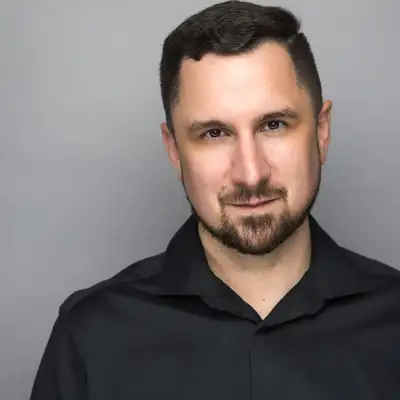
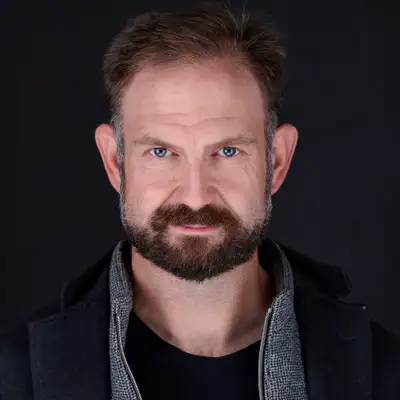
Ep. 382: Matt Symes - A Better Way to Lead Your Team Through Change
Welcome back to Count Me In. I'm Adam Larson, and today I'm joined by Matt Symes, a transformation strategist, AI first architect, and the founder of Leadership for a no nonsense conversation about what it really takes to lead and grow in a world where change is the only constant. Matt shares his journey from his family's entrepreneurial roots through academia and into building and scaling businesses, offering hard earned lessons on why we think the systems we rely on need to evolve when we want to keep up. We get into why so many organizations stall out during growth, how most teams are misusing AI, why leaders should focus on blaming how, not who, and how to create a culture where problems become fuel for progress. If you're looking for real strategies, not just buzzwords, to help drive impact and stay ahead of a rapidly changing business environment, this episode is for you.
Adam Larson:Let's dive in. Well, Matt, very excited to have you on the podcast. Thank you so much for coming on. And, you know, we're gonna be talking a little bit today about, you know, transformation work. I wanted to kind of start by just maybe going a little bit over your career and kind of what landed you, kind of what got you to this place up until now.
Matt Symes:Yeah, that's a potentially long winded question, isn't it, Adam? Yeah. Yeah. I'll keep it brief. I'm the great grandson of a subsistence farmer, the grandson of a first generation entrepreneur or roofer.
Matt Symes:I spent my eighteenth and nineteenth summers on the roof. My dad was the first to graduate from university, I was the second. My dad happened to stumble into a place where he learned modern management systems and brought it back to a multi billion dollar organization. He retired early from that organization and we started a little company called Simplicity Designs. My trajectory was not always in business.
Matt Symes:I took the academic route. Sometimes I joke that I'm a recovering academic. And I wasn't really sure what academia was going to produce for me long term, but I now see it as probably the most important ten years of my life in terms of being able to work and live in the world of transformation and in constant change, constant evolution. And I don't say that lightly because if you're going to live in this modern world where OpenAI has a new release every three days and we're dancing with whatever we're calling it now: artificial general intelligence, artificial super intelligence, whatever's going on. However, we're branding this intelligence that we're working with, you have to be able to really change yourself.
Matt Symes:So, we spent a decade changing companies and building other people castles. We in the last five years have started to partner with organizations and take significant but patient minority positions in companies that we believe have tremendous opportunity to make this world a bit better.
Adam Larson:That's that's a very truncated version of that story. I like that. I... One thing that that kinda stuck out to me is you said you learned constant change and difference in in the academic world. And it's funny because lot a of people see the academic world as kind of stagnant.
Adam Larson:So can we talk a little bit more about that real quick?
Matt Symes:Yeah. I think I think... Look. The ivory tower is stagnant and we still have far too many academics that don't want to admit AI exists. We have far too many academics that are interested in their topic of study more than they're interested in educating the minds of the future.
Matt Symes:I was fortunate enough to have a number of unbelievable mentors and professors who really understood that developing the mind is an important thing. And I think if you're dancing with AI, part of being able to work with AI well and integrate it into your life, integrate it into your business, integrate it into your workflows to create value is to actually understand how do you think. It's a thing called metacognition, right? So thinking about how you think. And if you aren't able to hold two opposing ideas without combusting, and we're living in an increasingly polarized world.
Matt Symes:We're living in a world where we don't embrace discomfort, where we don't embrace productive struggle, all those things. And all those things are required in order to change your mind and then change your habits and change your life. And at the base of transformation is your ability to realize that the thinking that got you here probably isn't gonna get you there. And everything that served you well to get to the point where you are in this life is probably none of what you need to get to the next level. So look, do I think that academia itself is a bastion and an example of rapid change?
Matt Symes:No. Do I think some disciplines allow you to explore thinking in the abstract, to wrestle with different ideas, to understand how to come to a conclusion that isn't certain but is a conclusion and it's, you know, it's sort of firm opinions held lightly. This is my opinion until better evidence surfaces and then I will change my opinion.
Adam Larson:Yeah. I like that. I remember when I would always raise my hand and say, Well, isn't that just a theory? Sometimes professors would get mad at me. I'm like, well, it's just a theory right now because couldn't it in the future?
Adam Larson:And sometimes they just didn't wanna have that discussion at the time.
Matt Symes:Yeah. No, I think some people get caught in absolutes. Look, was fortunate enough to study history and study the longue duree. And so when you study history, you by nature can't have experienced it. So you have to think in the abstract, number one.
Matt Symes:Number two, you have to deal with competing understandings of what happened. When you think about it, you've got a bunch of primary sources, you have a bunch of secondary sources, there are interpretations of it. Winston And Churchill is famous for saying, Democracy is the worst form of governance except all others. And a mentor of mine along the pathway, Tim Cook, said, History is the worst form of inquiry except all others. And it's about being able to live in a world where there are facts and there are truths, but then there are interpretations of those.
Matt Symes:And largely those are what you're using to guide your identity, your understanding of value creation, all that stuff. And we're living in a world right now where that is being challenged and it is deeply uncomfortable for how we're biologically wired.
Adam Larson:It really is. And and I heard somebody say the other day that truth is only relative when it's... Truth is only... It only makes sense when it's based on a perspective. And so if your perspective is different, your truth might be different.
Adam Larson:So like it's an interesting thing because people say, oh, there's absolute truths. I'm like, well, is there? And then you can argue... I mean, we could argue those things till you're blue in the face. But I wanna bring our conversation kind of back to like businesses and organizations.
Adam Larson:Yeah. You know, because these are all things that a lot of times founders and people who are running organizations, they don't have those kind of that... They they have that mindset to a point, but they might not they may not be able to, like, to go with that flow. And sometimes when you're in a founding... If you're a founder led business and you start to strain under your growth, what are those first cracks that you start to notice when you're working with those organizations?
Matt Symes:Yeah. I mean, so most of us aren't Steve Jobs, and we're not going to end up with sort of this... His famous reality distortion field. We're not going to bend the world to our arc. And so you got to see the world as it is, not as you wished it was.
Matt Symes:And so the idea is not getting to your truth. Look, that's fine. Save that for some coffee or some bar. The reality is that you live in a world that is changing, a market that is changing, and you deliver value to that market. And so if you're a founder, the most important thing for you is not what product or service are you delivering?
Matt Symes:And my grandfather was a technician who started a technical company. He's a roofer, started a roofing company. And so he would have said, I sell roofs. People who understand what problem do you solve for who, what's the value of solving it, would have probably positioned that differently. They would have said, I'm actually protecting the most important investment that most people make in their lifetimes.
Matt Symes:That's problem you're solving. Look, you can buy a bike at Walmart and you can buy a bike at Mike's bike shop. You can buy the exact same bike for dramatically different prices. And it's not that Mike's bike shop is ripping you off. It's that Walmart solves a different problem than Mike's bike shop does.
Matt Symes:Walmart solves the problem of the cheapest bike. You go there and some 16 year old with pimples tells you Aisle 21, it's actually an Aisle 16. You have to get it yourself. But when you go to Walmart, the problem you're solving is you're solving a problem, I know I'm going to get this for likely the cheapest price. That's why a shopper goes there.
Matt Symes:When you go to Mike's bike shop, you're going for an entirely different reason. You're going there to buy the bike that works best for you in this moment. So you're buying the knowledge I'm leaving with the right bike. And when you're building a company, you've really got to figure out what problem do I solve, for who, what's the value of solving it? And then you're going to ask the second question, which is, what am I terrible in the service of great?
Matt Symes:So in every vertical, there are seven to 15 attributes to serve a market, and you can't be good at all of them. If you decide to be good at all of them, you confuse the out of the market, because in every market there are sub markets. You've got to get those two in order to get pricing and positioning right. And once you answer that question, now we can make the engine better. How I find those customers, how I convert them, how I schedule and deliver to them, how I find the right people and the right tools to deliver to it.
Adam Larson:Mhmm. So it, you know, you can't be an expert in everything. So obviously you need to hire the right people to help you get to where you need to go. But a lot of times, sometimes the the growth can only happen with as much ways in, you know, in as much as a leader can sustain. So how do you kind of build yourself for growth, but yet still do as much as you like find that?
Adam Larson:But how do you find that balance? I guess is what I'm trying to ask.
Matt Symes:Yeah. There there's no perfect answer to this question. Go look at the founder stories. There are a couple realities. There are very few...
Matt Symes:Well, let's just... We hear the big stories, but let's just lay it out. There are less than 6% of businesses that ever do more than $1,000,000 in revenue. Less than 4% of those ever do more than 5,000,000 in revenue. That's 2.4 out of a thousand businesses.
Matt Symes:There's a reason why most businesses can't scale beyond those levels. And it's not that the market doesn't want the thing they do. In every vertical, you can find the big companies that have... So it's not true. And it's not that you're lacking resources.
Matt Symes:That's resources you can get. That's not a problem either. The real problem now becomes at different levels, it requires different levels of leadership looking at different things. So under a million bucks, you can basically, you go through this process where you sell to friends, family, and fools, and they buy your thing. And you say yes to too many things, but eventually you get to like, No, but I do this.
Matt Symes:So you generally get there, but even under 2,000,000, you can largely hold that together with a couple of good people
Adam Larson:and
Matt Symes:a willingness to kind of deal with the shrapnel or the stuff that doesn't fit neatly into a process. But you're still doing the work. You're still making the sales. You're still delivering the jobs. And you look at a lot of founders and they get caught somewhere below 1,800,000 or so.
Matt Symes:Yeah. Okay? And the reason for that is that between 1,800,000 and 5,000,000 is a place called the Badlands. And between 2.5 and 3,500,000 is usually the black hole. What happens is the whole game switches.
Matt Symes:Over about 2,000,000, you need all of the resources of a $5,000,000 firm, and you have none of them. So now it's the race through these badlands, but the game's different too. You're not making the sale, now you're leading the sales process. You're not doing the work, you're managing the scheduling process for gross margin per week. You're not basically in the interview, you're leading the leaders to hire their teams.
Matt Symes:So everything moves from tangible to abstract, and most leaders bluntly, the stats are really clear. They can't make that transition. And so because they don't make that transition, they're not ready to actually lead their business to the next level. And some people get into this and they hire people who've been really successful in like ten to one hundred million dollar firms. Well, those people are the wrong people too because they're used to leading systems.
Matt Symes:They're not used to building systems that they're gonna lead. So they drown. And it's fascinating to watch a really good product with a really good brand, and it just gets stalled.
Adam Larson:How do you kind of help leaders get over that stalling? Because it sounds like, you know, a lot of times it's the leader who has trouble letting go of control. It sounds like what's happening is they're not letting go of control, they're trying to keep their hands in everything still. Is that what's happening? Sometimes.
Adam Larson:Sometimes.
Matt Symes:Sometimes they don't even know what's happened to them. They think more is more and more is not more. More is very different. So they don't even know that they've entered a new business, and they're still running it like the old business. The first thing I do with the founders, I sit down and I'm like, Look, what's your best life?
Matt Symes:Explain to me your best life. Because the only success in this world is that you've actually articulated it and you're living it.
Adam Larson:Yeah.
Matt Symes:Choose it. And some people's best life is not actually to grow a $100,000,000 business. It's not actually a great life. Entrepreneurship in and of itself is... I'm functionally unemployable, is why I'm an entrepreneur.
Matt Symes:Right? So you look at these things and you go, Okay, what is your best life? Describe it to me. And what I'll do is work with a founder on what their best life... I once had a home builder say to me, Matt, I love landscaping.
Matt Symes:I would love to do that two days a week. And I'm like, well then, let's build the business so you can landscape two days a week. And he's like, well, I'm not very good at it. And I'm like, it doesn't matter. It's your business.
Matt Symes:That energizes you. You'll get better at it if you wanna do it. And we literally, his business was right around $67,000,000 at the time, and in home building, that's not that much because the supplies are a lot of money. Right? So, you know, it's like running a $506,100,000 dollar business.
Matt Symes:90% in and out. So he he said, okay. Well then, let's do that. So now he's running a $50,000,000 home building business and he landscapes two days a week. He picks his kids up from school five days a week.
Matt Symes:He's got an incredible life, but he articulated his best life and then he built the business to thrive around him. So that's the first step. What energizes you? You don't have to build a prison of doing shit you don't like all the time just because you founded the company.
Adam Larson:Yeah.
Matt Symes:Right? So that's step one. You can be the chair of the board and not the CEO. You can be deeply involved strategically and not have to execute the strategy. So these are things...
Matt Symes:Now, if you want to grow, great. Recognize the business can only grow as fast as you can stay ahead of its needs as a leader. James Clear, I think he's the one who said that entrepreneurship is just a personal growth experiment gone terribly wrong. You will get beaten with your flat sides over and over again until you address them. The culture is a representation of you.
Matt Symes:It is not someone else. It is you. And so if it isn't doing what you need it to do, the mirror is the first place to look.
Adam Larson:Man, I wonder how many founders could really use that advice today.
Matt Symes:Most won't listen to it. Yeah. Most won't slow down enough. But here's the test for the founders out there. If you're still solving the same damn problem six months from now, you're probably not at the root cause of the problem.
Matt Symes:And what I mean by that is the root cause is probably the way you're approaching the problem, not the problem itself.
Adam Larson:Yeah. So where does... You know, you talked a little a lot... When we first when we first started chatting, talked a lot about AI. Where does kinda AI fit in all of this?
Matt Symes:So AI is an accelerator. Okay? And and the common mistake that most organizations are making with AI is they're treating it as IT. It's not. Look, it is unbelievable how much value you can create and how fast you can create that value.
Matt Symes:Everybody's job has changed and every single business and the way they can create value has changed. It's just most of the world hasn't caught up. So we're about to go through two to three very chaotic years, regardless of what they do on the frontier. The models are already capable enough today to fundamentally alter every workflow that creates value in a business. So where does AI fit today?
Matt Symes:It's an accelerant, but unfortunately, most organizations are so noisy and they don't actually know how the value is created that it's actually just creating noise, not value. So some stats for you. 52% of businesses are actively using AI within the business. So people, the employees are using AI. 76% of leaders in those businesses believe it's getting value.
Matt Symes:35 of CEOs believe it's also creating results. Only 7% can count the cash. That's This is insane. So what it means is the cost center for 93% of businesses. It's not a creator of value.
Matt Symes:And the reason is really, really simple. AI is extremely bad at things you think it should be good at. Like rinse and repeat automation, take care of the paperwork, book my account. It's absolutely terrible at automation. It's really unbelievable at augmentation.
Matt Symes:So to make that really simple, if you understand how you create value in a workflow, you can do any one of those steps faster and better with AI. But what it can't do is the whole workflow because it doesn't have the context, it doesn't have the connection, it doesn't have any of that stuff. So if you back out and you go, What is AI? AI is an accelerant. If you're headed for the ditch, you're just going to get there faster, more violently, and it's going to hurt.
Matt Symes:But if you point it in the right direction, and you do these changes with your team, not to your team, and you dance with AI as more like a teammate, a team, a crew, not an IT deployment, a software deployment, you will totally change your ability to create value with it. So you step back and you go, Hey, look, businesses have one or two problems. Either I have too many sales or I don't have enough sales. So which one is it? So if I have too many sales, probably have an ops problem.
Matt Symes:I need to deliver faster. Let's point AI there. And we'll go unpack a workflow. If I don't have enough sales, then let's point AI there. So the first mistake is that people are pointing AI everywhere instead of at the constraint in the organization.
Matt Symes:So let's go find the constraint. Now say you need to get more leads. Classic sales process. Suspect, qualified opportunity. Proposal, yes, no.
Matt Symes:Suspect, I know you, you don't know me. Prospect, we both know each other. Qualified opportunity, we both know each other, we both know what it might do. Proposal, we've written it down. Yes, no is underneath that.
Matt Symes:So looking through that and you go, actually the problem is I don't have enough leads. Okay? So let's use AI at the tier three for how we go from 100 suspects to 1,000 suspects. Now AI starts to become a tool that feeds the organization. And I work with the people who get suspects and go, Okay, how how are we gonna use AI to get more suspects?
Matt Symes:I did another podcast where I walked through how we do exactly that with Perplexity Computer. So it doesn't have to be Perplexity Computer. Can be any way that you accelerate that workflow. But I hope what I was clear on there is that the first thing is where's the business going? Where's the business constraint?
Matt Symes:Where's the workflow constraint? Now let's work with the humans to integrate AI, to bust open the constraint so I get workflow value, then I get business value.
Adam Larson:Yeah. So I think that's a great example of how to do that. Is there like a mindset shift that needs to happen in order to get to that first step? Because I feel like sometimes businesses are like, well, their AI is here, but I don't know where to start. Or it's just another tool on the pile, but they're not actually getting you value.
Adam Larson:What's that mindset shift that has to happen to get to that first step?
Matt Symes:Yeah. So the first step is that great organizations blame how, not who. Okay? If they're not getting the results in an area, they blame the process, not the person running it. And in most knowledge organizations, it's real...
Matt Symes:Look, in most knowledge organizations, we basically set outcomes. We hire good people and beatings will continue until morale improves. We just say like, get the outcomes. Well, great organizations actually know how the sausage is made. So the first step is knowing where you're taking the business and where the constraint is.
Matt Symes:That's called strategy. Most people think strategy is like some kumbaya event on a weekend where we all feel good about what we committed to, but we've all over committed and we're about to under deliver. Good strategy is saying, What am I going be in ten years? What am I going to be in a year? As a result of that, what's the next ninety days look like?
Matt Symes:And what workflow on the business are we working on to change form fitter function? And then give it the time and resources to go do it. So the first shift is a strategic one. Do you do strategy? Organizations don't have a strategic plan, they have a strategic process.
Matt Symes:Two days a quarter, half a day a month, one hour a week, they connect the big things to the small things. Organizations normally don't die of starvation. They die of indigestion. They get over committed on too many disconnected targets. So you need some sort of forcing function to bring this all back.
Matt Symes:So that's the first mindset shift strategy. Right? The second mindset shift is the one that we started with, which is blame how, not who. So now I got to a workflow, let's understand how we actually do the work.
Adam Larson:Yeah. That's a completely different way than a lot of typical strategy people look at things. And I like this idea of of a strategy, you have a process as opposed to a plan. Can you dig into that a little bit more? The process versus the plan?
Matt Symes:Yeah, so let's be real. This comes from a military historian. Dwight D. Eisenhower was famous for saying, Plans are useless. Planning is indispensable.
Adam Larson:You
Matt Symes:don't make a plan to be right on the plan, especially strategically. Strategy is about being less wrong faster. With a thousand variables that are changing all the time. You look at the original Fortune 500, only 9% of those companies remain in the Fortune 500. 44, 43 out of 500.
Matt Symes:I mean the rest of them didn't show up and say, I can't wait to get the hell out of the top performing companies in the world. But what happens is you get things where the world changes and the market changes, and we don't pay attention to that. So good strategy starts going, This is what I want to build, but back to our, There's multiple versions of the truth. No, there's a market that's moving, can you see it? There's a world that's moving, can you see it?
Matt Symes:I'm fairly certain most of your listeners are not responsible for any of the geopolitical global conflict going on right now, but I'm fairly certain they're all paying more at the pumps.
Adam Larson:Yeah, yeah.
Matt Symes:Okay. So you don't have to have an opinion on what's going on in the world, but you do have to know how it's impacting your business. And so for people doing a lot of driving to clients, for pest control companies, etcetera, this is a huge increase that they have to find a way to mitigate. If you don't have a strategic process where you're looking at the world and the market, you'll miss those things and they will slowly erode your margin. So if you're looking at what a strategic process is, we're looking at two days a quarter, half a day a month, one hour a week, which is a rhythm where you make the big decisions, you check on them once a month, and then you convert intention to activity in the calendar every week.
Matt Symes:And I haven't met a high performing organization that doesn't have a battle rhythm of some sort where they can separate the signal from the noise and keep everybody focused on the main thing. If you ever want to listen to an amazing podcast on this, Shane Parish had Alan Mulally on, where he talked about turning around Ford and building the working together system. At the base of it was a weekly battle rhythm with his global VPs. All of them must attend one hour a week, might even have longer, where they looked at the priority initiatives and status them every week. Because it was the forcing function to make sure that the we said was important last week is still either important
Adam Larson:Mhmm.
Matt Symes:And we're doing something to make sure it's going the way it needs to, or it's not important anymore and we shuffle the deck.
Adam Larson:Yeah. I That's so interesting because I feel like what you described sounds a lot more chaotic than what most businesses are comfortable with. And what if you guess wrong? And like, I guess there always is there always is that risk that you could guess wrong.
Matt Symes:Right? Mhmm.
Adam Larson:And... But that's that's a risk you have to take when you're trying to do the best.
Matt Symes:Well, you don't you you don't actually get to opt out of making a decision as a leader. That's You either make the right decision, the wrong decision, or no decision, and the third one is worst of all. Yeah. If I make the right decision or a one that is better, awesome. I benefit from it right away.
Matt Symes:If I make the wrong decision and I'm monitoring it and I have a way to reset, great, I learn quick. If I make no decision, I actually just leave everybody in this weird state of chaos that is way worse than having made a yes, no decision.
Adam Larson:Yeah. Right? Well, and it's like if you've ever worked for a boss who's very indecisive, you're kind of like in that limbo, can you make a decision so we can actually get some work done? I feel like that's that's more of a danger to an organization than than actually trying to trying something out. Because it's kind of that reiterative cyclical kind of project management where you're like fast fails, fail fast so that you can reiterate it and keep going.
Matt Symes:And and look, there's order of magnitude decisions. Right? So there's there's... Jeff Bezos calls them one way door decisions or two way door decisions.
Adam Larson:Yeah.
Matt Symes:The Vikings called it burn the boats. Right? So are we burning the boats and staying or can we go back? And on two way door, it's ironic because people mix them up all the time and they tend to spend way too much time on two way door decisions where you actually could just walk through and learn from doing, which is way better than learn from thinking. Yes.
Matt Symes:The one way door decisions when you're about to burn the boats, those require probably more thought than people actually put in. But don't confuse the two. There are very few one way door decisions. So in strategy, there are two way door decisions and one way door decisions. The one way door decisions require a lot of analysis, and we know that we have a way to analyze that and do it.
Matt Symes:The two way door decisions, look, scope it down to a pilot, try it, and learn from what you drive. And there are better ways to get to a pilot. There's Demaic methodology that's an advanced problem solving methodology that allows you to get to a better pilot, but you're still ultimately just going, This is a problem. This is what we think we're going do about it. Measure results and learn.
Matt Symes:Yeah.
Adam Larson:Yeah.
Matt Symes:Right? So this is far less chaotic than what most businesses do. What you're adding is a degree of rigor to the decision making process, which gives everybody clarity on what matters and what doesn't.
Adam Larson:A lot of listeners to this podcast accounting and finance professionals. They may not be at the top of their organizations. They're within their teams. You know, what advice would you give to them to help help start driving those decisions and getting those seats at the table and help, you know, having that voice in in the midst of this process?
Matt Symes:So, look, you want to be able to understand what winning is in your position and then clarity around how well you're performing and what's preventing performance. So we've worked with a number of accounting firms and the processes are largely the same. It's a seasonal, no matter how many people we try to get off year ends, there's still an enormous number who believe that January's a good time to start the year. And so there's a time of year where accountants have got a head down and there's four to six months of unadulterated hell and then there's four to six months of breathing. During your busy season, you will be trying to get hundreds of things done, going back and forth between files all over the place, right?
Matt Symes:When we work with accounting firms, there are two things that matter more than anything else. The scheduling process and then how I go do that file. So we had somebody look at the file, process once, and we ran a pareto around what was causing people to not have a perfect day. What's preventing you from having a perfect day today? And I wonder, do you know the number one driver in increasing the hours on a file?
Matt Symes:Do you know what the number one driver is? I don't. It's crazy. We've now seen this in more than seven accounting firms when we've gone to do it. It is switching between files.
Matt Symes:And you know why people switch between files all the time before Because a task is they don't have all the information.
Adam Larson:That makes sense.
Matt Symes:Okay. The problem we run into is once you figure out the workflow that isn't working, I gotta switch to ask, the answer is ridiculously simple. It's almost embarrassingly simple. This has been the case in all seven of these organizations. If you don't have the file with all the information in it, don't start it.
Matt Symes:Because the cost of changing between and going, I don't have all the information. So we injected a runner that would make sure that all files had all documentation before we started and we made sure that we had two weeks of work for every week we had scheduled. Two reasons for that. One, you start through and you can start a file and finish a file. Now you get it done in far less hours because you're into the file, you're not switching all the time.
Matt Symes:Second thing that we learned in doing that is that if you do that, people can get the files done almost under hours. So in all seven of those firms, right now today, they do not run overages. None of them. The other thing? None of them right now work overtime in busy season.
Matt Symes:That's amazing. Think about those two things. And not on some of the files, on all of the files. Yeah. And it all comes down to, do I have all the information?
Matt Symes:And if I don't have all the... When you look at something through a workflow instead of a worker, and if you can create that clarity for your boss, okay, we've agreed that winning is, I have X number of hours Yeah. Per file, and I should be able to get it done in. And here's the Pareto of things that are getting in my way. The reason code getting in my way of achieving the hours.
Matt Symes:Most times it's logistics, not competence. Yeah.
Adam Larson:That's... It's so funny. It's it's... You make it sound so simple, Matt. I know it's not that simple when you're actually, like, going through the process, but you make it sound so simple.
Adam Larson:And I think it's because at its core, it is a simple thing. It's just we, I think we as humans kind of get in that we ourselves get in our own way a lot of times when we're trying to go through these processes.
Matt Symes:We do because there's all... Like, we're we're not logical, we're biological.
Adam Larson:Yeah. We're all not Vulcans. We can't just think logically all the time. No.
Matt Symes:So how do you create the scheduling process and the file delivery process
Adam Larson:to
Matt Symes:create the forcing function within it so that we can get out of... We do some really weird stuff when we don't feel we're performing. We have to find reasons, and if we don't have a good clear process to understand what's going on, we will make up all kinds of amazing reasons that send people on witch hunts. And then out of those witch hunts, we create narratives that may or may not be true. It's why some people thrive in an organization and then they go to another one and they're terrible in it.
Matt Symes:It's got nothing to do with them. It's got everything to do with the systems that are in place. And we don't give enough credibility. Yeah. We don't place enough importance on the systems and the environment, and most importantly, the way we talk about that isn't going well in an organization.
Matt Symes:Because you basically can tell the culture of an organization by how they deal with errors. Are they excited to find them because they get to learn? Or do they beat people for making them? And in most white collar professions, we actually beat people. We don't have psychologically safe environments to learn to be less wrong faster.
Matt Symes:We don't have it. And yet, an organization benefits when it can. Look, there's not that many processes. There's normally three levels of audit accounting that you would do, and there is only so many processes in an accounting firm, and you, as a listener out there, you are responsible for one of those processes. So do you know what winning is over the course of the year?
Matt Symes:Have you been able to translate that into this season? Have you been able to translate that into this week? Generally, it's going to be a set of work units on hours versus estimate. How are you doing on that? And what getting in the way of doing it?
Matt Symes:And the amount of chasing, checking, and correcting that goes on in an accounting firm is wild. We just accept it as the way work gets done, but it's all waste.
Adam Larson:Yeah. Man. Well, Matt, you know, we could go on for a while on these topics, but I just... I, you know, I think we'll kinda end it there. It's been an amazing conversation.
Adam Larson:Thank you so much for bringing all these insights to our audience, and thank you for coming on the podcast today.
Matt Symes:Thank you for having me, Adam. Appreciate it.
Announcer:This has been Count Me In, IMA's podcast providing you with the latest perspectives of thought leaders from the accounting and finance profession. If you like what you heard and you'd like to be counted in for more relevant accounting and finance education, visit IMA's website at www.imanet.org.
Creators and Guests