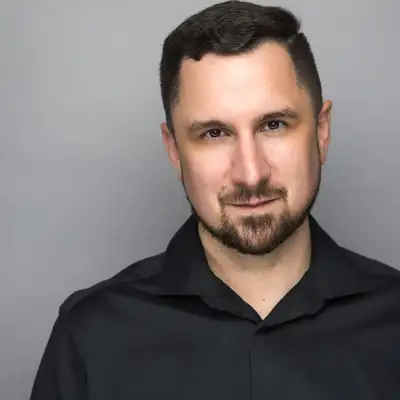
Ep. 379: Ayush Sharma - The AI Edge: Future-Proofing Your People and Payroll
Hey, everyone. Welcome back to Count Me In. I'm your host,Adam Larson. Today, we're taking you inside the world of modern HR and finance with someone who's truly on the cutting edge, Ayush Sharma, the founder and CEO of Warp. Ayush is going to share his journey from the chaos of building a company in the wake of COVID all the way to scaling Warp with some seriously bold ideas.
Adam Larson:We'll dive into how automation and AI are transforming the back office from payroll to compliance, breaking down traditional data silos, and building systems that actually empower employees and finance pros to work smarter, not harder. We'll talk about real time reporting, the future of work, and why next generation is jumping to meaningful roles faster than ever before. So if you're curious about how to adapt your skill set, lead through tech disruption, or just want inspiration on what's possible at the intersection of people and numbers, you're at the right place. Let's get started. Well, Ayush, thank you so much for coming to the podcast.
Adam Larson:Excited to have you here. Man, I wanted to start with, you know, maybe we could talk a little bit about your... Like, what got you to this point and at what moment did you realize like, hey, you know, HR operations is sitting with a lot of untapped opportunities so much so I wanna build my company around it.
Ayush Sharma:Yeah. For sure. Really great question, and pleasure to be here also, Adam. My name is Ayush, founder and CEO here at Pork. Right?
Ayush Sharma:And to your point, I think we got our start in YC. That was winter twenty three. And the context was, like, we had applied really late, actually, like, almost at or after the deadline. Yeah. Right?
Ayush Sharma:Like, I think it was one week before the batch had started. We had barely built a functioning product at that point. We were basically, like, at a napkin idea stage at that point. Right? And then NYC folks let us in, and we got to build.
Ayush Sharma:But really, I think we had seen ourselves, first of all, just I had been part of a high growth series, a startup right before starting this company and got my hands into what goes into building a team, starting a company, scaling a team quickly. This was also like, right after COVID time. So I think like, as you imagine, everybody had woken up all of a sudden that, you know, the model had flipped overnight almost where? Start a company and you're pretty much in just one place all the way to... You start a company and all of sudden you're hiring now everywhere.
Ayush Sharma:Right? And that's at at very earlier stages. And I think that allowed us to, like, I got my hands way deep into some, like, really complicated tax stuff with New York Department of Labor and Arizona Department of Revenue. And it just gave me this, like, really crazy whiplash. I'm like, oh my god.
Ayush Sharma:This is, 2025, 2024, I think, at the time, or we're still doing this. This is crazy. Right? Going into these very complicated archaic agencies as a business owner myself. And so this was this was the the personal pain that sort of like kick started the whole whole saga.
Ayush Sharma:But it became clear to us that none of the traditional software attempts were going to solve this thing because there's no clear APIs. These agencies, tax agencies, there's thousands of them. They're all different. They all run on their own rules. They all have their own, like, PDF, phone calls, mail notices, really, really bad .gov portals.
Ayush Sharma:And my background is in machine learning. I originally studied computer science and machine learning back at MIT along with math and physics. And I think the bet we wanted to make was, could we use LLMs and and agents that were admittedly pretty brittle and early at the time, but we're improving quickly? And could we apply that to this, like, very age old, like, compliance, payroll, state taxes problem that is all... Like, withstood automation for all this long?
Ayush Sharma:And that's how we got our start at work.
Adam Larson:Yeah. I I... It's... I love talking to founders because everybody has a, like, hey. This was the problem.
Adam Larson:Nothing was fixing it. And I was like, I'm just gonna create the thing to fix it. And I I... And I... That's gotta be scary too because, like, you're putting all your all your eggs into one basket for lack of a better term.
Adam Larson:And like, hey, I'm just gonna build my own system. If it doesn't work, well, I guess it won't work. Like, what is that? What is... What does that process feel like as you're like building something that has to work for yours...
Adam Larson:For your organization to be successful?
Ayush Sharma:I I always tell other founders and anyone who asked me, like, we have in... You know, now our team is almost actually 57 people as of today. We've grown quickly. I still do all final rounds interviews with every single person that joins and will probably continue to do so for a long time. But I tell people that, like, when starting a company, there is no rational, like, calculation that tells you that you should start a company.
Ayush Sharma:It is it is inherently a highly irrational thing to wake up and say, you know, all these people that have tried to solve this specific problem or start a company in this space or build something here who may have failed or gotten, but maybe there's all these other challenges. It takes a long time. It's a lot of work. There's always a chance that it might not work out. So I think that there's just no way to...
Ayush Sharma:If you're trying to be fully rational, like if I were trying to be fully rational, I'd probably go work at a larger company or something. But I think, you know, there's something usually wrong with people who just start companies in their heads, and they can't, like, help themselves. And the only environment... This was certainly, like, my my story where I just couldn't imagine myself working for somebody else and still being able to do my best work. Like, anytime I look back at my personal life, it was always...
Ayush Sharma:Like, anytime I had full ownership, full agency, with that, obviously, to your point, it comes the downside, which is like, hey, if it fails, it's all on you. Right?
Adam Larson:Yeah.
Ayush Sharma:But I think that's the start of entrepreneurs for a lot of people, entrepreneurship journey for a lot of people. And the second point there, I think that's interesting is it is rare to build conviction, but that's the thing that's really scarce in startups, especially early stage startups, is that conviction, which is some of it is you just like, you know, you've experienced a problem. You have some unique insight, hopefully, into how to solve it. And it gives you that sense of like initial conviction into you should start this company and that you can make that jump. But I think the real, I think conviction comes from customers and users, which is when you start seeing the thing that you're creating becoming useful to actual customers.
Ayush Sharma:And often, you know, in the very early days, like the product's gonna be pretty, pretty early. There'll be all these like rough edges. And yet, if you can get some folks to like use it and better yet, like, you know, they use it, it solves their problem and they start giving you a bunch of feedback. That's the best place to be. And I think that can generate a lot of conviction.
Ayush Sharma:So I think for me, like, I didn't know a ton about Payroll or HR when I started, but I had a very technical background and I knew we could make a dent into this long standing problem. And then we got a bunch of our initial users who started using the product and were telling us all about, here's what next we should improve and fix. Like that iteration loop, we got that going pretty early on. And I think we've been in a fortunate place where now we serve over a thousand companies, tens of thousands of employees get paid via work. We process almost 500,000,000 in payroll.
Ayush Sharma:And the thing that I think we've been very fortunate about is, as early as I can remember, we had this initial sort of product market fit, if you wanna call it, where users were willing to use the product. And they just kept telling us like, here's the next thing you should solve and build and fix. And we're still doing that today. I'm still talking to customers and still building new things. Like, I'm writing code often still, even though we have a larger team now.
Ayush Sharma:And I think that's honestly my favorite part.
Adam Larson:Yeah. That's cool still being able to tap into... I'm sure at some point they were like, Ayush, stop writing code. We got people to do that. We have...
Adam Larson:Need you to focus on other things. I'm sure that'll come eventually.
Ayush Sharma:Well well, I I think there's an interesting thread here to go down on if it's interesting to you, but I do think the... There's talk about founder mode broadly. Right? And and there's there's various ways to talk about it, but it's really interesting how I think the the more product minded, more technical founders are able to contribute directly to code for far longer now than you could before pre AI. And that's that's something that I've...
Ayush Sharma:Like, I am sensing that all the best companies that by the time you were series a, like, as a technical founder, you sort of like bittersweet moment when you just kinda give up because the code base becomes too large, too complex. And it's got all these parts of the code that it'd be very hard for you to have all that context in your brain while doing all the CEO things that, know, like fixing problems, talking customers, all these things. But I think really, like, and AI have allowed us... Like, opened up a whole new kind of world where, you know, we're serious b now. I think we'll...
Ayush Sharma:As we go to, like, c d... I'm talking to founders. I think the best folks are staying way closer to the product and code for far longer now than they could before. And I think it's an awesome thing. Like some of my, some of the best product love we're able to generate with customers is like, if they give us something that would be useful to them, they give us some feedback.
Ayush Sharma:And I'm personally able to, like, often just, like, go in, build that thing, go back to, like, a day later or, hey. You know, the thing that you asked us is actually out now. Go go ahead and try it, and let me know how it goes. Like like, I personally am looking at this thing and the people, customers, like, love that. So I didn't feel so very good for that.
Adam Larson:That's awesome. I I I appreciate that because a lot of times, it's like the founder gets to that point where they're they're they're like, oh, I can't touch this anymore. Have to do the CEO things. But the fact that you're able to do that obviously continues your passion for what the reason why you built it in the first place and allows you to do more with that, which I think is a great picture.
Ayush Sharma:Totally. Totally.
Adam Larson:So, you know, when you and I were speaking in preparation for this, you know, you were telling me how a lot of times, you know, the People Data and the financial systems never talk to each other, and there's this huge gap. What happens when you talk to companies and you're saying, hey, you can connect your People Data with your financial data, and what does that gap actually cost them, and what does that look like?
Ayush Sharma:Yeah. So we have been we've been doing a lot of work when it comes to building a first class, really amazing reporting and ERP connection experience in Warp. Right? Mhmm. For context, you know, with warp, we obviously touch all the company and employee data.
Ayush Sharma:We're the first party, all the payrolls, payments, even in many cases, like reimbursements and expenses, everyone's benefits, which includes healthcare, four zero one ks, miscellaneous benefits like HSA, commuter benefits, all of that, WARP is the first party source of truth on all of those line items across the entire company base. Right? And as a result, like, we get to sit in a very sort of, like, central position in this, like, ecosystem of, like, ERP, accountants, CPAs, benefits admin, in many cases, like IT admins are involved when that touches it. And so we've been going down the rabbit hole of what does a really great experience here look like to give our finance minded admins or finance financial stakeholders, so to speak, that are added into Warp, CFOs, finance suite people, as well as the accountants, a great experience in Warp, and also be able to give them full visibility on their entire company's finances, starting from warp into whatever ERPs they're using. Right?
Ayush Sharma:And I think a couple of things we have learned very quickly. Number one is, first, yes. Generally, for most companies, your people costs are going to be your top line item. Especially, I think maybe increasingly, there's some interesting convo on, like, how compute costs are increasingly blowing up, especially for a lot of AI companies they work with. Right?
Ayush Sharma:And we see that. And I think, like, that's an interesting aspect here that is changing or is changing very quickly for the the CFO suite. But the people cost, like, I think that we haven't seen any any declines in that. People costs are generally still one of the top, if not top two items. So we have the first party data.
Ayush Sharma:Now, that means it is on us to first give a really incredible product reporting analysis experience on top of that. And so that's the first layer we built out. And one cool thing that I'll just share that I think is showing a lot of, like... It's getting a lot of, like, wow moments from our customers increasingly is we built out our Warp Agent, which is our AI co pilot that sits inside Warp, and can securely run full workflows end to end, such as, like, onboard this employee or, like, add this person to, like, the right company PTO policy based on their hourly requirements and things like that. And one of the cool things that's really coming up is, because it has all the financial data, people data, you can start building these really sort of detailed granular reports on the company employee expenses.
Ayush Sharma:So being able to say, like, what are our top five, like, cost, like, department breakdown items when it comes to benefits. Like, where are the benefits cost going? Break it down by departments, by tenure, etcetera. And it's like, use the agent and it automatically builds it up. And then you can add that report as a customized report to your dashboard, and it will always be up to date and so on.
Ayush Sharma:Right? So if you've operated inside any of these legacy systems, when they... Either they have very poor support for custom reports, or when they do, it's really, really hard to use. Like, you go in, you try to build a custom report, it just makes you pull your hair out. And we just took that.
Ayush Sharma:We're like, okay. We're not gonna do any of that. We're just gonna give your build the fully AI native experience here, which is you start from... With the agent. You just talk naturally to it.
Ayush Sharma:It will build out the thing, and then you can save it as a report. You can download it. You can pin it, etcetera, etcetera. And that's been really cool. I think it...
Ayush Sharma:It's getting a lot of wow moments from customers and prospects alike. And two is the connections to ERPs. Right? So we pretty much built out this internal unified layer where we have all the data normalized in a very granular way for all the employees, their departments, their payroll, taxes, benefits, expenses, all of that in a really amazing internal ledger. And from there, we're able to spin out integrations really quickly to a lot of ERP providers.
Ayush Sharma:I think at this point, we cover basically all the ERP providers that we run into with customers. So that's gonna be everything from NetSuite of the world to Xero, QuickBooks, and also the new AI native providers like Relay, Campwire. We have both as well. Yeah. And if if a customer needs a new one that we don't cover, like, often we're able to spin that up, like, in less than a day at this point with the infrastructure that we established.
Ayush Sharma:And there is where we do a lot of customization and granularity on how that data gets go to. Right? So often we would hear that how customers with their legacy systems or older systems, it would just run into limitations on being able to customize how the data was syncing from their HRIS to their ERPs. Often, would hear around, like, being able... Like, requirement to customize an earning or a field and have that carry over to their entire ERPs.
Ayush Sharma:They can analyze, like, you know, which sector of their business is doing, like, how it's performing, the P and L, and things like that. And we just allow you to do that. Right? Like, we built it out a really detailed way, and that's been really powerful. Because if you've got a large company and you've got, like, multiple cost centers and you're trying to divide it by, like, different workplaces or locations, those are the kinds of things that often you run into limitations with trying to do that really nicely.
Ayush Sharma:But we could do that pretty easily now.
Adam Larson:Yeah. Wow. You guys are really doing a lot there. And it's things that when you look at traditional kind of HR systems, you know, they they take care of, you know, the basic needs, but they don't actually take it to that next level that allow you to scale at the pace that you guys are allowing to. And also the connection to the ERPs, is important because your two biggest cost centers, cost lines are people and then technology.
Adam Larson:And you need to be able to look at all that together and you can't always look at that because traditionally these systems haven't talked the way you're discussing. And what is like, what is that like, you know, you've mentioned a few of them, like, are there other things that become possible that weren't possible before when you kind of are able to connect all that data together?
Ayush Sharma:Yeah, absolutely. First, I think, like, one quick thing here that there's a very philosophical sort of like a difference here on how we are thinking about the data itself and data's accessibility in warp versus all these legacy providers. And what I mean by that is I think if you look at all the legacy HRIS vendor... Vendors, they make it very hard to actually just, like, access your own data. They they they really try to sort of, like, lock it down, silo it.
Ayush Sharma:Some of it was, you know, you could argue it's it's sort of, like, lack of... Like, maybe it's, like, incompetence, you know? They just haven't, like, prioritized building it or whatever. But I do think it's also a bit strategic. Right?
Ayush Sharma:Like, the model was very much... Because we own the data, that's a competitive advantage. And if the data becomes really accessible by the customer, then might... The data portability, maybe it becomes easier to switch off of our platform, blah blah blah. And so this was a big, big thing for the SaaS era legacy providers.
Ayush Sharma:And I think one of the things that we're just like, we are doing completely different from all these providers is we're taking a first like, no, your data is your data. And you can download it. You can run analysis on it. You can use the warp agent to build all kinds of reporting on it. Or you can also bring your own agent.
Ayush Sharma:You can have your own, like, cloud, etcetera, via MCP, connect it, and do your own analysis. Right? So it's a very data liberal approach that we're taking, which the incumbents and legacy providers. And that I think is like at the root of why a lot of the integrations have these weird bottlenecks and limitations, etcetera. Beyond like speaking on the technical ability of these folks.
Ayush Sharma:Right? Like, I think, which maybe if they had enough time, they can like... Which these guys have, like some, in many cases, decades, but they haven't. Right? And I think to me, that's an indication that there's a difference in the approach fundamentally.
Ayush Sharma:The kinds of things that we can enable now, once you've got a really granular picture of your people's expenses, costs, salaries, benefits, miscellaneous benefits, all these things, their four zero one ks's, it becomes really easy. Like the kind of analysis you would do, like quarter end, and it would take you weeks to try and understand, okay, which cost centers, which which departments are healthy as you look through building the p and l across the company. If you're a CFO, like, that's the kind of thing that your your org will spend weeks trying to figure out. But now you can just build that in a matter of hours. Right?
Ayush Sharma:Like, maybe even faster. And I think that's the kind of difference we're seeing. I think often when we are now working with really high growth companies like the blind AIs, the the servals of the world, they want a lot more real time, like fully updated view of their business, which their expenses, p and l's, etcetera. And it's it's moving to, I think, this is certainly happening in accounting where now you're moving to this, like, month end close model to more of a real time close model. Right?
Ayush Sharma:Like, you're sort of like, you want the AIs and the agents to, like, work in the background twenty four seven so that everything's classified correctly and you can come in at any given time. It's like, I have I have the latest on my company, and I don't need to, like, wait several weeks to pull that analysis by my two beard people or whatever. Right? And I think it becomes really, really powerful if you have your entire people's ground or thing. Because then things like call centers, workplaces, departments become all of a sudden legible, instead of being like, oh, we are paying this much in taxes, which is like...
Ayush Sharma:It... It's not very useful if you're trying to understand that.
Adam Larson:Yeah. You're not. Well... And and and I... I've spoken to the leaders of Campfire and Rilla, and so I I I love what they're doing with ERPs and having that real time kind of data.
Adam Larson:And I know, like, the the NetSuite of the world are trying to... Are getting to that same... Are working toward that same point as well with their AI, you know, regardless of what it actually looks like. But I know that they're working towards that as well. And so it's interesting as you kinda look at these native ERPs kind of working toward that.
Adam Larson:And then if you have all of that data in one place, like that's huge. And it, I, I think you're gonna have to, people are gonna have to rethink how they budget. They're gonna have to rethink what all that looks like as an organization from the CEO top down. And then also like a lot of roles that used to be very repetitive doing a lot of that manual work, suddenly AI is taking care of those things. And so what does that look like when, you know, a lot of that operation work is automation is taking a lot of those things off.
Adam Larson:What does that look like from an organization standpoint?
Ayush Sharma:So this is where I have perhaps a more optimistic take than most people here. And I think there's there's something... I I think it's a little bit bit of a sensational soundbite thing to give. Like, oh my god. You know, it's like, oh, we're doomed, and AI is gonna have all the jobs.
Ayush Sharma:And I think people selling AI tokens will sort of sort of want to portray that picture of the future, which I actually disagree with. My take is that we... No no humans actually go into just like pure operations, repetitive, manual task role. Like, that's that's just not what people aim to do in their lives. Often you...
Ayush Sharma:What happens is, you know, we we call these roles some euphemism and, like, this business operations or finance operations. And then you arrive at your role, you know, you're often in the job description and and, like, how you're sold on the role, you're told, like, yeah. You know, you're gonna get to work on, like, these important problems and the strategy of the business. And then you arrive and it's like, actually, we just need to close the books first. We don't have the right data.
Ayush Sharma:Actually, it's really messy. So let's spend all these time trying to do that. And I think generally where we're headed, I'm very optimistic that these, like, manual toil, this, like, tedious portions of a lot of these roles are going to go away. And they will be taken over with these agents and background agents. They'll just run 20 fourseven.
Ayush Sharma:And they will have a lot of these operational things handed off to them. And the interesting bit for us, obviously, is like, we're trying to do that in HR functions, but you have to do it in a way that you're giving control back to the people. Because then then it's almost like you're orchestrating the background agents to do the repetitive work. And that opens up your entire time and energy to focus on all the strategic things, which is, are we solving the right problems for our customers? Right?
Ayush Sharma:Yeah. For the growth plan that we have for the next year, which bets are worth doubling down on? And which things that, like, maybe we should cut? Like, these are the kinds of important questions that finance people, finance folks, and leaders want to be spending their time in. And increasingly, I think we're going to enable that by handing off all the repetitive work to AIs and agents.
Ayush Sharma:And I think that's why I'm really optimistic. I think we're not seeing these broad job unemployment trends or anything like that. If you actually look at the data, what we are seeing is people moving up to more higher leverage tasks internally in companies. And I think it's a net win, right? Like you get those people get to do more satisfying, more meaningful work.
Ayush Sharma:The companies now are actually using, getting the utilization from their people on the higher leverage thing that they basically promised them that they should be able to do, but just couldn't because of all the toil. And the three, I think it's like net net, that is where we will see like the most amount of people like being satisfied with their work overall. Mhmm. And I don't think it it necessarily means like for us to... I don't think necessarily leads to a job collapse or anything like that.
Ayush Sharma:At least I haven't seen the evidence for it.
Adam Larson:Yeah. I hope you're right because, you know, there's a lot of thoughts going either way, you know, besides the fact, you know, like, the the people who are, like, Terminator Skynet kind of things. Like, oh, no. The AI is slowly gonna take over. But you know, when we have these conversations around like, you know, okay, it's gonna open up your time for more strategic things.
Adam Larson:What about like the people just coming into the workforce where they haven't had the the opportunity and the experience to learn what, like, the roles that were traditionally theirs are now be giving to AI and agents. And so they don't necessarily have the operational knowledge to understand what the agent's doing to be able to make decisions to know what is happening. What do you... Like, what do we do with that?
Ayush Sharma:That that is actually a very good question. And I I don't know if I have the full answer, but I am... I'll give you an example of where, like, where I'm seeing this and how it's playing out. I think engineering is is is a function where this is very prominently visible right now. Because what's what's happening is with agents, like, almost...
Ayush Sharma:Like, at warp, almost all the code being written is that we're no longer hand typing any of the code. I think most orgs have now shifted to that. And so there's a question of like, okay, what about the new people? What about the younger, like, up and coming engineering talent? If they're not writing code by hand, how are they actually going to learn?
Ayush Sharma:And I don't know if I have the full answer, but I'll give you an example of, like, the thing that we are seeing is we recently hired someone, you know, Akidu just dropped out out of school After, I think, like a year or two in, and super smart, very sharp, we got connected, and he was really interested. And within, like, less than two weeks, like, we went from initial conversation to him dropping out and starting here at Warp and as an engineer. And he seems really promising. Like, it's it's only a few weeks in, but he seems really, really good. And I think what's happening with these younger folks is they are able to just like move up to the higher value tasks themselves.
Ayush Sharma:And those higher value tasks, like, there's still so many of that. So many of those that it is not necessarily the case that you have to, like, do the grunt work to learn the thing.
Adam Larson:Yeah.
Ayush Sharma:And so it's really becoming like, okay, if I can move faster now, I can... And that forces me to make better decisions about the architecture of the system, which is really, really important to get right. And then being able to have agents break up the task, orchestrate the work. And now I spend time on the last mile and the first mile a lot more, which is first mile is actually talking to customers, understanding if this is the right problem to solve. And the last mile is a lot of testing, QA, guardrails, building systems for how we should be testing the thing so that it's safe, etcetera.
Adam Larson:Yeah.
Ayush Sharma:And the rollout to the customer, which is like, okay, let's get this in the hands of customers. Is it actually working? And I think these are the kinds of things that actually my take is that engineers should be doing a lot more, but historically, they didn't have the time because they were in writing the code themselves so much, and that would just take up all your time. But now you have the expectations that you should... There's no reason.
Ayush Sharma:There's no excuses for not doing those user research, first mile, last mile things. And when there are things, like, when they need to, like, debug things, go under, they're able to, like, look, go into the code stack very quickly. That is still the expectation. So anyway, that's kind of how I'm seeing this play out in engineering. Like, I'm actually not seeing that young younger talent is as any sort of like, is getting shortchanged or not trained.
Ayush Sharma:It's just that the expectations for them are a little bit higher because And they have it forces them to like shift a bit and think more in systems infrastructure trade off. I think what's gonna happen, and I'm seeing this with some of the offer of some of our best customers, is when it comes to folk finance function and HR functions, it is also a similar higher expectation, which is yes. Like, even if we're hiring younger folks, we expect them to be able to work well with AIs, like, be AI native, know how to gather the right context, ask good questions. And then we're giving them a lot more responsibility So that, instead of doing this one small function thing, we're actually gonna hire... Take a bet that you can actually oversee these three big problems that we've got going on.
Ayush Sharma:And maybe they're a little bit more cross functional. Maybe they're more generalist, higher caliber, etcetera. And that's the of folks, that's like the set of folks that I'm seeing thriving right now. Like people who wanna have larger impact, they get up and running very quickly because they're no longer being slowed down by the operational repetitive work. But I do agree.
Ayush Sharma:I think it's a... It is not fully clear how companies can enable this kind of learning environment for younger people. And I do think it's a very important it's a very important thing to, like, have that pipeline, because those are the folks that become, hopefully as you grow the company, etcetera, they go on to be doing more responsibility, etcetera. So I do think every company has to probably force themselves to think about how we're going to enable that for younger folks. And I think overall, we've done a pretty good job internally work.
Adam Larson:That's amazing. It's it's a very difficult thing that, you know, colleges need to figure out that, you know, higher education needs to figure out.
Ayush Sharma:Yeah.
Adam Larson:And also, like for the, you know, for the people who've been in the business, you know, you're seeing this young kid come in and you're like, wait, I wasn't a manager until x number of years because I had to do all this grunt work, you know, and hopefully it's not creating bitterness and we're creating cultures within organizations to help get everybody up to speed. But it's definitely, it's like the... I'm almost like, I'm excited for this next generation to come into the workforce because they actually get to jump into more meaningful work faster than the generation before them, which is huge.
Ayush Sharma:Yeah. Yeah. I think this... I can imagine some folks being like, oh,
Adam Larson:you know, we had to
Ayush Sharma:go through all these, like, the... Go through the wringer, so to speak, to earn the And I think that it it... In startups, like, you generally tend to be a lot more meritocratic. Right? That's that's at least the culture here at warp.
Ayush Sharma:And it really is about, like, how effective you are at solving problems and much less about, like, age experience, years of experience, gray hair, etcetera. But I can imagine, yeah, I think like larger companies probably will need, like, the best ones are probably thinking about it already or doing doing this already. But I'd imagine, like a internal cultural sort of pillar around, hey, look, like, we are seeing younger folks be able to contribute way faster. And as a result, like, we want to empower them and help them get to like their career structure. You know, that's faster than, like, what we could do in the past years, like, even better.
Ayush Sharma:Right? Like, as a company, we're here to build cool things, build useful things for our customers. And if we could do that better and faster, like, that's the thing to enable. Right? I think that's generally generally going good.
Ayush Sharma:I I do think there's a question on like the people aspect of it. Right? Which is if you're going to be, especially as you start thinking about leadership roles and management and so on, I think it's there is something to just having experienced a lot of these difficult, tough scenarios of the manager or team lead or an exec, which does come with years of experience and making a lot of mistakes there potentially. Yeah. And that that I don't think you can, like, speed up by just, like, reading on it.
Ayush Sharma:It's it's like, you can read everything on it. You can, like, do all the LLM research on it, but the only way to get better is, like, in startup. Just do the thing, learn from it, see how it goes. So... Yeah.
Adam Larson:Yeah. I I like your perspective because it, you know, it is different atmosphere in a startup versus a company that's been around for a long time, and there's a lot of different different things to navigate within the culture. Appreciate that perspective. Well, Ayush, this has been a wonderful conversation. I really appreciate you sharing what you've been seeing in the in the workforce, especially with what you're doing at Warp.
Adam Larson:And thank you so much for coming on and connecting with us today.
Ayush Sharma:Thanks, Adam. Pleasure chatting as well.
Announcer:This has been Count Me In, IMA's podcast, providing you with the latest perspectives of thought leaders from the accounting and finance profession. If you like what you heard and you'd like to be counted in for more relevant accounting and finance education, visit IMA's website at www.imanet.org.