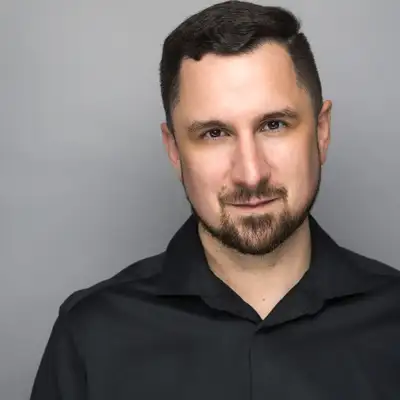
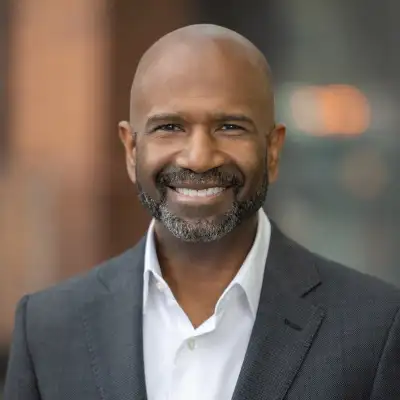
Ep 374: Eric Lenard - Surviving the Storm: How Courageous Leaders Inspire Action and Growth
Welcome to Count Me In. I'm Adam Larson, today I'm thrilled to welcome Eric Lenard, Vice President and CFO, Innovation, Development and Quality at Medtronic. Eric is a finance leader who has built his career by boldly stepping into the unknown, navigating new challenges, and driving transformation through both ambiguity and growth. In this episode, we dive into the essence of courageous leadership, what it means to build trust in new teams, and why it's essential to embrace failure as a tool for learning, and how to keep your eyes on the North Star that guides resilient teams through the storm. Eric shares honest stories about the excitement and pressure of leading teams through uncharted territory, the importance of transparent communication, and practical advice for anyone facing fast moving realities in today's business world.
Adam Larson:So, if you're taking on a new role, managing change, or looking to strengthen your leadership in unpredictable times, you'll find loads of inspiration and actionable insight in this conversation. Let's jump right in. Well, Eric, I'm so excited to have you on the Count Me In podcast today, and it was great to, meet you in person at IMA twenty six. And, you know, as you guys were on stage talking about, you know, talent management and talent, you know, I there are some things about leadership that, you know, you definitely have brought up that are really interesting, especially in the terms of courageous leadership. But I wanted to start off our conversation kind of taking a step back to earlier in your career where you had to kind of step in a situation where nothing was mapped out yet.
Adam Larson:And what was that like? And, you know, I know you've had to navigate that a few times in your career.
Eric Lenard:Yeah, well, thanks, Anna. First, it's great to be on the podcast. I appreciate the invitation. This is exciting. Especially since I'm in the middle of a lot of new things in my career.
Eric Lenard:So it really is good to take a step back and see how things might kind of process started to where I am now. Really, I started my career at Procter and Gamble, very constructed career paths. So you don't even get a chance to pick what you want to do for your career. It's done for you and everything is based off of current best approaches and that way to do things. They even teach you how to write and how to do presentations and how to do everything.
Eric Lenard:There's even a single way to how to put together Excel spreadsheets as finance person. And then I joined Johnson and Johnson, and my first role was on a brand new ophthalmic pharmaceutical venture that they were just getting into. They were trying to expand the business from just contact lenses to broader vision care. And I was hired in as a finance manager for initially for mergers and acquisitions for that business. And I'd worked in mergers and acquisitions before, but again, my experiences were laundry detergent and stuff like that.
Eric Lenard:And I went from laundry detergent to ophthalmology. I'll tell the joke I couldn't even spell ophthalmology when I was hired into the group. I didn't realize it had two H's, for example, but brought into the group. Literally within, I think the first week, they completely changed my role. They said, no, we we know we brought you in here to do mergers and acquisitions for this new venture, but we really realized that contact lenses and ophthalmology are extraordinarily different businesses.
Eric Lenard:And the people that we for running our contact lens business don't have the bandwidth to actually stand up this brand new pharmaceutical venture. So could you do it? And again, I'm hired in to do mergers and acquisitions and all of a sudden within a couple of weeks or really a week and a half, we want you to actually be the person to stand up this business. Also, the time I started to the time this new venture was going to be made official, this acquisition was going to be closed. I had six weeks and I knew nothing about Johnson and Johnson.
Eric Lenard:I knew nothing about ophthalmology. I didn't know that much about the business that we had acquired. And to make things even funnier, I was gonna be put on a plane in the next week to fly from Jacksonville, Florida, the business was headquartered, J and J's vision care businesses headquartered out to Silicon Valley or really to the San Francisco Bay Area, Napa area, to meet with the CFO and the operations leads for this new company to start the transition process. So it was probably the most difficult and complex role I've ever done where everything was new. Also where I had the most fun because I knew nothing.
Eric Lenard:The number one thing that I needed to start doing was to get out of my own way in terms of being the expert in all things my prior company. Realizing that I don't know a single thing besides the core accounting and finance principles that I had grown up with in college with P and G and kind of an understanding of that I needed to, even though I wasn't the experts, needed to find out who the experts were. Get that courage to why I call phone a stranger and just start talking to people, Hey, I need to do X, Y, Z. I need to start putting together a strategic plan for this new business. Never done it before.
Eric Lenard:Could you help me do it? Could you tell me someone who teach me someone who can actually work on doing this? Or, you know, I needed to write the contracts for this pharmaceutical venture at the three major distributors that do a lot of the time, a lot of The US pharmaceutical distribution companies like AmerisourceBergen, Cardinal McKesson. I know they changed names since then. This was twenty something years ago.
Eric Lenard:And I need to write these contracts. Who can help me put this together and who can help me from a core J and J standpoint? Just asking those questions and being connected with people and starting to build that web of expertise around me allowed me to within six weeks go from knowing about Tide detergent and bounce dryer sheets to standing up a new division of Johnson and Johnson in an area that J and J hadn't been investing in recently in ophthalmology and starting to drive those that level of of of of expertise, but also starting to to build my my contacts and my connections and my my my network was really, really fun. But doing that, I think it will get to later on, doing that really helped to build my confidence that going from into a brand new environment was something that was difficult, but also something that I really found a lot of enjoyment in, you know, kind of living in the ambiguity, you know, living in the fog. Was something that I really enjoyed doing in my first, you know, my first five years with the company.
Adam Larson:Well, and it's almost like you're you're starting off laying a foundation of trust because you have to build trust with these people that you don't even know, but you're saying, hey, I'm gonna have to lean on you because I don't know how this works here and how are we gonna make this work? And you have the opportunity to create new processes to make things better, but you also don't have you're not bogged down by the this is how we've always done it. And when you're creating that something new, so you have a that's a very unique position because not a lot of people are put in that position. And I can imagine it's scary, also exciting at the same time.
Eric Lenard:Absolutely. It was it was a being in also in an environment where the recognition that that no one really knows individually what to do. And we can't get there at all unless we work on that collectively. So the understanding of, hey, I can help with these certain areas in terms of thought processes around finance and accounting, you know, acumen and theory, but I need to talk to all these experts that we have around the board to help to drive kind of that that that level of of engagement. And they needed me.
Eric Lenard:And so that whole process of everyone learning together created a real esprit de corps, but also allowed us to figure out how we can make things happen in a very kind of nuts and bolts way to build it up from the ground up. And when things went wrong and they often did, it wasn't about pointing fingers. It was about, all right, this was wrong. Let's figure out how clean this up. We can fail fast and how we can make solutions out of the problems that we run into.
Eric Lenard:So it really made an effort. I worked pretty ridiculous hours. At the same time, was also getting married to my now wife. My gosh. You're moving to Jacksonville, Florida from wherever you were living before in Cincinnati, Ohio.
Eric Lenard:So learning about a new company, new location, new city, new state, getting married, some new marital status, and all that stuff while I was also, you know, working on this. So it was a lot, but it was a ton of ton of fun. I still keep up with a lot of the folks that I worked with back then. You know, the relationships that you build when you're in those kind of situations really, you know, play for it all.
Adam Larson:It almost feels like you have a kind of a startup feel. Like, as like, when I've talked to different entrepreneurs when they started up, what the atmosphere that you're talking about, it's it's exactly like the atmosphere that they when they're just starting their organizations, how that feels where you're just everybody's kind of figuring out you fail fast so you can reiterate. That's what it feels like that same kind of feel to it, does it?
Eric Lenard:Oh, yeah. And, you know, and the one thing, the one misnomer around, you know, account corporate America today is that there is a dichotomy between the startup environment and the corporate environment. Know, I was working a company that had been around for a hundred plus years, But companies like that, like your Procter and Gamble's, your Johnson and Johnson's, or your Googles, your Amazons, even some of the newer companies, they can't grow and be successful unless there is always this influx of new ideas and a transformation and a growth and a change. That kind of comfort and willingness and even excitement about creating something brand new in a corporation that has been around for a very long time. That creates, you get kind of the best of both worlds a little bit.
Eric Lenard:You get the whole thing around that startup environment and how to try to build things up from pseudo ground zero. You get the comfort that you are working with a company that has a decent amount of bank, you know, amount of cash in the bank. So you're not worried about not making payroll, in the next quarter. But you also are learning a whole new skill around change management and change dynamics because in corporations, even though change is a required part of corporate growth, it also is something that always gets levels of pushback and some, you know, some conflicts. You know, there are folks who are like, why are we?
Eric Lenard:We're just fine as we are. We've been good for a hundred plus years without having that ophthalmology business. Why do we need to do this? Why do we need that? Why do I need to give up my budget, so to speak, to be able to have additional funds for this company that's not made a profit yet?
Eric Lenard:And so there's also that storytelling dynamic that why this makes sense for all of us, even though there is some short term pain and that ambiguity and that lack of knowing what the future looks like. Let me be able to tell you the story about why this makes sense long term. So that's that kind of you know, both the startup and the comfort of corporate, but also that change management piece is a is a is a really big proponent of, I think, what's been able to to to to shape my career even even.
Adam Larson:Yeah. So there's a term that, you know, you and I talked a little about when we were leading up to this conversation was courageous leadership. And I was wondering if you could maybe define that and what does that look like in the profession that, you know, there's a lot changing, especially in, you know, in the county finance, you know, with in with with the age of AI and everything that's happening. What does courageous leadership mean to you, especially now?
Eric Lenard:I think it's the willingness to the willingness to explore failure and embrace failure and use it as a tool to drive success in the future. We have an industry, accountancy, where you need to be certain and everything needs to be tied up and wrapped up. When you're in a brand new environment where the risk of failure is decently high going into new ventures and whatnot. I mean, the majority of acquisitions fail. The majority of acquisitions don't make their Even the ones that are successful, they don't meet their business cases.
Eric Lenard:And that willingness to sign up for something that may fail. And there's gonna be tons of micro failures that happens even in successful ventures. And once when that those failures take place, it's not around trying to, you know, cover up or fix the fix the issue. It's about owning up to it. This is what happened.
Eric Lenard:This is how I think we're going to fix it. This is how we learned from that and what we're going to do in the future to make this failure something that actually drives a level of success in the organization. Going back to an example in Vision Care, when we went live with the new business, we realized that, I mean, that the business was making, before we acquired it, they were throwing off about a $100,000 of sales every day. We were getting daily sales reports, 100,000 miles of sales a day. The moment that we took over, like the Monday we took over, that $100,000 of sales went down to $100 of sales every day.
Eric Lenard:One thinks one day it was like 50 something dollars of sales, you know, for a business that, and obviously we had a business plan that we were committed to from the corporation that had a certain amount of revenue and therefore profit, you know, on a regular or, you know, per year. So the fact that the numbers dropped off so substantially and stayed that way was something that's, you know, I'd only been there for six weeks, but even then it was how could we have missed this? What possibly could have happened? We started to really dive into what was going on. I was the person who was then going to the guy that hired me, the CFO of the division of J and J, and say, Hey, remember that forecast we had for sales?
Eric Lenard:Well, now, it's probably gonna be half of that. Remember that that the one forecast is half of that? Well, it's probably gonna be half of that, you know? And I think it really, you know, at the end of the day, we ended up losing about 80% of the sales from forecast to actuals that year. But it was not around, Yeah, we messed up.
Eric Lenard:Go ahead and fire me. This is terrible. We're starting to point fingers at who's to blame. It was, What happened? How can we fix?
Eric Lenard:Found out that the company that we get acquired had kind of flooded the market or flooded the distributors with tons and tons and tons of inventory. Not sure exactly why, but, you know, a company that should have had about, three months of supply of inventory on hand or distributors, they ended up having somewhere close to two and a half years of supply of inventory on hand. When pharmaceutical company sells its product, it sells to the distributor that records the sale in that way. And then the distributor then sells to the end customer. At least that's how our business works.
Eric Lenard:So they were recording sales, but they were just, you know, like distributors were just piling up inventory and then kind of meeting it out to the individual ophthalmologists and hospitals and doctor's offices and whatnot in their own way. When we found out that was happening, we said, okay, this is an issue. Reached back out to company we acquired the business from and got remediation from the lost profit and said, you know, that you guys shouldn't have done that. Let's make sure that we get that fixed. And we ended up, even though we lost 80% of our sales that year, we only ended up using a very, very much, much smaller portion of our profit because we were able to do that.
Eric Lenard:And we're we also made some changes in our, you know, our SG and A and our R and D spending and whatnot. We we were able to make some reductions in our expenses. So we wouldn't really see a major negative impact in terms of profit. So with because of that, that that kind of willingness to share the bad news and not just about, hey, here's here's some really bad stuff we didn't plan on, but this is how we're going to try to fix it. This is the ideas we think we're gonna have.
Eric Lenard:All of that, I think, is really the the definition of courageous courageous leadership. And I've got a Yeah. A 100 other examples, but that's kind of one that really ties that when I learned that lesson first was that situation.
Adam Larson:That's that seems so scary to walk through. And I'm sure it must have been really chaotic as you're trying to figure all that stuff out. How did you navigate that with your team as you're like, hey, we're doing all this new stuff. We're building this new team. Oh, wait.
Adam Larson:By this way, our sales dropped 80 and half of what you expected it half of half of a half of what you expected is actually what was gonna be. I can't imagine, like, what was that like leading your team through that through those moments?
Eric Lenard:Well, know, it was I think it was it was tough. You you'll find that the one thing that I've learned that differentiates a team that can thrive through things like that, thrive through chaos, and a team that just gives in to the chaos is a very clear perspective on what our ideal future should look like. So, you know, when I talk to my team and when I talk to my business partners and all of us, we're about, we said we have the opportunity, even though we're a very, very small division of the company, we have the opportunity to do some things that are going to be transformative to not just the industry and to the company, but to, you know, people's lives. You know, one of the things that I talk about all the time, I still remember, was one of the products that we had were one of them helped to fight pink eye. And, you know, pink eye or bacterial conjunctivitis is, you know, it's an annoyance to folks in most Western world or Western countries, but it is potentially blindness causing when you talk to me, go to some poor countries and places that have very arid regions and things like that.
Eric Lenard:So one of the things that I did when was heading up this company early in my career was I was put in charge of the donations that we would give to doctors going on sabbatical and things of that nature. One of the doctors that we sent a lot of our bacterial conjunctivitis products to, our pink eye products to, sent a letter back probably a couple of months later after we started the process. It was addressed to me and I opened it up and it was this big eight by 11 glossy photo and with a bunch of side by side pictures, probably a couple of dozen side by side pictures of very heavily diseased eyes and healthy eyes. Heavily diseased and healthy over and over and over again. And this was one of the doctors who I think did a sabbatical and I wanna say Central India.
Eric Lenard:And he was showing that, hey, these are the people whose eyesights we were able to save because of your product, because they had the access to your, you know, Pink Eye product. And so that's the kind of thing that when you're going through all of this, all the bad stuff and the bad news and all the, you know, kind of the short term oopsies and whatnot, that it's like, yeah, but what we're selling, you know, there's a kid who's able to go to school and be able to see, you know, or able to see his family, you know, able to see his mother or father, and be able to grow up and live a life with eyesight. That, you know, that's something that we really kept our eye on that. As opposed to those, the bumps in the road and the short term issue, then the bad news and whatnot. It's only making sure that we're keeping our eye on the big picture of the North Star that really helps a team to kind of keep itself together when chaos is happening versus if you don't have that that solid understanding of why we're all here and why we're doing this in the first place, then the first time, I kinda call it being knocked off of your orbit.
Eric Lenard:The first time that something bad happens and knocks you off of the orbit, then you're never gonna recover.
Adam Larson:It's it's that shifting of perspective. I like that. I you know, because when you're the middle of a storm, you know, there's so many things happening around you. The eye may come, you're like, oh, things calm down, and then the rest of it goes. But if you shift your perspective to above the storm, you're like, here's the beginning, here's the end.
Adam Larson:Here's other things that are being affected by what's going on. And like, you can it it kinda takes you out of it. And it's hard because when you're in the middle of it, you kind of like got those blinders on, you know, and it's so difficult. But allowing the team to kind of shift that perspective to the what's the greater good, the greater cause that's happening, what we're what we're working towards, that's that's not easy to do to help the team see that perspective, I can imagine.
Eric Lenard:Yeah, not at all. I mean, it requires, you know, they always say that, you know, in order to get, you know, something in, you know, someone to absorb a piece of data that they need to hear it seven times in order for them to really have that absorbed. I think from a business standpoint, it could be 70 times or 700 times. It's really just being a broken record on let's always remember this is why we're doing it. That's why having a mission and vision is so important.
Eric Lenard:Having a mantra is so important for not just for companies and corporations, but for individual groups. I mean, I've started my new role and one of the first things, I've only been with the company for a month. One of the first things I'm gonna do with my new team is to get everyone together and say, all right, let's talk about why we're here. Talk about, let's all together talk about what our vision is, what our mission is, why are we together as an innovation finance organization? What is our mantra?
Eric Lenard:That's something that actually I didn't do that often until my last role with Johnson and Johnson, where my predecessor had a mantra that they redid every single year. And I love that concept. I had a team of almost 3,000 people, but everyone knew what our mantra was. Everyone knew the why that we're here. And they did it in a way that, a four or five word statement that provided that initial perspective that could then lead to, well, this is what builds in our mission.
Eric Lenard:This is what builds on our vision. This is what you're doing for our North Star. And as we are developing all of our various goals and objectives and working on our various projects and going through our very all all the different things that we do in very complex organizations, everything rolls up into this four or five word statement that really provides that that insight. So that just always hammering that home and making sure that everything that we do as much as you possibly can, everything flows upwards to that that that that that picture, that piece. And, you know, every single meeting and every single town hall and everything, you start from that.
Eric Lenard:That's a really effective way so that that vision that you have that you're putting in place for the organization can kind of kind of flow to the rest of the group. And the only other thing that I really found was really exciting about that is that when you have that consistent method, that consistent, you know, communication, that consistent, you know, story, that the people underneath you and the one beneath them, they make that story their own. And they have their own interpretation and their own motivations that are tied to what we're all doing, but they've made it something that becomes a part of who they are from a corporate standpoint or job standpoint. But once they have that kind of fire burning within them, then they're able to do things that are even even more, you know, exciting and and transformational that everything kind of flows up into that into that one that one state.
Adam Larson:You know, as you were talking, it kind of made me think about, you know, the different types of people within a team. You know, you have, you know, people who kind of are on board and doing exactly what you're saying. They're making it their own. But then you also, like, there's in the midst of transformation, there's also a lot of frustration that can can boil up. And so how do you kind of balance the the need to sometimes people need to vent things, but then also that venting can turn into the Debbie Downer to to the negative Nancy who suddenly like the team is being brought down because of that.
Adam Larson:How do you kind of balance those? Because we we do need to vent our frustrations at times because you can't just bottle them up either. So, how do you kind of balance that in your team?
Eric Lenard:Not at all. I mean, and actually it's funny. I'm gonna be taking so in our at the conference, we had Sandra Worthy. Yeah. Who spoke, you know, did one of the keynote speeches at the conference talking about change enthusiasm.
Eric Lenard:And the fact that you need to not ignore the emotions that are associated with change and in a difficulty and of conflict, but you need to really embrace it and help to guide people in a positive way down the pathway of, again, not just acceptance, but enthusiasm. I actually loved it so much, and I'm taking her course next week. Nice. But what I found that difference between, you know, the ventures versus, you know, otherwise, or versus, you know, the kind of the Debbie Downers is you have to be able to to to to share and to go through your processes. Those negative emotions are very important, especially when you're dealing with change and of conflict because that's just that's human.
Eric Lenard:That's natural.
Adam Larson:Yeah.
Eric Lenard:The folks that just let that become an area to stew are the ones that don't go from venting and letting letting it out and using that process to then start moving towards problem solving. They're spending all of their time just excellently admiring the problem and spending a lot of their time on just you know, problem admiration as opposed to converting that and say, okay. I've done enough talking about the problem and whatnot, but let me start thinking about solutioning of those problems. And you can even see, you know, the folks who, you know, in the process of venting, you know, it may start at 90%, 10% problem solving. And then once they're halfway into their venting session, it's fifty fifty.
Eric Lenard:And the end of the conversation is eighty twenty, where they're really focusing on, alright, I think this is how I can maybe maybe I can talk to this person, maybe I can do this stuff. And happens to all of us, happens to me. You know, I literally heard before our podcast, I was meeting with one of my new business partners. And I was going through that kind of transformative venting session where I got this problem and this is, you know, getting through this. It's really difficult.
Eric Lenard:And just starting to say, well, this is how I think I'm gonna fix this. I'm gonna solve this. I'm gonna solution this. Using my business partner as a way to help me kind of guide me through that process. So I've really And when I've found people, members of my team and people that I've mentored and worked with who are in that dual loop of just admiring the problem and not moving into solutioning.
Eric Lenard:One of the things that I try to I've I've learned how to do it better and better as I go, is to, again, let them have the space to go through their process. But then start to pull them into, all right, that's great. We're admiring the problem. We've done a great job admiring the problem. Because of that, let's talk about how we solution.
Eric Lenard:You know, you see this multifaceted place. You see this three dimensionally, the problem. So you can probably also be the person that can help us solve this in a really effective way. So let's start. Mean, what are your thoughts about how we can go to, you know, some of the pieces that you just talked about?
Eric Lenard:Talk about you talked about this piece is a really bad thing. What are some of the things that maybe we can do to help us to help us to solution that? And not letting them kind of move back to, yeah, but I still wanna talk about the products. I've done that. Let's talk about how we solutions.
Eric Lenard:So, you know, that kind of process is something that I, in a gap, I'm living that right now, coming into a brand new company, in a new role with, you know, with a lot of new dynamics. It's, you know, there are a lot of folks who are embracing the change and a lot of folks who aren't. So, you know, how can I give the people who aren't the grace to go through their process, but then hold them into solutioning in a way that really is beneficial to everybody?
Adam Larson:You should coin that trains transform into venting. You know, like, it's like a, I feel like you could write a whole book on that whole, like, that whole concept of, hey, it's okay to it's okay to admire the problem. I like that. Admire the problem, but then let's move that into solutions as opposed to just getting stuck there. Mean, like, wow, this problem is so amazing, but we we can't get stuck there because the longer you stare at the problem, the worse it gets at some point.
Adam Larson:Exactly. Yeah. Yeah. So maybe we could, you know, this is, you know, this has been a wonderful conversation. I appreciate all the insight you're bringing.
Adam Larson:Maybe we could talk a little bit just about, you know, somebody who is walking into, you know, whether it's a a new team or they're starting something new. What does that first week kinda look like as they're like, hey. I need to get I need to get everything in a row so that I can you know, what does that look like? Obviously, every company is gonna be different in this situation, but maybe some, like, some things they should be looking out for as they're getting that started.
Eric Lenard:Yeah. You know, for someone really getting I think the first thing, you know, is for someone who wants to try to develop and build those skills, especially early in recruiting, Search out those opportunities. Maybe you're in a role, there's a project maybe isn't in existence or something that you're thinking about that will put you in a very ambiguous environment. Go for it. One of the worst things you can do in your career is to lean towards the easy.
Eric Lenard:That may be good from the short term dynamics of the company that you're in to become the expert in something that you're already an expert in or the developer expertise. But from a career standpoint, the leaders of corporations are the ones who are comfortable in ambiguity, comfortable in not being uncomfortable. So that's the first thing is to look for those opportunities, look for roles that will challenge you in that kind of a way. And then when you're there, the number one thing to do honestly, is spend the first couple of weeks just shutting out and listening to everybody, including the folks that are spending a lot of time admiring the problem, that really aren't big fans of the vision that this new organizational change or this new dynamic or this new process, this new company, whatever. The ones who are the biggest doubters.
Eric Lenard:Just sit down and listen to them and respectfully and learn from, you know, their points of view on, all right, so I'm gonna have to kind of get through these issues in order to make this successful. So just sit and listen to as many people as you possibly can. And do it transparently. You know, you're obviously there to generate a change that the person you're talking to is not a big fan of. And just be transparent about, you know, I'm here to learn from you.
Eric Lenard:I'm here to really be if this is gonna be successful, we want we only need be part of the solution. And then once you have that, you know, and continuously learn, continuously meet with people, I'm still doing that, you know, obviously, you know, myself all the time, even a couple of years into roles, I'm still trying to meet with people to learn and get their perspectives and take that and harness them to something that will make my solution or our solution better. And then start to find that what's the North Star? What is the vision? What's the mantra?
Eric Lenard:Pull people in to help you develop that. And then it's the piece by piece thing. It's all right. If I'm gonna make this at my North Star, what are some of the things I need to make sure? What needs to be true in order for this North Star to take place three years from now, five years from now?
Eric Lenard:Get down the list. Here's why, here's how I want this to be done. And then go to here's how it is today. And once you kind of have a side by side list of this is how I want things to be, this is the success, the results I want to this is what exists today from all the conversations you've had with people. And then right in the middle, it's where the actions need to take place step by step.
Eric Lenard:Figure that out, to pull together, you know, the team that you're working with to to also vet that, make sure that that that you're not looking at that in just a singular perspective, and then start to take that and prioritize it. Right. Let's let's break it down even further pieces. What are the things step by step, piece by piece, that we can start doing that's going to build, you know, create those building blocks for that for that eventual future? So it's really around kind of looking big, you know, looking at the forest and then diving into the trees and starting to work through that on a systemic basis.
Adam Larson:That's awesome. I love that advice. And it's great because sometimes people just want to be heard. Like they might be admiring the problem because no one's actually listened to what what they seem the problem is. And once they know they've been heard, then they're willing more willing to be a part of the solution because they know they've been heard and they know that their their point of view and what's going on is being taken into consideration.
Adam Larson:Because sometimes that's all people need is just to be heard. And that seems like a huge part of what you're talking.
Eric Lenard:Yep. I mean, the folks that are the biggest detractors of change sometimes can be the folks that are the most active participants in making the change successful. It's just allowing them to go through their processes. They've thought a lot of help, you know, that the change is happening and the things that are taking place, allowing them to go through that, and then making them an ally to drive that and to help to solve the problems that they are seeing is the biggest way to really make sure that the change is sustainable Mhmm. And, you know, multifaceted.
Adam Larson:Definitely. Well, Eric, thank you so much for coming on the podcast. This has been a wonderful conversation. I really appreciate you sharing what you've gone through and your your insights on these things.
Eric Lenard:Awesome. Yeah. Thanks a lot. This has been great. Living in this right now, so this has been a good reminder for even myself too that I'm going through.
Eric Lenard:So I appreciate the time.
Announcer:This has been Count Me In, IMA's podcast, providing you with the latest perspectives of thought leaders from the accounting and finance profession. If you like what you heard and you'd like to be counted in for more relevant accounting and finance education, visit IMA's website at www.imanet.org.