Count Me In | India: From Finance Leader to Global Business Leader: Lessons from a 30+ Year Journey
I have written my book recently. There are multiple failures I have written in this book of mine. I think there are more than 14 chapters. Eight chapters talk about my failure. Yesterday, I was clever.
Sunil Deshmukh:Wanted to change the world. Today, I am wise. Today, I am wise. I want to change myself. My entire board of my organization was against me in setting up the business in Myanmar because the numbers were not justifying that.
Sunil Deshmukh:I told my board, give me two years. In two years, if I don't turn around this business by setting up a new business, you can ask me to walk out. Numbers tell you the reality, but your mind and your intuition tells you the possibility. At the top, you are always alone. There are many leaders who are not coachable.
Sunil Deshmukh:They are beyond coaching, and I don't coach them.
Arindam Ghosh:One leadership quality that cannot be automated. Empathy and courage. One career mistake you would have undone.
Sunil Deshmukh:I should not have waited for an opportunity to go to Mumbai. I should have created an opportunity to go to Mumbai now. Take a risk, fail, and again take a risk.
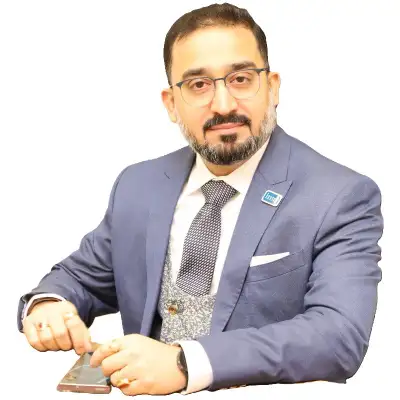
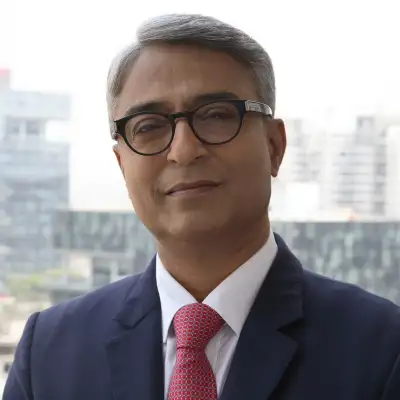
Arindam Ghosh:Most finance leaders can read a room. But Mr. Sunil Deshmukh has read multiple rooms in Africa, Asia, Middle East, and Southeast Asia, and build businesses in all of them. He started in finance, then he ran into multiple roles as a CFO, Managing Director, CEO, and somewhere along the way he realized that the skills that make a great finance leader are almost entirely different from the skills that make a great business leader. So today, I want to understand that what shift actually happens and what it demands of the people who really makes it.
Arindam Ghosh:Hello, everyone. I'm Arindam Ghosh, and this is Count Me In India. Let's go. Welcome to the show, Mr. Deshmukh.
Arindam Ghosh:It's a privilege having you in this chat show.
Sunil Deshmukh:Thank you very much for inviting me, Arindam.
Arindam Ghosh:You've spent about thirty plus years working across Africa, Asia, The Middle East, Southeast Asia, all the continents we talk about. So all these very four different kind of leadership classrooms for you. So forget for the timing, the titles, and for a second that you had done over the years. Give us what has the career actually been about in your long thirty years of journey?
Sunil Deshmukh:Interesting question, Arindam, and you are making me nostalgic today, I must say that. My career has been a roller coaster, if I may say so. I went through multiple countries, multiple geographies, multiple positions, and multiple challenges. But it was a fun ride, I must tell you. I started as a junior cost accountant with a manufacturing company and all the way to a Chief Financial Officer of American multinational companies, eventually becoming the CEO, Group CEO, living in multiple countries worldwide.
Sunil Deshmukh:But one thing which was very common in this entire process was learning agility. I should never stop learning, and that was my mantra. And I always use this phrase, when you don't get what you want to get. When you don't get what you want to get, what you get is an experience. And experience teaches us.
Sunil Deshmukh:And I learned from every single experience and improved upon and improved upon, kept on my learning agility. And I think this entire process made me realize that being a finance professional is not enough for me. I need to move beyond finance. And that's where my leadership journey started, and that's where I am today. And you can see that I'm sort of in a self actualization mode of a Maslow's need hierarchy, and I'm really enjoying it.
Sunil Deshmukh:Thank you very much.
Arindam Ghosh:Wonderful answers, Sunil, I think. You touched upon learning agility. You talked about the experience that has formed over more than three decades of your leadership roles. And yes, I think that has always made you be at the front of the race, if I may say it that way. Great.
Arindam Ghosh:That brings me to the second question. So was there a point early on in your career where you thought, I'm good at finance, and that's probably going to be enough for me? And then something really changed that thinking. So give us that story. Give us some anecdotes that how did you really change from that thought process of a CFO to becoming a CEO.
Sunil Deshmukh:This is a really interesting story, Abhish. I'll come to the story a little later. But yes, I must agree that at some point of time, I was contented that I am a CFO of a multinational company, and my knowledge, my technical expertise as a finance is being utilized to the fullest. I am enjoying my job. But one small accident, and I'm using the word accident in a positive way here, I was making a presentation in one of the board meetings of an Australian American company where I was a CFO, and one of my board director invited me to meet him privately after the board meeting.
Sunil Deshmukh:And in that board meeting, he opened a Swiss knife. So he gifted me a Swiss knife, and he asked me to open the Swiss knife. And to be frank, in my life, first time I was seeing the Swiss knife. I did not know how to open the Swiss knife. Right?
Sunil Deshmukh:So I started opening the Swiss knife, and there were multiple angles coming out of the Swiss knife. And then I asked him what was the intention of giving me the Swiss knife and why you asked me to open it. So this gentleman told me that like a Swiss knife has got multiple purpose or multiple possibilities, I want to look at you like that, and I'm looking at you as a future CEO. But you are not opening up your Swiss knife. And this is a example.
Sunil Deshmukh:This is a metaphor I wanted to show it to you. And that's how my journey of leadership really started. I still call that person as a mentor, my first mentor in my life. Unfortunately, he passed away three years back. But this guy changed my life completely, and that's where my leadership journey started, and he mentored me later on for almost two years.
Sunil Deshmukh:Of course, then when I went abroad, obviously, I was not able to be mentored by him. But I think this small anecdote or this example is a real story which completely changed my life.
Arindam Ghosh:Wonderful. I think what you really touched upon are an analogy of a Swiss knife is extraordinary. And yes, I think you are absolutely right. Mentors are needed when you actually grow in your life. It's without a mentor, you are like driving in the dark.
Arindam Ghosh:Wonderful. Thank you. And this brings me to the next question. So, Sunil, you have been in your long three decades of career, both a successful CFO and then a CEO. So this question for the audience is about that only.
Arindam Ghosh:So according to you, tell us what separates a CFO who is in an excellent form from a CFO who is ready to make the change to a CEO role. Over to you.
Sunil Deshmukh:No, it's very interesting you asked me this question, and I have been asked this question by many people. The one single straightforward answer I give is mindset. Fixed mindset and growth mindset. And I always use this quote, What got you here won't get you there. So whatever you are a great CFO, but does not mean that by default you will become a great CEO.
Sunil Deshmukh:It's a journey. You have to consistently put in efforts, And these efforts must be planned efforts, not accidental efforts. And there is a very famous saying that you need a right mentor, and once a mentor, always a mentor. So you need a person who will tell you during the journey of a transition from a CFO to CEO who you are, what you are, and what you are going to be. And this journey, a person needs to enjoy and not to suffer.
Sunil Deshmukh:So there is a difference between suffering the journey and enjoying the journey. So you must enjoy this journey from a CFO to the CEO, and eventually you will become a great leader. And I think I tried my level best. I'm not sure whether I'm successful in that or not, but definitely I tried my level best.
Arindam Ghosh:Surely, it actually talks about the volume of knowledge you have kind of got over the decades of your roles. And a wonderful answer, thank you. That brings us to the next one. So as you with your experience, have set across multiple founders in multiple organizations. What do finance professionals most consistently misread about how the founders think.
Arindam Ghosh:So we are possibly talking about the two mentalities of a finance leader mentality to a founder's mentality. How would you like to respond to this question?
Sunil Deshmukh:Yeah, this is very interesting because what happens typically, we want to work in multinational organizations or professional organizations. And then there are founder driven organizations. And we live in the world where both exist, coexist very happily. I worked for seventeen years in a big multinational company, world's topmost brands, and then I switched to a founder driven organisation. The biggest single point difference I would say in a founder's mind is a founder is an emotional person.
Sunil Deshmukh:Whereas in a multinational company, a CEO may not be an emotional person. So that's one difference. Second thing is, as a CFO, if you are working with a founder, you tend to look at the numbers from a control point of view, from risk point of view, from accountability point of view. A founder will never look at those numbers from that point of view. A founder needs to make a decision.
Sunil Deshmukh:A founder needs to make a judgment. And when a founder takes a decision or makes he or she need to do a judgment call, they may not look at numbers as you look as a CFO. There is a thing called intuition. There is a thing called guts, right? So most of the founders tend to take the decisions based on intuition and gut, which as a CFO, you may find it difficult to understand why he is taking this decision like this.
Sunil Deshmukh:One needs to get used to this mindset of a founder driven organisation. And I think it's a journey. It takes time. It's not easy to change immediately. But over a period of time, as a CFO, you will learn how to work with the founders.
Sunil Deshmukh:The amount of freedom which you will get to work with a founder is much, much bigger than the amount of freedom you will get to work with a multinational company. And that's where the difference between entrepreneurship and intrapreneurship comes in. And I became an entrepreneur because of this distinction.
Arindam Ghosh:Wonderful. So I think you touched upon that raw nerve of the difference between an entrepreneur and an entrepreneur. It's a very subtle difference, but I think that's where makes a leader stand apart and stand much ahead of it. Good. I think you touched upon one thing which is coming up for the next question for you.
Arindam Ghosh:So tell me about a decision you were in a room for where the numbers basically told you one thing, but then it was your gut. Who said something which is completely different? What did you do? Did you go with the number decision? Did you go with your gut decision?
Sunil Deshmukh:So this is a conflict of a finance professional with a leadership professional. I'll tell you an example. I was CEO in Singapore. I was setting up operations in Myanmar, Burma, now it's called Myanmar. My entire board of my organization was against me in setting up the business in Myanmar because the numbers were not justifying that.
Sunil Deshmukh:And my board was telling me again and again, Sunil, you are a finance professional. Your own numbers are not making sense of investing amount or investing crores of rupees in setting up a new plant. But I was wearing the cap of a CEO and not of a CFO. I was the CEO. I told my board, give me two years.
Sunil Deshmukh:In two years, if I don't turn around this business by setting up a new business, you can ask me to walk out. And I set up the business in Myanmar, which became a big, big business. Even today, it's running out. So this was a decision based on gut and intuition. Numbers tell you the reality, but your mind and your intuition tells you the possibility.
Sunil Deshmukh:And when you are a leader, you can obviously take help of the numbers. Financials tell you what is likely to happen. But most of the time, finance numbers are based on assumptions, based on past history. But when you are a CEO or you are a leader, you are creating the history. You are creating a future vision.
Sunil Deshmukh:So you need to take decisions, you need to take a risk, and sometimes trust your gut and your intuition.
Arindam Ghosh:Absolutely. I think perfect example of how your intuition played out in a probably unknown territory. And because you were a risk taker, you actually kind of came up at the top of it. Fantastic. Now let us have a few questions which gives you, all the viewers, a test of your global leadership area.
Arindam Ghosh:So we know that we have moved between markets that are actually economically very, very different, culturally different, completely different from each other. What stays constant in that market is how probably you would have led and what has to change every single time you've moved from one market to another market. Could you throw us some lights on that?
Sunil Deshmukh:Yeah, I would say the cultural competence is the right terminology for this. And when we say that, when in Rome be Roman, right? What does that mean? Means that if you are going into a new market or a new territory or a new culture, you need to behave like that culture, in that culture. I'll tell you one example.
Sunil Deshmukh:Again, I am getting the example of Myanmar. When I was setting up a new business in Myanmar, I went to meet a Finance Minister of Myanmar. I went suited, booted with tie and all those things. And when I was entering the government office, which gives the approval, I saw a lot of chapels lying outside the office, like we go into our temple. And I asked my general manager, What's this?
Sunil Deshmukh:He said, Sir, these people remove their shoes when they get into the office. I said, You should have told me this thing. I had shoes with the legs, of course, have to sit down and remove. When I go inside, I see the people are sitting with a lungi and a white shirt on that. And that's their traditional dress.
Sunil Deshmukh:Then again, got shocked. Why I'm wearing the tie and three piece suit? Culturally not competent. So I realized that this is the biggest mistake we have done. We should have known this, but my person didn't tell me.
Sunil Deshmukh:So this is a simple example of cultural competence. Now learning the culture is a very difficult thing. You can read through Google or you can read through the chat GPT, what is the culture about? But putting that culture into practice is the most difficult thing. So I would say culture plays a very important role.
Sunil Deshmukh:One needs to understand culture. One needs to practice the culture. What remains constant, Arindam, is the value systems, is the people practices. You know, people want respect whether you are in India or whether you are in Europe or whether you are in Myanmar or in Singapore. So, don't leave those basic value systems.
Sunil Deshmukh:Don't compromise those value systems. So when you travel across the world, you will learn a lot of things, but you need to understand those things quickly, grasp them, and start utilizing them into your day to day practices. Wonderful. I think
Arindam Ghosh:you just have explained to the entire audience that how cultural fitment should be, and agility along with the cultural fitment, understanding the context, and be always on your toes to quickly adapt. I think that's the sign of a great leader in multicultural context globally. That brings us to the next question. Now, has there been a market where you have walked in thinking that you understood the problem, you have a solution for the problem, but then, unfortunately, you understood somewhere in between that you probably would have misread it entirely? Have you ever faced that kind of a situation where you started off with a very confident disposition, thinking that you had everything in your control, but somewhere down the line you feel that it's not really that what you expected and it's entirely a very different, it's an entire vaulter phase.
Arindam Ghosh:It's an entire opposite scenario. Had it happened to you? If it has, what has been your way of handling things?
Sunil Deshmukh:Thanks for asking this question to me and you know I have written my book recently called Videsh Mukhee. There are multiple failures I have written in this book of mine. I think there are more than 14 chapters. I think eight chapters talk about my failure. But coming back to your question, Arindam, when you become a CEO, you sometimes become a little bit, I will use the word arrogant or overconfident is the right word.
Sunil Deshmukh:I remember when I transitioned from Middle East into Singapore as a CEO. I was already a CEO running a large business. Now I go into Singapore, running again a large business. Two mistakes I did, and I will tell you very bluntly and very openly. They have been written on my book also.
Sunil Deshmukh:One mistake I did, when I went to Singapore and I was managing a very large manufacturing company, I had four generations working in my organization. Right from now we call Zen Z, that time it was not called Zen Z, but I'm saying four generations right from the age group of 18 to 22 and my chief general manager of procurement was 74 years of age. So multiple generations being managed. Now, how to motivate these generations was a big challenge to me. I always believed as a leader, as a philosophical leader.
Sunil Deshmukh:I've studied leadership in Oxford and at Spain. I thought money is the best motivation in the world. Right? And when I realized that money is not motivating the people in my office in Singapore, it was a big lesson to me. Just by giving increment or giving good bonus, people were not getting motivated.
Sunil Deshmukh:It took me one year to understand that. And later on, I found out that what motivates the people in that part of the world is the food and not the money. So that's one example. Second example in same organization and this is really a big mistake I did. I saw when I was walking in my factory, I saw my workers, my plant machine operators using the Facebook and Instagram and WhatsApp and all those things.
Sunil Deshmukh:And as a CEO, it was my responsibility to ensure the safety of the organization. So I went to my office, I called my secretary and said, Issue is circular. No one is allowed to use Facebook and WhatsApp and Instagram during the office hours. So notice goes on the notice board. I am a CEO.
Sunil Deshmukh:Notice is out. You will not imagine within half an hour, entire factory stopped working. Entire factory stopped working and my General Manager comes to me and tells me, Sir, what have you done? No one is working in the plant. I said, What have you done?
Sunil Deshmukh:It's for their safety. Are using while operating the machine, are using the WhatsApp, are using the Instagram and Facebook. We can't afford this. Something may happen tomorrow. And then I realized that the people in that part of the world cannot live without using the Wi Fi, without using the Facebook, without using the Instagram and WhatsApp.
Sunil Deshmukh:So within one day, I to withdraw my notice of not using the Wi Fi. And that was one of the blunder mistakes I have done in my life. But you learn by mistakes. To us as a human, why not? I quickly changed my decision, and from the next day, everything was as usual.
Arindam Ghosh:And I absolutely agree because that's what creates a leader that accepts the problem with humility. And at the end of the day, as you mentioned, is human. We are all humans irrespective of the position we hold in our society or in the corporates. But important is that you accept it with humility and you quickly become, do the change to make it better. And you exactly did that.
Arindam Ghosh:So Sunil, in your career you have been both a coach and also a successful corporate leader. So the question that I'm going to ask you for the audience is something related to that. So as you have spent a significant part of your career coaching other leaders, What did that teach you about leadership that actually, while you were running a business as a corporate leader, didn't really give you that kind of a flare?
Sunil Deshmukh:Yeah. I was reflecting upon this question multiple times in last five years. It was the most difficult transition for me to move out from a corporate leader into the coaching. And I remember the very famous quote by Rumi, the thirteenth century Persian poet, who says that, Yesterday, I was clever. I wanted to change the world.
Sunil Deshmukh:Yesterday, I was clever. I wanted to change the world. Today, I am wise. Today, I am wise. I want to change myself.
Sunil Deshmukh:So the biggest change in my life I had to do was to become a coach. One thing I learned in a great, difficult way I'm using the word great and difficult way was the patience. As a corporate leader, I think my patience was limited because I had to take the tough decisions. But when I became the coach, I had to learn patience. Number one.
Sunil Deshmukh:Number two, had to learn active listening. And when I started coaching the leaders and because I had transitioned from leader to a coach, I know how a leader and we use the term fake it till you make it. Leaders many times fake it and to show to the world at large that we are confident. But in reality, they might be going through an executive loneliness, which was the part and parcel of my job when I was a leader. So I realized that many leaders are going through some sort of problem because I can connect with them.
Sunil Deshmukh:I have gone through the similar problem in the past. My coaching based leadership style got accepted much better. And I would say that when I sit with someone and when I'm coaching someone, and there's a terminology in psychology called transference. So when I am talking to a leader with his problem, I realize I had the same problem when I was a leader, and that's called transference. But of course, I'm not supposed to coach at that point of time.
Sunil Deshmukh:But what I'm trying to say here is that I can connect with the people very quickly as leaders, and they have a lot of problems. They cannot tell a lot of their problems to their family, their subordinates, their bosses, their board of directors, because at the top, are always alone. That's where I come into the picture and I listen to them. I must tell you here, Arindam, there are many leaders who are not coachable. And when I use the word not coachable, it's a very strong terminology, but they are beyond coaching, and I don't coach them.
Sunil Deshmukh:It's a fact of life.
Arindam Ghosh:Really, really shocking and also importantly, you know, kind of shocking it from the rock bottom because you talked about something which is really a pain area probably for the leaders, as we know that it's a position to always reckon with, but there is so much of executive loneliness, and that's an area which is really, really worrying. But, yeah, thanks for giving us that viewpoint. It's really, really good for all of us. One, as a coach that you have been over the years, and second, as a successful corporate leader that you have been for the last three decades, more than that. So if we have to draw some inspiration examples from that part of your story, let us know that as your career, as a career coaching that you offer to other leaders, what did that teach you about leadership while coaching other leaders that you did not get when you were running as a corporate leader yourself the businesses?
Sunil Deshmukh:Yeah, it's interesting, Arindam, because as a corporate leader, of course, I spend a lot of time in telling my staff what to do, telling my managers what to do, what not to do. But when I decided to transition my career from a corporate leader into a coaching, one thing which I still remember is the famous quote by Rumi. Rumi was the thirteenth century Persian poet. His very famous quote says that, Yesterday, I was clever. I wanted to change the world.
Sunil Deshmukh:Yesterday, I was clever. I wanted to change the world. Today, I am wise. I want to change myself. So I realized that this is a time for me to change myself.
Sunil Deshmukh:And that's where the journey started, really. One thing I learned as a coach and not as a successful leader was patience. As a corporate leader, I used to take tough decisions. I used to take courageous decisions. But when I became a coach, my role was completely different.
Sunil Deshmukh:So I learned patience. I would say I learned emotional intelligence. I'm not saying I was not having emotional intelligence, but the ability to listen to the people, which is like active listening. I learned that. Ability to ask the right questions to the leader, which is very different because a lot of leaders tend to give the answers the way they want to give the answers.
Sunil Deshmukh:So how do you ask the right question to the leader? And in this entire process, I realized that, and I was a part and parcel of that game, Many leaders fake it till they make it. They show as if something is good, but behind that good, there is a problem. So the issues of executive loneliness or the issues of having problem within an organization, they don't have any area where they can go and discuss these problems. So they run through an executive loneliness.
Sunil Deshmukh:So what has worked with me is that being a leader in past and coach in present, I can connect with these people naturally. And there is a concept of transference in psychology, which means basically if I am coaching a leader on a particular problem and I have gone through a similar problem, it's likely that I may get emotionally attached to that problem. But it also means that I can help that leader to solve that problem. So these are multiple things I learned, but I think coaching is one of the most interesting profession as far as my last thirty five years journey is concerned. And this must be my at least sixth or seventh transition of my career.
Arindam Ghosh:Wonderful, I think what you have been able to do exceptionally well is, as we say, connecting the dots, because you have traversed the entire path from being a corporate leader to being a successful trainer, and coach yourself for that matter. So thank you for sharing your examples on that. So Sunil, now I would like to ask you about a question which is very interesting in a way. You would have come across individual contributors who are exceptionally confident and also technically sharp and also people leaders. So what is the biggest gap you keep seeing between a brilliant individual contributor and someone who can actually lead people?
Arindam Ghosh:And why do so many, according to you, so many brilliant, technically sharp people or contributors, individual contributors, finally struggle to become a people leader? Why do you feel that transition is so tough for them?
Sunil Deshmukh:Yeah, I agree with you, Arindam, and I have seen multiple people who struggle to transition from an individual contributor to the team contributor or to team leader. What reminds me is a very famous Sanskrit Shloka, which says that, What does it mean? A full person is respected in his home. A full person is respected at his home. A Sarpanch of a village is respected within his territory or within his village.
Sunil Deshmukh:A king is respected within the kingdom, whereas a person who is intelligent, who is educated, who is knowledgeable, he is respected everywhere else in the world. Now, same analogy applies to an individual contributor. An individual contributor is living in a cocoon. He is only good in that cocoon. The moment he or she comes out of that cocoon, they fail miserably.
Sunil Deshmukh:The reason being the traits required of an individual to be an individual contributor and to be a team contributor are totally different. So what happens is the teamwork. Teamwork is the most difficult thing in the world even though we say that we saw the cricket matches where a team performs very well, but we have also seen the cricket matches where team has not performed well. What changes is, first thing is your ability to work with people, your ability to accept someone else as a leader, your ability to quickly and flexibly understand what is your role within that team, and your ability to help someone else to go beyond you or above you. Now, are very difficult transitions.
Sunil Deshmukh:And most of the time what happens, people enjoy individual contributorship because there is no requirement to work with other people. You are working on your own. But in today's world, it's a global village. You have competitions all over the world. For example, global capability centers.
Sunil Deshmukh:You may have a GCC in Hyderabad, but you are competing with someone in Vietnam, someone in Philippines, someone in maybe Singapore. Now, how do you work in that team environment is very, very important. And I have seen many people struggle to do that. But if you want to grow in the corporate world, as an individual contributor, you can grow up to a level. Beyond that, your growth stops.
Sunil Deshmukh:Once you get into the team settings, the entire ball game changes. Visibility becomes very important. Thought leadership becomes very important. Personal branding becomes very important. But your ability to play your part along with other team members also becomes very important.
Sunil Deshmukh:I think this is a difficult transition, but I am seeing that people are learning it. In a technology driven world, which is IT world today, the roles of individual contributors are much higher at the beginning. But if you want to grow in your life, I think one needs to move from an individual contributor to a team leader or a team contributor.
Arindam Ghosh:I think you exactly touched upon what the audience would like to hear. Most importantly, people who are growing up the corporate ladder, that from being a technically brilliant person, how they can also possibly become an intelligent an emotionally intelligent person so that they are able to move along with the team. That brings me to a kind of a next question, which is let's talk a little bit India geography where we are all belonging from. So India is producing some of the most ambitious credentialed finance professionals in the world right now. The talent is genuinely there, but so there is a dichotomy.
Arindam Ghosh:So there is talent, but the global stage still has a very few Indians or that we can talk about at the top level. In your views, is that more of a talent gap, a system gap, or an opportunity gap? And what needs to change first if somebody needs to be a leader at a global scale?
Sunil Deshmukh:Very interesting question, Arindam, and I struggled in my initial years of my life. I still remember when I went to South Africa first time in my life, and I was negotiating with a big bank, big bank about borrowing some money, I realized that I don't have a global qualification. And their approach to look towards me was different because I had only Indian qualifications, right? So one is a global qualification or global certification is one area I would say. You need to have some sort of global education.
Sunil Deshmukh:That's number one. Number two, I think mindset is also very important. What worked for you in India, you cannot cut paste that and apply in some foreign country. Most of the leaders I have seen in India, very successful leaders in India, the moment they are transferred or they go abroad, they try to copy paste. The biggest problem is what worked in India may not work in foreign country.
Sunil Deshmukh:So how to do that adjustment is a difficult task. So they need to learn that. I think third thing is also culture. Again, are coming back to the culture and you know there's a famous quote by Peter Drucker, Culture eats strategy for breakfast. Now how do you understand the culture of each organization in each country?
Sunil Deshmukh:Now how do you adjust yourself? I think people forget those things and other simple simple things like for example, if you go to let's say Nordic countries, time management becomes very important. If you go to America, aggression decision making is very important. If you go to, let's say, China or Southeast Asia, patience become very important. So each geography has got some nuances which leaders need to understand.
Sunil Deshmukh:I think biggest mistake Indian leaders try to do is or Indian corporate leaders try to do is they want to do the same thing what worked for them in India. They want to apply in foreign country and that's where I think they fail. I am not agreeing with you fully that India has produced few leaders in the global top now. There are multiple leaders from going into India and showing to the world that we are capable of doing that. But I think that number can go multiple times if we follow certain basic stuff.
Arindam Ghosh:I agree, you actually touched upon the very thing that, yeah, the numbers are growing day by day, But yeah, I think there is a lot more area to cover in the coming days. And you touched upon that cut, copy, paste from one geography to other geography is a sure shot solution for a failure. People have to understand markets differently, people have to probably do a lot of reiki in the beginning to understand the culture, you talked about it some time back, to talk about how the economy works and then think about a strategy which may be different, very, very different from where they have been successful. Okay, so that brings me to the next question. And let's say if you were hiring a finance professional today for a role that will eventually lead to a CEO position in the coming days, What are the three qualities?
Arindam Ghosh:I did mention three qualities that you would look for to have without it, you will not really take it. And it is not only financial knowledge. So beyond financial knowledge, what are the three qualities you would be talking about?
Sunil Deshmukh:Yeah, if want to use that in today's world, of course functional expertise is a must, and it can be any area, not necessarily finance. You might be expert in supply chain. You might be expert in marketing, but one basic thing you should be good in what you have done. So functional expertise. Second thing I will ask that person how many times he or she failed in life and what they learned from that failure.
Sunil Deshmukh:So if someone has not failed in life, it's very likely or very unlikely that I will hire them because what failure teaches you, success never teaches you. So multiple failures will teach you a lot of things. So that will be the second thing. Third thing I would say that agility and flexibility, which is very very important. The resilience part, which is more of a emotional aspect, your ability to bounce back, your ability to take risks.
Sunil Deshmukh:All those things, I will look at the person and definitely whether that person has got that hunger. And I use the word here, greed. Greed is a bad word technically, But if you want to become a CEO or a leader of a big organization, you need to have that greed. And that's where I will see whether that person carries that greed, that attitude, and that passion to become something big or not.
Arindam Ghosh:Absolutely. I think the core is always to grow in life is to have the passion, the never said I attitude, to move forward with the conviction that you can be at the top. Bringing me to the next question, So do you think that the future CFO needs to be more of a technologist, a strategist, or that of a people leader? So it has three elements to it, whether the technological leader, a strategical leader, or more of a people leader. What do you think is a better combination, or who is the better one?
Sunil Deshmukh:This is a good one because I'm reflecting back when I started my career as a CFO, what was required and what's happening today. I would say in a simple, straightforward answer, combination of all three. A technologist, a strategist and a people leader to be a good CFO. But I would say that over a period of time, the weightage given to all these three may vary. When you start initially, you might be a functional expertise or technologist, but later on you become more of a strategist and later on you become more of a people leader.
Sunil Deshmukh:But I would say a combination of all three is required if you want to become a successful leader. I use the word a business partner of an organisation of the management.
Arindam Ghosh:So what you are talking about are the facets, multiple facets, being a part of the same professional individual and then playing the cards. What is more prevalent or what is more important there? Wonderful. This will lead me to a question because you have been in multiple boards as a part of the main board leader and for governance committees. So as you spend time on multiple boards, what do most finance professionals fundamentally misunderstand about what a board actually is and what is the need of the board?
Sunil Deshmukh:This like, you have touched my heart, Arindam, today by asking this question. If you would have a lady, maybe I would have thought otherwise, but unfortunately not. See, CFOs need to understand the role of board is very different than the role of management. And lot of people make mistake differentiating between the management and the board. CFO needs to look beyond numbers.
Sunil Deshmukh:When you go into the board meeting, the numbers presented in the board meeting is only one of the aspect of running the business. Board looks at future. Board looks at strategy. Board looks at governance. Board looks at succession planning.
Sunil Deshmukh:Board looks at pivoting the business for some time. Now, this is a different mindset and a CFO needs to forget that numbers only drive the business. Control only drives the business. Compliance only drives the business. It never happens like that.
Sunil Deshmukh:So that mindset shift is very very important. Other thing very important in a board is a stewardship. Boards think about the future. They are the role models. They create the culture of the organization.
Sunil Deshmukh:So sitting on a board is a different cup of tea than sitting on the management of the company. And I do it day in day out, nowadays all those things. It's very very different, very very difficult and you need to contribute a lot in a very less time. Now that's art. Giving too much giving too much contribution in a very less time is an art and I think CFOs need to learn that art and think beyond the numbers.
Sunil Deshmukh:I think that's the, you can say, message.
Arindam Ghosh:Thanks for giving us that insightful answer. So that brings into the elongated part of the same question. The next question. So what according to you makes someone genuinely effective in the boardroom if a person has recently taken up that space?
Sunil Deshmukh:Very interesting and I coach a lot of board members, upcoming board members. One simple thing I will start with is asking the right question is an art. How to ask the right question which will give you the answer? This is an art a new board member needs to learn. You cannot ask the question in a board as if you are asking a question to a schoolboy in a school or college.
Sunil Deshmukh:So there is an art of asking the question. That's number one. Number two, how do you think strategically? In a board, you cannot ask tactical questions. You need to ask strategic questions.
Sunil Deshmukh:So how to differentiate between tactics and strategy? I think it's an important differentiation. Many new board members don't know how to do it. Third thing which is very very important and I speak a lot about this topic, you know, your network is your net worth. Board sitting on a board is a networking job or you need to have a right type of network.
Sunil Deshmukh:Let's suppose you are sitting on some board and you want to have some information. You need to have a right type of network to get that information. Of course, in a board meeting, you can ask that question, someone will give you that answer. But if you have a right type of network, you will get that answer from different people in your network, which will add lot of value to the board. And that's very, very important.
Sunil Deshmukh:And of course, in addition to that respect to the people, allowing people to speak. Active listening skills are very very important in a board meeting and contributing in every single board meeting, I think is very important.
Arindam Ghosh:I think you just gave away a golden rule for all the newbies who have moved into the board roles And I love that example where you say, your network is your net worth. So viewers, I think this is something really awesome as a takeaway from Sunil. So Sunil, now we come to the most interesting part of this chat show, is the rapid fire round. I'll ask you a few questions and I want some ant candied answers from you. One skill every young finance professional should develop right now.
Arindam Ghosh:Storytelling and communication. One leadership quality that cannot be automated. Empathy and courage. Good. One career mistake you would have undone if you could.
Arindam Ghosh:I should not have waited for an opportunity to go to Mumbai. I should have created an opportunity to go to Mumbai. That's candid. Thank you. One market that every ambitious Indian finance professional should explore for the real experience.
Arindam Ghosh:Africa, Handle With Care. Africa, quite interesting and out of the box. One book you would recommend. What got you here won't get you there. Now last one, complete this sentence that I would tell you.
Arindam Ghosh:The future finance leader is someone who, who
Sunil Deshmukh:is connected with the people, who understand the strategy, and who knows the purpose.
Arindam Ghosh:Wonderful. The last one and this one's personal. Imagine a 25 year old sitting somewhere in India right now, watching this incredibly ambitious wants to end up where you would have ended up. What do you tell them specifically to do differently from what most people around them are currently doing?
Sunil Deshmukh:Take a risk, fail, and again take a risk.
Arindam Ghosh:Sunil, you have taken us from Finance to Business Leadership, from one country to four continents, from managing numbers to managing people. This has been a wonderful experience. The thing I keep coming back to this is, it was never really just a curious story for us. It was a curiosity story built around your more than three decades of experience. The people who end up leading like you, they are just kept asking different sets of questions, and you have answers for probably everything there.
Arindam Ghosh:Thank you Sunil for being here today.
Sunil Deshmukh:Thank you very much for inviting me. Always a pleasure speaking with you.
Arindam Ghosh:I am Arindam Ghosh, this is Count Me In India, and we are signing off. Thank you.
Creators and Guests