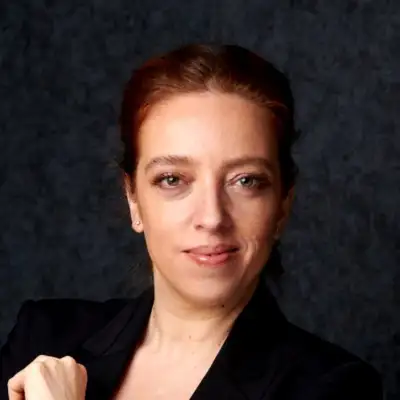
Ep. 370: Carla Aranda - New Thinking on Simplicity for Finance Teams
Welcome back to Count Me In. Today's conversation is about complexity and the paradox it creates in how we work every day. My guest, Carla Aranda, is a global finance executive with more than twenty five years of experience building a finance career across continents, industries, company sizes, from a small shop in Argentina to global fashion and beauty brands like L'Oreal and Revlon. Carla writes and speaks about simplicity as a discipline, not just as a mindset. And she has practical ideas about why teams overcomplicate their work and how to reverse that pattern.
Adam Larson:We talk about her subtraction mentality, the idea of saying no with context, and how small changes build the courage to challenge outdated processes. Here's my conversation with Carla. Well, Carla, I'm so excited to have you on the podcast as we're going to be talking about complexity and the paradox that that brings when we're trying to work in our in our everyday lives. But I wanted to start a little bit about your story. You know, you have been more than twenty five years in finance, stretching continents and countries, and in the fashion, the beauty industry.
Adam Larson:And maybe you could walk me back to the beginning of that journey. What drew you to finance, and how did those early years shape, the way you think about how you work?
Carla Aranda:Hi, Adam. Very nice, to be here, and thank you for that question because you are breaking me back twenty five years ago. That sounds like a long time. I think that I would say that my first summer job was what brought me into finance. I was working as a salesperson in a local shop back in Argentina and I was very curious how they were doing business, you know, how the owner could set the pricing of the products, how they would manage inventory, why some items were moving faster than other ones, what happened if a customer comes and asks for a product that wasn't available.
Carla Aranda:So all those things, like, start, like, getting my wheels turning, and I realized that finance could give me that understanding of the business, and I'm talking beyond understanding the the the numbers. Right? It was more understanding the business and how it work. And also early in my career, you mentioned about working in different countries, I realized that I wanted to have an international career. So I think those first jobs that I had is what really sets, you know, the route that I wanted to take.
Adam Larson:That's awesome. Yeah. Because when when you first see somebody doing business, you're like, how does this work? What is this? What are these things like you're you get buying and selling?
Adam Larson:And it's it's confusing at first because you're like, what what is this? What is happening?
Carla Aranda:Yeah, and at that time like they didn't have any systems or anything in that local shop, so my question was how the owner knows the inventory that they have to buy. Yeah. It was kind of intriguing, know, and at the end I thought okay maybe I'm gonna follow finance and see what happens. So
Adam Larson:where did this idea you know, you wrote in your first article about like the idea of simplicity, how we need to take a simplistic view, especially in our work, in our lives. When did that conviction first take hold for you? You know, was there a particular moment or experience in your career that you're like, hey, something has to change here?
Carla Aranda:Yeah. I think that, again, it was my first corporate job. I was very junior and I was literally doing photocopies, you know, like photocopying reports and binding them. And at that time we didn't have the spiral, I was punching the pages and putting it in the folder. And I remember the first time that I walk in in one of the leadership team office, and I saw my binders in the shelves, nobody touch it.
Carla Aranda:And then I realized, yeah, I'm becoming very efficient of doing things that nobody's using. And then I started to realize why are we doing that? Why I was doing that? Of course, I kept doing it because it was part of my job, but that's a that story goes with me everywhere. And even today, if I see a leader walking from meeting to meeting with a binder under the the arm, I have flashbacks from that time because, that really was the beginning of me asking, like, why are we overcomplicating, creating all this extra work?
Carla Aranda:And really, wasn't adding value at that time doing that.
Adam Larson:Yeah, it's interesting when when you start looking at how people are doing their work and you start to simplify things. Suddenly jobs go away because you're realizing, hey, I had five people doing this thing that one person can do if I just do this and this. What does that look like as a leader when you're trying to simplify things? You make it a better experience for the people doing the work, but then suddenly people are without a job now because you had five people doing something that only one person needs to do now.
Carla Aranda:Yeah, I think I would leave that aside because I think it's this whole narrative in the marketplace today that because of new technology, people losing their jobs. I think that in my view that comes because companies were growing so fast that they never look at the complexity that they were putting in, and this time with the new technologies are taking the opportunity to review their organization.
Adam Larson:I
Carla Aranda:do believe that when you start simplifying, you kind of create the capacity for your teams to do something else and I think that's where growth happens. That is where you can start focusing on creating value. So I think that's the the point of so many layoffs lately. Think it's just a company narrative. That's my personal opinion.
Carla Aranda:But I think this concept of simplicity has to be an ongoing thing so companies don't get to that point that they have to do massive layoffs.
Adam Larson:Yeah. And that's that's never easy for any company because suddenly you're laying people off and that's people's jobs and that's difficult for a team and for a culture. But hey, but the work is getting on faster. What how do you balance that as a leader?
Carla Aranda:Yeah. True. That is so true. Like, the new technologies, what what they do is to make things faster. So I think it's a question I probably you heard this concept of garbage in, garbage out.
Carla Aranda:Right? So you have to be very careful what you put in that new technology because that's gonna be the output that you get. I think for me being in finance is fascinating to see how things could move faster, especially in things that are tasks that are repetitive, tedious, tasks that probably don't add that much value. I'm more than glad to give the case to AI or any new tool to do that. So I can't focus more, you know, on the strategy and all that.
Carla Aranda:So I don't have at all a doom view of new technologies. On the contrary, think that I'm very hype about it and the benefit that could bring to a function like finance.
Adam Larson:Yeah. So in your article, you talk about simplicity as a discipline and not just a philosophy. Maybe you can help like our audience understand what that distinction means to you and what why do you think so many teams fall into complexity in the first place if it isn't laziness or incompetence or just like they just don't know how?
Carla Aranda:Yeah. I have to clarify because for me philosophy is what you believe.
Adam Larson:Okay.
Carla Aranda:But simplicity is a discipline because it's something that you do repetitively, in repetition. Yeah. So I think those are two different things and that's why I mentioned simplicity more as a discipline rather than a philosophy. Because you end up doing recurring things, recurring choices. You continue you do repetitively, review things, you challenge, you stop things.
Carla Aranda:And I think that during that process, it's very important that you resist unnecessary additions. And this one goes to your question of why complexity piles up because I think it's easy. I think that it's easy to keep adding, and I think that when you get into the mindset of removing, that really require courage because you need to question, you need to challenge. So I think teams in general get into a habit of doing things without thinking what is the need for it, what problem they are trying to solve. So I think that's why complexity gets easy, you know, and it's compounded because over time, like, you keep adding and keep adding.
Carla Aranda:So it's I think it tends to be easier than simplicity, going the route of simplicity, I can tell you that. But when you get the swing of it, you're gonna love trying to find opportunities to simplify and find that moment for your team to focus on something else.
Adam Larson:Now you just mentioned a little bit ago that a lot of times teams that are when organizations are growing very quickly, they just keep adding on and adding on and adding on like you just mentioned. What does that look like from like, especially from a finance function when you have to say that kind of like idea of no with context, like, no, but no, but we need to take a moment. No, but and but they're saying, no, we don't have time for that. How do you balance that no time versus, Hey, we need to make sure that we're doing this for the right purpose and doing it the right way so we're not just adding on, adding on, adding on, like you've been saying?
Carla Aranda:Yeah, I think my first approach on that is first to listen what is the goal, what is the team or my leadership team is trying to achieve.
Adam Larson:Yeah.
Carla Aranda:And then think if there are options to offer. I may say no to how you want to solve the problem, I would never say no to the business needs. So if there's a business need, I'm gonna listen to that and try to find if there are alternatives. And during that process, think that it's very important and this is the piece that I think sometimes finance leader means is to give context. Why are you offering a different solution?
Carla Aranda:Without the context, people gets wondering like, why is she saying no to this? You know? But if you give context, feel that that's very relevant. I can give you an example here. This one was a recent one.
Carla Aranda:My president asked me to do, like, a high level, simulation. We agreed that it was a high level. But every time that we sat down to review, there was a new iteration, new changes. So there was at some point, I was thinking, like, I think we are going, like, very further into the details, and that requires my team to spend extra time. Probably, they need to work that weekend, to finalize the work.
Carla Aranda:So I kind of understood what he was going for, what he was looking for, and I realized that this information we had, we had the answer there. So basically, went back to him and I said, I'm not gonna do this other iteration or add this extra example, but this this is the reason why. Mhmm. I mentioned to him the information we have so far, think, can help you to convey the story. And two, this is gonna require this extra time.
Carla Aranda:And to be honest, there was no pushback. It was just a question on letting him know why not. And sometimes I've seen it firsthand, like, leader that says no. You know, like, being the policeman, the controller, but that's not the way in my view. I think that as long as you give context, they understand, your business partners would understand why you're offering a different alternative.
Adam Larson:Yeah. I think a lot of times the Finance and Accounting team gets the bad rap for being the king of no, you know, the king or queen of no where it's like, well, no, we can't do that or no, not this, not this, but I like this idea of no with context, no, but let's talk about it. Like, let's say, well, we can't do this, but we can do that. Giving solutions with your no, almost, right?
Carla Aranda:Yeah, absolutely.
Adam Larson:So what is that, you know, from your experience, you know, you have a lot of experience especially in the beauty industry and you know, that's it's an interesting that I that I don't have as much experience with but I am fascinated by it because there's you guys the it's an industry that's constantly coming out with new products, constantly revolutionizing, constantly bringing on partners like you have new faces of the or new new models or new celebrities that are coming in. What does that look like from a finance perspective as as those things are constantly changing and you have to be the know with context and try to give that that that proper pictures for the organization?
Carla Aranda:I can tell you that for sure it's fast paced. Mhmm. Because as you mentioned, there's a new lounge, there's a new face for the brand. There's always something new that you have to chase. Being in a function like finance, I think that you could make it very fun or you could make it very tedious.
Carla Aranda:And I think that in environments like these that are so dynamic, I think this concept of simplicity is so important because you have to make a space for the new things. So it's funny because I always had this mindset. I call it subtraction mentality. And I always share with my team, but I always wonder, are they listening really what I'm saying? Yeah.
Carla Aranda:Until one of my team members, I asked her to do a new analysis and she asked me, what what can I stop doing so I can make a space for this? And I'm thinking, oh, okay. My my job is done here because she listened. And that's, I think, exactly the way to work in a very dynamic environment. You have to make a space for those new things because you cannot say if there's a new launch, you cannot say, sorry, but I don't have time.
Carla Aranda:I'm not gonna be able to to see if the launch is performing well or not or not. So that's why it's a fast paced environment, like push you to constantly be thinking about how you can simplify the way that you operate. Yeah.
Adam Larson:I love that. I love that idea of wondering, hey. Are my is my is my team listening to me? Are they doing it? And then seeing that time, you're like, yes.
Adam Larson:It's working.
Carla Aranda:Absolutely. Yes.
Adam Larson:So, when in your in your first article you wrote, you said, you know, don't automate a process that shouldn't exist. And I think that that kind of goes along with your idea, like what you said earlier, garbage in garbage out, more looking at data. When you're looking at, you know, these new tools, these new AI tools, automation tools, you know, what's that conversation that you have to make sure that, hey, we were moving fast, but we want to make sure that we're automating the right things. We're putting the right data into our systems.
Carla Aranda:Yeah. I've seen it so many times that the number one mistake that I see when there's a new implementation of ERP, a new tool, or even when you go the route of centralized operations like a shared service center, is the belief that what you have, you lift and you shift to the new model. I think that's wrong and that's where I see some of these implementations that doesn't work because there's a process in place that at some point was trying to solve an issue. I don't know, a process approval, a transaction, or whatsoever. But maybe today, you don't need that.
Carla Aranda:So lifting and shifting, what it create is at the end of the day, you're gonna overinvest trying to customize the the tool to accommodate and have that extra report that you used to need. And then at the end of the day, you realize that, oh, I don't need all that. So you're kind of carrying on with the the complexity that you have. So that's why I mentioned garbage in or garbage out is the same concept that technology only accelerates what you give it. So if you give something that is already complex or shouldn't exist on the first place, your output is not gonna be reflective of what you need at that time.
Carla Aranda:So I think it's, when you go through these processes, it's this constant question of, okay. We're gonna go through this task. That's is this task relevant and important for the next stage of the company? I'm talking about task, transaction, process, whatever it is. I personally implemented a shared service center in one of the companies that I've been that I've been, and That was the number one question and I think that's why it was that implementation was very successful because we kind of clean up first, we simplify, we eliminate what we didn't do and then we move to the new model.
Adam Larson:Yeah. So what does that look like for a team that's they're listening to this and they're saying, okay, I'm really interested in trying to simplify. You know, want to apply this when I'm when I'm working on AI tools. You know, you mentioned some questions like you said your employee was like, well, what can I stop in order for me to do this? Like, that's one of the questions like, what can I stop and what happens if we stop so we can work on this?
Adam Larson:You know, what's non negotiable? You know, walk me, like, can you maybe walk through that, what that looks like in practice for your team?
Carla Aranda:Yeah. On a real case scenario, probably the way that it's going to work is that you sit down with a team, you try to define what's the goal of what what you're trying to achieve, and then they start challenging every step. If you recognize that there are something that if there's some, if you don't see like there's a red flag during the process, I mean, you continue to do it and then you could question like what happened if I stopped doing that? If the answer is, well, there's gonna be consequences, so probably I would say go to the route of simplify and standardize and maybe potentially later on you automate. Mhmm.
Carla Aranda:But if during that questioning, realize that there is no consequence to stop doing something, just stop altogether. And my personal advice is I would say that don't try to boil the ocean at once, like, with something small. Pick one task, one recurring meeting that you have, something that takes a lot of your time during the week, and try to go through this process. Think about what is the consequence if you stop it. If there's no serious consequences, just pause it at least for thirty days and see what happens.
Carla Aranda:And you're going to be surprised that sometimes nothing happens and that allows you to stop it altogether.
Adam Larson:Yeah. Well, it's like a it's a step by step process because it can be super overwhelming looking at a process that you need to simplify or things you need to work on. There can be stubborn culture. The culture doesn't want to change. Oh, yeah.
Adam Larson:And so what does that look like? You know, because you mentioned like this something like this the subtract ion mentality. What does that look like especially when there is a stubborn culture in place and you want to help make these changes, but people aren't really willing to do these changes, but it's affecting the bottom line, it's affecting the organization?
Carla Aranda:I think I've been in that situation, and I think it's a question of building momentum, like, as I mentioned, just pick one small thing, show the impact that has in your team and the rest of the organization, And then praise, you know, the person that is doing that or found that opportunity because then it's kind of it's gonna create like a repetition, it's gonna inspire others. I've been in organizations that were very stubborn on how things were being done, but the minute that you show the benefit of it, they start to incorporate it. But again, you have to be small, you have to go with a very curious mind and very humble. If you go in, in a new role and you say, okay, now I'm going to change everything, probably yeah, you're going to get a lot of pushbacks.
Adam Larson:Yeah, you are going to get pushed back. Like you said, you can't boil the ocean. The even thought of even trying to boil the ocean is like, wait, how would that even work?
Carla Aranda:Exactly.
Adam Larson:And taking things small is a great first step, you know, and as you're taking those first steps and as you're building that case, you know, you can that slowly kind of changes the culture from within, which is kind of how culture changes happen anyway, right?
Carla Aranda:Yeah. Yeah, I think that it's in terms of the culture is exactly what I said before. It's first trying to create that momentum and then be consistent as a leader, be consistent in the message until it sticks. You know? I gave you this example of my team member.
Carla Aranda:I was wondering if it was sticking, but I realized that it was. So I think your consistency in the message that really makes that trustee. And one thing that I've done and I think that is very important is really what I mentioned before, like reward the people that is taking this route. Because at the end it's going to inspire others. I can give you an example here.
Carla Aranda:What I started to do is in my quarterly meetings with my whole team, I would find like a small portion of the meeting to highlight someone's project or idea. The project typically went into this automation simplification route. And people, you know, start seeing, oh, I'm gonna have the chance to present in front of all the finance leaders. I'm gonna be recognized for the job that I've done this. And I can tell you that that inspire other team members to find out new ideas or new things to do.
Carla Aranda:So I think it's very important that once you set that mindset and you are consistent in expressing, you know, this idea of simplicity that you also recognize the people that is following that path as well.
Adam Larson:And what does that look like when, you know, let's say you have your, you call it chief simplifiers, those people who are really simplifying things within their organization. And what if, like, not everybody in the team is on board or they're having a slower time? What does that look like when you're trying to, like, encourage those people who might, it might not come as naturally to simplify because complex is what they do.
Carla Aranda:Yeah, I think that I have that type of team members. I think you have to have a very legal eye in terms of who could be a good ambassador for this cause. The chief simplifiers. And typically I found there is the individual that is more tech savvy, the individual that is very curious, the one that doesn't mind to spend some extra hours working on a project in parallel. So I tend to lean on those people who are the ones that are gonna help me build the momentum.
Carla Aranda:Mhmm. That's what I always done in any new teams that I'm I'm leading. And the people that I mean, there's people for everything. I mean, there's people that is good with technology. There's people that is not, or they don't have an interest simplifying, and it's just a question of keep hammering and, you know, and where I mentioned the consistency of the message and show them, like, maybe there's an easy route to do the work that you're doing that could release capacity for you to do something more fun.
Carla Aranda:And I'm not saying to, you know, to have free hours to do nothing. I'm saying, like, maybe you can put that person to work in a more strategic project and so forth. So you start showing them the the fruit, if you wish, of that effort and they tend to follow. But sometimes some people takes a little bit longer than others.
Adam Larson:So what's your what's your response to somebody who may be listening to this and they're like, you know, I have the mentality if it isn't broke, don't fix it. You know, and that's a very certain culture mentality where, you know, Hey, this is the process we've always done. It's working perfectly fine. I don't want to mess things up because if I mess things up, it's going to change everything, blah blah blah. What would be your response to somebody who came to you after reading your article and seeing everything like, well, it's not broken.
Adam Larson:Why would I fix it? Yeah, it may simplify things, but it's working fine.
Carla Aranda:Yeah. I feel that, well, first of all, I think what I said, take some courage to kind of challenge things the way that we are doing it today. Maybe with all this new environment of new technologies that are out there, maybe there's an easier way to do the job. So I would say that the one thing that I would tell that person is try to focus on those tasks that are taking the longer. I mean, I'm sure that there's a task during your day to day that you're not that excited to do.
Carla Aranda:So think about that task and maybe try to see, you know, where are the different these steps that I that I mentioned, like, if you can simplify, if you can eliminate. And one thing that I want to clarify for me, the ultimate form of simplification is elimination altogether. But I realized that sometimes there are consequences to it. So in that case, I would go the route of simplicity, automate, and so forth. So I think that even if they think that nothing is broken and is working well, I think there might be a better way to do it.
Carla Aranda:It's a question of modernizing what you do. I remember back in the day, like few years ago, when dashboarding became so popular with Power BI and so forth, mean, people start realizing that it was a great tool to have, you know, reports in a visual way and everybody jump on it. And maybe you were doing like the reports in Excel and at work and it wasn't broken, but now there was a new modern way to do it. So why not to jump into it, right? Yeah,
Adam Larson:I like that of having the courage because maybe in your mind it is not broken and you shouldn't fix it. However, how much money and time are you spending on this? Whatever this task or whatever this project is, you know, so you may not you may not think it's broken, but what if what if you were able to take back twenty hours of somebody's time because you've simplified the process or removed an element of the process and then suddenly that person has twenty extra hours a week to do something else to help the organization? So I think you have to reframe your way of thinking based on what you're saying. I think you have to reframe the way you're thinking to understand it.
Adam Larson:Am I understanding that right?
Carla Aranda:That is 100% you got it exactly correctly. And that's exactly the mindset that I try to instill in the teams that I work with. And I think it has to do also with this curiosity that I mentioned. Yeah. Because you have to be curious enough to question if that task could be done differently.
Carla Aranda:But I think at the moment that they realize that, oh, I'm picking up, I don't know, two hours per week. One clear example is for instance, recurring meetings. Yeah. I remember when I joined in one of the roles that I had, I inherited a lot of recurring meetings. And I remember sitting in some of the meetings like questioning, like, what I'm doing here.
Carla Aranda:So I feel even those small moments that you have a, you know, recurring meeting, maybe question why. Mhmm. And what I start doing, like, first of all, I did I took the challenge to remove all the recurring meetings and then see who come back and say, you are really required to be in this meeting, and then I jump in. And then in another case is I evaluate that maybe it was my opportunity to delegate and send someone in my team to those meetings. And there you have.
Carla Aranda:I pick up long hours because before it was filled my calendar was filled with workover meetings, and now I have time time to think and time to do exciting things.
Adam Larson:Yeah, it's interesting when when your time is full of meetings, never have time to actually do your own work and then that goes into, hey, I have to do this outside of work or I'm doing it, my hours are extended, extended, extended and suddenly that turns into burnout, which you know we could have hours of conversation around what burnout looks like within people and how
Carla Aranda:to And recover from those
Adam Larson:so like, I like this idea of like, hey, start with like simple things, start with small things, start with the little things first. And then as you get better at it, you can move to bigger things, bigger tasks.
Carla Aranda:You know, I tell you, there was once I was talking to a CFO and we were talking about Simplicity and he replied to me, yeah, I have to find time and I'm gonna start simplifying the task. And then I left, I'm thinking like, no, that's the opposite. You have to simplify to then find the time. Yeah. Because as a CFO or as a leader, you're never going to find the time.
Carla Aranda:So that's why I had simplicity comes first and not the time to find the simplicity opportunity. You know what I mean?
Adam Larson:Yeah, it does. You know, like the second article you wrote, you said you write about the busy paradox where everybody says I'm too busy to do that. I'm too busy to do this. I'm too busy to do that. And then nothing ever gets done because we're always too busy.
Adam Larson:And there's an age old saying that goes like, you give your time to what you deem is important. And so if you you think about that from that perspective, you're like, wait, what is important? And am I just doing busy work? And can I simplify to get rid of some like there's so many questions you can ask yourself there?
Carla Aranda:Yeah, in that article I kind of share a story that at some point was my story but then I decided to move on from that. That is probably imagine this person, I'm sure that you saw it in your workplace, or maybe you were at some point that person, the person that walks in the corridor with the laptop open, phone, you know, on the shoulder, a mug with a coffee and maybe lunch during meetings. Like when people have the time to think and I was that person and that's why I decided, okay, I'm gonna need to be more drastic in finding those times because otherwise you get drained into the complexity of any organization today.
Adam Larson:Yeah, you can really. And I think we've all either been that person at one point in our careers or we've seen that person and be like, Oh gosh, what's going on with them?
Carla Aranda:What's going on? Yeah.
Adam Larson:What about this idea of like you've also read about the safety paradox where, you know, somebody is like they feel comfortable in what they're doing and you've already mentioned this conversation where we need to have the courage to take that first step. But how do you balance courage and safety? Because, you know, you want people to feel safe, but you also need to have courage. Like how do you balance those two?
Carla Aranda:Yeah, I think for instance, in the in the final function, there's a lot of risk management, right? Like that's super important. So there are processes that we have in place in organizations that is there for a reason. And that's why the courage is to question why and go deeper to try to see what that process is trying to solve for. Because think about this, and I'm sure that you came across this situation that someone along the process decided to add a new step, an extra step thinking that it's gonna be safer.
Carla Aranda:But at the end what he's doing is like really mapping the situation, adding that extra step. And in the article that you mentioned, I talk about an example of, there was an approval, process in a in a company that that I was part of where, the process need to go through a whole approval committee every six months. And there was a manual process because we had to fill in like an Excel file with an ROI and different indicators. And if for whatever reason you miss that deadline of to to present to that committee, you had to wait six extra months to get to the next round of approvals. I mean, I get it, there was a risk management, the company was trying to be safe in the way that we were investing money, but I mean, there's also a limit to that because when you're trying to invest or allocate capital on something and you have to wait six extra months, I mean, the train already passed.
Carla Aranda:I mean, maybe that technology becomes obsolete. Think about today AI and how fast it's moving. So those kind of things, you have to have the courage in an organization to question that kind of examples that I gave, that kind of approval process, for instance.
Adam Larson:So somebody's listening to this and they're like, hey, I have the like, I'm I'm building up the courage because I really wanna work on this. I really wanna do this. But maybe they're not, you know, they're not a CFO or they're not a leader. They're just somebody within their there's somebody within the Finance and Accounting team. What does that look like to have that courage?
Adam Larson:And maybe you're not getting buy in from anybody else, but you're doing it in your own tasks. What does that look like to try to become that Chief Simplifier, even though you're not a leader within the organization?
Carla Aranda:Well, I've been there. I told you about my dad's first word that I was doing I was doing it for myself at that time. I started questioning. And by the way, in that example that I gave you, I reduced the number of binders that I was producing. For me, it was a huge win.
Carla Aranda:I mean, I didn't eliminate it altogether, but at least I questioned the number of binders that I was producing. I did it for me because I didn't want to spend my days doing binders. So I would encourage that person that you mentioned, the example that you gave, I would encourage to continue do it at least for themselves to find the time to really think on something else, you know, to do some extra projects. And maybe with that capacity that you release, you can go to your manager and say, there any project that I can help you with? And I can tell you your manager is gonna be delighted.
Carla Aranda:You're not gonna get a pushback on that. So I would encourage that person to do it at least for themselves, and to release that time, to do something more fun.
Adam Larson:Yeah. Love that. Well, Carla, this has been an amazing conversation. Thank you for bringing Simplicity and just your perspective and your great experience on this. And just for our audience, we've been mentioning a couple articles that Carla wrote.
Adam Larson:Please check the link in our show notes. You'll see a link to both of those articles if you wanna look at it and keep the conversation going on LinkedIn. I think that would be amazing. So thank you again, Carla, for coming on.
Carla Aranda:Thank you. This was lovely. Thank you for having me. Bye.
Announcer:This has been Count Me In. I am a podcast providing you with the latest perspectives of thought leaders from the accounting and finance profession. If you like what you heard and you'd like to be counted in for more relevant accounting and finance education, visit IMA's website at www.imanet.org.
Creators and Guests