Ep. 368: Kapil Arora - Upskilling for Success: Tech, AI, and the Evolving Finance Professional
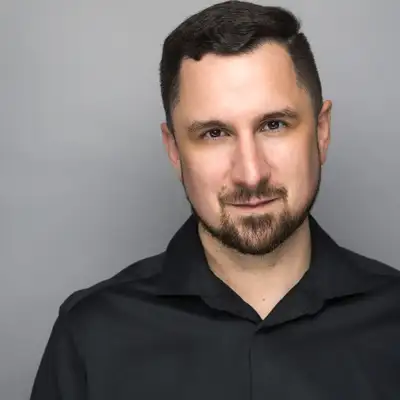
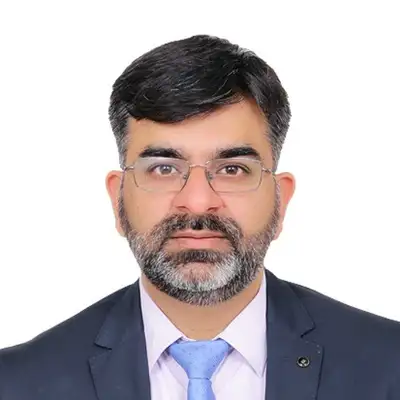
Welcome to Count Me In. I'm Adam Larson. Today, I'm joined by Kapil Arora, a finance professional whose career has taken him from India to The UK and back again, working in top firms like KPMG, and now Grant Thornton. In this episode, we get into the fast paced world of accounting and finance, diving into the real world skills gap facing new graduates, and how students and professionals can stay ahead as tech and AI rapidly reshape the industry. We'll talk about the challenges of upskilling, the new demands of sustainable reporting, and what it takes for leaders and teams to build future ready careers.
Adam Larson:So whether you're just starting out or have decades in the field, there's something in here for everyone who's passionate about continuous learning and staying relevant in a changing landscape. Let's get started. Well, Kapil, I'm so excited to have you on the podcast today. And when you and I were chatting before the podcast, you were letting me know, you know, you've had quite the journey through your profession. Maybe you can walk me back to the beginning and help me understand what drew you into this world and how that path kind of took shape as part of your career.
Kapil Arora:Thanks. Thanks Adam for inviting me. Right. So, you know, we've been discussing regarding that, you know, I started my career with ACCA, right. So I have done my ACCA from UK.
Kapil Arora:Right. And that was done back in 2009. Before that, I had been studying in India, born and brought up in India, specifically, know, the central, I would say, North India, Delhi, Delhi region. Right? So born and brought up here, did all my schooling, college, undergrad, and everything here.
Kapil Arora:And then I have chosen to go to The UK to pursue my ACCA career. You know, that's how it began. And when I completed my ACCA, I came back to India and then started working with companies like KPMG, and now working with Grand Theft.
Adam Larson:Well, that's a great story, just being, you know, being able to have the experience of, you know, go to a different country, you know, learn what's going on there, get certified, come back to where you're from and being able to join these big service organizations, which I'm, you know, you, you, you've learned a lot over the years. You know, what are you kinda seeing on the on the ground as you you know, you're working the Grant Thornton with organizations? Are are there skills gap, especially in the India Indian finance and accounting industry that was bigger than peep most people realize?
Kapil Arora:I would say that today, things are moving very fast, right? So, whatever we do, right, there's always a gap, right? So, things are changing, whether the new regulations are coming in, new technologies coming in. That kind of gap has always been there. However, when I talk about the gap particularly, you know, when I landed back in India, I realized that there's always a gap also between what we are studying versus what is expected out of us in our work environment.
Kapil Arora:So these companies are looking for different kinds of skill sets which are not being taught directly in the colleges or any professional qualification. So that was the gap which I found. And I observed that that gap is getting wider and wider, alright, every day.
Adam Larson:So what do you what do you do when you're when you come across these new undergraduate students who are coming into the workplace and you're trying to work with them? How do you close that gap? Because, you know, with with colleges and universities not moving as fast as the the industries are moving, how do you how are you able to close that gap and and help these this next generation of of employees, you know, be be productive in the workplace?
Kapil Arora:So it's a big challenge today. Right? So I would say that today what is happening that we need to invest a lot in all the people whom we are recruiting for the first time. Right? So all the first time graduates or new joiners are having some sort of, you know, the gap related to what is expected out of them.
Kapil Arora:So there, you need to invest a lot of time in giving them training, bringing them to a level where you can start putting them onto a job. Right? So that's what is required. That's what we are doing. So the kind of investment we need to do to set the expectation and put them to work.
Kapil Arora:So, that is the thing we are actually working on and investing on. I feel that if something can be done around that particular area, it's a good way or long way to help all these newcomers as well as the corporate at the same time.
Adam Larson:Do you think that how long do you think it'll take before the universities catch up and so that they can help help the next generation, you know, before they get there so that organizations don't have to take that burden on? Do you think there'll be a balance eventually?
Kapil Arora:Do you mean that what should they do? How how long they can take to do that?
Adam Larson:You know, it could be a little bit of both because, you know, you're thinking about a lot of times universities don't move as fast as the industry's moving. But, you know, eventually you want those you want those universities to get the students at a better place so that the corporation doesn't have to take the burden on.
Kapil Arora:So so what is happening now, Adam, is that, you know, there are a lot many things which are which are being adopted by these universities to to, you know, to keep a pace of that what is required in the in the corporate. Right? So they are adopting new curriculums. They are adopting new qualifications also. So what is happening is that they are bringing in qualifications like CMA, ACCA, CFA into their qualification and trying to give, I would say, the international curriculum to the students.
Kapil Arora:Which is more practical, which is more, I would say, case oriented problem oriented programs. So, students are learning and at the same time, they are experiencing what is actually required these kinds of corporates. So, that is something which they are already doing. They have already started adopting the global qualifications which are helping them to adopt what is required in the corporates today. So, these are more practical or case oriented qualifications which give students the exposure regarding how they can not just learn but experience what they have seen in the curriculum.
Kapil Arora:It's what something is happening and these qualifications like ACCA, USCMA, CFA, all these qualifications are helping students to learn fast, I would say, but at the same time to get the expectation set right for all the corporates. So that's something which is a good thing that universities are doing. Plus apart from that, they have also started interacting with industries, you know, professionals to make sure that not just academia or the professors are now only teaching, but the people coming from industry are also going to universities and sharing their experiences with the students. So, you know, I feel that this is the kind of change which we have seen. That's the way the balance is balancing the way the gap can be can be fixed somewhere.
Adam Larson:Mhmm. Well, and and there's so many certifications out there, and I'm sure it can get confusing for students because it's like, which direction do I go? Obviously, at the IMA, we promote the USCMA as one of those certifications. What are your advice to students when they're looking to pursue, to grow in their career? What questions should they be asking when they're looking at certifications?
Kapil Arora:So, they do ask these kind of questions that and they are many a times confused when it comes that particular age or maybe at that particular time when they have to choose at which qualification they should go for. So, my advice to everyone would be that choose a path, right? If you want to be in you have to choose the right qualification which can take you to the audit side or taxation side. If you want to be in finance or maybe let's say investment banker, then you have to choose the right qualification. If you want to be a management accountant, right, and know about what is happening around the business, then choosing USCMA particularly could guide them better.
Kapil Arora:So these are the advices which we give. My advice would always be based on what their ultimate outcome or expectation is from their career path. Right? If they are choosing to be accountant, then, you know, the the right qualification has to be as per their need.
Adam Larson:Yeah. That makes a lot of sense, you know, to say, okay, where do you wanna go? What's your goal? And then start going down that path. And then obviously, obviously, like once you start going down that path, then you have to kinda make decision, do I wanna continue down that path?
Adam Larson:Because no matter which certification you choose, it's a lot of studying plus, you know, along with your whatever coursework or schoolwork that you're doing, it can be a lot on each professional.
Kapil Arora:Yep. And that's true. That's true. So that's how we are advising. And we also advise that, you know, don't just look at today in today's scenario.
Kapil Arora:Whatever you do, right, make sure that you are keeping the tech piece intact, right, the AI, the data, everything intact to make sure that you are learning about how these things have been built and working. Right? So because anyways, you can't do away with tech in any given scenario. So, along with that, you choose your qualification in finance. Choose which tech platform tech you want to pursue, right?
Kapil Arora:So that you have the fair idea. The good part about these international qualifications is that somewhat everybody is having tech, you know, incorporated within the curriculum itself. So they are not just making you the finance professional, they are making you the finance professional who understand the tech better. Right?
Adam Larson:Yeah. Well, let's talk a little bit about AI because it's it's definitely reshaping how, you know, firms are scaling, how people are looking at their their daily jobs. So not only the students who are upcoming need to be on it, but finance professionals who've, you know, have twenty, thirty, forty year careers, they have they're having to upskill themselves. So what does that look like as you're working with firms as they're trying to get all of their employees, not just the new people, but also the people who've been the well seasoned employees have to get caught up on AI as well?
Kapil Arora:It's it's tough. Right? I won't say that it's easy. It's tough because, you know, getting something to change is not is not that easy. Right?
Kapil Arora:An AI adoption is something which which has to be changed, you know, throughout the company. It's not just about that one department has to adopt AI. Right? I feel that everybody has to adopt it. But at the same time, within our businesses also, we are looking at that there is a mindset shift.
Kapil Arora:Everybody is talking about AI first. So if you have anything new to be adopted or new to be done, They say that, can it be done without Hune? Can it be done using AI tools or anything? Right? New technology.
Kapil Arora:Right? So, that shift we have seen. And I feel that because of the same that everybody has to learn or go through the AI upskilling. Right? So that something is happening.
Kapil Arora:And it's not easy. Right? However, I have seen people going through the right kind of AI trainings now. They are looking at that. If they are in finance, they are not just learning about tools.
Kapil Arora:They are looking at that what are the implementation into their particular function or domain. Right? So, that's something which is happening.
Adam Larson:Mhmm. So, what about things like sustainable business reporting and global reporting standards? Because, you know, not only are we having to look at AI and learn those new technologies, we have to look at the impact of those new technologies are having on our processes, the global as a whole. You know, how is that looking as, you know, as finance leaders are looking to look at those non financial reporting numbers? Because that's becoming more and more the standard of having to especially if you're a publicly traded firm, you know, it's becoming more and more the standard.
Adam Larson:And what does that look like as you're trying to get those employees ready and have those standards up to par?
Kapil Arora:I think it's similar, right? So, the thing is that certain regulatory changes are also becoming very important for everybody. You need to talk about a lot many other stuff apart just from financial numbers. Right? Talking about what you are doing for the society, what you are doing for the environment, your people, and everybody.
Kapil Arora:And everybody now understands why this is important. Right? And I feel that the way ESG or the sustainable reporting frameworks which are coming up is helping us to give detailed exposure regarding how companies are operating. And I won't say that it is just the reporting thing which is happening, but at the same time, there is a lot of awareness among the people also. People know that if some companies are looking after or taking care of the environment, at the same time giving them products which are coming from the sustainable growth, right, or not impacting the environment as such.
Kapil Arora:There is always attraction, right? We have seen that there is a big shift which is happening towards electric vehicle, right? So India is adopting very fast on that path also. And moving away from the petrol vehicles or gasoline vehicles. So, is the kind of shift which we have seen And the impact which we also realize that everybody is talking about that.
Kapil Arora:How good, bad, you know, they are doing to do all these things here.
Adam Larson:Yeah. Well, I can imagine it's difficult because not only do finance leaders have to worry about the numbers, worry about the strategy for an organization, help make sure that you're a part of the business table, but it's also like, hey. What are our sustainable business numbers? What, you know, what are our AI numbers? It's like there's so many it's it's like the role of the CFO and the and the and the controller within our organizations, like, especially the CFO, has grown substantially that how are how are how are they able to keep up in the midst of this constant growing that there's so many new things that they have to take on.
Kapil Arora:That's true. That's true. Right? So, their role has gone a bit off collating so much of information. But at the same time, you have a lot of people who are providing information from different areas, right?
Kapil Arora:So you have to be very conscious about what needs to be reported, how it is getting reported, what impact it can have on your business in the long run. Right? So that that also needs to be considerable, you know, when when these numbers are going out.
Adam Larson:Mhmm. Well, and it also it it makes sense why you have to make sure that your tech stack, your the the software within your organization is up to par so that when all those different reports come in, you can have that summarized in a way that you can easily be easily accessible so that you can report that to board. You can, you know, keep with with all the Yeah. With all the different reporting and stuff like that, which can get overwhelming. But, again, these are skills that new CFOs have to kinda take on with everything as it's changing, especially.
Kapil Arora:No, of course. I think there's lot of upskilling which is required at that level also. Right? Because we know that the kind of learning they may require at their level, right, to be updated with everything which is changing around us. Right?
Kapil Arora:And at the same time, adopting every new thing which is coming in, including technology and everything, it's not easy for them.
Adam Larson:So as we look at trying to set up future ready leaders, if you were to summarize a combination of skills or mindsets that would kind of set leaders apart as we look, you know, into the future of what a future finance ready future ready finance leader looks like. Maybe you could summarize that for us.
Kapil Arora:For future ready finance leaders, I would say that of course they should have the understanding on contact along with the knowledge or the deep knowledge of their domain. But at the same time, I would say that somebody who is having a zeal to learn every day. Right? Because things would always be changing. Right?
Kapil Arora:So things are not going to the same or not going to remain constant. Right? So change will always be there. Right? So somebody who knows how to adapt things fast, how to move fast, right?
Kapil Arora:Anything comes in could be an opportunity for you. You don't see everything as a threat. Right? So, I think that kind of mindset you should have. Resilience you should have to ensure that whatever you are doing, you keep on doing on a regular basis.
Kapil Arora:You don't have to change your routine if things are changing around us. Right, so that kind of mindset, I believe, is somewhat required. Because you know, the concepts, the technology, I guess everything will change. Ten years from now, things would be very different. But something which can make you relevant is that how you adapt, you know, everything, the situation, and you learn through that how to, you know, pass through that.
Kapil Arora:And so that is something which every every person, right, not just finance professional, but I would say every every individual. Mhmm.
Adam Larson:So how have you within your organization, how have you kind of helped adapt your team, you know, to these ever changing needs and stuff like that? Because, know, as professional services, lot of times, you talk about from the perspective of, hey, how are you helping organizations that we work with? But how is that how how's that affected in your internal team?
Kapil Arora:So, Adam, what what we do generally is that we ask everybody to make sure that, you know, whatever we are doing is somewhat up to date, right, to what market needs. Right? Or the way things are happening. If you won't learn, it will be very difficult for us to sustain for a longer period. Right?
Kapil Arora:So that something is there. At the same time, them the opportunity to learn, you know, the new things, new skills which are required to perform their task. So that's something we are doing. Right? And giving them the opportunity to bring in that what are the new ideas.
Kapil Arora:Because I feel that the new age people coming in, they know tech better than anybody else. And they learn fast. So they may think differently, but they are the fast learners, fast performers. And I think that the kind of attitude they are having, they have capability of taking businesses to different levels. Right?
Kapil Arora:So, that's what I believe. And giving them the opportunity, at the same time, chance to learn. Right? That's what we are doing.
Adam Larson:I love that because a lot of times you get the when organizations are trying to help their teams advance like you were just talking about, it runs into the, like, the I'm too busy excuses. You have all these excuses that come up. But when you create that space, like, kind of what you described, it allows people to say, oh, I can take an hour here, a half hour there, and learn something new and apply it right away as opposed to I need to go away for three days and take a class and maybe apply 10% of it. So, it's that just in time learning that seems to be more effective in organizations that I'm seeing.
Kapil Arora:True. True. I think that's that's the way people are learning nowadays.
Adam Larson:Yeah. That's great. Well, Kapil, this has been a great conversation. You know, I really appreciate you coming on the Count Me In podcast and sharing what you're seeing, especially from a Grant Thornton perspective and and just from all your experience with working in different professional services organizations. So we really appreciate you coming on the podcast today.
Kapil Arora:Thanks a lot, Adam. And I feel that people who may listen to this would see that or may may find some value out of it.
Announcer:This has been Count Me In, IMA's podcast, providing you with the latest perspectives of thought leaders from the accounting and finance profession. If you like what you heard and you'd like to be counted in for more relevant accounting and finance education, visit IMA's website at www.imanet.org.