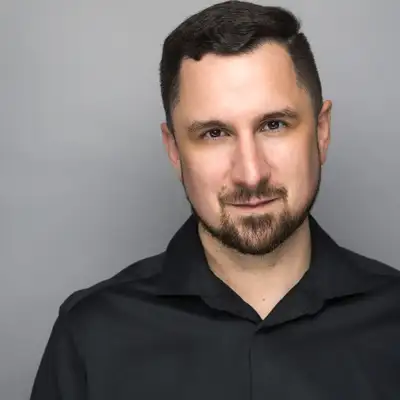
Ep. 367: Ted Bozarth - Why Every Young Professional Needs a Mentor
Hey, welcome back to Count Me In. I'm Adam Larson, today we're diving into the power of mentorship with our special guest, Ted Bozarth, founder of the Set Fire Foundation. Now Ted's career has been anything but conventional. He started out as a self taught programmer, ran his own IT consulting business, and then spent thirty years in supply chain management before dedicating his retirement to giving back. Now, he is focused on lighting the inner fire of college students, helping them navigate the confusing world between independence and adulthood, and ultimately finding their own unique path.
Adam Larson:Through the Set Fire Foundation, Ted and his team are redefining what mentorship means supporting students, not just as future professionals, but as people with real world tools, resources, and honest conversations they need. So whether you're curious about becoming a mentor or looking for guidance yourself, I promise you'll take away practical insights and plenty of inspiration from today's conversation. Let's jump right in.
Adam Larson:Well, Ted, I'm really excited to have you on the Count Me In podcast, and we're going to be talking a little bit about the Set Fire Foundation. But before we get to that, I wanted to talk a little bit about your career and what kind of led you to this point of, you know, you find yourself, you know, having mentorship organization for college students, but you have a career in things like supply chain management. I just kinda wanted to walk through a bit of your career.
Ted Bozarth:Oh, sure. Well, my career started, I guess you could say in IT at a very young age, kinda self started, taught myself how to program, started teaching programming at a young age, 16, 19, had a IT consulting business at 21. So I was kind of a young nerd. Then after finishing college, which I did over a number of years while I was working and having a business, then my supply chain career started, which lasted about thirty years. And then upon retiring a couple of years ago, I entered this retirement phase.
Ted Bozarth:And I'm sure we'll talk more about that transition. But getting into the kinda how can I help people kinda thing? So yeah, I think on paper, it kinda might look like an odd series of events. But I think the key thing is not so much my professional background, but being a dad. And kinda looking at what I've done over the years with my kids and helping them prepare for their future.
Ted Bozarth:And also kind of looking around and realizing how big of a gap there is. We're all humans, right? We get to a certain age. We're starting to become kind of independent of our parents. Maybe we don't hear them so much anymore.
Ted Bozarth:We're starting to listen to ourselves and other people. And that gap between when that happens and also when that young adult has a solid footing about themselves and their future. There's some time in between there where a lot of young adults could really use some advice and some guidance. And there's just not enough career counselors or sorry, college counselors and people like that to step in and help them out. Just kind of looking at what I did with my kids and really this huge vacuum and need that I see out there and I'm sure others do too that there's just a real opportunity to help, you know, guide people, help them find their path, if you will.
Adam Larson:Yeah. That's I mean, that is so true. I mean, I think all of us can think back to our, you know, late teens, early twenties, and you're trying to figure everything out. There's a lot of, you know, shifting the world around you, and you're trying to figure out how to be an adult, but also trying to have fun at the same time. And there's a there's a lot of floundering that happens.
Adam Larson:And so I I think there's that that's a that's a really good it's a really good place to kind of capture those students because a lot of times they aren't sure what to do. And, you know, were there certain things that you saw as you were starting to develop this? You're like, hey, this is what I really wanna get into, especially in retirement.
Ted Bozarth:I think in addition to just having this kind of perspective on this kind of void where there's this need, from a kind of a personal perspective, I'd had in our family some fairly significant health issues that really kind of gave me some pause and reflection and kind of thinking about my life and just the life in general that have really given me a I guess you could say an acute gratitude for life and wanting to make the most of it. And that kinda turned into wanting to help others make the most of their lives as well. And so these two kind of motivations or observations kinda converged as kinda moved towards retirement and thinking about what I wanna do and where I can make an impact and what the need is. And so it really kinda came down to a focus of wanting to help people kinda turn their lights on, so to speak, right? And live intentionally, make the most out of life.
Ted Bozarth:Sometimes when I talk to students, and this can sound a little heavy sometimes, but it's really the most poignant way I've come up with to kinda get the point across. Is, you know, if you were dropped, you know, naked, no food, no clothing, no nothing, right, onto the earth with $28,500, how thoughtful would you be about how you spend them? Because that's about how many days on average we have. So how will you spend them? And so it's really Yeah.
Ted Bozarth:My passion has really become wanting to help people live intentionally, make the most out of life, help them find their path, help them understand who they are, right, so they can make good decisions about their future.
Adam Larson:Yeah, I love that. Can you maybe talk me through like why the name Set Fire Foundation? What was the genesis behind the name?
Ted Bozarth:Yeah. I'm surprised I don't get asked that more often. But but it really has to do with helping someone find their passion. Right? You know, kind of like the fire within, if you will.
Ted Bozarth:So set fire kind of just being And I don't know where it came from, but I remember the minute it hit me because I went out and I had to pay some money for the domain. I was so committed to getting that name. But yeah, it's really about helping people find their passion and kind of igniting their future, if you will. So yeah, that's where it came from. And I remember that moment like it was yesterday.
Ted Bozarth:That was October '24. I was helping an extended family member with talking to him about some things in his life. And it hit me right then. This is what I wanna do, right? I wanna help guide people, help them work through challenges, help them find their path, understand who they are, make good decisions, all those kind of things that really roll into mentoring.
Ted Bozarth:This really didn't start out as mentoring. Was like, you know, some people might have looked at it as like life coaching or something like that, which is never really what the intention was. Life coaching more is kind of an on the field kind of play by play type of thing. But I wanted to impact people's future. And I was like, I could do some of this myself or I could go leverage a vast network that I have and really bring a lot of people into this.
Ted Bozarth:And so within the first three months roughly of of kinda going down this path, I I realized that mentoring was really the right way to approach it.
Adam Larson:Yeah. That's that's amazing. So, you you know, mentoring is something that is, you know, I I think very largely hugely important, especially the IMA. We wanna make sure that the next generation is, you know, is being prepared for this crazy world that we're in, especially as per business professionals. So maybe you can describe a little bit what does mentoring look like inside the program?
Ted Bozarth:Yeah. Sure. So I think probably the most important point is every mentorship is unique. Even if we have five or 10 mentorships going on, you know, with with accounting students, Every one of them is different. So it's not like there's a standard accounting mentorship and it's got these 50 things in it.
Ted Bozarth:That's by design because we think the right thing to do is focus on those things that the student to accomplish in their mentorship. So one accounting student may be a senior, may have some clarity on their desired type of role that they want upon graduation, but they haven't built a network yet. So they need help building their network, making introductions, what have you. Whereas there might be a freshman who wants to go into accounting or finance in general, but isn't sure all the different options and career paths and things like that that are available. So every mentorship is based on the goals that the student defines for themselves for the mentorship.
Ted Bozarth:We obviously help them with those. So they'll draft those when they apply. But in their first couple sessions, we help them fine tune those. Not that they need to get them all perfect at the beginning because they change over time what they wanna work on. That's the key point there is that every mentorship is unique and focused specifically on what the student wants to work on.
Ted Bozarth:Now, obviously, as the mentor has observations of the student and thoughts of their own, they will interject those into potential other objectives. But those are at the student's choice. So our mentorships are twelve months long. The mentor and student meet once a month for a year. And in between mentoring sessions, the student has access to our platform, which has numerous different resources on it, which I imagine we'll touch on at some point.
Ted Bozarth:So what a mentorship looks like is it starts with the student's goals. The mentor, of course, helps them. When we talk to students and we onboard them into the program, I of use the model, think of a car. The student is the driver and the mentor is in the passenger seat with a map because they've been down about every street that the student wants to go down. And so they're helping them navigate.
Ted Bozarth:But the student is the driver of the mentorship. So it's one year long, access to resources, an hour meeting per month. In my role, most importantly, the thing that I focus on is providing a platform, resources, coaching, and support the mentors because they're the ones that are supporting and impacting our students.
Adam Larson:Yeah. That's amazing because it's I know it's difficult sometimes to find a mentor. Sometimes you're like, oh, I see this person with this title, and you think, this can be a good mentor for me. But just because they have the same title that you desire may not mean that they're a great mentor. Right?
Ted Bozarth:Right. Yeah, that's for sure. And that's one of the great things about our program is most of our mentors come to us through our current mentors. There's kind of a natural recruiting filter. But of course, our application and discussions that I have with mentors during kind of informational sessions where they learn more about the program allows me to get to know them as well and who they would be a good match with and that kind of thing.
Ted Bozarth:But absolutely, having a strong platform is important. But what's way more important than that is having good mentors who have relevant current, because the world changes by the minute, experiences that they can share with students. And even our retired mentors, we don't have, as I tell students, maybe 20% of our mentors are retired, but not one of them is out of date or out of touch, right? If they were, they wouldn't be in our program. So yes, getting the right mentors is key and we have a growing network of very great mentors.
Adam Larson:When when you and I were chatting leading up to this conversation, you mentioned something to me that, like, you you kind of frame mentoring in three buckets, mentoring someone as a human being, as a student, as a future professional. Maybe you can kind of give us an example of what that looks like in practice, during this course of this year long mentorship you've been talking about.
Ted Bozarth:And, yeah, whenever I talk about this too, mentoring someone as a college student and as a future professional, those are kind of like no brainers. We always think about those kind of things. But mentoring someone as a human being is one that And that's why I kind of created these three buckets because I didn't want anyone to forget about that first bucket. We may have a student who Like I was mentoring an international supply chain student from Vietnam. We may have a student who's on a US campus for the first time, maybe dealing with cultural kind of challenges or just changes, right?
Ted Bozarth:We could have someone a there's lot of the conversations I have with students. It's not surprising how much you hear the word anxiety. But you may have some students who have like Or some people who have real anxiety kind of issues. And then you talk about public speaking and things like that. And it just It's an even bigger challenge.
Ted Bozarth:You may have some people who are just trying to deal with some things in their lives regardless of the fact that they're going to college, whether it's social anxiety, whether it's cultural adaptation into The US or whatever it might be. And working with and supporting them in those areas. There was another student that I just wound up a mentorship with a couple months ago who in the first half of their mentorship, they were a senior and then the second half, they were employed. The mentorship ran kind of half while they were a student, half after. Because a student could start their mentorship as a late senior.
Ted Bozarth:And our topics ranged from helping him with some real skills for his job, like how to assess an organization's needs, how to create kind of a strategy, things like that to, yeah, I'm thinking about buying a house. I don't know whether I should buy a house, whether I should build it because my parents got some property. It's like a key life decision, right? And they're looking for a sounding board. So we run the gamut in terms of the topics that we mentor on.
Ted Bozarth:Of course, we're not psychologists. We don't get into those kind of things. In terms of being a sounding board and providing a perspective and an experience from our own lives is very valuable, whether it's just about growing as a human being or what classes would be best to take or here's a school project I have or I'm getting ready to graduate. On the future professional front, I need help building a network. I need help understanding how to navigate my particular career and maybe prepare to negotiate a job offer.
Ted Bozarth:Those kinds of things have become more important later in the college career.
Adam Larson:Well, I'm sure the the students appreciate having that third party who's not connected to the world in any way, who doesn't have any skin in the game, who doesn't have any you know, whether they make one decision or another, it doesn't really matter. It's just more of like a, hey. Here's the person that I can just talk to. Like I like you said, the sounding board, which I'm sure is extremely valuable when you're in that situation as a student where you're not sure and you're trying to figure out what your footing is. So, you know, you mentioned that, you know, the the students, you know, meet with their mentor once a month, But you also said that they can log in and there's tools and resources.
Adam Larson:Maybe we can describe some of those tools and resources that are at their disposal.
Ted Bozarth:Absolutely. So yeah, we've spent a lot of time developing our platform not just to be a place to organize the mentorship, but to really allow the student access to resources that they can use to work on their goals without their mentor. So one example would be Values Explorer. So as I told my kids, your number one job in the life is to get to know yourself and be a 100% you, right? So one of the key ways for someone to get to know themselves is to understand what they value.
Ted Bozarth:What are their core values? And if we understand that as their mentor, wouldn't that be a great thing as we're guiding them on making decisions and whatnot to understand what they value? So we have a Values Explorer tool on our site that helps students understand what their core values are. Then again, they can bring that back to a mentoring conversation. But we have a mock interviewing tool that you can give a scenario like, Hey, I'm accounting student.
Ted Bozarth:I'm interviewing for an internship in the accounting department at Boeing. It's my first interview with HR. And it'll give you a very realistic interview with all the situational like, Hey, tell me about a time when you were on a project and this happened. What did you do? What was the outcome?
Ted Bozarth:All those kind of situational questions. And it'll give you feedback on your answers. At the end, it'll turn the table around and say, Okay, what questions do you have for us? Just like you would have in any interview. And then it'll give you feedback on the questions that you're asking.
Ted Bozarth:In addition, you can drop in a real job description into that tool and it will interview you for that job so it can help you prepare for an actual job interview as well. We have a tool called Career Explorer in which you can pick different career paths. So say you're a sophomore accounting student and you're like, okay, CPA is one career path, cost accountants another, tax accounting. Let's say you pick these three and let's say then you pick a couple different industries. It will then give you a picture of what each of those career paths looks like within each industry that you pick.
Ted Bozarth:So it's kind of peek under the hood in terms of what's my day gonna look like in this role within this industry. So it helps you kind of start thinking about like, Oh, I don't know if I'd like that so much or, Wow, I didn't realize this was gonna be that cool. So it kind of helps students think through some of that. And again, the mentors can engage the student with those resources and bring those conversations back into their sessions, which can be very valuable. Another one would be foundations of money.
Ted Bozarth:Mean, how many people have you heard of that leave mom and dad's house, maybe even college at some point and still don't understand how to balance a checkbook or manage money and all that? We have a tool that coaches on eight different areas of personal finance. And the last example I'll give in this one, we just got done developing over the last couple of days. It'll be available to our students in the next few weeks, which is Launchpad. We're trying to give our students resources, finding jobs, whether it be internships or if you're a senior, long term, full time jobs.
Ted Bozarth:Give them tools to help organize their job searches. And so this tool helps them organize everything the companies, the contacts, the interactions that they've had, who, with, when, follow-up steps, offers, and being able to look at that from a total compensation kind of perspective and understand all the elements of an offer. So we're we're always trying to think of different ways that we can help our students, you know, through their college journey, but also, of course, you know, those critical internships and and kind of arming them with tools to help them organize that part of their college career.
Adam Larson:Wow. That's a that's a lot of great resources for students. Is there a cost for students to sign up?
Ted Bozarth:There is not. And as of February, we're a five zero one c three nonprofit and are just beginning to engage in fundraising. But all of our myself, all of our board members, all of our mentors are unpaid. And some nonprofits pay themselves, their staff and whatnot, which there's obviously nothing wrong with. They're adding value to the organization.
Ted Bozarth:But for us, and at some point we may have a couple people helping with the operation. Right now, all that money goes straight to the program. But it's free for students. It's a $3,000 value based on the mentor time and the platform access value. And as we tell students, you
Announcer:know what I like to say when I talk
Ted Bozarth:to students, the good news is at the beginning of this or at the end of this conversation, I'm gonna give you $3,000 but I'm also gonna tell you how you have to spend it, which is on our program. But, yeah, it's kinda just a funny way of saying, you know, it's a real $3,000 value.
Adam Larson:That's amazing. Now between sessions, like, let's say something comes up and the mentee would like to, like, connect with the mentor before their next session. Is there a way to do that as well?
Ted Bozarth:So I leave that up to the mentor to decide. But what what our commitment is to the student is that it's gonna you're gonna have an hour conversation every month for a year. If the Mentor wants to open the door further than that and be available via email or have more frequent meetings, that's entirely up to them to offer that.
Adam Larson:Yeah. So, you know, most of our audience for this particular podcast is, you know, accounting and finance professionals are in their career. And let's say somebody comes up to you and says, hey. I wanna be a mentor, but I don't even feel like I'm ready. I don't feel like I'm doing what I'm supposed to be doing yet.
Adam Larson:What would your conversation be with them talking to a professional who
Ted Bozarth:would say that? Yeah. I would just get to know them more. I always look LinkedIn profiles as well as kind of getting a gauge on someone and what their experience has been. Our general rule or criteria for mentors is five years of professional experience.
Ted Bozarth:All of our requirements, it's the spirit behind them that matters. It's not the wording, but it's the spirit. So we would prefer to have college graduates as mentors so that they can empathize with the college experience. But we might have someone apply who's the mother or father of three college students, but they didn't get to finish their degree. They only finished one year.
Ted Bozarth:Or they didn't go to college, but they're very immersed in the college experience through their kids. So while we do have certain requirements or standards, there are also exceptions to the rule based on what the spirit of those was. But I would get to know that person more in terms of the depth of their experience. And, you know, they might've had five years of experience in three years. Right?
Ted Bozarth:Like, you just you just really need to have that conversation.
Adam Larson:Yeah. So what does that commitment look like? Let's say, like, hey, I wanna sign up. Somebody's listening to this conversation. They're like, I wanna sign up.
Adam Larson:I wanna be there for these students. What does that commitment look like? And, you know, maybe some things that they might get out of it that they're not that they're not expecting.
Ted Bozarth:Yeah. So the commitment is an hour. You know, if you if you wanna be, like, totally kind of all in on the on the number, you know, maybe some months it's an hour and fifteen minutes or an hour and a half in terms of prep. A lot of times I'm preparing in my mind while driving to the grocery store or doing whatever. I'm just thinking about an upcoming conversation with a student.
Ted Bozarth:So it's not really focused time, if you will. So there's a little bit of prep time, but it's yeah, an hour a month per year. What I like to tell mentors is you just bring yourself. We'll provide the platform, the resources, the student, if you will. And if all you do is get on a call with them once a month for an hour and share your experiences and answer the questions and all that, you're gonna change someone's trajectory.
Ted Bozarth:But normally what happens in part of the onboarding session that we have, which is a key thing to set expectations and roles and all that kind of stuff, we tell the students, you know, to send their mentor a list of topics that they wanna talk about a few days in advance that helps the mentor prepare, you know, think about different experiences they've had relating to those topics to bring them and add more value in the conversation. So yeah, it's a really light lift for a pretty substantial impact. It's virtual. It's flexible in terms of when you schedule your hour. So it's a pretty easy lift for mentor.
Ted Bozarth:And in terms of the other part of your question on what do mentors get out of it consistently here, the feeling that you get from helping someone is really what we're all here for. And so we constantly hear from our mentors the fact that they get a lot out of it in terms of keeping in touch with what's going on in the industry, hearing different perspectives, the feeling of giving back. And it's kinda like, I guess the analogy would be, it's kinda like working out, right? You always feel more energized after you work out. It's kinda like that.
Ted Bozarth:It's kind of like an uplifting feel good kind of experience, I guess you could say.
Adam Larson:Is there a period of time where, let's say the Mentor and Me Tea aren't working out? Do you have like a processes in place? It's like, hey, we need to we need to change?
Ted Bozarth:We do. We haven't had a situation yet where a student, for example, says, hey, I want a different mentor. Which which, you know, if they did, we would take a look at and and do our best to accommodate. But one of the things and I'm glad you asked that. One of the things that we tell our mentors is it isn't your role or job to give the student everything that they need.
Ted Bozarth:It's your role to help them get everything that they need. It may not all come from you. Right? So you're matched with them because you have a critical mass of what they're looking for. But we should all also be connecting students with other people in our network, introducing them to other resources, right?
Ted Bozarth:So it doesn't all have to come from you. And so tying that back to your point or your question, even if a student was heading down one career path in business and then maybe shifted during mentorship, that doesn't mean that they're necessarily gonna wanna change mentors because at that point, you've built real trust or relationship. That mentor can many times directly help that student still. And if not, also connect them with other people in their network. But if we did have a situation like that, you know, we would certainly take a look at accommodating it.
Adam Larson:No, I think that's great because, you know, with, like, with any relationship, there can be ups and downs, and so you have to kinda measure that a mentor and a mentee, being able to kind of work through those relationships. And it's also probably a learning experience for both parties as well.
Ted Bozarth:Yeah, a lot of our mentors have led or managed or had a role developing people before. But there will always be parts of the mentorship, think you're right, that will be new. Like a new topic or discussion or challenge or something like that for sure. A couple of the things that we do that relate to that is our platform automatically pulls the student and the mentor every quarter during their mentorship. So the student replies, the mentor replies, and then they see each other's replies after they both have replied.
Ted Bozarth:And it creates a little bit of a kind of an automated check-in, if you will. So if there is something that's 10% off track or 5% off track, which would be natural in any kind of human relationship, It provides kind of a prepackaged conversation, if you will. Like, Hey, let's talk about what you said on the survey real quick and then realign, I was not aware of that, or what have you.
Adam Larson:Well, it creates a good opportunity to have uncomfortable conversations in a safe environment. Like, hey, you wrote this thing. Let's talk through it. And being able to talk about that with somebody because you might have to do that in your career many times.
Ted Bozarth:Exactly. Exactly. And that's that's why I am very careful to not get in the middle. I mean, there was some significant issue, of course, but that is the that's the mentor's relationship. Right?
Ted Bozarth:So once we make that connection and their mentorship is setting sail, my job is to support the mentor. We have a monthly newsletter for the mentor. I do a huddle every month for mentors for an hour. They don't need to come to all of them, right? They may stop in every couple or whatever.
Ted Bozarth:But yeah, my job is to provide the best support I can to the mentors to make sure that they can then, you know, in turn provide the best support to their students.
Adam Larson:Well, Ted, this has been really great getting to understand how the Set FIRE Foundation works. Encourage everybody to check the links in the show notes. If you want to participate, if you want to be a mentor, if you want to be a mentee, or if you know somebody to send links to, check all those links in the show notes. And I encourage you to connect with Ted on LinkedIn and through his website. We so we really appreciate you coming on, Ted.
Ted Bozarth:Thank you, Adam. I appreciate it very much. Thank you.
Announcer:This has been Count Me In, IMA's podcast, providing you with the latest perspectives of thought leaders from the accounting and finance profession. If you like what you heard and you'd like to be counted in for more relevant accounting and finance education, visit IMA's website at www.imanet.org.
Creators and Guests