Ep. 359: Marina Ter Sargsyan - Unlocking Data Readiness for Small Business AI Success
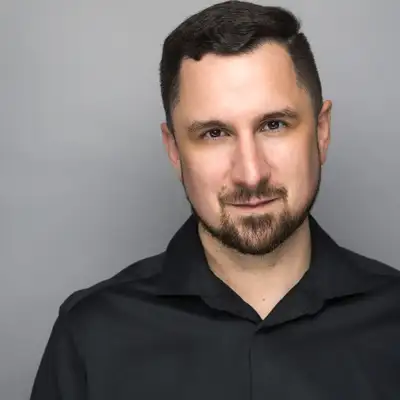
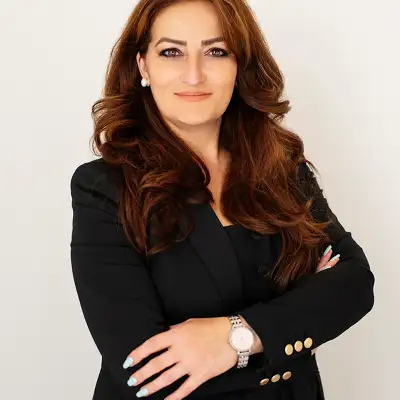
Welcome to Count Me In! I'm Adam Larson and today I'm joined by Marina Ter Sargsyan, Founder and CEO of Crystal Books Consulting. With over twenty five years of experience in finance, spanning from Armenia's banking sector to leading non profits and small business teams in The U. S, Marina brings a unique perspective on innovation and leadership in our field. In this episode, Marina shares why she is passionate about the nonprofit and small business sector, what makes finance roles here especially dynamic, and how she guides organizations through the challenges of AI and automation.
Adam Larson:We'll dive into the critical differences between automation and AI, explore why data readiness is more important than ever, and unpack Marina's outcome based approach to adopting new technologies. So whether you're a finance leader or curious about tech's impact on the industry, there's something here for you. Let's jump in. Well, Marina, very excited to have you on the podcast today. And before we get into some of the big ideas that you have, I'd love to kind of talk just walk back through your career.
Adam Larson:You've You know, worn a lot of different hats over the years and how would you describe the through line that connects all of it?
Marina Ter Sargsyan:Sure. Hi, Adam. Thank you so much for having me today here. I will be gladly happy to share my experience. So I had a very interesting, unusual journey over the past twenty five years.
Marina Ter Sargsyan:I started my career like very early, when I was only 18 and I jumped into the bank industry and I fell in love with just finance numbers and everything related to finance area. So as you can imagine, when you grow in your career, you actually have to take some risks, opportunities that comes your way and I happen to be in multiple industries over the past twenty five years. Not only that, but my first fifteen years I spent in my country where I'm from, it's Armenia, so in there we have a combination of it's a very different market and we had a combination of finance function together with a little bit of accounting, a little bit of finance, so we had to actually learn as we go everything that relates to finance. And the compliance piece and the technology was always a part of my learning journey and I always had to invent things. So it was never the same thing that I've done, maybe two years in a row, yes, but every third year there was something new I had to learn, either because I was growing into the latter of the career or just because there's new technology.
Marina Ter Sargsyan:So, and then life took me to The US, where I continued my journey as a finance and I worked in multiple organizations. I worked in small non for profits, I worked in a publicly traded large organizations and all I did was finance basically. So, and as you can imagine, finance is very different from every single organization you go. Even within the industry, it's going to be different. But I actually finally end up being in the not for profit sector because that's where my heart is.
Marina Ter Sargsyan:And this is, I should say, a very difficult journey and very difficult sector to be as a finance leader because you actually really need to have a little bit of everything. Like, you really need to know everything, including the mission, including the donor relationship, including operations, including accounting. So, you can't really be behind and hide yourself behind the system of software. You have to be in front or in helping the whole key management and leadership to grow sustain the organization. So it's a very large mission for me, it's a very big mission for me to fulfill.
Marina Ter Sargsyan:And obviously right now, because of the AI and technology, it just became another thing that we need to learn. So it's a gradually, it's very normal process for me considering my professional journey and I'm so happy that I have this chance as a professional and that matches perfectly with the level of expertise I have, which is a combination of accounting, finance. I also teach accounting. So all this together comes very nicely, brings me to the place where I feel very appropriately positioned to help organizations to further grow and introduce any new technology, I should say. So, because in the past, if we were talking just about how one software can be different from others, now we are talking about like a big change.
Marina Ter Sargsyan:It will change a lot of processes, it will change culturally, internally how the processes shift, how people interact, how numbers interact. So I'm happy to be in the place where I am right now in terms of expertiseopportunities and how best to contribute to the industry basically.
Adam Larson:So as you're working with, you know, these small businesses and nonprofits, what kind of drew you to working with them as opposed to working with the larger corporate organizations?
Marina Ter Sargsyan:That's a great question. So I, as I mentioned, I worked in very large company, like very large, publicly traded, and I admire them in many ways. Like they are very different world, they have a very different internal structure, but what pushed me out of that towards more to not for profit and small businesses is complexity of our work. And I'll bring you example, like in a publicly traded company, the finance leader might end up doing just one thing all the time and it's very structured. In some cases, you might not even have flexibility to improve things.
Marina Ter Sargsyan:So, you have to be okay with that to go with the flow because that's how that world operates basically. While in no hortrophies and small businesses, it's very well known that in most of the cases it's understaffed, in some cases the scarcity of resources drive the work of the finance towards more complexity. Basically, you really need to be innovative and we even have a joke between our peers that, you know, the accounting and finance is probably the most boring profession, but it's actually not. And through my work, I'm showing that you can actually be very innovative when it comes to how you do things, how you design the processes, procedures. And I think it's a creative process and with the years to come, with the tools that are becoming available, it becomes more and more interesting to do that improvements within the organization.
Marina Ter Sargsyan:So I am all for the complex work, like for the improvements, optimization, which is why I'm staying with not for profits and small businesses to continue that kind work and delivering the results. And when you see that your results are actually directly linked to the success of the organization, like one of the examples can be if you optimize internal processes, the way the board reports are presented, quality of reports that are being presented, you gain more donors' confidence and that way it's much rewarding basically as a professional. That's my own, you know, explanation.
Adam Larson:Of course, of course. Yeah, it's interesting, because those types of businesses have very unique problems and if you're focused on that, can help them get where they're where they need to go, especially in the world of technology, which, you know, you you love, you have a passion for the technology. I mean, when you and I were talking previously, you had mentioned that a lot of times when you're working with these organizations, they a lot of times confuse AI with automation. And so maybe you can talk a little bit about, you know, the differences. I know we talk about that a lot, these things a lot on this call, but maybe we can kind of lay down a baseline and a foundation for folks who are listening in who might, who might, be confused with that as well.
Marina Ter Sargsyan:Sure. So, a lot of times when I speak to small business owners or not for profit executives, they call everything AI right now because AI is so like overwhelmingly present in everything in every sector. So sometimes they confuse automation, which existed even before. Now, fortunately, people like me and any other professionals that are very interested interested in digitalizing things, optimizing things, we know the difference. So as long as we can talk to the executive and understand the needs of the organization, we are able to distinguish that and able to explain that sometimes you don't need a fancy AI tool, which costs thousands of dollars.
Marina Ter Sargsyan:Instead, you just need to automate one or two processes and you will be gaining the same result that you actually wish for. So, the baseline is that in most of the cases, are professionals who are working or delivering internal reporting that they might not be familiar with automations that exist outside AI, so they confuse that they think that they need AI, but in general, they just need one or two automations that will help them to reach the result.
Adam Larson:So a lot of times when you're talking about moving over to A. I. And getting prepared for A. I, we talk about data readiness. And when we first started talking about big data, you know, a number of years ago, we were saying garbage in, garbage out.
Adam Larson:You're putting garbage data in, you're going to get garbage data out. And I think that still stays true for these AI systems for for new technologies that you're bringing in. What does that look like when you walk in with new clients and you're finding that their their data is not ready?
Marina Ter Sargsyan:Yeah, that's a very, very valid question because, again, when AI is so overwhelming and popular and people have like, it's a peer pressure that you actually want or the board decision, just do AI or implement something. Sometimes you are forced to actually implement things or think about, okay, what is it that I need to implement on the AI? Which tools I'm bringing in? And in most of the cases, no one is talking about is organization actually ready to do this. So that part is actually data readiness, which we are talking about.
Marina Ter Sargsyan:And I'm going to be very specific to small businesses and non for profits, because most of them operate last twenty five years with the chart of account, which might be twenty years old. With the vendor information, you might go and see that the same vendor mentioned five times. The other problem might be that their sub offices operate with a very different charge of accounts. So, baseline and nothing is wrong with that, as long as you don't expect right now in a week to introduce AI Talk. Because even when the first step, which I am always talking, and I know that some organizations might get frustrated when we say that, but we first go and look at the data.
Marina Ter Sargsyan:Do actually have enough data optimization already and can we actually build on that? Or we first, as the first step, we need to clean the data, optimize the data, adjust the data and it's a lot of work in some organizations. It might take a few months until the whole operations are actually optimized and the templates and the data which is in ready for the out basically, if that makes sense. So now, we have been discussing a lot of things internally at the CFO Alliance and other places that yes, actually CFOs are now admitting that number one root cause of not even AI, but all finance technology implementation failures actually are due to data architecture, like the one that already exists. And that's a serious issue because I think from board perspective, when you are delivering the reports results on time, they don't even know how you produced it.
Marina Ter Sargsyan:They don't necessarily know your data readiness. They don't necessarily know. The only thing they know is that you are able to produce those reports. But are they reports easily convertible and actually useful for the AI to be processed processing or not? So that's another thing.
Marina Ter Sargsyan:So basically, instead of focusing on AI tool that exists, I think my suggestion to small organizations are first looking at their own data first, as a first step. And that's I'm not saying it's free of charge to do, because it's obviously you need to spend time. Even if you don't hire anyone, you really need to spend that time to cleaning. And I'm suggesting to anyone who is even thinking to optimize or bring any new technology into place at any time. I think that the first step is just the data readiness and making sure that they can actually produce, have the data ready for AI to come in and take it basically.
Adam Larson:Yeah, no, that makes a lot of sense. When you and I were first chatting about this, you mentioned the concept about like creating a wish list when you're, when you're bringing a new technology into play. Maybe you can talk about what that looks like for you and what that means because everybody kind of has a different meaning when they talk about wishlist sometimes. So, I wanted to kind of get your thoughts on that so we can kind of share the audience, with your process.
Marina Ter Sargsyan:Yeah, that's, it actually was a process, like thinking process until I came up with this concept and sometimes I actually failed in some of the projects before I actually realized that I actually need a wish list. So traditionally, like other, and I consider myself a traditional CFO type of professional, because again, I started twenty five years ago when we hardly had QuickBooks for example or QuickBooks were manual, everything was manual. So we actually, I actually went through the whole process, like whatever comes to the market, we learn the market and we grew with the market basically. So I consider myself traditional thinking CFO, meaning the process wise, because you are at the senior level, you think you know when you see the tool, will know how to use it. That's how we think.
Marina Ter Sargsyan:At least before AI, that's how it was. Like we were seeing, let's say, comparing one accounting system to another and we were okay to make decisions. And in most of the cases we were comfortable, no regrets after that. However, I tried to do the same with AI and it didn't work. So what I did, I actually and you probably saw a lot of advertisements, like everyone who can is now producing, creating softwares, AIs, budgeting AIs, I don't know, AP AIs, multiple function based AIs.
Marina Ter Sargsyan:So there's plenty of menu, if I can call it, to choose from. On what is it that you can automate? What is it that you can introduce? Where you can use AI? That's what I thought.
Marina Ter Sargsyan:I'll just look at the list and I'll just start using it. Maybe one or two. And guess what? It didn't work. First, going back to the data, I realized that that's a very good tool, but my data is not even ready.
Marina Ter Sargsyan:Like, I can't have the standard columns every month. I can't have the standard like one column is here in this way, the other coding is different. So I need to adapt the data before it can even be used. So that was first lesson learned. Second was that I end up having two parallel tools, which was doing almost the same, but then I end up having a lot of other gaps which were not covered, although we spent a lot of money on these tools.
Marina Ter Sargsyan:So I said no, there must be a thinking process, something is wrong. So I went to my AI developers team and I started to debate that, you know, I need to be able to do this, to be able to do that and whatever I would say, they say, yes, we can do it. Yes, we can do it. Yes, we can do it. So every time when I was posing the question that this is what I want the system to do, they would say, yes, we can do it.
Marina Ter Sargsyan:And I said, no, this is unbelievable. I cannot have the final product. Like, I don't know what to wish for. So they said, and I tried, I said, 'Can you please show me one of your systems again?' So I started to think a little bit differently that something is wrong with the decision making process, like how come I can't filter from the menu what I need? And the guy who is very young and has a different mindset, he asked me, and he's not a finance guy, he asked me, I think we need to do the opposite exercise.
Marina Ter Sargsyan:You just tell me what do you want and then we just give you the tool. Don't try to understand the tools, don't try to understand how they work for now. You just develop the wish list. And I started to think that actually the wish list is a good idea because I can imagine that I do have unlimited number of assistants, unlimited number of accounting finance teams. They have the best capacity in the world and I don't have any financial scarcity of, you know, there's a lot of money or budget available for doing this.
Marina Ter Sargsyan:So I started to think forward thinking, like what is it that this organization needs the most? And it doesn't necessarily need to be the most fancy AI tool. It might be okay, what is it that I want to optimize? What is it that I want to change in this organization? So I end up having just seven to eight bullet points.
Marina Ter Sargsyan:So I went with these bullet points to AI team and they started to actually they actually developed something which covered the whole seven to eight points. But if you ask me, I cannot do the reverse now. I can't find the equivalent right now online. There's no equivalent because every organization at this moment, because of the data, the way the data is different from one organization to another, they are actually going to have their own wish list. And I think the professional finance leader's role is right now to be very honest with themselves, just block the time, think about organization, imagine that you have no limitations, absolutely, like no limitations.
Marina Ter Sargsyan:Yes, you can combine everything together, you can have the best team in the world, everyone is capable, everyone knows the tool, so what is it that you would just do with this organization? Like, you develop procurement automations? Will you develop budgeting monitoring tool? What is it that this particular organization needs? And I think that's the day I understood became more and more easier for me to help the clients, because that way I also sort of like make them think critically and eliminate this bias that marketing is right now creating with all these AI tools and we are literally being attacked by all these demo requests from AI, you know, softwares and they are all equally good.
Marina Ter Sargsyan:Like I can't really complain, name any tool that I saw that is not good, but it doesn't mean that they are good or appropriate for your organization needs basically. That's my point. So it's a reverse outcome based approach basically.
Adam Larson:Yeah, I mean, I think I appreciate that. You know, when you're when you're creating like learning learning objects, you want to talk about you want to figure out what you want to talk about first before you want to figure out the tools and how you're going to present it. So it's that same kind of a concept, but it does almost feel counterintuitive to how our minds work sometimes because sometimes we want to figure out, well, how am I going to do it first? Or I don't know what I want yet because I haven't seen any of the tools. And so where does that balance lie between getting your wishlist and actually doing demos?
Adam Larson:Because not everybody has developers they can go to and say, hey, build this for me. They might have to do demos from different tools to figure out what would work best for their organization. So how do you balance the the wishlist versus, hey, I need to do demos to figure out what what's actually out there?
Marina Ter Sargsyan:It's a very good question. So I'm a little bit also old school. So I suggest the following, just either with the team or alone. I suggest to do it alone, like for all CFOs out there, to sit about an hour and take the time and create the list. Out of that list and don't act immediately, like you come back to the list next morning and I promise you that out of that list, of it is not going to be AI related, like totally not AI.
Marina Ter Sargsyan:It might be automation, it might be, oh, introducing a new policy, or introducing a new, I don't know, mechanism internal. And then once you do that exercise next day, anything that is left for AI, it might be just one tool, let's say budgeting tool. And that's all what you focus. And actually that creates a lot of buying power for you as a company. When you go to the companies that sell AI products for finance and accounting, you already know what you need.
Marina Ter Sargsyan:So you're not interested in multiple other things that comes with the supplement. And in fact, the research shows that when you do technology advancement or changes, you only end up using 25% of that tool in general, like the rest of the percentage you don't even need. So basically, we need to be careful with AIs. Basically, we don't want to end up with multiple tools and then you don't use 80% of that tool, which I think that exact methodology where you are actually shortlisting and then going back to AI people with only the problems that are AI related. Because I promise you that finance leaders can easily identify those that are not AI and those that are actually AI, like helping with the repetitive tasks, helping with those, those can be considered to be AI for sure.
Marina Ter Sargsyan:Some of the things are just candidates for automations, are not even that advanced. You just need to fix it through automation. So, yeah, that's my methodology how to do that. And that increases a lot of your power when you go to, even to watch the demo, you know exactly what you want. And that way we also are being very fair to AI developers that we actually want, know what we want and they can actually provide you solution.
Marina Ter Sargsyan:Otherwise, if you don't do that exercise, I think we just go watch whoever invented something and there will be something you don't either use or you might not be efficient as you can if you do the reverse way, like outcome based. Know it's not a popular way because as I mentioned that traditionally we think that we see the tool, we understand and we know where it applies, but I think it's right now we are at the intersection that it's a little bit different change. In the past, if we had to move from one sophisticated accounting software to the other, it was still software. It didn't automate, like it didn't cut your time from twenty days to one week. Now it's a big change.
Marina Ter Sargsyan:Like actually, I think we are responsible to spending time in understanding the need of the organization you serve first, before even watching any demos, to be honest, because otherwise you get more confused. It's just I don't know how not to get confused if you do multiple and you might end up having two tools at the same time, which are not complementing each other. It's actually, and then you might still end up doing the same amount of work, but then you spend all these funds on the tool that you are not even using basically.
Adam Larson:Yeah. Now you mentioned that, you know, sometimes it's good to sit down by yourself and do this, but, you know, you're not the end all be all. You have a team that works on these things as well. At what point do you bring like a group in to look at your wish list exercise to make sure that you've covered everything that will affect the whole team?
Marina Ter Sargsyan:I think each of us as a finance leaders, we either are proficient, even if you just joined the organization, I think we have that ability to know when your thinking process ends. Meaning like, some people really need one hour, others twenty minutes, the others might think three-four hours before they get into the final stage. But I think some other professional might want to do it with a teamwork. Me personally, I need my alone time first and then go back to tip because that time needs to be like uninterrupted because unfortunately in this age we get interrupted a lot with this messaging, emails all the time, this active involvement. It doesn't really I think we need the time to focus, know organization, the processes and what is the strategy of the company.
Marina Ter Sargsyan:If company is going to be, let's say, growing or adding more and more branches in different countries or if the company is downsizing or if the company is adding multiple other revenue sources, you know better what the company strategy is or where are you going with the company. So I think you need time alone to kind of map it through your looking forward, mapping, okay, I want when we grow or when we add all this revenue, I want us to have automated this or to be able to control this or to be able to get these reports faster so I can grow more. That time alone will allow you to do that and my technique is just a physical paper to write down. Because I think the research also shows that when you write, you actually think slower and the focus is absolutely needed right now for finance leaders to keep, so we can actually do more good for organization and the whole people. I think this is the only time when we are in intersection.
Marina Ter Sargsyan:If you contribute, if you do your contribution, you might not get another chance because we are talking about how AI is not going to replace the judgment, how AI is going just to automate some repetitive tasks. And I think our role right now is changing and the changing in a way that we need to be able to guide the AI process and make sure that we are on alert on every, every direction it takes basically.
Adam Larson:No, I appreciate that perspective, you know, because I feel like we don't always talk about the time that we need to think about things sometimes with the fast pace of organizations and high pressure situations. A lot of times we don't give ourselves time to think about things. And, it was refreshing to kind of hear you say, hey, sometimes we just need to think. I need I need my time to think. And I and I get that.
Adam Larson:And I think sometimes we can forget that in these high paced environments. Yeah. So as we, you know, kind of wrap up this conversation, you're clearly somebody who's spent a lot of time helping people figure things out. What's the belief you'd want a finance leader to walk away from this conversation holding if, you know, like they've been listening, they're they're they're they're saying, hey, I've got some pointers here. What's that one thing that you kind of want them to walk away from this conversation?
Marina Ter Sargsyan:I think there are two things. One is that I want my peers and everyone who is involved in decision making for AI in small businesses and non for profits is not to fear for their roles for the future. Because I personally think the way I see it, our role is much more important right now and it's going to be very, very important in the future as well with all these automations, AI introductions, because we are the ones designing it. That's how I think. So I know that I'm not personally the one designing it.
Marina Ter Sargsyan:There is a whole, but we are the ones setting the tools. We are the ones processing the judgments within organization. I think if we get disappointed or scared about our future, we are not going to do a great job right now. And it's very important that we do great job right now, because there is a whole generation, we are in the middle of multiple generational offices, we all have different skill sets, it's a wonderful time to be in the same office together, because that covers all type of skill set you can even imagine in the world. Like, some people are very analytical, the others are very technical, so we have all the skill set possible of the old generations right now working together.
Marina Ter Sargsyan:I think we have to use it. So my message is to be extremely open minded. The way I have realized that my traditional thinking is not going to work, now let me change it. Be open to change. Be open to change and change it if it's necessary.
Marina Ter Sargsyan:Don't hold it back. And the second, I think not to be scared of signing off on the output that AI is giving, because I think we're all on the same boat. We might be signing off on the papers that AI is generating without even understanding how this software generated this. Try to be more proactive and understand it quicker, because the time is coming. I don't think it's going anywhere else and I already see the effectiveness of it and I think we need to be a little bit quick so the younger generation can learn from us as well.
Marina Ter Sargsyan:Instead of replacing our expertise, we actually put our expertise into AI that we are living to next generation. That's my message.
Adam Larson:Yeah. Well, awesome. Well, thank you so much Marina for coming on the podcast. It was great to hear your insights and thank you for sharing those with our audience today.
Marina Ter Sargsyan:Thank you for having me, Adam.
Announcer:This has been Count Me In, IMA's podcast providing you with the latest perspectives of thought leaders from the accounting and finance profession. If you like what you heard and you'd like to be counted in for more relevant accounting and finance education, visit IMA's website at www.imanet.org.
Creators and Guests