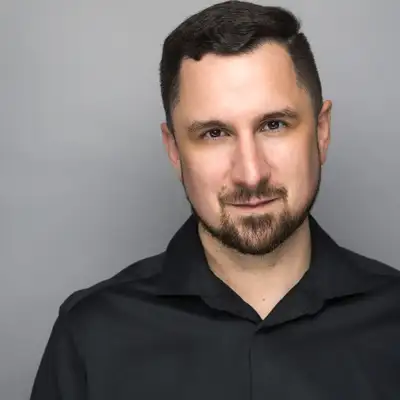
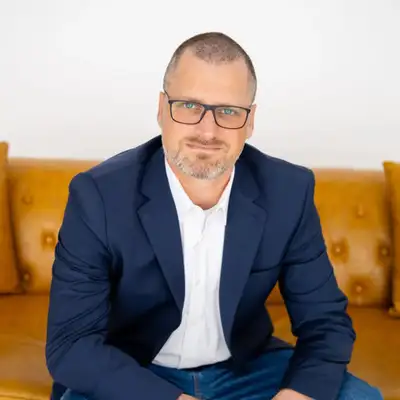
Ep 356: Rafeal Pinho - Driving Business Growth with a Strategic Finance Approach
Welcome to Count Me In. I'm Adam Larson and today I'm joined by Rafael Pinho, Co Founder and CFO at TD Pine Advisors. Rafael began as electrical engineering graduate in Brazil, but leapfrogged straight into the world of investment banking before eventually becoming the CFO of a major company leading a 50 person team through high stakes financial challenges. In our conversation, Rafael shares what it's like to learn finance and accounting on the fly, how he's turned struggling teams into strategic powerhouses, and why accurate, engaging storytelling is crucial for leaders. We'll dive into his lessons on leadership, the importance of delegation, and how anyone from big corporations to small businesses can use strategic thinking to evolve their finance function and drive real results.
Adam Larson:So whether you're leading a team or just starting out, Rafael's journey is packed with insights you don't want to miss. Let's get started. Rafael, so glad to have you on Count Me In. I wanted to start the conversation kind of going back to the beginning of your career because you started as an electrical engineer and then made a pretty sharp turn into investment banking. Maybe paint me a picture of what that leap forward look like and what drew you toward the world of finance.
Rafael Pinho:Absolutely. Have you heard about emerging countries and economies? Yeah. They're not very good at infrastructure investing, so that's what explains it all. Coming out of an electrical engineering school, I knew all I needed to know about power lines and transformers, but there was no investment.
Rafael Pinho:So no real decent jobs. And banking was a good thing back in the day. It was paying off. They had a job for me and they wanted guys who could do math. So I like, Okay, that explains it all pretty much.
Rafael Pinho:So I jumped all the way from engineering straight into finance and been there ever since.
Adam Larson:You know, that's that's kind of crazy where you're like, Hey, I see the need and I can jump into that. But you're not like trained in anything accounting or investment banking. How did you kind of learn? Like, did you just do on the job experience and just kind
Rafael Pinho:of go as you went along? It was pretty much like that. So back on being an electrical engineer to never change a light bulb, I'm sitting in this investment bank. And at the time they had a unique system. You started at the back office and kind of a bootcamp style type thing, figured it out and start learning about trade settlement and learning about all those things.
Rafael Pinho:They actually had very small teams and we had to figure out stuff. They didn't have the software. It wasn't a big right now it's a big bank, but at the time it wasn't. But they were like, Okay, these guys can figure out Excel macros and systems and help us. So that's what engineers are for.
Rafael Pinho:Right. So I end up doing a lot of that and learning as I as I went by learning by doing. And when I finally got into actually front office and equity research and all that, I remember that my first manager in equity research told me, Okay, so you are very good at numbers. You're a very reasonable guy, very logical, but you don't know what accounting is. So here's a book.
Rafael Pinho:Go read it as a novel, as this is a novel. And next week I'm going to be asking you questions and I hope that you have intelligent answers to those. I was I literally went to read into my first accounting manual as if it was a novel, like flipping the pages like crazy. Yeah, next week I guess I passed the question part.
Adam Larson:You know, that's insane. It's something like a story that you never really hear nowadays. I don't think anybody would say, oh, hey, you don't know how to do this. Here's this book, read this, and then come back to me so that we can, so you can like, it's like you're learning on the job, but like, that's got to be overwhelming and kind of scary at the same time. Can imagine.
Rafael Pinho:Yes, it was. So my first assignment was I was working with this analyst. I mean, I'm a fan of her to date. So Daniella, she's been just a great manager, right? So first job is she used to cover this company that was actually 14 different models because it was an integrated structure with 14 businesses to consolidate under a single traded stock.
Rafael Pinho:And we're like, Okay, we've to figure out how to consolidate these 14 models. By the way, here's your first task. The links are all corrupted and we need to fix a way to fix this because it's now came to a point where it can no longer work. So your first task is to rebuild all of this from scratch and apply what you're just learning in that book. So I'm like, Okay.
Rafael Pinho:Well, I started, you know, carefully trying not to break things as I go and asking the questions. And it was a it was pretty much like a, like a blacksmith teaching its, you know, successor how to do things. And I'm glad I survived and it
Adam Larson:and it worked. Yeah. Well, did work because you eventually became the CFO of a very large company in Brazil, you know, having like a team of 50 people, like all of them and half of them were accounting. Like, I remember I was talking about this and I was like, woah, you went from being an analyst all the way to CFO. Like that's a, that's a drum that people dream about.
Adam Larson:You know, what was that like, sitting on the other side of the table and kind of leading a team of people doing this thing that you had just learned just, you know, not too long before?
Rafael Pinho:That was a that was a crazy hoop to jump through. I remember when I was getting interviewed for that CFO role, my soon to be boss looked at me and said, Okay, so I know you're a pretty smart guy. I know you've done all these great things. I see your investment banking career and your private equity experience and all this analyst thing. You are a spreadsheet guy.
Rafael Pinho:Let's face it, right? You've been always behind a spreadsheet, being a smart guy behind a spreadsheet. But now off the bat, by the way, I would temporarily be in a manager position until I was able to grow up to the CFO. It was like, you never manage 15 people and the first team is going be 15 people. What's the biggest team you've ever led?
Rafael Pinho:And about three or four, but they were all analysts, so they were very like minded individuals. And I'm like, no, these are like completely different levels and skill levels and experiences. How are you going to do that? I'm like, well, there's only one way to figure out is deploy me, give me a couple of months and I'll do it. Right.
Rafael Pinho:So it was again learned by doing and trial by fire. The team they handed to me was a team that was already in the out thing as I was onboarded. Four people quit in the space of the next two weeks after me coming in. I was like, Is this me or is this a situation that was already going on? And I'm glad it was a situation that was already going on.
Rafael Pinho:But I have to turn that ship around. I remember putting everybody in the room. I a lot of I think I brought like a six pack of Red Bulls put on the table and told them, Hey, guys. Yeah, you guys know I'm not a very experienced manager, but I know I know what you guys need to turn this thing. And this is how we're going do this.
Rafael Pinho:It's going to be a lot of hard work and probably some Red Bulls needed here. So help yourselves. But we'll get this. We'll turn this thing. And at the time, I remember the company cash flow, which was very vital in a very highly levered company, would never be ready on time for actual CFO and CEO review.
Rafael Pinho:Or when it was on time, it was ready. I mean, draft one was ready less than half an hour to the presentation meeting, which was completely unacceptable. And the monthly report to the board, I was leading the FP and A team, was probably done like the 100 page deck with all the views from this business, which was very complex. It was done like literally going to the meeting. And this is like the meeting was held like the very last week of the month, meaning they were looking at on one and a half month old data, which in a company as levered as they were in the situation they were was I'm reading history books now.
Rafael Pinho:It's not real business data. So, yep, a lot of Red Bulls and we were able to shift that to be okay, now we're ready in about ten days and C level review. It's from day 10 to fifteenth. By the day 20, if they actually have real data and the meetings are happening after review and after enough crunching that now this is presentable data and cash flows at some point started to get ready two days before the meeting so that the CFO had time to look at it, make decisions, see what's going on and already present, come to the meeting with a plan for what the data is showing as opposed to let's just figure it out if this data is even right because we don't know.
Adam Larson:Yeah. Well, that's a huge turnaround because, you know, you have to have accurate data. That's something we talk about a lot, especially in this podcast is like accurate data is hugely important, but also being able to reconcile things and making sure that you as a CFO can tell the right story to, you know, to the board, to to the other senior leaders, you know, whoever you're presenting that to, you need to able to tell the proper the you need to tell the accurate story, but also in a way that's engaging to them so they can understand this is what's actually happening.
Rafael Pinho:Exactly. Exactly. And you just said it. Data is like oxygen. It's
Adam Larson:like you
Rafael Pinho:need it to survive. I had to do I mean, I resorted to all sorts of tactics, right? Even just using the scare of my role. So I was like, Okay, if anyone is now going to send a payment less than one week because that was the window we defined in the system and that broke all the system and all the cash flow building tools. They're going to have to ask me, no one else, just me.
Rafael Pinho:Yeah. And they're like, now I got to talk to the CFO to put to put up And our limit for payments was actually being put in the system before day 10. So if they are beyond day seven, they already broke all the rules. And they're like, Yeah, now we're going to be talking to the CFO. That didn't do the trick, by the way.
Rafael Pinho:Then I had another I had to say, Okay, now here's the thing. If you do something like that, you've got to ask your boss to ask me. And that did the trick. Because now they were like now they are having to save face with their own boss. Because me, mean, I'm just a guy sitting on I I would still be given a hard time over email, but in a 2500 people company, I mean, it's just I can be just a name for them, too.
Rafael Pinho:Right. So yeah, just an annoyance over email. Now, as soon as it's their own boss and as soon as I'm bringing to them to the weekly management meeting a list of how many events I have per peers. Right. Then the peer pressure really helped.
Rafael Pinho:Yeah, we eventually had the data.
Adam Larson:Yeah, that's awesome. What did you what did you learn about yourself and even about like leading people through this time as you're kind of put, you know, trial by fire leading this team of a larger than you've ever led before? What did you learn about yourself and leadership during that time?
Rafael Pinho:The biggest lesson delegation. I, at some point, tried to fix it all by myself. Whenever there was anyone, any delegate that wouldn't do their part, I would just step in and try to do it for them in a sense and it doesn't work. There were so many hours in the day and I couldn't remember that they were this HR person who I used to she was a manager too, so we would, you know, have an ongoing chat. She just reached out to my desk.
Rafael Pinho:It was an open space office, so pretty easy to spot all people and she was like, Hafel, we need to talk. I get here pretty early every day. We had flexible working schedules, so she would arrive every day at seven because that worked for her in some reason. I'm normally the first one here and I've seen you always here when I arrive. And whenever I go and over the past few weeks for my own problems, I've been going late, you're always here when I leave.
Rafael Pinho:So there's something odd and that's not sustainable and it stops now because you're going to get yourself in trouble. We like you. I see a lot of people talking good things, but we've got to fix it now. So with that came a conversation with my boss about that. Because I obviously was trying to deliver at the highest level.
Rafael Pinho:He was the one telling me, It's delegation, dude. You're trying to do it all by yourself. Let's start delegating. And delegating means sorry if I'm getting long winded here, but the lesson learned was something comes not the way you expected, just send it back. You say, No, this is wrong.
Rafael Pinho:This is not what I asked. Go figure it out yourself. I'm not going to figure it out for you. You have to figure it out by yourself. And then learn that, yeah, it's never going to be 100 like to your standards to what you would do it, but it's least 80.
Rafael Pinho:Apply the eightytwenty rule and live with it and say, Okay, 80% is good enough. If I have every everyone on the team doing at least 80%, there are going to be some outliers there doing better. Yeah, you're going to you're going to wing it. But otherwise, you're not going to do the work twenty four hours in a day, live with that concept and move on. That was the biggest lesson.
Rafael Pinho:That was hard. Yeah. Because I was handed a lot of responsibility in that job and I wanted to make sure I delivered on it. Anyway, it was the biggest lesson ever.
Adam Larson:Well, and if you, if you're sitting there doing all the work that your team is supposed to be doing, where is where is the where's the room for you to have those strategic conversations to be doing what a true CFO should be doing? Having that seat as at the table as a business partner, helping guide the strategy based on what the
Rafael Pinho:numbers are saying. And then
Adam Larson:so it like you were kind of you're robbing yourself of that true experience of walking into that true CFO role.
Rafael Pinho:Exactly. And this was like yearly review time. And one of my CEOs biggest improvement points for me at the time was a half a I want to have those strategic conversations, But you're always so bogged down when the numbers need to be right and you're fixing the process, which is fine, but I just need you to be operating at this other level. And yeah, eventually we had a deeper conversation about, Okay, let's restructure this team. We had I haven't hired a team, right?
Rafael Pinho:I didn't assemble it from scratch. Okay, what are the pieces we need to move? We put together a plan. It would take us anywhere between one to one and a half years to really move all the pieces that needed to be removed, because by then we already had a good picture of, Okay, this won't work, that person will work, that person can move up, can be given more. Anyway, we just draw all that out and executed on it.
Rafael Pinho:When it when it was finally done, it was liberating. It was like I was really now I was really having the conversations that really people dream when they think about sitting in that role. We're talking. Let's talk about the five year investment plan for the business now because the business can have that. Let's talk about replacing machines that we need to work on the financing for today if we want to buy them six months to one year from now, because they actually they represent execution risk for the business.
Rafael Pinho:If they break down, we're going to miss on 70% of the revenue like that. So we need to get all those plans together. And then, yeah, that was amazing. I mean, just one example of the several conversations that now I had the time to do it. There's an interesting aspect, too.
Rafael Pinho:As soon as it happened, it's hard not to go back to the task oriented life. So you start feeling like, now I have all this time. What do I do all the time? Yeah, now it's a hard part because now you've got to start coming up with the next task, coming up with the And next you're creating from scratch because you are writing the strategy. You're not you're no longer reacting.
Rafael Pinho:So
Adam Larson:that's more difficult than people think. It is much more difficult. So maybe let's talk. When you and I were first talking, you were talking about how passionate you were about making sure accounting and finance professionals are switching to that strategic mindset, that kind of FP and A mindset. You told me a story about, you know, like there was a depreciation schedule that turned into a major strategy conversation.
Adam Larson:Maybe So you can walk me through, you know, that one because it really captures what you're talking about when, like, accounting days, your starting point, but not your finish line.
Rafael Pinho:Sure. And I kind of touched on this. It ends up with that machine conversation, but let me start there. Yeah, you're absolutely right. So that all started with We were having a conversation with the accounting team about the depreciation schedule of the whole business.
Rafael Pinho:And that was because we were of prepping for We were big five audited, so we were getting prepped for annual audit. As they showed me the schedule, I saw a bunch of machines that were fully depreciated, but not like they were fully depreciated last year. They were fully depreciated for twenty years or something. I was like, This is a problem. And the accounting team didn't see it as a problem.
Rafael Pinho:They were just doing their task. Okay, here's the schedule. CFO asked for the schedule, here's the schedule. Here's your report. And I go, Guys, don't you see that this is a big issue?
Rafael Pinho:And they didn't. And I was like, This is a massive risk because I don't know, I'm not in production, but just looking at this, it tells me that our machines are way too old. And in a fast evolving technological world as we are, I'm pretty sure that they are also way more than obsolete. Well, that led me to, A, tell them changing the system. Okay, next time you do this as you go and you see anything like that, another twenty years, just a next machine which is about six months to be fully depreciated, I need to know.
Rafael Pinho:So now you need to create a report that tells me and the FP and A team that that's happening. So let's start creating the processes and having accounting think of those processes. With me, I took that report, called my CEO and called my manufacturing director and said, We got a problem here, guys, don't we? Then the manufacturing director was super happy and excited to say, Yeah, I've been told that we were under serious cash limitations in the business. So yeah, I've been quietly trying to survive with those machines, but if we could have that conversation, that would be great.
Rafael Pinho:I'm like, Okay, let's have that conversation then because you're absolutely right. The CFO message was and continues to be we are strapped for cash because we were. However, I'm forward looking. And as I look into the projections from the FBNA teams, know that in six months to one year we're going to be in a position to be investing again. And if we don't, we're going to be suboptimal when it comes to the capital stack.
Rafael Pinho:So let's let's have a conversation now because replacing those machines involved, you know, going to Europe and China, sourcing them, then negotiating them, then importing them and then installing them. And again, not so long as it's like a full two year process. So all started with an accounting team report that I'd hoped that the accounting team itself would have prompted as a problem as opposed to just checking the boxes on the annual audit, Right. As they were, we were having then we started to have those conversations. And over time, the accounting team started to bring things straight to the FP and A team without even coming through me.
Rafael Pinho:And I loved it because that was Okay. That was the type of mindset shift that we wanted. They were now working together on projects. And then FBNA team had problems with extracting some of the data from the accounting reports. They started working together on fine tuning because it wasn't a difficult change.
Rafael Pinho:Accounting could change this and that field in their extraction that would help so much FP and A to cut days from their monthly reporting routine. One thing led to another and it was an amazing transformation just because getting accounting to think forward as opposed to just reporting.
Adam Larson:What were those conversations like as you were coaching people's kind of developed this habit of looking because, you know, especially if you spent years doing it another way, thinking a different way or those conversations like as you were saying, hey, guys, this is the way we need to start thinking.
Rafael Pinho:I guess the it kind of helped the way I was led to it because I started from I'm getting big five audited books and listed companies, right? So I kind of knew what the highest possible standard was and what type of information I would be able to get. And honestly, a lot of the sell side equity research life is trying to figure out how to read beneath the numbers, how to need the data that you don't get because you are over the wall, right? You are an outsider. You're not an insider.
Rafael Pinho:I'm like, I would love so much to be an insider and have all the data to figure this business out. And now here I am, fifteen years later, sitting as an insider, having access to all this data, but the data didn't say anything because I didn't have access to the right amount, to the right data. And when I had those conversations, I would go back and say, Hey guys, a lot of things, a lot of people out there are able to figure out business just by looking at these two reports, just at your P and L and your balance sheet. I'm pretty sure we can do a better job being inside. And now why don't we get down talking about what else can we do with all the data that we have and it's here, right?
Rafael Pinho:And so I was able to always go back to that 10,000 feet level view of, okay, what if all we had was the balance sheet and the P and L? With those, I could get here and I would love to go to this next level. Can we get to this next level? Do we have access to that data? Yeah.
Rafael Pinho:Sometimes the answer is yes. It's there, it's just that no one was asking about it. And sometimes the answer was no, we have the data, it's just not in a way that you could use it. And that would involve us then bringing the IT team in and the coders and say, Hey, we need this. Let's find a way to extract it.
Rafael Pinho:But keep going, keep going at it, because people get discouraged so quickly and corporate structures can be very good at shutting down stuff just because they are a lot of work. But if leadership at the management level or at the C level is just adamant about, Yeah, we need this, eventually you get it.
Adam Larson:Yeah. Well, and it helped that you had a real world example to say, okay, here's an example of this, of what I'm talking about. Now let's keep finding more of these examples so that we can keep learning. It's like it's it's because you learned on the job. You know, it's one of those things where you were able to help them learn on the job in the same way, in a way that was beneficial to them growing.
Adam Larson:Then and it made your job easier because suddenly they're doing what they're supposed to do and you can focus on what you need to focus on.
Rafael Pinho:Yeah. Yeah. And and those are those journeys are amazing and they and they're still I mean, it's like we wanted to have a view of client level profitability, but this is a consumer product business, right? And we had a retail So we had like, I remember, 7,000 clients in our CRM, in our system. And somebody told us, We want to look at the granular level, at the individual level by client at that profitability.
Rafael Pinho:I'm like, This is going to be crazy. And it was. It took us six months of work to get the data. But when we got the data, I mean, from that report we did. We reshaped the whole CRM process because we realized that we were paying up some clients or favoring clients by sales volume.
Rafael Pinho:And if you've been long enough around retail, you know there are a lot of the sales in retail. Sometimes big volume buyers buy at sales time and discounted prices. So they are not the type of people that you want to send a bottle of champagne saying, Oh, you bought so much. No. And I even had this knee jerk reaction during a meeting.
Rafael Pinho:I remember as I'm looking at this report saying, Okay, so these people, we should have a security, like a big bodyguard in the store. As they come in, we don't let them come in, right, because they are actually a loss. Then it was a lesson learned about retail. No, actually, those decent people, they are good for us because they help us not to have to, you know, have all this surplus that we don't know what to do with. So they at least take that stuff out.
Rafael Pinho:They have they have a place. What we cannot do is give them the champagne bottom in the end. And I'm like, Okay, good. So anyway, we redesigned the whole CRM. We found about five percentage points in EBITDA margin by doing so because now we were promoting the right type of client and we were finding ways of moving because we bucketed those 7,000 clients by profitability and we were able to do all that.
Rafael Pinho:Guess what? We also had a wholesale unit for the manufacturing piece inside of the business. We just applied the same methodology to the distributors and found another few I can't remember that one but a few EBITDA percentage points out of doing that. So sometimes from a single task, if you really stick to it and if you really extract all that you can from it, you're going to find a lot. We changed the whole commercial management of the business just by generating that.
Rafael Pinho:It took us six months to do it. My team wanted to give up time and again, but we're like, Nope, we're going to keep doing this because I know there's good information here. It's it's those things. Those things are transformational and you've got to you've got to keep at it.
Adam Larson:Yeah. So let's talk a little bit about what you're working on now. You know, you help small to medium sized businesses with succession and transition planning. How have you been able to take all the lessons you've learned from everything you've been doing from investment banking to the CFO, to turning teams around? And especially when you're dealing with business owners who might not have strong financial foundations, they might have not have strong financial teams.
Adam Larson:You know, what how have you been able to like work with them and like strategically figure those things out with them?
Rafael Pinho:I guess we bring in that corporate level thinking and big business like thinking to them. And the trick is tell them, Okay, I know that a lot of them did this or decided to start on their own because they dreaded corporate, and I know why they dread corporate, and that's fine. Not everybody is going to be the next apple out there, right? But there's a reason why corporations are so dominant and there's a playbook that they play by, that if you're able to bring just a little bit of it to that mid sized business, it's going to be operating at a completely different level, right? So you just bring simple things.
Rafael Pinho:Okay, let's have a real budget. But people think that budget is just a nice spreadsheet that's going to be collecting dust somewhere in the cloud. No, let's think of it strategically, have the budget and then let's do it like a big company would. We're going to have monthly reviews. We're going to look at this thing and we're going to see the deviations and we're going to understand and measure why the deviations happen and then say, Okay, if it's a good deviation, as in more sales, because people say, Oh, more sales, great, move on.
Rafael Pinho:No. If I had more sales than I budgeted, it either means that my bowl was too small or there's something else happening that I'm not seeing or analyzing. But let's do all that. While we where we spend more than you expected, definitely have a look. That's that's what most people do anyway.
Rafael Pinho:But think strategically because sometimes you spend more than you expected for a good reason. It could be a variable cost and sales are up. So, you know, it's those things. It's bringing the good practice, the best practice from big corporates to those companies and then having them obviously adapt to their reality because they won't have a five people FP and A team to run the reports or they won't need to go such a level of generality as having 10 different cost centers. Maybe they have two or three, but at least have two or three.
Rafael Pinho:So you can, you know, at least break between fixed and variable and look at it that way. Time and time again, normally I get into those businesses and I look at their numbers and it's basically the numbers are just done for tax reporting and for tax season. They're not used strategically. So it all starts with having that mindset shift, right? So just yesterday one of our clients had its first quarterly shareholder meeting And this is a company with two partners.
Rafael Pinho:And we're like, Well, I haven't had that. Well, one of the partners is more in the operations, is not seeing what's happening on the financing finance side and on the, say, biz dev side of things. And that created friction between the partners. We noticed that. And we're like, Okay, guys, you need to have at least a quick meeting where you guys tell each other what you guys are doing and where you're going and where the numbers are and compare that with at least last year to see that things are better or things are worse and why and have that conversation.
Rafael Pinho:So we brought that. But we will say, wow, have a shareholder meeting. Well, in that case it was appropriate. And I'll leave with that, Adam. Not every tool in the toolbox is for everybody in this world, in the smaller business world.
Rafael Pinho:So the second big trick is not only have the tools and bring it to them, but bring the right tool for the right situation. So a lot of our process is really going in the weeds and as deep as we can in the problems, try to see what's really being a roadblock for that company development and then say, okay, for this, we're going to go with that tool, we're going to fix that. And as soon as that's fixed, we know there's going to be a next one and a next one. We keep removing those roadblocks until the business is able to to to to, you know, grow, grow on its own.
Adam Larson:That's awesome. That's some great advice, Rafael. Thank you so much for sharing your story. I hope that people have been able to learn from it and they can connect with it, connect with what you're doing and realizing, hey, there's things I can do in my own, like my own daily job to think more strategic. And so, you know, maybe we can end the conversation is what if there's somebody who's listening to this and they're like, you know what?
Adam Larson:I haven't been as strategic. What's one thing that they can do tomorrow that they can shift and shift in their thinking as they walk away from this conversation?
Rafael Pinho:Just get one number that you think it's big enough. Okay, I'm going put it in accounting terms. Just think it's material for any business, any business that you're looking at and say, What can I do to improve this number? The proposal said number, it could be anything. It could be a margin, it could be an expense, it could be, you know, just an item that is said, this item is relevant in this business, this piece of information.
Rafael Pinho:How can we improve this? Improve just that one and have a little forward looking, okay, we are here, we know where we are because we're always able to measure where we are in accounting, but we want to what is a great number for this indicator, this KPI? The great number will be X. Okay, what can we do between now and say six months to one year from now to converge towards that number, that ideal benchmark number? Just do that.
Rafael Pinho:Do that with anything in the business and you're going to be doing the business a favor, you know?
Adam Larson:Yeah, that's awesome. Well, again, thank you so much for coming on the podcast. Really appreciate you sharing your story with our audience today, and I look forward to chatting with you again in the future.
Rafael Pinho:Awesome, Adam. Thank you so much for having me. Appreciate it. I already challenged you with our next talk. I'm happy to say this was a decision made last week that by July our book is going to be out.
Rafael Pinho:It's going to be called From Job to Asset. So it's a book to tell mid sized business owners how to make that transformation. It's very step by step. Every chapter has exercises and very practical advice on how to do that. He devised that journey because it's a big journey in four big phases that they have to go through.
Rafael Pinho:I'm excited to say it's coming. It's come back from editing and it's ready
Adam Larson:to go. Awesome. Well, congratulations and, we'll make sure to update folks with that and we'll have another conversation just about that book later in the future. All right. Well, thanks so much.
Rafael Pinho:Thanks for your time.
Announcer:This has been Count Me In, IMA's podcast providing you with the latest perspectives of thought leaders from the accounting and finance profession. If you like what you heard and you'd like to be counted in for more relevant accounting and finance education, visit IMA's website at www.imanet.org.
Creators and Guests