Ep. 350: Barry Dyke - Laying a Solid Financial Foundation for Any New Business
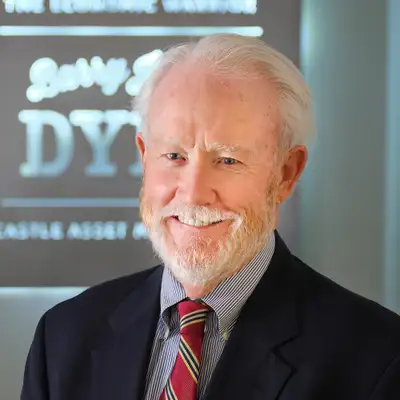
Welcome to Count Me In. In today's episode, we sit down with Barry Dyke, financial planner and author with over forty years of experience helping individuals, families, and organizations navigate the complex world of finance. From examining the pitfalls of America's retirement system to sharing the importance of strong foundations for business and personal wealth, Barry brings a wealth of insight and practical advice. We dive deep into the real challenges facing small business owners, discuss the values of saving versus investing, and explore the pitfalls of the current retirement planning models. So whether you're a business leader, employee, or anyone looking to take control of your financial future, this conversation with Barry promises actionable takeaways and a fresh perspective on what it means to build a secure tomorrow.
Adam Larson:Let's get started. Well, Barry, thank you so much for coming on the podcast. We're very excited to have you here. You have, you know, over forty years of experience, especially in the world of financial planning. You know, you've written books that have talked about major financial crises.
Adam Larson:Now you've worked with individuals, families, nonprofits, you know, and now you're leading, you know, Castle Asset Management. You know, there's a lot of ground you've covered over your career. And so what's the through line for you? What's been the thing that's kinda driven you at all from the beginning?
Barry Dyke:I yeah. I I guess it's like everyone anyone else, Adam. I guess it's really the the drive is really to, you know, to be of maximum service to others and really to to be good at what you do. You know? And Yeah.
Barry Dyke:You know, and this really kinda could flow into anything we we do, whether it be a, you know well, what I do have a planning firm and a publishing company and stuff. But, you know, whatever you do, whether it be a teacher, your accountant, a lawyer, Indian chief, I think, really, it's a a desire really to to be to be good at what you do. And my father, Adam, once said, you know, anytime you do you touch something, you try to leave it better than the way you found it. So that's what I've been trying to do with with financial planning and so forth, and it's been a it's been a wild and crazy ride. You know?
Adam Larson:I can only imagine. I'm sure that it always hasn't been going up. I'm sure there's been a lot of ups and downs throughout that. How have you kind of managed that, you know, those waves throughout your career?
Barry Dyke:You know, it's funny. The older I get, the more I don't know. I guess maybe in in like, most important thing in my life, you know, is my faith in God. And, you know, and there's no there's no question about that. I couldn't do without my faith.
Barry Dyke:Because the more you know, the more you it's kinda freaky. You know? And when you understand what's under really underneath the hood of the economy, how banks really work and how mutual funds really work or how four zero one k's don't really work. Mhmm. It's it's it's it's pretty discouraging.
Barry Dyke:So I think, really, how do I get through it? It's really having faith and and always having hope, you know, faith, hope, and love. You know? I guess maybe that may sound corny, but that's that's how I do it. Sure.
Adam Larson:So when we're talking talking about businesses, you know, obviously, you can't just say, hey. Faith, hope, and love is gonna get me through, starting a new business. You know, there's a number of other things that you have to do. You know? So I I love those as, you know, principles for life.
Adam Larson:But, when it comes to building businesses, sometimes you have to kind of build a good foundation in order to be successful in your organization. And so when you're thinking about a small business owner or somebody who's trying to get things off the ground, what does it look like to get those fundamentals right when you're when you're starting your organization and and laying that foundation correctly?
Barry Dyke:Yeah. I well, I used you know, I and I still do planning, by the way, all around the country, and it's god bless me. But I you gotta have the fundamentals done right. In other words, you wanna have first of all, you if you wanna get into any venture, you wanna save money. I mean and there's a difference between saving and investing, but you gotta save first.
Barry Dyke:And, generally, most people should save 10 to 20% of their income in in before into insurance and investment products and so forth. And everyone did that, Adam. We really wouldn't have any problem. Most people but we don't in America. We have I think North Korea South Korea actually is one of the highest rates of savings in in the world.
Barry Dyke:I think, at around 30%. We're, like, around 4%. So so one of things would be first of all, we we just to save money. Spend less than, you know, kinda common sense stuff. But the more I know about this, the more it makes sense.
Barry Dyke:So because when you have a pile of capital and you don't have to access the banks or go into things like private credit, which is really a a mess right now Mhmm. You can do a lot more things. So I think it may save first, and then also get getting the fundamentals right, you know, having to make sure you have the proper health care and and disability income and and life insurance and these type of things. The really the the blocking and tackling of any business. Okay?
Barry Dyke:Because you just don't know. People have young families. I'm doing this a long time. I've actually over my career, I actually paid out 63 for life claims. So I really realized the importance of doing the planning.
Barry Dyke:Now so just getting you know, so essentially, you know, saving first and then investing. That makes sense?
Adam Larson:Yeah. Yeah. And that's gotta be scary when you're when you're trying to get the fundamentals right and you're just starting out. A lot of times, organizations don't have enough money to save until like a few years in. And so how do you kind of manage those those first few years when you can't save?
Barry Dyke:Well, that's why I pray a lot, you know. But, you know, I think one of the things which to me is really important, and I've seen it, And then one of the blessings that I've dealt with a lot of really successful people in my career. Some people you know, one guy actually is a friend and actually is a billionaire. But I think one of the things which you really have to when you go through time to stress, and we're all gonna go through these these types of stress, I think you really wanna, you know, look out for your physical health too because I think that's a that's a big Sure. It's a big deal.
Barry Dyke:I mean, because sometimes, you know, some of the transactions I've dealt with people, some are involving millions of dollars. And so, you know, they could be stressful stuff. So my point is is that I think we're getting it staying healthy physically. I mean, I I think you mentioned your your children into sports and things like that. Am I correct?
Barry Dyke:And so I think really, you know, getting outside, you know, getting fresh air, all these things. I think the the the you know, yoga, whatever the case may be, I think these all these things really help. Luckily, I'm I'm I'm blessed. I live on the beach up here in New Hampshire, and then I when I got last time we were talking, I I stayed down on the floor on the beach. So I spent a lot of time on the on the ocean, and, and then it seems to help.
Barry Dyke:But I think, you know, really trying to take care of yourself first because I think it it we're you were for crazy times. I love this country, but it it's if you study history, and I have been a student of history, the things which we're having problems with the primary, which are the debt, it's it's gonna be crazy. And if you look at the the the prior crisis, the stock market crashed '29, you know, the most recent crisis in 2008, the dot com meltdown. I was always preceded by tremendous amounts of debts. I think, really, you really wanna take care of yourself, but also Mhmm.
Barry Dyke:Be prepared and get ready for the what's happening in the days ahead. We're this right now. It's more important because we're seeing private credit. I don't know if you've been following us at all, Adam. It's it's really taking hits left and right.
Adam Larson:Mhmm. So what is that gonna look like, you know, as you know, because because companies, you know, there's a lot of uncertainty. You know, the stuff you're mentioning brings feels free fuels uncertainty among the employees, but also the business owners. And when you're looking at trying to recruit, retain your employees, you know, they're feeling that uncertainty. You're feeling that uncertainty, and you gotta think it you gotta still you gotta still run your business.
Adam Larson:You gotta still try to make money. You gotta still try to do all those things in the midst of all that uncertainty. You know, so how do like, and you gotta, like, oh, I gotta make sure I my employees have good benefits so they stay with me. You know, how does that, like I feel like there's this almost impossible trade off that you have where you're trying to take care of your employees, but also keep your company running, but also not freak out because of all everything happening around you as well.
Barry Dyke:Yeah. I forget whoever said all whoever said all greatness is equally difficult. Something like this that I forget who said that. Yeah. No.
Barry Dyke:You know, I and I've had, you know, I don't have I have a couple of people working with me full time now. Don't have as many I had nine people working with me full time, but it's it's a it's a real balancing act. Mhmm. But I think it's a I think it's also part of which which you're I guess, if that business owner out there who who's trying to get the the just the what I do today, and this helps me as any I can't just focus on just me making money. If it's just me making money, I I can't get motivated.
Barry Dyke:I'm I'm sorry, man. It's just, you know, you you buy a nice car and then what what what's next? Okay? So so I think really the as a business person, you have to say, how many how much is my business or enterprise gonna help, not just myself, but my family, my staff, my clients, my fans, and that type of thing? How many how can I maximize the macroeconomic impact of what I do for others?
Barry Dyke:Alright? So so that's what that's what kinda gets me excited because let's let's face it. Say, the the retirement system in The United States are freaking mess for for the majority of the population. And so that that that kinda motivates me. And and the truth of the matter is we're in the world league tables, Adam.
Barry Dyke:We're, like, number 30 in the top 30, and which is horrible. So that kinda gets me motivated. So I'm kind of helping people I'm trying to help people with better retirement and having more safety and seat belts around their money.
Adam Larson:And that
Barry Dyke:and so and so as a result, you know, I'll get consulting clients. I'll get some notebooks, and I'll get more speaking gigs and all that stuff. So I know that's but it's not just I it can't be just about me. If it's just about me, I it's hard to get out of bed in the morning.
Adam Larson:Yeah. It it can be, for sure, especially if there's the weight of everything else and and you have to have your why, you know, like the the book by Simon Sinek, You know, finding your why. Being able to find, hey. Why am I doing this? What's motivating me to keep going?
Adam Larson:And I think that's that's a thing that a lot of people struggle with, especially, you know, if you're living paycheck to paycheck, if your money isn't in a situation where, like, hey. You know, you mentioned you get to travel between two houses that are near the beach. That's pretty cool. Not everybody has that a bill, that option and trying to find that why is difficult at times for people.
Barry Dyke:Yeah. And, yeah, and also too, everyone wants to go to heaven, but no one wants to die. People don't, you know, I've sacrificed a lot to to do what I'm good. I just I just keep it in perspective. I I guess I'm very grateful in the sense that if you have that why, you'll eventually get there.
Barry Dyke:You know, we're all trying to fall the yellow brick road, if you will. But I think really having with the end in mind is what Stephen Covey said, you know, you know, what what's the end of mind here? It's like I'm I'm in the process of finishing up a book right now.
Adam Larson:Mhmm.
Barry Dyke:I can't begin to tell you how many times you just wanted to just drop the whole thing. You know? And because you put so much time into it. It's like, I don't wanna do this anymore. But when I realize in the end what's gonna happen in the end, and I'm pretty confident it will be successful, that's that's what keeps me going.
Barry Dyke:I guess maybe whatever you you know, whether it be, you know, having as I say, you get up a daycare center, but I'm saying, whatever that what's that why you wanna do? And that's gonna that's gonna keep people motivated.
Adam Larson:Yeah.
Barry Dyke:That's just that's just where I'm coming from.
Adam Larson:Yeah. For sure. So somebody has their why. They've set up their new business, and they're like, I my employees need benefits. You know?
Adam Larson:Are there common mistakes that you've seen when you've helped people, you know, when they're setting up their business that their program their benefit programs that you've seen that you can say, hey, guys. Here's some red flags you should work out. These are comp mistakes that you shouldn't be looking at.
Barry Dyke:I think, yeah, another thing too, you have to communicate with people because the the cost now and I luckily, I'm not burdened with this, but the the cost, like, of health care now, it's it's just I was reading in
Adam Larson:Yeah.
Barry Dyke:It's it's it's like a telephone number now. So I think really sharing that information with with people say, hey. Look. We're all in this together. We're make money because you want health care and you have family, and we all want these things for our families.
Barry Dyke:I communicate it, and I I I think you have to be an open book about it. The I think communicating is just being open. I mean, it's it's hard because we all wanna I know I wanna give give the boy the store, but this stuff is very, very expensive. And Sure. I think the more people the know about it, I think the more gratitude they have.
Barry Dyke:And I think and that's one of the things which I I run my life on. I couldn't do things without being grateful. So when I think people you communicate to people how much this stuff is really costing, I think it's gonna help people. I mean, there's there's no silver bullet or panacea, Adam, but I think just communicating the truth because, you know, you know, a lot of these people, you know, are good adults. So I think the more open I think is one of my favorite, sayings.
Barry Dyke:I don't know if you ever remember the guy. Louis Brandeis, he wrote a book called Other People's Money.
Adam Larson:Okay.
Barry Dyke:1914, and it's a classic book. And he said or, sunlight is always the best disinfectant. So I think the more you enlighten people to these costs and things like that, and I think the better off you're gonna be.
Adam Larson:So, you you know, enlightening people to the cost is one side of it. But what about the the the plan programs that you get from companies that you're trying to, like, trying to see which benefits are best for your organization. You know, are there different things you should look at in those packages that you get from organ from companies that you're trying to get the benefits from?
Barry Dyke:Well, yeah, I think, you know, I I don't do as much benefits work as I as I used to. I used do a ton of that. I think the you wanna well round it as much as you possibly can.
Adam Larson:Okay.
Barry Dyke:If you're doing a benefits package, you wanna you you obviously wanna have the health care or the the life and the dental and things like that. Just because people, we all need to have good health, spiritual, mental, and physical, and I think those are the core benefits. And then savings, think, and I think then stay tuned for some of the work I'm really we're releasing. And I'll essentially show what the rest of the world is doing in terms of retirement planning, The US is we're kinda going backwards. And I think that's kinda getting into our ahead of ourselves.
Barry Dyke:But we've we've our four zero one k system, I think we we talked about the do it yourself model, which is, to me, it's it's just it's it's
Adam Larson:So walk us through that. What what does that what does that mean when you say it's a disaster?
Barry Dyke:Well, you know, the purpose of retirement income plan, Adam, is to first and foremost, I've been doing this for quite some time, is to reduce retirement income. End of story. If you have retirement income, it's it's it's reduced retirement income because in the very name is the idea of creating an income stream in our older lives to to, you know, enjoy our golden years, if you will. And that's the purpose of a retirement plan. Going back to the setting up of Social Security with the Germany back in the 1890 or something like this.
Barry Dyke:So that's just really the the root of any retirement plan. And now and the thing is but if you look at other countries, if you will, who are the best countries for retirement systems, I e, The Netherlands, Iceland, Israel, Norway, England, all these other countries, they're all based upon retirement income. And that is the core fundamental. Now in The US, we've we've turned it into a a casino, a little an online casino with stocks and bonds, which which I tell my friends that or my fans that the k a toaster from Walmart has more guarantees than a four zero one k, which is true. So the whole thing is in The US is that what has happened is that we we've now created a system where it's I tell people, it's like, I take all the part I come go to Adam's house, and I go and I dip all the parts to your car and you do in driveway and say, Adam, put a car together.
Barry Dyke:And that's what we have for our system today. And then so I'm saying that's wrong. If you look at the best systems in the world or the best retirement systems in the world, they're all income based. The best pensions, if you will, are all, you know, for the state and federal and local and government employees because they all have defined benefits. There's no the true pension plans true retirement plans.
Barry Dyke:Now we've drifted away from that in this country. So but I think, really, the more you base upon income in retirement, the better off you're gonna be. In America, I was, like, picking up the rest of I when I had lunch, I was talking to one of my assistants. She said, well, Barry well, she was telling me about the stocks. I said, Lisa, I said, you know, the purpose of your retirement plan is to produce retirement income.
Barry Dyke:Not to gamble with but, you know, you know, we and so I even see people close to me. And so I think we really need to change our mindset. I'm not again, I'm a capitalist. Okay? I love my I love my iPhones and my technology and all that stuff.
Barry Dyke:And I don't believe in giveaways. So but, no, we have we have to rethink how we're actually setting up actual retirement plans these days.
Adam Larson:So if you're a small business listening to this and you're like, okay. I wanna revamp my retirement. Are there are there systems that they can look at? Like, do you need do they need to come in to someone like, say, hey, Barry. Show me how to do this.
Adam Larson:Because I can imagine that there's obviously like, hey. Here's the four zero one k plan. You can just sign sign your name here and give it to your employees. But it I'm sure there's are there ways that they can get out of the typical system in The US?
Barry Dyke:Yeah. I mean, people can keep particularly contact me. I I still people are amazed that I they can call me or email, and I'll call, and I'll pick them up or return the phone call. But I think the 401 is again, I know, the I was in a movie called the, the baby boomer dilemma. I don't know if you ever heard heard of the movie, boomermovie.com.
Barry Dyke:I think you can go to that URL. Boomermovie. But the Ted Bennett is a friend of mine. He's the guy who actually created the four zero one k. And the k, Adam, was only meant to be like a Christmas tree ornament on a Christmas tree.
Barry Dyke:It was never meant to replace the Christmas tree, which is the the true defined benefit pension plan. So the reason why we have the four zero one k today is really because it is cheaper of the two, okay, private industry. And that's the reason why it's proliferated because you it's very cheap speaking, and you could have something like a SEP or a simple IRA, which is somewhat similar to that. And it's relatively cheap, and there's no, risk management, if you will, because all the employees bear all the risk. But the thing is that so you have if you're an employee, depending upon a a small business, you know, you may wanna look at things like a, a cash balance plan, which is very popular today, which is a true, retirement plan or profit sharing or a defined, contribution or even perhaps a defined benefit.
Barry Dyke:It all depends on the businesses, but there are options out there. The institutions just don't wanna sell you. So you have to go to a an adviser or someone like myself really to get the option because there are other options to do that and much better than I'm actually, doing this right now, like, for a pretty successful, medical practice, this weekend. The thing is and we're and we're we're not even putting in the four zero one k. So because we actually I really wanna kinda get out of that.
Barry Dyke:So so there are options of the whole thing. The thing is that the reason why you're being sold four zero one k is because this is what Fidelity and Vanguard and State Street and BlackRock and everyone wants to push. But you really have to look at which it's which is best for you first, and you have to work with someone who's knowledgeable.
Adam Larson:Of course. So it's there's no easy way right now. It's not something that you can just grab off the shelf. It's something that you kinda have to build yourself, basically.
Barry Dyke:Yeah. I mean, the the the the certain parameters, the certain, you know, things you have to to keep them. You have to, you know, you have to it has to be in compliance. You have to look at how you're funding it. I mean, you wanna keep your costs down, obviously, but you you really need to have how how does defined benefit work or how does defined contribution work or what's a simple plan work?
Barry Dyke:I'm not saying it's a but you really have to look at a lot of and you have to see you have to there's options out there. And I'll tell you the this is the funny thing. I'm setting up this up. It's a pension plan for medical practice and very successful. Okay?
Barry Dyke:Extremely successful. And and I I was kinda calling just late in the game, but and what happened is that they would change accounting firms or whatever. And the new accountant, they sent in, like, a what do you call it? They they sent a retirement expert from, like, something like Fidelity or Vanguard. No.
Barry Dyke:It was something like Fidelity or something like that. It's a major institution. And they said, okay. When do wanna set the form I said I said the That's that's that's really kind of the worst thing for this person. I'm not saying that it's not an important thing to do, but so it's not always the best interest.
Barry Dyke:Okay? Now if you're re if if you're a small employee, you have to have a return retirement plan to recruit and retain the best people because your business goes in and out of the door each night. But I'm saying I'm not saying that the four zero k is it's but not a panacea. Actually, I was one of the first guys to do a four zero k in New England probably about 30 ago. Then so it it but now it which is kinda like the side dish has become the main event.
Barry Dyke:That's and that's a real problem. But Wall Street and the asset managers like it's it's I'm kinda swimming upstream against that one. You know?
Adam Larson:For sure. Well and, you know, obviously, people should do their research, you know, especially, you know, what if you're an employee working for an organization and the only option they have for retirement planning is a four zero one k, you know, are there other options for you in that case?
Barry Dyke:Yeah. You can. You can always amend it and, you know, and I'm not saying it you know, a lot of employees, and they're very generous with matches and things like I'm not saying don't do it because it because the dis the habits, having the discipline of saving is is is actually is more important than rate of return. Mhmm. So so if you employ if if you haven't you have one, so utilize it.
Barry Dyke:I mean, everything's step by step. But my point is is that probably I would say probably I'm a small business person. I would say probably they're being way oversold. They're way too oversold. Even, you know, you know, I'm an advisory, and, obviously, I get paid on fees and assets under management, things like that.
Barry Dyke:But I they're way oversold. And, you know, I'm I'm kinda discouraging for some of them because of it. There's there's so much compliance involved with the employer. There's fiduciary risk. So but you you just gotta you gotta be really it's it's not the panacea, but this is what Wall Street's gonna ram down our throats.
Barry Dyke:And that that's I'm just I'm just I'm just a voice in the world in this, Adam. You know?
Adam Larson:Yeah. I mean, people with the most powerful people with the money usually have the loudest voices because they have the most money, unfortunately.
Barry Dyke:Yeah. And and and, you know, that can be saved, and this is the old stories all the time. The elites win, and then this and this fact is the the asset management elites, but but this is what they want. And they wanna confuse the heck out of us, which and I I and I don't know about you, but I like things more I understand them, the better I I I feel and and even for myself. And Wall Street wants to complicate the heck out of this stuff.
Barry Dyke:Okay? They wanna keep keep it complicated with things like target date funds or collective investment trust. Now do know what collective investment trusts are, by the way?
Adam Larson:I do not.
Barry Dyke:You wouldn't. No. You wouldn't know. But do you realize that most people think of a a mutual fund as the prime investment, if you will, in a retirement plan? And, actually, they're not.
Barry Dyke:It's actually a collective investment trust. We do it's called CITs. If people don't they get it online. Google it. C I it's a collective investment trust, which is exempt from SEC regulation.
Barry Dyke:There's no requirement for prospectus. You have to go through the advisory firm to even communicate it, which you really have. Because I've and I I I forget who I Morningstar. It's Morningstar. We're one the top rates.
Barry Dyke:Roughly, it's about 4,800,000,000,000 or something like that in four zero one k plans now, and more than 54% of it is in collective investment trust, which are essentially unregulated. Now the reason why did they wanna use unregulated funds was so that way they can stuff things like hedge funds and private equity and private credit and get and essentially get away from it. And that's Mhmm. There's a major people don't believe me. The major case going on this is Intel Corporation and who the administration, I think, can put, like, a $9,000,000,000 investment, Biden put invested in as well.
Barry Dyke:But this is the this is the classic case where they were putting in using collective investment trust. They were doing this in 2008, Adam, and they were Mhmm. Stuffing four zero one k's with hedge funds and private equity, which is not a good idea, but this is, but this is how they're getting around through the side door. All the and all the major asset managers are using CITs. So you have to be really just you just have to be proceed with caution.
Barry Dyke:You know? There's some danger there.
Adam Larson:Mhmm.
Barry Dyke:You know, you can't get something from nothing. I don't know if your parents were like that. Anytime someone says you can get something for nothing, it just it just doesn't work. And that's the same thing with the market. Of course.
Adam Larson:Yeah. As you were saying all those things, I can imagine people listening to this conversation and say, well, what's the point? You know, if if everything everybody's just kind of gonna gut it, they're just doing it for themselves. What's the point of investing those things? And so, you know, I wanna go back to what you said one of your tenets is is hope.
Adam Larson:So let's give some people some hope, and let's give them some encouragement on what things they can do because, you know, there's obviously negative sides to everything that is within
Barry Dyke:Yeah. Exactly. Exactly. And I I do wanna caution that because I was showing this to, one of my advisers, yesterday. The thing is once you save, once you get critical mass in the market, Adam, if if you just if you have, like, a $100 or a million dollars in a S and P 500 fund, okay, and you want This is really crazy.
Barry Dyke:As long as you save and you so you have it in the market, s and p 500, and this will be coming out in the next book, and I actually got it from Saint Louis Fed, that as long as you're if you're able to save and you're say a $100,100 grand in it or a million dollars in in S and P 500, your your account's gonna grow like crazy just because when the Federal Reserve prints up more money, your account's gonna grow just through through inflation. So I'm I'm a capitalist, and I'm just saying you have to be really cautionary. Know this is how it works. But the thing is but yeah. But first, you should have a $100 or couple $100 in a cash value life insurance or something like that first so you can really lever that.
Barry Dyke:And you and that's a better work worth than a four zero one k ever was. You know? Because a four zero one k too is almost like playing pinball with your hands tied behind your back. You know? You know?
Barry Dyke:So so I'm not again, see, once you have the money in the market, okay, you're gonna make a lot of money just by virtually being in the market, which is which is but yeah. It's it's it's a real parallel, and it's one of it was actually one of my IT guys who pointed this out to me, I researched it, and he I said, you're right. So as the money supply is printed up by the Federal Reserve, the s m the market goes up. It just automatically goes up, and it it they almost, like, it's parallel universe. So so the whole really key thing is really to say first, but what I'm saying but before you use you can put money in the market, have a have a couple a $100 or $200 or whatever in capital so you can take advantage of things.
Barry Dyke:Because when you have capital, then you can act. Otherwise, if you have to finance something, you have to react. The banks don't lend out really to small businesses anymore, which is which is horrific. But ever since 2,008, really, the banks do not really lend out to small business. They'll they'll lend out a big corporation, IBM, or something like that, but they really don't wanna help the little guy.
Barry Dyke:So I think my whole message really, you have to be self reliant. Okay.
Adam Larson:I mean, I think that's that's a huge that's great advice, especially in a in a system that was unfortunately built on, hey. Just build more debt and debt and debt, which doesn't help anybody in the long run, I don't think.
Barry Dyke:No. And and that's and that's the thing that's gonna haunt this country. The thing is is that the I love this country, but then we get some passion by the way. Savings rate, Adam, I mean, I see and I actually get the statistics from operate the operating economic cooperation development. One of those I one of those, it's major European think tanks.
Barry Dyke:Yeah. Again, I mean, US I mean, the top, you know, top economy in the world. I think we're I think we're in the twenty fourth, twenty fifth saver in terms of savings rate. I think South Korea is, like, number 30 number one. We're, like, number 30%, but we're, like, number 26.
Barry Dyke:So you have to really look at the fundamentals. You you have to ignore that. You can't follow the crowd. So a lot of the stuff which we were seeing before, you know, a lot of it's just propaganda. I mean Yeah.
Barry Dyke:So you have to be strong, but, yeah, you have to look about what's best for you first.
Adam Larson:Well, this has been a great conversation. I know it's been a different conversation than we've had on Count Me In before, and I appreciate you coming on and sharing your knowledge with us and our audience. And I hope they can continue the conversation.
Barry Dyke:Yeah. Thank you so much, Adam.
Announcer:This has been Count Me In, IMA's podcast providing you with the latest perspectives of thought leaders from the accounting and finance profession. If you like what you heard and you'd like to be counted in for more relevant accounting and finance education, visit IMA's website at www.imanet.org.
Creators and Guests