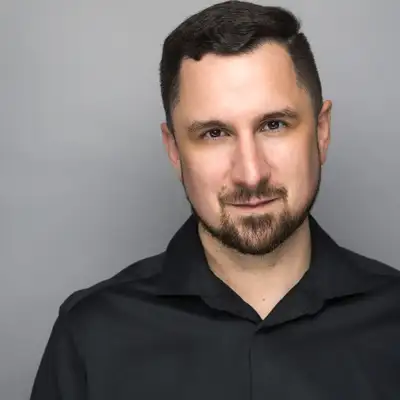
Ep. 349: Michael Housman - Thriving in the AI Era: Change, Skills, and Opportunity
Welcome back to Count Me In. I'm Adam Larson. And today, I'm sitting down with my returning guest, Michael Housman, author of the new book Future Proof, a recognized expert in data science, AI, and machine learning, and the founder and CEO of AI-celerator. In this episode, we explore how AI has rapidly evolved from a niche field to a force that's transforming entire industries. Michael shares stories from his own journey from building early data platforms and startups to helping a global organizations navigate today's AI powered marketplace.
Adam Larson:We talk about what it really takes for individuals and teams to become super adopters of AI, the challenges organizations face in embracing change, and why so many of us are still just scratching the surface of what these powerful tools can do. So whether you're a business leader, a curious professional, or someone simply trying to future proof your skills, this conversation will give you the insights and even maybe the push that you need to dive deeper into the world of AI. Let's jump right in. Well, Mike, thank you so much for coming back to the podcast. You were back on in 2024, and we talked about different AI innovations shaping the fintech world.
Adam Larson:And I gotta say a lot has happened since 2024, we're back here talking again. You've written a book called Future Proof, which we're excited, which we'll talk a little bit about today. And, you know, something I I appreciate about you, you know, you've been in the trenches kind of digging and building machine learning, building learning platforms even before you wrote your book. So maybe maybe we can start by, like, talking a little bit about your journey, kind of what drew you into data science and AI in the first place, and what did those early years kind of look like?
Michael Housman:Yeah. Yeah. It's funny. I I was always a data nerd and always liked working you know, love math, love working with data. And I got my PhD in 02/09.
Michael Housman:And I at that time, I just liked playing with data, building models, and but but I kinda reached a decision point, and I had to decide, okay. Am I gonna go into academia and focus on, like, publishing more articles, or did I wanna start doing this in the context of private industry and startups? And I couldn't have predicted then what has happened to data science, machine learning, and AI, but I did have a sneaking suspicion that, you know, all of this data being thrown off by our devices was gonna be transformative and was gonna have create a lot of demand for folks like myself that were trained in working on the models. So, you know, at that time, I decided, hey. I don't I think I'm gonna pause on academia.
Michael Housman:I'm gonna join the private sector. I'm gonna work for startups. And that's what I did for fifteen years just building out machine learning platforms and lurking in HR technology, financial services, built out lending models for businesses and and consumers. I did fraud detection. That was kind of where I drew from that fin you know, fintech experience.
Michael Housman:Yeah. So, yeah, it's changed a lot. That community that data science community was there was a few thousand of us back then. You could probably fit us all in a single hotel ballroom. Now there's millions worldwide, and it's just blown up in a way I never could have anticipated.
Michael Housman:And so it's it's exciting, and it's kinda cool when this thing that you are working on or in building, all of a sudden, world sits up, take notice takes notice and says, hey. That's really cool and powerful. And so it's been a little bit just mind blowing to see that shift really in the last three, four years. But I like to tell everyone, was doing this before it was cool, and AI friends reach out, they're like, where'd this AI thing come from? It came from nowhere.
Michael Housman:And I was like, no. No. No. We've been building towards this moment for decades, and it's just now that the models have gotten good enough and consumer facing enough that they impact us and we can interact with them directly.
Adam Larson:It's funny as you were saying that, it made me think of just I don't know how many years ago this was. This is probably, like, three or four years ago where, like, every or it's probably just a couple years ago before AI kind of really took off. People were like, talking about big data, and we need to look at our data and do some more things with our data. But it was, like, it was so funny. It was the it was the catch word, but nobody really know knew what to do with the data.
Adam Larson:Like, oh, that's great. There's all this data, but I don't know what to do with it. But now that we have these tools like AI, you're like, oh, wait. I can do something. Like, the big data didn't go anywhere.
Adam Larson:It's just like we actually have something to do with it. And I think, you the person who may have started out doing one thing in their life, they're like, hey. I need to get into data. Suddenly, they're becoming like miniature data scientists as they're getting into it.
Michael Housman:Yeah. Yeah. Mean, number one, it's I talk in the book, we've repackaged this thing, and we rebranded, and it was you're old enough and veteran enough that you remember it was like data sci it was big data, and then we started calling it data science, and we started calling it machine learning, and then it became AI. And now the thing that everyone's familiar with is generative AI. But it's it's been there the whole time.
Michael Housman:And I think you're right that the tools needed to get democratized enough that anyone could play with them. Back in the day, especially, like, you think of the evolution of GPT. GPT one was a developer's part playground. GPT two and three really weren't robust enough for prime time, and you still needed to have technical skills. And what's really exciting is these tools are democratized.
Michael Housman:And so not only playing with an LLM is obviously very easy, and everyone's now doing that, but even building out models and embedding those models in workflows and different decision points, that's something that you can go to a Zapier to do that some way you know? And then there are a ton of different applications that make everyone a data scientist. And I think it's it's a little bit scary and humbling for someone like myself. Like, I think everyone's running into this same challenge where they're saying, oh my god. I built out this specialized knowledge.
Michael Housman:This was my domain. Now anyone can do it. And it's scary to think that that that's the case, but I'm glad that everyone gets access to this, that it's not just companies that have a budget enough to hire data engineers and data scientists. There's so much value out there to be unlocked that I think everyone should be leaning in. And folks like myself will always have a job.
Michael Housman:Right? I think having that experience and that scar tissue prepares you for the inevitable challenges that you run into. You can do a lot of bad things and you run into a lot of trouble if you don't think about this stuff the right way.
Adam Larson:Yeah. Well, makes me think of that analogy you use in your book where you say AI you know, a lot of people are using AI like a Ferrari to light up your garage and charge your phone. Yeah. I think that's really funny, but it's it's it's important to realize that most people are just kinda scratching the surface when it comes to what AI tools can really do.
Michael Housman:Totally. Yeah. I mean, I think it's crazy to me. You know, when you look at ChadGPT study, how are people using ChadGPT? And they found the answers are you're using it to write things for them, you know, report, email, social media.
Michael Housman:They're using it for a lot of advice, kind of personal advice, fitness, nutrition, relationships. I'm not saying those are bad use cases, but they have no idea how powerful these tools are. You know, thinking of it as a strategic thought partner, as a brainstorming companion, the technical capabilities of these tools are unbelievable. Very few I I was just in a group of very smart partners at one of the big four firms, and you ask them, who here has vibe coded? And not a single hand went up.
Michael Housman:And to me, that's crazy. On top of which, the agentic tools, they're just mind blowing. And I would guess we're already we're seeing flat adoption of AI, and a smaller subset of that is agentic tools. And I would guess it's, you know, one in a one in 10, maybe one in a 100 of AI users are really playing with the agentic tools that are out there now. And it's a shame because they are so powerful and they can automate your inbox and your calendar and they can do a zillion different things.
Michael Housman:And so, it's crazy to me that so many have not really embraced it yet. And that's why the book's coming out a little late in this journey. ChatGPT came out almost four years ago, but I'm also thinking to myself, you know what? It's crazy how few people have really leaned in. And so I think the message is still coming at the right time.
Adam Larson:Yeah. So how do you how do you how do we so let's talk about adopters. You know, you have your super adopters who are in the AI. They're getting the the agentic AI. They're doing all these things that, you know, people would have just dreamed to do, and then you have everybody else.
Adam Larson:How do you kind of bridge that? How do we bridge that gap? Especially, you know, thinking from if you're thinking from a professional perspective and you're like, hey. I want my team to get into this. I want my team to be, like, to be super adopters so we can utilize this to the best of our ability.
Adam Larson:How do you bridge that gap? Because that spectrum can be pretty vast, and it can be pretty scary to say, well, I have to take that Ferrari out on the road now, but it goes so fast.
Michael Housman:Yeah. Yeah. Absolutely. I mean, these tools are incredibly powerful. They also you know, if you hop on a for you know, Ferrari or a Ducati and you don't know what you're doing, there's a lot of potential to crash.
Michael Housman:Yeah. I mean, there are a couple of things. This is what you're asking is the heart of the learning and development work that I do every day. Right? I travel around the world, and I deliver keynotes and workshops.
Michael Housman:And part of and what I do with those is, first, I try to kind of address some of that fear. There's a lot of fear in the room about losing their jobs, and I think folks have to shift from fearful to excited, and they need to understand what the possibilities are. And so that's how I spend a lot of that time just building that foundation where they're excited about it offloading a lot of these repetitive tasks so that they get to lean in to the parts of their job that are more human, right, that we're best suited to do. We do hands on experiences. So it used to be the case that I would just do a kinda keynote and try to blow people's minds.
Michael Housman:Now I insist we have to do a workshop. I get their hands on the tools. We work with a dozen different tools to showcase, hey. How can you build out a pitch deck, do deep research, build out multimedia content, build out agentic systems, you know, in a fraction of the time that it would have taken you before? And in that process, we see some light bulb moments.
Michael Housman:Right? We see people really it blows their minds what's possible. And often they come back and they said, I had no idea the tools were this robust. And so I think and then architecting, giving people time to experiment. Google famously said Fridays are for you to experiment and do R and D that benefits the company.
Michael Housman:I've done that with data science and engineering teams that I've worked with over the years. I think you need to give people dedicated AI time to play with the tools. And then finally, I I hate to say it, but I think in along with those carrots, there've gotta be some sticks. There's a story in the book about a company called Homebase, and they did all those things. They empowered their employees, gave them a budget, told them play with the tools.
Michael Housman:And my, you know, my friends, the CEO, John Waldman, said adoption was flat. He didn't really see much come out of it. So then he had to make it mandatory. He had to orchestrate hackathons where you had to use AI tools. He baked it into job descriptions.
Michael Housman:They built it into their performance reviews. I think you have to do those things as well so that people realize this is not optional. And we are by the way, we would do you I love a line from John, which is if we didn't encourage you to lean in and use these and retrain and reskill yourselves, we'd be doing you a disservice. We would be making you less skilled as a knowledge worker. We would be making you less competitive on the labor market.
Michael Housman:So I think it's a combination of those. I wish I had the the I wish there was a magic bullet. Right? And I'd I'd I'd probably be rich and be able to retire if I knew what it is, but change management is the challenge, and it's the hardest part of this. It's not when when projects fail, it's not because the technology fell on its face.
Michael Housman:It's because people didn't lean in, and they didn't trust the tools or they didn't really take advantage of what they can do.
Adam Larson:Yeah. And it's it's scare change is always scary. You know, we could talk we could probably talk for a whole hour about change management and the problems with that and get into the nitty gritty of those things, but it's difficult. People don't trust things. It's hard to trust these new tools.
Adam Larson:And it's also the fear of, like, well, if I train this tool to do my job, then where does my job go? And failing to realize that your job is changing. Like, whatever you were doing yesterday is gonna be different tomorrow because of AI, not AI is taking my job. No. What I'm doing is gonna change.
Adam Larson:And I think that's a that's a that's a tough pill to swallow, especially for organizations that maybe have been around a long time. And you see all these, you know, these new startups popping up. Like, I've talked to a few different people who are you know, they're AI native, like ERPs, and people are like, woah. What is that? You know?
Adam Larson:But, like, it's this this whole idea of creating an AI business model, AI native business model, how, like, how can like, a new company, obviously, you can start from the groundwork and say, hey. This is AI from the groundwork. But trying to shift a a traditional corporate structure to an AI native business model, it's they that's that's like that's like trying to steer a aircraft carrier on it, like turn an aircraft carrier on a dime. It it doesn't work that way.
Michael Housman:Yeah. Yeah. It's a it's a it's a great point. It's a real challenge, especially for bigger kind of, you know, more heavy heavy companies that have a heavy headcount. It's really hard to make that transition.
Michael Housman:And I think everyone can find the incremental opportunities. Right? Part of what we do during these workshops is we sit down and we say, hey. Where are the no brainer opportunities where we could be bolting on AI to existing processes and allowing our people to sprint? That's part of it.
Michael Housman:But in the book, I really I spent a lot of time talking about transform transformation and disruption and Okay. Trying to let you know, give people the guide rails guard rails to understand, like, you're vulnerable to companies that enter your space, can build out and do what you do in an AI native way, you're you're gonna be at a disadvantage. And some of what we do, you will do these exercises where we say you are that AI native disruptor. How would you go about doing it? Where are the opportunities in your space?
Michael Housman:And then once you understand, okay, what could we potentially be aiming for? The hardest part is exactly what you're saying, which is how do we keep the lights on while we start building towards that north star, that vision. And I talked to a friend and CEO just last week, and they do effectively, they're doing lending in the kind of construction and real estate space. And he gets it, and he said he went to his board, and he told them, he you know, we may need to just shut down for a period of time so that we can retool and rearchitect everything from the ground up. And as crazy as that sounds, the board was receptive to the idea.
Michael Housman:They said, okay. Like, what do you need to do that? Right? He understood. This changes everything.
Michael Housman:And if we keep doing business as usual and he was asking his people, hey. Lean into the tools, but they just know there are small parts of their job. They don't have that view of the business, and they don't understand that many things are gonna have to be rearchitected from the ground up. So, you know, it's it's easy to say. It's hard to actually do, but I'm glad you get it.
Michael Housman:There's there's a I call it out in the book. There's the incremental, and there there's the transformational. And you need to be doing both simultaneously, and that's a real challenge.
Adam Larson:It is a real challenge. You know, it makes me think of when you and I were first chatting, you know, chatting about having this conversation, you know, you mentioned things like Uber and Airbnb. Right? They didn't just, like, kind of make the they didn't just make the industries that they were in faster. They kinda created whole new markets.
Adam Larson:And so I'm sure a lot of industries, you know, especially, like, when you look at finance and accounting, like, it's like, what are those new Ubers and Airbnbs that are coming up that are really gonna change what the market looks like? And then you have to kind of play catch up to to to keep up with, hey. There's this whole new industry. That's where that transformation comes in, and it's it's it's very scary.
Michael Housman:Yeah. Absolutely. But I also think, you know, it's scary to think, oh my god. I have you know, someone's gonna come and steal my lunch. And so that, you know, that's the the concern.
Michael Housman:But you you make the point, and I call it out in the book that historically, these new technologies have actually they've democratized access, and they've increased surface area. So let's not think about how do I just defend my territory. Let's think about, hey. How do I become the Airbnb, the Uber that increases surface area? Uber didn't just steal market share from cab companies.
Michael Housman:They grew the market four x. Why? Because that convenience then increased the number of people that wanted to engage in ride sharing that wouldn't have called the cabs a cab otherwise. Airbnb, same thing. They didn't steal the market of hotels.
Michael Housman:They grew the market overall because it appealed to a somewhat different type of customer. But, you know, Robinhood didn't just steal the the business of wealth managers. They grew the market because they democratized access. So instead of thinking, hey. How do I prevent someone from stealing what I you know, this is my space.
Michael Housman:How do I think about being that AI native disruptor that then grows the market? And how can I become even bigger? How can I serve more customers? How can I serve markets that I wouldn't have otherwise? That gets folks a lot more excited than the, you know, let me let me just defend my territory.
Adam Larson:Yeah. Well, and I like how you you said an example of what you do in your workshop where you say, hey. Pretend like you're that disruptor. What would how would you do this? And it kinda takes people out of that mentality of I've always done it this way, and I need to fit it in the parameters of how I've always done it.
Adam Larson:And it kinda you need to kinda learn to break outside that box in order to kinda be that disruptor because otherwise, you'll just kind of keep doing the same thing because you're you're putting yourself in the same guardrails you've always been in. And it's it feels like what you're saying is you have to kind of break out of your traditional guardrails to actually grow and adopt AI in a in a in in a successful way.
Michael Housman:Yeah. Absolutely. And I think on top of that, there's an exercise in the book that I talk about, which is think about the job to be done. So I think so many companies are so, you know, in that habit of like, okay. We create hammers.
Michael Housman:So our job is to just create hammers. But then you need to take a step back and say, well, what's the need that we fulfill? Well, people use hammers to put nails in walls. They're trying to, you know, put things together. Like, what are other ways that we could fulfill that need?
Michael Housman:If you're a knowledge worker, like you're a doctor, is your job to read scans and to prescribe medication? No. It's to make the patient feel healthy, right, to make sure that they're able to engage in their activities of daily living and so on and so forth. So I think that's another exercise is think of being that AI native disruptor, but take a step back and think about, well, what is the core need that we're satisfying? Right?
Michael Housman:And are we you know, we need to broaden broaden the aperture, kind of widen it so that we don't just think, okay. We have to we are gonna continue creating the widgets that we've been creating this whole time.
Adam Larson:So as you've been going around doing these keynotes and doing workshops, you know, what kind of surprised you most about how, like, our bit these business leaders are receiving the material that you're putting in front of them? Like, when you're giving this exercise, are they like, okay. I'll do the exercise, but I don't see how it actually apply this, or are they getting like, I'm sure that you get the wide range of them.
Michael Housman:Yeah. You know, no one pushes back. The funny thing is, you know, there's a lot of content in the book and in my talks about how this is gonna change everything, and this is truly disruptive. And I think very rarely does anyone push back on that. You know, even knowledge workers with twenty, thirty, forty years of experience being lawyers and accountants, they get what's happening.
Michael Housman:Think and then we'll do those road map. We'll do those exercise I mentioned, exercises I mentioned, and and they do get their minds blown about what's possible. I think the biggest challenge is the kind of Monday ish you know, Monday, what do I do on Monday? Right? How do I get started?
Michael Housman:And and it's it's there's no easy answer. I mentioned it before, but, like, I I likened it to my own fitness journey. It's not a there's no pill. There's no magic anything. It's just cons it's taking action.
Michael Housman:It's being consistent. It's finding experts and mentors that can coach you along the way. Yeah. I think it's it's funny. Folks come out with a lot of excitement, and then the real work begins after the workshop where they realize what's possible.
Michael Housman:They develop this road map. Now we gotta execute. We gotta put resources to this. We gotta set aside time. And and that's the challenge.
Michael Housman:You know? You can get really excited about working out. You could go to a fitness competition and be like, oh my god. I wanna look like that. I'm sold.
Michael Housman:I'm on board. But, unfortunately, I there's no easy path, and this is gonna be a many months, many years journey for companies to pivot and to transform themselves.
Adam Larson:So I have to ask, you know, in today's day and age with everybody looking for small form content, give it to me in thirty seconds or less, why write a book?
Michael Housman:Yeah. Yeah. It's a it's a great question. I think I wanted to you know, I've been doing these these talks for eight years now, and I felt first and foremost like there there was a a way I needed to scale it. I wanted to get it in front of as many people as possible.
Michael Housman:And so that was part of the motivation. Now, you know, you can do that via Substack and LinkedIn, and there are other tools that allow you to do it in a shorter kind of way. I thought there there's really so many different angles and nuances, and I wanted to say, listen. Let me capture people's attention and walk them through this journey. And the other thing is there I looked at what was out there, and I'd read most of it.
Michael Housman:It's very technical. It's not written for laypeople and company leaders to meet them where they are. And I realized that there was a big opportunity to put something out there that people could could really digest, could sink their teeth into, and could really understand. And so if you you've read pieces of it, like, it's written in my voice. It's very storyteller esque, which is what I do on stages.
Michael Housman:It's super relatable. There are lot of stories from my own life. There are case studies of companies I've worked with. It's not inundating with data and research and stuff and case studies that I haven't been a part of. And so I can really speak to the nuances of this transformation.
Michael Housman:Yeah. And the other reason, if I'm being honest, is as a thought leader and someone that does what I do, I had enough people reach out and say, listen. You know, you you need to write a book. Right? That's just kinda part of the play.
Michael Housman:If you're going to be taken seriously, you need to get this book out into the the world so that anyone can digest your ideas. And I've been thrilled. The reception's been amazing. The feedback's been off the charts. You know?
Michael Housman:As as of now, we have only five stars on Amazon, so everyone's loving it. And it and the most amazing thing is friends who knew what I do but never had an opportunity to sit in a workshop are sending passages back to me or quoting me to me or sending screenshots of, you know, of the book, and it's so mind blowing. My dad, my uncle reached out, and they were like, this is this is awesome. And so it's it's so gratifying for that to happen. These are folks who had you know, just did they had a passing interest in AI, and they said, oh my god.
Michael Housman:This is amazing. I had no idea this is what's happening. I'm in. Right? Tell me where to go.
Michael Housman:So it's it's been a great experience, but it was not easy, much harder than I thought to crank out a book and get it into the you know, into Amazon bookstores.
Adam Larson:I can only imagine because, you know, most people when they write books, it takes them it could take them years to write that book. What was that, you know, you know, swerve off the topic a little bit? You know, what was that like kind of writing that book? Especially, I'm sure you were doing other things too. You weren't just like, I'm just focused on writing my book.
Adam Larson:You're working. You're you're you're giving talks, and you're writing that book. What was that kind of like trying to find that balance?
Michael Housman:Yeah. I know not easy because you're absolutely right. I do about 50 to 60 workshops, keynotes, and boot camps a year. So it's it's you know, my time is pretty scarce. The good news is two things.
Michael Housman:Number one, it's the job is cyclical. So I find over the summer and in the end of the year, like December and January Yeah. Things slow down. And so that gave me frankly, it was last summer where I just went heads down, and I cranked out at least the first the first draft of the book. And then the other thing is I realized that I've been speaking about this so long, and I've been asked to speak to so many different nuances and elements of AI that I kinda already had the content.
Michael Housman:I'd already done a ton of research. I'd built out just volumes and volumes of PowerPoint decks. And so all I needed to do was take that and translate it to an outline, and that outline grew from 10 pages to a 100 pages. And then from that point, they have a 100 page outline. All you need to do is just fill in.
Michael Housman:You have all the the bones, and you just need to add some meat and some transitions. So, yeah, that it was probably easier for me than most because of what I've been doing. I didn't start from scratch. This is something that I've been thinking about and speaking about for eight plus years. Right?
Michael Housman:15 if you count all my date my time in the trenches. So it was truly a and, you know, it was a labor of love. Like, it was so much fun getting these ideas out there, telling these stories, and and and really sharing that narrative.
Adam Larson:Well, it's really cool because it even though it didn't take you very long to necessarily write it, it you did do the work because you've been teaching. You've been building all that whole library. So you had a found good amazing foundation to pull from to actually write that. And and then that's a testament to, you know, your commitment, and I think that's really awesome that you were able to do that because it's it's no easy task. Like, I've I love the idea of writing a book, and then I sit down and think about doing it.
Adam Larson:I'm like, yeah. And this is not happening right now, at least. At least not now. Yeah.
Michael Housman:Yeah. It's it no no question. Make no mistake. It's it's a lot of work, but I just I had such a great opportunity. And the other thing is, you know, my job is part instructor, but even more Mhmm.
Michael Housman:Almost like entertainer. And so, you know, I think of it as, like, almost a stand up comedian. Every time I get on stage, I am tweaking content, and I'm making adjustments. I can read the audience pretty well, and so I can see what resonates. I see when they start checking their phone.
Michael Housman:I'm like, okay. That didn't land necessarily. And so the nice thing is that gives you this endless laboratory to experiment and to see what resonates and how and I try different speaking styles and different ways of sharing these ideas. And so I think that's why it's been as well received as it has because I was building it from content that I knew folks really enjoyed and and resonated with and Mhmm. Wanted more.
Adam Larson:Yeah. So navigating back to our topics lately, I I was thinking I think a lot about when it comes to AI. For me, I always think a lot about the human side of things, the human connection and Yeah. Knowledge. Because a lot of people are using AI to say, hey.
Adam Larson:What about this? And what about this? Instead of the old days of having to go to the library or having to, like, read a book and and figure out something some piece of knowledge that you weren't aware about. And and it seems like people are are gathering it in this short form, but I don't think it's building lasting knowledge in in everyday workers. What do you think what do you think we should, like, what do you think we should be doing in order to continue building lasting knowledge and that human connection in the midst of an AI world?
Michael Housman:Yeah. I mean, I think you're you're a 100% right. There's a lot of research coming out that basically suggests once humans can offload a task to technology, we start hemorrhaging it, and we start to lose it. And I know,
Adam Larson:like Yeah.
Michael Housman:GPS. Because of GPS, no one knows how to read a map anymore. I've got full self drive in my Tesla. My driving my fiance will attest to the fact that my driving skills have atrophied. I think it's look.
Michael Housman:It's important to digest. Right? And the the other thing we found with research is that people get lazier too because of AI, and they just resort to what started as I'm gonna use these ideas has inevitably goes towards I'm just gonna copy paste. I think it's really important to recognize anything that leaves your desk, your email, whatever it is is is your kinda you have to own it. You're responsible for what's in there.
Michael Housman:You need to fact check the LLMs because there are hallucinations, and there are ways that they can go off the rails. They reflect biases that are present in humans, and so you need to make sure that that content that you put out there reflects what you actually think. But I will say that I don't think I think the skills that are gonna be valuable aren't gonna be regurgitating facts anymore, but synthesizing knowledge and storytelling. And so I you know, to the point about what's gonna be carved off for AI and what is gonna remain for humans, I think pulling facts and support, you know, is gonna be an AI focused job. And then it's your job as a human to tell a story around it, to kind of interpret it.
Michael Housman:There's a lot of AI is not good at navigating gray area and ambiguity. So how do you read through the lines to understand what's going on? How can you communicate better and convey that to a colleague or a friend or a peer or whatever the case may be? And so I think those are the skills, problem solving, a complex problem solving, a strategic thinking and foresight, storytelling. I tell everyone, these are the skills.
Michael Housman:Double down on those. It used to be the case I mentioned in the book. People were like, what profession is safe? And naively, said, okay. If you're a writer or creative, you're probably fine.
Michael Housman:And this is years ago. Oh, if you're a developer, STEM will know it would never go out of fashion. Right? STEM, data science, you're good. Well, AI's making its way into everywhere.
Michael Housman:So there's no profession that's safe. So don't think in terms of safe jobs. Think in terms of safe skills and and attributes and what are the things that make us human. You know? And to your point, like, we're seeing so much AI slop out there, and you see it every all over your social media feed.
Michael Housman:And what I think and what I'm seeing in the research is that people value that authenticity. Right? They they value the people that can speak from experience, that can be vulnerable. And so I think human connection, it actually it's not gonna erode that. It could actually enhance it because it forces us to lean into the, well, what's gonna resonate with another human being?
Michael Housman:And if I if I resort to copy paste, I don't think that's gonna get the attention and the engagement that I'm looking for.
Adam Larson:Yeah. And it really challenges you to kind of it forces you to think. And I think that's the biggest part because, you know, the AI thing may not might not well, whatever the AI spit out as a result might not be the best way to present it, but you might have to take this piece here and that piece there and think about your audience and think about who is going to and be able to digest all those things like you were just saying. And that's and it's and it's funny because we we want things to go faster and we want the things to go faster so we can output better, better, better. But yet there you have to build in time for thinking, for pondering, for pausing, and saying, okay.
Adam Larson:What about this? And you have to kind of build that in. And I don't think that companies are realizing that you still have to people still have to ponder things. They still have to you have to build time for thinking. I it's I feel like in the AI wave, we're not building that time in there.
Michael Housman:Yeah. Yeah. I think I think you're right. I think everyone's just sprinting to get ahead, and they're just trying to crank out as much output as possible. And what some of the research is saying is that it doesn't just let us do more things, but work intensifies.
Michael Housman:And what I think that means is not that it's harder, but that you have to be kinda more focused and thoughtful. Right? You have to be thinking about how to now you have a team of agents that are working for you. You need to be very smart and strategic about how you use them and what pieces you retain for yourself and what pieces you'll kind of carve off and have the agents go run off and do. So, yeah, I don't think it's a how do we just create more.
Michael Housman:Right? I'm sure some people are using it to blast out lots of personalized emails to solicit customers and so on and so forth. But I think a smarter way is to say, okay. Well, how can I be thoughtful about how I build out these processes so that I can preserve the human touch so that folks don't think they're being spammed by AI? And I think that's the challenging part.
Adam Larson:Yeah. That is the challenging part. Well and and also just popped into my head, you know, you you're saying how storytelling is very important now. And when you think about it, it's probably one of one of the oldest professions in the universe because, you know, people sitting around a campfire outside of a cave. What are you doing?
Adam Larson:You're sitting there telling stories and entertaining people, and and stories were passed down from generation to generation through people who are actual storytellers. And the fact that we're saying in business here in 2026, hey. You have to be a good storyteller. I think it it shows the importance of story. You know, I always appreciate when I'm reading a business book, when I read like, I I read some excerpts of your book, and I'm like, I loved your your voice because you're telling a story.
Adam Larson:You're speaking to me in a way that I can connect with. And I think people always connect with story better than they connect with numbers any day.
Michael Housman:Yeah. Absolutely. I mean, if that's if I've learned anything from speaking and I'll, you know, give you the historic like, I first got a tryout by Singularity University. I'm very grateful. They put me out in front of clients.
Michael Housman:I get I get a tryout for them. They like me enough. They put me out in front of some clients. I kind of approached it like a lecturer.
Adam Larson:Yeah.
Michael Housman:Like a professor. Right? And I was very research oriented, and I'm throwing data and graphs at them. And I got the scores back. I remember there was someone else on the program, and I thought he did pretty badly.
Michael Housman:And he didn't and the audience just wasn't engaging with him. And my scores were basically on par with his. And I was like, oh my god. Like, I thought yeah. So I was like, Jesus, this is not good.
Michael Housman:I need to completely change the way I approach this. And fortunately enough, they gave me another shot. And what I learned was that when you take those that information, those nuggets, and you fold them within stories, that's when and we know, you know, neurochemically, that's when, like, those set those synapses and neurons light up. And so that's the art is taking these ideas, which is it's a very heady topic. It can be very data oriented.
Michael Housman:It can be very technical. But how do you convey it? It's easy to make a hard thing sound hard. It's hard to make something that's hard sound really easy and simple. And so doing that, by telling these stories, that's what gets people to kinda lean in, put down their phones.
Michael Housman:And so that's if if there is any skill that I have developed over the last eight years of speaking on stages, it is being a storyteller, and it's totally rewired how I approach content and and so on and so forth.
Adam Larson:I love that. So if somebody's been listening to this conversation, and they're like, okay. I've just been using my Ferrari to, you know, to answer emails and light up my garage and charge my phone. Yeah. They're saying, oh, you know, tomorrow morning, what's my first step so I can get out of this rut of just using it for these things?
Michael Housman:Yeah. I mean, I would say two. Number one, starting with LLMs is a good starting point. I would just I would think of it as a colleague. There's a mindset shift.
Michael Housman:These are not tools. It's not like Google. It's not like Excel. Think of how you would react if you had a really smart colleague sitting next to you all the time, and you could bounce ideas off of them, and you could get honest feedback about how you're approaching a problem or how you're thinking about doing things. That that's, I think, an unlock for folks.
Michael Housman:And then the other thing is I'm personally a big fan of of Claude code and Cowork. I don't think frankly, I think GPT and OpenAI are kinda losing this race right now. All of my smart technologist friends are migrating over to Claude. Do yourself a favor. Go on Claude Cowork.
Michael Housman:It'll take you about half an hour to connect it to all the different SaaS platforms you use, like Gmail and Google Calendar. You know, if you're a Microsoft shop, it's a little more challenging, but I'm fortunate that we're we're Google shop. And then once you've done those connections, just talk to Claude Code and say, hey. What what are you what are the things that I'm doing on a regular basis? What are the things that I could automate?
Michael Housman:How can you help me? And it has a pretty amazing understanding of you and your work just by virtue of getting access to that data. And once I started playing with it and realizing what was possible in the way of taking action on your behalf, organizing, drafting up email responses, helping to I just deployed my website. I had a developer. I'll tell you a story because I've really struggled to find people who are conscientious like I am that can deliver.
Michael Housman:I had a developer who, for various reasons, was hard to get ahold of, and it was just hard to get wait. It took six months to update my website for this book. Started working with Claude Code. It updates it in almost real time. I could make changes.
Michael Housman:It would push it out to AWS. It would deploy it. It would test it. It was just it blew my mind. And I don't wanna be a jerk, but that I'm not gonna be working with that developer anymore.
Michael Housman:I am gonna be making Claude code my developer. And that made me really happy because I can Claude code works at my pace. Right? And I'm not waiting for a weekly meeting and a check-in and sometimes it gets pushed. So anyway, that's a little bit of a tangent.
Michael Housman:Start with the LLMs. Think of it as a colleague, and then do yourself a favor. Play with the agentic tools and just start to experiment with what's possible, and it'll blow your mind.
Adam Larson:I love that. That's really cool. Yes. I appreciate that, Michael. So, Mike, thank you so much for coming on podcast.
Adam Larson:Again, always great chatting with you. Check out Mike's book, Future Proof on Amazon. We'll put a link in the show notes, and, just always appreciate chatting with you, Mike.
Michael Housman:Yeah. Always good connecting with you, Adam. Thanks again.
Announcer:This has been Count Me In, IMA's podcast, providing you with the latest perspectives of thought leaders from the accounting and finance profession. If you like what you heard and you'd like to be counted in for more relevant accounting and finance education, visit IMA's website at www.imanet.org.