Ep. 345: Helen Hastings - Empowering Finance Teams with Automation and Continuous Close Technology
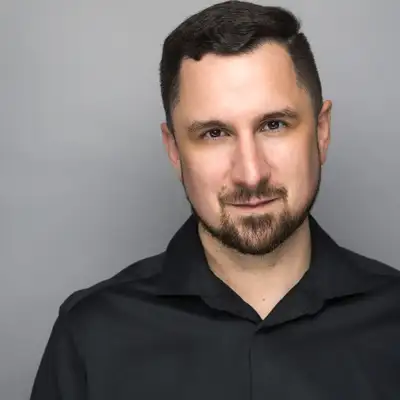
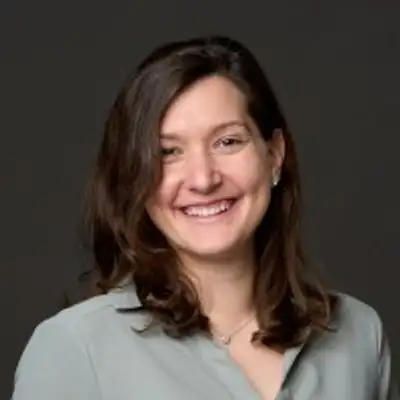
Welcome to Count Me In. I'm Adam Larson. In today's episode, I'm joined by Helen Hastings, a Stanford trained software engineer turned founder, who brings a fresh perspective to accounting with her company Quanta. Helen shares how her deep dive into finance and a hands on experience with founders led her to realize just how much accounting processes need to change. We talk about her vision for continuous close accounting, making financial data reliable and accessible every single day, as well as the balance between automation and accuracy in this new era of AI driven finance.
Adam Larson:If you're curious about the future of finance, the role of technology, or how explainable finance is reshaping teams, you'll want to tune in. So let's get right into my conversation with Helen Hastings. Well, Helen, thanks so much for coming on Count Me, and I'm so excited to have you here. Man, you have a you have a very interesting background. You came from a software engineering background through Stanford.
Adam Larson:You've built financial systems throughout your career. So maybe can you walk me back to that moment where you decided that there's a problem that you see and that you wanna build a new software?
Helen Hastings:Thanks, Adam, and, glad to be here. And, yes, I'm a software engineer, turned founder, and found my way into the accounting space. And there really actually wasn't one single eureka moment where the idea for for Quanta and my company came together. It was really just a over a steady drumbeat of immersing myself in in the space. And, actually, I've I've talked to a lot of founders over my past few years of of working with a lot of founders as Quanta does their books.
Helen Hastings:And, actually, the theme I see is pretty similar where there isn't just one eureka moment, no single clever shower thought where it all suddenly becomes clear. It's actually usually that the the founder has just built up this expertise over time by immersing themselves in a space, and over time, it just becomes obvious that something's to change about the world. It even just becomes painfully obvious dirt simple. So again, not one clever thing, but just dirt simple. Hey, I think the world should should work like this as opposed to a clever insight.
Helen Hastings:So that's really what it was for me. So so to really answer your question, it was in my past job being a software engineer building the in house accounting system at my last company firm building financial systems and then over many, many months of doing full time user research talking to potential customers, talking to accounting managers, controllers, CFOs, heads of finance, finance managers, living in their day to day, seeing their pain, and combining that with my past experience just over that time. The so there wasn't one single turning point. It all built up to realizing the world just needs to work differently, and I think that I can build that thing.
Adam Larson:That's an awesome to have that realization to say, hey. The world needs to be built differently or something needs to change. I think I can help make that change. And, like, walk me through, like, what that feels like as you're kinda, like, realizing that in yourself.
Helen Hastings:Yes. Again, it's really it's steady over time, but it is sort of all encompassing. And at this point, it honestly feels like everyone else is living in some collective fantasy where they think the world should work this way, but I just know it should work in the way that I I want to. And it's the sort of thing where you end up feeling like, hey. In five years, ten years, people are gonna say that quanta is just inevitable.
Helen Hastings:Oh, it's so obvious. How come everyone wasn't thinking about it? That that's that feeling. I feel such conviction in in that even though right now everyone is thinking the other.
Adam Larson:Yeah. I can understand that. So, you know, when it comes to the accounting space, people are very set in their ways. You know, they have massive ERP systems. They have all these different legacy systems that are happening.
Adam Larson:You know? So walk me through the the the problem you're trying to solve with Quanta and how that kind of fits into people's system.
Helen Hastings:Yeah. Definitely. We are solving a few problems in one, actually. We well, I can actually start by saying really more about what we do. We're in that.
Helen Hastings:Yeah. And that'll help answer the question. We're an AI powered accounting service and and finance platform. And what that means is we we fully manage and close the books for our customers who are early to growth stage software companies. So we fully manage, close their books.
Helen Hastings:That includes a human service element as well. But what sets us apart is the software that we've built. So we have built our own accounting system, ERP, that lets us provide an exceptionally high quality and and highly accurate service. And it also helps with the finance side of the house. So answering the day to day business questions, even non accounting finance metrics, really automating a lot of the otherwise manual spreadsheet and and analysis work.
Helen Hastings:So so that's a lot of the problem we're solving is solving the closing the books, making it so much more automated and fast than it was before, and giving companies really real time insight into their business. And so they don't have to do all this digging across a bunch of different financial tools to answer a question. But since the accounting is up to date and live and done in a way that actually preserves a lot of the operational finance context behind it, so not just those accounting entries, but really what's going on in your business from a financial perspective, we solve a lot of that pain and and that financial analysis works that teams would otherwise have to do digging across of a bunch of different tools while they wait for the accounting.
Adam Larson:So how are you connecting to the general ledger? Because a lot of times, like, trying to close the books and stuff like that, you know, you have to get you know, you have to connect to the bank. You have to make sure the general ledger is all connected, and there's, like, always these, like, these delays in the process.
Helen Hastings:Yes. So that is why we actually built our own general ledger from the ground up. Yes. And it was essential for us to to do that. Again, it's Quanta's not just a general ledger, although that's a really key part of it, but we're a source of truth for for all of finance.
Helen Hastings:And for that to work, the general ledger needs to tie tightly to all of that other finance operational data. And you really have to rebuild the general ledger to get those properties of how tightly it's tied to everything. And to to be concrete in what that means is our general ledger stores a ton of rich contextual data that has really stored this explicit cause and effect relationship with all of the upstream operational data and everything else in the systems. An example is if you you're a business, you incur an expense. Let's say you you've used your your lawyer services.
Helen Hastings:So you know that you've an incur an expense, so you tell us about it, but maybe you haven't even gotten an invoice yet. But later you get an invoice, and then you start paying it on one system, but then you cancel it and then pay it through another system. But it's an annual contract, so you have to spread that out over many months. And then maybe six months in, it gets you get a discount, so you have to redo it. In traditional general ledgers, those are all very separate very separate entries, and there's nothing that enforces that they're all linked together.
Helen Hastings:But the way the quanta general ledger works is those are all linked together. And because of that, you you get a couple of things. One, you get a lot of act. So if you change one piece of all of that, we enforce that it's accurate across all of them. So you have all that consistency across all of those things.
Helen Hastings:You never have the world saying one thing over here and and saying another over there. So that really allows it to become self validating and self reconciling. So we have that accuracy and then two, it lets us actually beat the financial source of truth, not just for the accounting entries, which are all those individual pieces, but really what is going on in your business, which is how all of those things are linked together, and they're really viewed as one thing that has happened, not just a bunch of disparate pieces, which are hard to understand in isolation. So that is why it was so important for us to rebuild all of it from the ground up. And because, again, we sync in with all those financial systems and pull that all in, we can keep everything up to date because we understand both the source and that general ledger and how everything fits together.
Adam Larson:So what you're describing sounds a lot like, you know, the continuous close. You know, a lot of people are very familiar with, like, our monthly close. They try to close the books within a few days after the end of the month, and that can be a huge burden on finance and accounting teams. So maybe help me understand what this day to day looks like for a finance team who's operating in this kind of continuous close. And maybe you can define what that continuous close means for people who might not be familiar with it.
Helen Hastings:Yes. So this is a term that's sort of been a dream in the accounting space for a while. Traditionally, closing the books is is once a month. A continuous close means it's it's accurate all the time. So instead of this big once a month thing, things are accurate through throughout the month, and we're still chasing it completely.
Helen Hastings:We haven't done a 100% of it, but we're really getting there. And we're seeing the effects of it already and what those effects are. What it means is that you have a financial system and accounting system that is useful to you throughout the month. It's not just useful at the end of the month and 12 times a year. It's useful to you every single day.
Helen Hastings:You can log in. You aren't worried about not trusting the data, which is the status quo today. A lot of accountants and and controllers, which is the head of accounting title, would not find their system useful at all during the month. They wouldn't trust it. They wouldn't really provide like, get any value out of it.
Helen Hastings:It wouldn't provide value to them. But what continuous close means and what we we have enabled for our customers is they have something they can log into every single day throughout the month and have it be useful in making their decisions about their finances on a day to day basis.
Adam Larson:Wow. I mean, that's gotta be a dream for accounting and finance teams because if you don't have to spend three, four, five, you know, six, seven days to, like, do that massive close and you can kinda do that more, that frees you up for other things, which kind of is it like you said, it's kind of like the dream of the accounting team.
Helen Hastings:Definitely. I mean, one of the reasons I I started this company was in the user research I was telling you about hearing from finance leaders saying Mhmm. You know, my my CEO is asking me all the time to to know what my metrics are and they want to know on day one and they want to know on day two. And I say the books aren't closed yet, and that's very frustrating to them. And in fact, they actually say, no, I need it today.
Helen Hastings:Figure it out. And then the finance team has to go do all of this work because the accounting data isn't ready, and then they often produce a number that is different from the actual accounting number, which causes a lot of problems down.
Adam Larson:Yeah. So you're able to kinda stay on top of it. And does does this continuous close idea allow you to kind of catch mistakes or errors or fraud and things like that on a quicker basis?
Helen Hastings:Absolutely. Yes. So we run a bunch of reconciliations every single day within the the Qantas system. And yes, there are some that we can't run until the end of the month when a bank statement comes in. But with today's technology, a lot of the the banks have an ability to really reconcile every day because they're showing you what what the balance is.
Helen Hastings:So we have different tiers of reconciliations, but there are some that we run every single day, and that can alert us if if something looks off. So we can catch in the middle of the month, oh, it looks like you started using a new payroll system that you haven't told us about, or it looks like you double paid something here. Your bank isn't matching your other systems. We can check that thing, every single day, and that can alert our users to things that they might not have known about until a lot.
Adam Larson:Yeah. That that sounds like it sounds like if if somebody was listening to this and they heard that, they're like, why aren't we doing this in my organization? Like, it sounds like something we we should all be striving toward in our accounting teams.
Helen Hastings:Yeah. Absolutely. I mean, I can give give a few more examples of
Adam Larson:Yeah.
Helen Hastings:What it means to have the data coming in so late. So it really is the status quo for a lot of very small companies. I see them waiting two months to get their books. That is a huge amount of time in startup land because companies are are moving so quickly. So I I have customers where on their previous providers, they never even looked at their books.
Helen Hastings:And it's not because they're negligent or not because they're lazy, but it's because by the time they got the data, it was useless because it was so far in the past to them. Felt like a decade in the past even though it was a couple of months. But what they can do now is they have a place that they can log into every single day to see the state of their business. And a few examples of what could happen if you if you are waiting that long is you might not know what your customers owe you. You might not know that a customer is way behind on paying you back, which may mean that revenue that you think is revenue is actually not revenue.
Helen Hastings:It's something that you need to write off. Maybe a customer is no longer interested in doing business with you, and you don't know because you've gotten the data way too late and you're not looking at it. Maybe you haven't realized that you're close to running out of money because you're burning a lot more than you thought you were. Maybe you didn't realize that a department is spending way too much money and you caught it too late, or maybe you think you can afford to hire someone. So you hired them, and then and then you realize later that you actually couldn't afford to hire them.
Helen Hastings:So that is the impact of of not knowing what your finances are until too late.
Adam Larson:So this this all sounds amazing. You know? And I know you're really using technology to do a lot of these things to run those reports. You know, how do you balance getting all that data real time and making and all but also making sure that it's accurate, the human element of understanding how this works? Like, a lot of a lot of things that we're automating are things that maybe first years out of college would be doing be doing that work.
Adam Larson:And so how are we balancing that, especially when the next batch of accountants come out from college?
Helen Hastings:Yeah. That's that's a great question. Sort of a but to make sure actually I'm understanding, it's balancing accuracy and and that speed? Or
Adam Larson:Yeah. Balancing accuracy and speed, but then I'm also adding the element of, like, what about the people who are coming in who might need to learn these things, and how are we balancing that as well?
Helen Hastings:Okay. So the I think I can answer both of the starting with the the first one about the the accuracy and the speed. I mean, it's something that we think a lot about because we actually made a mistake early on focusing too much on on speed where we we knew that things were accurate because behind the scenes in our code and our checks that only we our team was seeing, we knew it was accurate, but we weren't showing enough about that in the product to our customers. So we were going very fast, but actually the more savvy finance people didn't trust the numbers that that we were showing because we didn't we didn't show our work. So we learned from that that the speed and the automation don't really mean anything unless you can find them useful, and that requires showing accuracy and letting your customers understand.
Helen Hastings:So now we do a lot more work in our product to show our work, to really build that trust and show that understanding. And when it comes to maybe new grads, I think, honestly, I think this is not just accountants, but maybe junior folks across all disciplines where you trusting an AI number that doesn't show its work is not a good way to learn how things actually work. You kinda need to do that work yourself. You need to build the logic yourself to know what it's doing and to have a gut sense of when is a number that a chatbot spits out something I can trust versus when is it not. So for for new folks emerging into into accounting, as long as they're using tools that show their work and they maybe do the exercise of maybe double checking that work, really understanding what is this logic, why did it choose this logic, as opposed to just trusting a system that's with some numbers.
Helen Hastings:But but when it comes to accountants specifically, I I think it's actually less a worry of the junior people are are not gonna be able to do their work because The US actually has a problem where it's not producing enough qualified accounts. It's not producing enough CPAs. The number of people who have gotten CPAs have have dropped a lot. So actually, the bigger problem is that they need more tooling. They need more automation because the amount of work is increasing.
Helen Hastings:The the number of new companies is increasing, the GDP is increasing, which means there's more accounting work to be done, but we have fewer people to do it. So really the bigger problem is we need to empower them with tools versus be worried about there's gonna be a bunch of junior people without enough work to do.
Adam Larson:Yeah. And if you're listening to this podcast and you're like, I haven't touched AI yet, just heads up way behind, get in there, start playing around, start poking around, and start asking, hey, team. Why aren't we using these things? It's something that you can no longer ignore AI in your daily job, especially working in a corporate environment. Even just small mom and pop shops who are who are getting in, are who are building their business, utilizing those tools can help you save money, can help you save time, and all those stuff.
Helen Hastings:Absolutely. And it's not too late to to catch up, but that's for sure. And I think because things are changing, changing so much every single day. So even something that's useful today might be obsolete in in several months, but I really encourage everyone to to go and make use of of those tools. And, you know, I do talk to a lot of accounting and finance folks that are still skeptical of them, and they do say they're using ChatGPT to do things throughout their day.
Helen Hastings:But, actually, the new era of AI tools has not cemented itself yet in the accounting and finance space, and and we're really just at the beginnings of it. So it is a very, very exciting time.
Adam Larson:That's awesome. So when you and I first talked, we were we were kind of chatting about what you guys are doing and you used the term explainable finance. So I was wondering if you could kind of tell me what what do you mean by that? And then, you know, why does it matter, you know, so much that you know, because I know it, like, I numbers tie back to source date and stuff like that, but I wanna make sure that, you know, we're using, like, this term and so, like, so people can understand what it means and how it affects them.
Helen Hastings:Yes. So we started using the term explainable finance when we released our most recent major product launch, which is a product called Prism, and that's our agentic reporting layer.
Adam Larson:Okay.
Helen Hastings:So it can let a user ask any natural language question, what's affecting my burn, who are my highest impact customers, and you can get a report in in response. And we call it Prism because it's bringing color to your finances or or bringing things from the dark into the light. When a finance person thinks about taking a number out of a chatbot, like I was saying earlier, it's very scary to them and they're very skeptical of that. So we needed to make it explainable. So we needed to make it really show its work and improve itself.
Helen Hastings:And the thing we built is numbers explain themselves. So that is how we came up with the term explainable finance because it means it's not just numbers. It's not just outputs, but it is numbers that explain themselves. And we knew that we needed to talk about that to get people comfortable with with this new new concept. So concretely, way it works is you ask a question and you get a report.
Helen Hastings:So it's something that's sort of like a spreadsheet, but it's integrated with all of our data. So it shows its work and that it lays it out, and you can keep drilling down. You can click on a cell and drill all the way down to the cold, hard proof of receipts and links back into banks and links back into all of your other financial systems. So that is what explainable finance means.
Adam Larson:That's great. I love that. So, you know, I like to ask this question, especially, like, when there's new software companies. You know, a lot of the things that you're doing, you know, some of the big names are are doing similar things and there's, you know, there's all these other ERP systems that are out there. You know, why do we need a new platform?
Adam Larson:Why is why is there a need for a new platform out there that may be doing something similar that other things are doing? Maybe we can talk through that a little bit.
Helen Hastings:Yeah. I and I think it's less about a new platform and more about making people's lives easier. And Okay. From all my user research, just seeing just how much pain there was and all the examples that I just gave you and companies. I talked to companies that didn't know how much money they were making, which sounds pretty crazy, but actually is pretty pervasive.
Helen Hastings:They didn't know how much money their customers owed them, and they didn't have a way to answer their day to day questions about what was going on in the business. They needed two weeks across four teams to answer any question they had because those teams need to dig across all the tools and put together a visual. And then, of course, that all broke next week when one small thing changed. And so so that that is why we we need a new platform. It's because I I believe that we can move away from this world where you need two weeks to answer any question about your business and start being able to actually get an instant verified answer, and that will completely change how businesses make decisions.
Helen Hastings:Instead of having this huge cost associated with the question, you have no cost, and suddenly that means you get to ask a lot more questions, get a lot more information, and then into making better decisions. Everything is more efficient. And I believe that that should exist, and it doesn't exist today. And I don't think anyone else is working on it, so that means that I wanted to build that myself.
Adam Larson:That's awesome. I love that. I love that. It's like because if you read the news, if you go to other big you know, you look at what the big names are doing, some of the things that you're mentioning, it sounds like they're doing those same things. But from what your your research is saying, it's like, hey.
Adam Larson:Maybe it's not necessarily doing that, but it doing it in a different way or doing it at a grander scale, and it might not work for every every every organization.
Helen Hastings:Definitely. I see little bits of marketing all the time from different finance tools where they have this natural language chatbot, and their their marketing images. So someone asking why did my revenue go up, but none of them have actually been able to do it. Maybe they can do it in very certain contrived places. Mhmm.
Helen Hastings:But if some of them had actually really been able to do it, we would be talking about it a lot more. And again, maybe each company has built its own internal tooling, but it comes with that cost, these two week projects and how our team is maintaining things. And I think that we're really actually able to do it because we've taken a different approach where we are doing the hard work of doing the accounting of really building the books and building them in an organized, structured way. A lot of tools that claim they can answer all these questions are fancy layers that have just sitting that have put themselves sitting on top of accounting system. So they say, hey.
Helen Hastings:Connect your QuickBooks. Connect your web
Adam Larson:Yeah.
Helen Hastings:Your NetSuite, and we promise we'll answer everything. But the problem is the data in there is not good enough to actually answer those questions. It's very messy. And you it's not as easy as just saying connect your Stripe, connect your bank, connect your payroll, connect your accounting, and we promise we'll be able to answer all the questions. There's actually a lot of really messy work in there to organize the data very well, and that's what Quanta has has focused on.
Helen Hastings:And that's why it's been a few years in the making, and we spent years just building our accounting engine and building that financial source of truth Mhmm. Before building prism or building product on top. Because the only way to actually build that dream is to do the hard work of organizing all the financial data, doing the accounting, building up that single source of truth where everything actually ties together across all of the different systems.
Adam Larson:What I I think what I love about what you're saying is that it's kind of freeing the accountant to do what we've been saying the accountant should be. The accountant should be the business partner. They should have that seat at the table. The CFO should really be there talking about strategic decisions, not just focusing on, hey. What are our numbers from last year?
Adam Larson:But we can actually look forward because with this idea of a continuous accounting, continuous close, you're kind of you're continuously on top of where you are so that you can make those decisions in a better way. And so what does that look like, you know, for a business as you're trying to look strategically? You know, what does budgeting look like, and what does all that look like as you're doing this type of accounting?
Helen Hastings:Definitely. It means that you're freed up from the endless log of of manual work to actually be strategic. So you're getting to the heart of it, which is we're bringing accounting into out of the rearview mirror into the forward facing. Let's be strategic. And it's not that accounts don't want to.
Helen Hastings:They they want to, but they they have so much work to do about just closing the books. And then again, by the time we're closed, there might be time to do it again. So you're forced to always look into the past. But what Quanta is doing and and where I think the future is going is you're bringing accounting up to the present, and that also means that you're bringing them into the same timeline as as finance teams. So that's gonna create a fundamental shift in working where it's not like there are these two areas.
Helen Hastings:One's in the past and one's in the present, and this one's always waiting for this one and has given up on waiting for them. So they do all the work themselves, and then you produce two different numbers, and no one can ever explain why the two numbers are different. What it means about the strategies we've eliminated all of those sets of problems, brought them together, and made them start looking in just one single shared source of truth so that they're always speaking the the same language. So as they start working together, finance is gonna get a bit more accounting savvy. Accountants are gonna get to be a lot more strategic and forward thinking.
Helen Hastings:And concretely, you asked about budgeting. It won't be a week after the month ends, two weeks after the month ends. We figure out who's behind budget, but we catch you throughout the month as you're trending on and off budget.
Adam Larson:That's definitely a whole different way to look at it. Because a lot of times, you know, traditionally, it's like, hey. Quarterly, let's look at the budget. Let's make sure everything's on point. But being able to look at that weekly, daily, like, that's that's a whole different way of thinking about how you're doing your job.
Adam Larson:And I I I can imagine that could be exciting, but also scary for the, you know, the everyday accountant.
Helen Hastings:When I talk about things to some people, they are pretty scared of it. It's actually more that they're skeptical of it that Yes. That they're So I talk with a lot of finance leaders, and they don't believe that an accounting system can do what Quanta does because Sure. To to use the the the two different or if anyone's listening, my hands are showing two separate spaces right now. Finance versus accounting.
Helen Hastings:They're very separate. And the the finance leaders think accounting is separate. It's back in the past. And they when they think accounting, they don't think that it's something that can help with their day to day, and they don't think that prism and explainable finance or something that would come from an accounting system. So it's actually very hard to me as a CEO salesperson to convince them of that.
Helen Hastings:And so, yes, they're they're skeptical and a lot will need a lot of years of getting comfortable to this, hearing their peers do it before they will accept that the accounting system is something they can log into every single day, but we worked a lot of very early adopters who have shared the division that I described to you earlier.
Adam Larson:Mhmm.
Helen Hastings:And those ones are very excited and happy to log in every single day.
Adam Larson:I love that. Well, and it it sounds like, you know, you're pioneering pioneering kind of a a different way of looking at our accounting software going into the future. So as you kind of look into the future, you know, there's there's so many new things, so many new technologies coming out, and there's so many different things that are happening. What's kind of like the biggest opportunity you see in the accounting and finance space as they look at their role differently and as we kind of get excited about what's gonna happen?
Helen Hastings:There's so many exciting things happening right now. I think this might be one of the most exciting times to build new product and and build software for the first time in a while with with with with with AI. And so I think I would encourage everyone to just make sure they're staying on top of the the latest tools and realize that they can start asking a lot more questions than they ever could before. So getting out of that mindset of it takes two weeks to get an answer to a question or even it takes hours and take advantage and shift that mindset of I should just be asking a ton of questions because the cost is lower to getting those answers. And how will that change how I think as as a leader and as part of the business to be able to be a lot more strategic and actually be able to get to the heart of a lot of thorny questions because that tooling didn't exist before, and it's starting to exist.
Adam Larson:Yeah. One is it's starting to exist. I I think the biggest thing that I hear other others saying that, you know, I hear folks that I interview saying, like, continue to be curious. Don't don't think that just because you've always done it this way, that's the way you should continue to do it, that there could be better ways of doing your job to make it more efficient, to make it more timely, and even be more accurate and be able to catch things faster.
Helen Hastings:That that's a great point. I think it's just that general mindset shift of being open minded. Things that were absolutely the cold hard truth three years ago are not today. And so it has to work like this. Like this is a best practice.
Helen Hastings:Think I think that's one that's true. It's across true across every industry not just accounting and finance. I mean, I see it in my engineering team and then talk with engineers as well of, oh, this is a best practice. I gotta follow this best practice. But actually, you need to think from first principles again, not just do something because it's the best practice, but what makes sense now?
Helen Hastings:What makes sense now that the tooling is so different that I have this completely different tool set? The best practices are actually changing so that people that don't just follow previous best practices but to think from first principles about how to work will be the ones that succeed in this area, In this era, I mean.
Adam Larson:In this era. Yeah. This era is definitely it's a very exciting time, you know, be working and working and seeing the different softwares that are coming out. And it's interesting too because a lot of softwares that people might already be using, they're adding, like, elements. They're adding AI elements.
Adam Larson:And so you maybe maybe you could help, like, somebody who's maybe listening to this conversation, and they're like, cool. I wanna do that. We're not we're not changing softwares yet. You know, my my thing my my current ERP is giving me this tool. Maybe you can help them with some, like, what are some things they should look for?
Adam Larson:What are some questions they should ask when they're when they're when they're coming against that? Like, hey. Look for this, or this is a red flag that you should see. Or what are some of those things some help we can give our listeners?
Helen Hastings:So to make sure I'm understanding, it's if you maybe can't do a big switch, you can't do a big ERP switch. I definitely recognize that can be a long period of time. We make it very fast at Quanta, by the way, but it is something that requires organizational buy in for for a
Announcer:lot of companies and is not as easy as switching a light sometimes. But what can
Helen Hastings:you do anyway? I I've seen people hook up their data into LLM tools and ask it questions. Again, I think this will only get you so far if you have messy data and the hardware
Adam Larson:is keeping
Helen Hastings:the data clean. But if you can find a way that maybe it's building your sub ledger outside of your existing ERP or having some good Mhmm. Golden dataset source of truth that you've built up yourself and then putting an LLM on top of that, piping that into some sort of AI system, learning how to prompt to give it the the context that it needs on your data, and then just ask a bunch of questions and and iterate and iterate from there. The other advice I would say is don't use the first answer you get as the the baseline. You need to iterate need to practice, but over time you can start to see.
Helen Hastings:I'm getting a lot of value out of this and I'm able to answer questions that I wasn't able to before.
Adam Larson:That's awesome. Well, Helen, I really appreciate you coming on the podcast. Thanks so much for sharing your insights and the cool things that you guys are doing. I I encourage everybody to check out what Helen's doing. You know, check out Quanta's website and see what's going on and connect with them.
Adam Larson:Thank you so much for coming on the podcast.
Helen Hastings:Thank you. I had a great time. And, yes, please check out our website. We're use quanta.com. I'd love to, hear from everyone.
Helen Hastings:You can DM me on my LinkedIn, Helen Hastings too. But thanks again, Adam. I had a really great time.
Announcer:This has been Count Me In, IMA's podcast providing you with the latest perspectives of thought leaders from the accounting and finance profession. If you like what you heard and you'd like to be counted in for more relevant accounting and finance education, visit IMA's website at www.imanet.org.