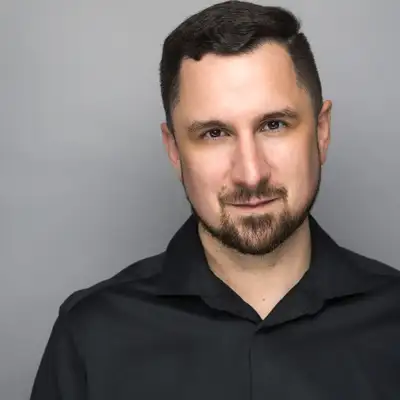
Ep. 344 - Timothy Wingate - Leadership and Resilience: Using Family Values to Build a Strong Business
Welcome back to Count Me In. I'm your host, Adam Larson, and today we're excited to welcome Timothy Wingate back to the show. Timothy is an entrepreneur, author, and founder of g plus f business and financial consulting. In this episode, we dig deeper into Timothy's personal journey from his family's entrepreneurial roots to tough challenges like lawsuits and even arrest to hustling through gig work and piano lessons to help rebuild his career. With his wife's unwavering support and a leap of faith, Timothy launched g plus f business and financial consulting determined to help others avoid the pitfalls he experienced.
Adam Larson:He shares insights on setting the right prices, building a remote team, using AI to streamline operations, and leading through servant leadership and continuous learning. So whether you're an entrepreneur or just looking for inspiration, Timothy's story offers practical lessons and encouragement. So let's jump right into the conversation as we welcome Timothy back to Count Me In. Well, Timothy, welcome back to Count Me In. It's so great to have you back on the podcast.
Adam Larson:Last time you were here, we talked a lot about you know, we really focus on what you're focusing is, like, your construction accounting. But I wanted to take a step back with this conversation and talk about you as the entrepreneur because you're an entrepreneur, you're an author. And maybe we can start with, in your journey, like, what moment did you realize, hey. I can't work for anybody else anymore? Like, what was kinda going through your head that you kinda took that jump like, this needs to happen?
Timothy Wingate:Yeah. It was it was so tough. You know I mean? Because entrepreneurship is the DNA of my family, you know, from my grandmother to my father and from what from what I hear from others that came before them. And so I didn't set out from college to say I'm gonna be an entrepreneur.
Timothy Wingate:You know? When I left college, I said I'm work in work in banking, but always had this entrepreneurial DNA. And so I did a lot of things on the side. Like, we talked about, you know, me being a musician. So when I was in college, I was gigging a lot, playing for weddings, teaching piano lessons.
Timothy Wingate:I even was cutting hair for, you know, side money and and being a barber. I I've always had this entrepreneurial DNA within me, and then my grandmother called me to come and help with the family business. And when she called me to come, you know, come and help with the family business, I I put banking and my dreams of being this wealth management person in Bank of America. I I I threw all that away and said I'm gonna come and help family. And when I came down, I took a salary cut, major salary cut, but my heart has always been for family and been for people who needed someone who's educated and who could learn systems and and and hopefully take a company to new heights and better Yeah.
Timothy Wingate:Better places. So all that was going fairly decent. When I say fairly decent, it's because we were we were going through so much. Nine lawsuits I went through while I was there. Nine lawsuits.
Timothy Wingate:And it was terrifying, tough, all of that at the same time. I was very young. And with that, I'm working with family. That adds another layer of complexity to to trying to grow a business and bring new ideas to the business. And then we were a so we had a nonprofit organization that catered to child low income families who needed childcare.
Timothy Wingate:Mhmm. And so we were serving the community in that in that way. I inherited a team of people who were, some were great, some were not so great. And so the ones who were not so great caused us to lose all of our major federal funding. And so Why?
Timothy Wingate:What happened was there was an act of child abuse that happened with the childcare facility. And because I was the director of that facility, I was wrapped up into that as well. So what really hit home was when we closed down the facilities. We had three locations, 27 employees. Everybody lost their jobs.
Timothy Wingate:And I had to find a a new career, a new something new. My grandmother owned the building, so she was taken care of, but I had to find a new career. Lo and behold, I had a warrant out for my arrest.
Adam Larson:Talk about, like, throwing you for a loop there.
Timothy Wingate:Right? And I just couldn't believe it. I'd never been arrested a day of my life, never did any any type of crime or anything, but come to find out that I was being railroaded. So when you hear about these stories in the news where, you know, this director or this CEO was was arrested, and there was this conspiracy or whatever it was, these things actually happened. They happened a lot, and, you know so I was arrested.
Timothy Wingate:I was I remember it vividly. You know, I was home with my son, just dropped him off, and I came back home, and I was going to make a run to the courthouse to renew my my my tag on my car. All these, like, four or five unmarked vehicles just ran into my yard. The craziest thing you could ever experience as a person. I mean, that was wild.
Adam Larson:And Yeah.
Timothy Wingate:To hear someone calling your name, Timothy Wingate, get out of the car, you know, put your hands behind your back, you know, all this kind of stuff, that was just a weird, weird thing to happen to me. It was surreal. And I will tell you, the scariest thing about getting arrested is not actually, you know, being taken being inside of the cell, it's actually the ride to the jailhouse because you're stuck in the back of a a vehicle with this one person driving, and you're hoping that this person doesn't have a heart attack, this person doesn't have to make a stop to do something else. And Yeah. You're stuck in this very tight space where and I'm a small guy.
Timothy Wingate:I'm only, you know, a hundred and eighty pounds. I I know I'm I'm giving you some background because I I I wanna let you know that every entrepreneurial journey is not a an easy road, and it's not something that that looks pretty. And so when I got arrested, now I got this warrant, and now I have you know, I got out the same day and those type of things, and I no longer you know, I don't I didn't get convicted or anything, so to clear all that up, it was a technicality that they were trying to get me on, and I hired my lawyer. They did their job. And so everything got expunged, so all these type of things was cleared up.
Timothy Wingate:But what happened was during that time where everything was getting cleared up, I had jobs waiting for me that were gonna pay me 6 figures, but they could not hire me because I had a pending felony. You know? Third degree No. It was a it was a it was a third degree felony that they were trying to get me on, and that was pending. They said, Tim, as soon as that clears up, we're ready to bring you on.
Timothy Wingate:Well, what happens during that time? You know, the court system moves slowly. I had to feed my family. I had a mortgage.
Adam Larson:Yeah.
Timothy Wingate:I had car notes. I had two kids. It was tough. I had to do something, so I reverted back to what I knew. I played piano for my church, so I was getting paid from that.
Timothy Wingate:I started beefing up my piano lessons, got in getting paid for that. And then I started doing odd in online jobs. I remember one job where I used to drive to different cities, and I don't know if you ever saw, you know, someone standing outside of a department store and just counting people in. I was a counter. And so I'm I'm just counting people walking in and out of the stores, and then you turn in, you you know, you submit your your your data, and you get a check, you know, direct deposited within a week.
Timothy Wingate:So I was doing everything, and then God gave me the vision of g plus f, and so that's and and for those of you who know, g plus f stands for God plus Family because that's all that I had. That's all I had at that time, and I have the best wife in the world, the best wife in the world. She dumped out her entire four zero one k. Wow. Four zero one k so I can start my business.
Timothy Wingate:Marry You well. You know what mean? Make sure you pick someone who would do that, because those of you who know, a 401 k is not in the name of two married people. Any retirement account is gonna be in the name of one person, so that one person has to be willing, you know, to to do that for you. My wife did it with no questions asked.
Timothy Wingate:She said, okay. I mean, she did give me a little side eye, but she did it, and I appreciate her for it. And that's how I started on this entrepreneurial journey. I said, I don't want anyone to go through what I experienced. Running a nonprofit, nine lawsuits, all these different pit you know, pits that were along my path, I want to help people avoid those things.
Timothy Wingate:And so that's what I bring to any organization, to any entrepreneur or business owner who I work with, you're you're getting experience. Like, real, real experience. Yeah. So I know that was a long road, but I think it was good for the podcast to hear, you know, hey, this was my journey. That was the actual journey from getting to from a college graduate all the way to an entrepreneur, and it was not something that was on my radar from the onset.
Adam Larson:Well, and it's scary being an entrepreneur because, like, you were doing all those You were doing a lot of gig work. It felt like before you did the entrepreneur thing, and the gig work is hard enough because what if the kid doesn't wanna come to piano lessons this week? Yeah. You know, what if the per the the company's like, okay. Thanks for this week, but we don't need you next week.
Adam Larson:You know, what are you gonna do next? And so taking that leap so when you first launched, you know, G and F, what, you know, what would that first year look like? What was that day to day? Like, what kind of challenges were you looking at as you're trying to, like, make those new decisions? Because you had a lot of experience, but now you're actually putting it into practice, and that that's not easy.
Timothy Wingate:Yeah. I'll tell you, I had some of the similar challenges that I see a lot of entrepreneurs have. I've had those same challenges because remember, when I came into my grandmother's organization, it was already up and running. So Yeah. We were having challenges, but they were different types of challenges.
Timothy Wingate:They were challenges that, you know, hopefully, I will continue to avoid, because I've I've avoided it thus far, and it's been almost ten years. It'd be ten years of May 1 that g plus up has been around. But I remember only being able to run payroll for myself, $600 gross a month. Man. Jeez.
Timothy Wingate:$600 gross a month. That's all I could pay myself. Because everything else had to go into marketing and doing other things.
Adam Larson:Yeah. You know? And your wife's like, wait, I put my four k out for this?
Timothy Wingate:Oh, so there you go. I I I couldn't pay myself what I was, quote unquote, worth. And the other thing was, I remember driving to different business owners and doing their books in their office. So here I go. I'm wasting gas.
Timothy Wingate:You know, QuickBooks Online was kinda taboo back then, and people only trusted you if they could see you in person. So that I I was doing that. And I remember the other thing, not charging what I was the proper pricing to grow my company. I remember charging $50 an hour. $50 an hour.
Timothy Wingate:That was it. And can you imagine I'm I'm going I'm driving I went as far as Miami. I live an hour away from Miami. Yeah. I was driving to Miami to someone's office to work in their office for two to three hours and only make a $150, and I I drove a Ford f one fifty.
Timothy Wingate:Jeez.
Adam Larson:Gas guzzling.
Timothy Wingate:You could see very quickly I realized I have a pricing problem. I had a pricing problem. So I had pricing problems, had, you know, business model. My business model was inefficient because I'm driving to people's office, so they're winning, but I'm not winning. And I'm only even paying myself $600 a month.
Timothy Wingate:Those are my problems. Yeah. Yeah. Tough.
Adam Larson:That's yeah. That that is tough because it it's like you have to you have to start somewhere, obviously, and no business starts off being super successful. So, you know, how and and one thing you mentioned when we were first chatting and you mentioned this in your book too that, like, a lot of business owners kinda stay stuck in that technician role. How did you get from you're driving everywhere to everybody's books to, you know, living not in the technician run, actually leading your organization? Like, how long did it take you to get to that point?
Adam Larson:How did you kind of what steps did you take to get there?
Timothy Wingate:Great question, Adam. The first step I took was I had to change my business model. So I told people they had to get on QuickBooks Online. I needed to be able to to work with them remotely.
Adam Larson:Yeah.
Timothy Wingate:That was the first thing because I've seen that was where I'm gonna save money. So I worked from home, never had an office, never had that crazy overhead of an office space, and still to this day, I don't have an office. Work from home, my team, everybody who worked for me worked from home. So that was the the first thing. So, like I said, we're kinda taboo at first, but it's either you was with it or you wasn't.
Timothy Wingate:And I made that very clear, if you're gonna work with me, you're gonna be working with me by getting QuickBooks online. So that was the first Then I remember taking some of that seed money again from my wife's four zero one k, and I have invested in a weekend course with this guy named Andrew Argue. He was an he was a young accountant who who went to the University of Tampa. Shout out to Andrew Argue. His course, I think at the time, was $6,000.
Timothy Wingate:I remember. So I made the investment to pay him $6,000 to learn how to structure my accounting firm. And so when I went down, I could tell you this. It was the best $6,000 I've spent, and I only took away one thing. I know that seems wild.
Timothy Wingate:Some people just like, hold on. You spent $6,000 and you don't took away one thing? Yes. I only took away one thing. And that one thing was how to price my services.
Timothy Wingate:Because when I changed my when I changed my pricing, now I started to become profitable.
Adam Larson:Yeah.
Timothy Wingate:And and now that $600 growth turned into $1,200, and then turned it $2,000, and, you know, started going up and up and up because now I know what I'm worth, and I'm charging what I'm worth, and I'm only working with clients who can see that value. So those were the two major things that I implemented in the beginning to start to make the shift.
Adam Larson:So talk to me about this value. Because you said, you know, you wanted to make sure you priced your thing to know so that you know your value. Because a lot times we talk about value, you're talking about, hey. What's the value of the service I'm offering to the customer? Whether it's a course or it's a service or, you know, whatever we're offering to them, that's the value.
Adam Larson:But talk to me about what it means to, like, know your value first and then you're the value of the service that you're providing.
Timothy Wingate:You have you be confident in what you understand. You know, a lot of people get caught up on this impostor syndrome type of mentality.
Adam Larson:Mhmm. Yeah.
Timothy Wingate:You know, I don't know as much as the next guy, you know, type of mentality. And those things are just killing your confidence. So do whatever you need to do to to build your confidence up. The way I built my confidence was all these great billionaires and millionaires who've built their companies to where they're no longer feeling threatened by any kind of new competitor coming into the market. All those guys wrote books, and they became my mentors.
Timothy Wingate:I bought their books, and I learned all their secrets. And I implemented and tested those secrets, and when I saw that it worked, my confidence started to grow. And so now I'm taking my textbook knowledge that I learned from school, and I married that with experience that I learned from books. It was a great combination that gave me this confidence to say, you know what, I can do this. And I'm gonna be confidently tell these people that I can do it, and this is what it costs.
Timothy Wingate:Mhmm. And they can't change my mind. I had so many, so many people who said I was overpriced. I had so many clients who said that, you know, this next this other guy, his his services are, like, 10 times less expensive than yours. I think it's highway robbery, you know, that you're charging these prices.
Timothy Wingate:I I've heard it all. And you know what I tell I tell these people, you know, go work with that person because that person values their services, and they don't have the dreams and things that I want that I have for my company so that maybe they can be a little bit less expensive or cheaper. But I have high expectations for what we're trying to achieve here. I want to be able to pay my team well. I want to be able to take vacations.
Timothy Wingate:I wanna be able to spend time with my family. And so I can't do that if I'm, you know, scraping every penny every single week, every single month, and can barely get by. So I gotta stay on this hamster wheel of just constantly working as hard as I can and never getting anywhere. Yeah. I wanted to work with with business owners who understood that, Because I realized too that working with clients who had the mentality of buying cheap services and being price sensitive that way, they always worked out to be not so good clients for g plus f.
Timothy Wingate:It was only the ones who who saw themselves as the cream of the crop type of company and that they wanted to be the best and had a great vision for the companies. So they respected the price, and long as they were getting the value that they signed up for, they were all good with it. Those those became the best clients to work with, and those are the only clients I work with.
Adam Larson:Yeah. I love I love that story because it's it's a great picture of you don't have to take every like, especially in the the type of services that you're offering. Like, you don't necessarily have to take every client. Like, because you wanna build relationships with them. You wanna build a lasting relationship so that you can continue on and have a lasting you know, help them grow their businesses.
Adam Larson:You're growing yours because you're helping them because you're learning new things. You're putting that into how the work you do for them with them. And they in turn see that, and they see that value because you've put that value in yourself, and that value comes out in the services that you offer. I think that's just beautiful.
Timothy Wingate:Absolutely. Absolutely, man. The best decision I made.
Adam Larson:Yeah. So what was it like starting when you started hiring people for the first time? You know, because obviously, you're you're pay you're barely paying yourself, and you start making more money, but then you start getting busier, which means you can't do it all yourself. You need to you need to have employees. So what was that like?
Timothy Wingate:It was it was actually better for g plus f than it was when I ran my my grandmother's nonprofit. So my grandmother's nonprofit was the training ground for making all the bad hires and dealing with the ramifications of those hires. So I've learned how to hire when I ran a nonprofit, and so when I came here, was pretty good at it. I got better because I still made some, you know, some hires that didn't work out. I got better each time.
Timothy Wingate:Every hire was better than the than the previous hire, always. Yeah. So I will say this. I learned to hire slow, and I learned to hire people who are good at what they do. And what I mean by that, you have to test that.
Timothy Wingate:You can't you can't bring them inside your company and then test it. You have to test it during the hiring process. And so give you an example of that.
Adam Larson:Yeah.
Timothy Wingate:You know, people are for who work, come work for me, they're bookkeepers. They can say, hey, I got twenty years of bookkeeping experience. I've worked for this company, that company. All that's great. All that's great.
Timothy Wingate:So now what I do is during the hiring process, there's a point where their technical skills will be put to the test, and I do that by not letting them know when that test is going to occur, so they don't know which interview that's gonna happen on. And when they come on, I greet them, and then I share a screen, and I tell them to walk me through how to record this transaction in QuickBooks.
Adam Larson:Okay.
Timothy Wingate:If they start stumbling, if they start get but you have twenty years of bookkeeping experience, this should be a walk in the park. Mhmm. So this tells me a lot. This is what we have to do when you wanna make great hires. You have to test the technical skills.
Timothy Wingate:The technical skills is what's gonna free you up. If this person doesn't have the technical skills, but they have a great personality, and you get them in, and you you love them to death, but you you realize, like, every day, they're asking you how to do this. How do you do this? How do you do that? How do do this?
Timothy Wingate:Then they can't remember. They can't retain. And you give them more resources, more trainings, you know, resources, and it is just they're just not getting it. So what you've done, you've wasted now ninety days of money that, you know, you poured into this person to free you up to do, you know, the the the correct work, the right work for you as a business owner, but you just did you just gave yourself an extra job of being this person that has to train and teach everything. Now, of course, there are gonna be some things that we're gonna have to teach you on, you know, like the new systems that we're using that you that you didn't use at the previous job and all those things, but the simple technical skills that come to very foundational concepts and theories of bookkeeping, you should know that.
Timothy Wingate:I shouldn't be teaching you those things. So Yeah. There's two great books that I read that sharpened my interviewing skills and hiring skills. And both of these books I mentioned in my book. One book is called Who?
Timothy Wingate:By Jeff Smart, and the other book is called TKO Hiring by Dave Anderson. And both of those books were great. Jeff Smart, I forgot, I was reading some other book and learned about the Who book from Jeff Smart. And then my brother, who is a senior manager at Apple, he told me about the TKO Hiring book by Dave Anderson. I read that book because he does, you know, all the hiring for his local store, his local app Apple store.
Timothy Wingate:And so Nice. I was able to, you know, glean from from both of these authors and and kinda marry their their their processes and and theories of hiring, and, boy, did it save me a lot of money. I'm just gonna I'm just gonna put it out there, a lot of money. So you have to make sure your hiring process is slow, intentional, and you always have to test their technical skills. Yeah.
Timothy Wingate:And this applies for any industry, any industry.
Adam Larson:That's interesting because a lot of times when there's a hiring need, it's like, oh, let's get this person hired as fast as possible, but that's not necessarily the best solution for the organization depending on what you need and what that per what that particular person is doing. And and, you know, in hiring like, testing their technical skills is not the easiest thing to do either. Like, here, do this. You know? Yeah.
Adam Larson:Do these books for me. That's your next task. You know? That's your interview for today. Not everybody want is willing to do that either, and so it it shows their commitment and passion and and what they're putting out there.
Adam Larson:So that's an interesting idea. I I I don't think I've heard of somebody doing that before, and I I I appreciate it. That's cool. Yeah.
Timothy Wingate:Yeah. It works. It works. And you will you will find out the people who only can do the work if they have AI. Yep.
Timothy Wingate:Yeah.
Adam Larson:That is true. Yeah. Especially these
Timothy Wingate:AI should not be your trainer. You know? AI should be your assistant, and so we always have to keep that in mind. You know? We use AI here at g plus f, but it is our assistant.
Timothy Wingate:It doesn't teach us how to do anything. You know? It's it's the same as if I'm asking someone to a paralegal to go research this this case case law and bring it back to me. That's what AI does for us. Hey.
Timothy Wingate:Go bring this back. Let me see if I like it. Let me see if it makes sense. Let me see if I can use this, you know, in an argument. You know, those type of things.
Timothy Wingate:That's what AI should be for every industry. So AI is a great tool. It's a great tool, but it can be abused, and don't let it fool you as a business owner.
Adam Larson:Yeah. Are you using it in any of your accounting systems? Are you utilizing its its abilities to look through numbers at a faster pace than humans? Like, how are you utilizing AI in your systems?
Timothy Wingate:Absolutely. Yeah. We use AI to gather data quickly. So things that used to take us, like, hours to put together a report, or we can query or prompt AI to go gather this data for us and put it together so we can put it into presentation form very, very quickly. So those are things.
Timothy Wingate:And then, of course, in almost every software that we use, actually, can imagine, we're we're software driven here, very software heavy, and so Yeah. Every software even has their own AI features that we utilize to get things like I'll say Loom. This has nothing to do with accounting, but in our Loom videos, we are, you know, recording steps on how you do, you know, the integration from Buildertrend to QuickBooks. And then once we record it on Loom, AI could take that and turn it into an SOP. So Oh, nice.
Timothy Wingate:Yeah. And and Loom has that built in to their features, so it's taking screenshots and saying, hey. You you do this, step one, step two, step three, step four, that type of thing. And then AI also has the ability to to blur out sensitive information that that's owned by the client, you know, those type of things. So it's a lot of different way I can go on and on and on forever of how we use AI here at G plus F, but it it has us to serve the client so much better.
Timothy Wingate:Like, we we can get them information a lot quicker than any other firm that's not using it.
Adam Larson:So I just you know, I would be remiss to not talk about leadership. You know, as a as an entrepreneur, a you start your own business, you have a team that works for you. What are some leadership lessons that you've learned along the way? And maybe you can reflect on those lessons and say, what would I have told myself back when I first started that would have helped me? Every leader,
Timothy Wingate:in my opinion, should be looking to serve instead of to be served. So that is what I do. I'm always because I'm I'm in position to make the final call on what software we use, on what Yeah. New processes we're gonna follow, those type of things. So I have to make sure that it works for my team and that it's it's making them more efficient, and it's not frustrating because it's inefficient.
Timothy Wingate:So they're not going to maybe see the vision of everything that we implement, but some things, know, as long as you can as long as you can support it and say it's making you more efficient, I think that's where you you should lean towards. Hey. You may not like it, but you have to agree that it's making you more efficient. Yes. It's stretching you, cause you have to learn something new, and you have to gain the skills required to make you more efficient, but it's okay.
Timothy Wingate:Take your time and do that. So what I've done, I've always come with a servant posture with my team. I'm not this dictator. I'm not someone who wants to micromanage. I don't hire people that I have to micromanage.
Timothy Wingate:So Yeah. That's that's another thing. I want people to be self sufficient. I want I don't need to be on every call because it's not necessary. Like, all my bookkeepers are client facing.
Timothy Wingate:There's no one hiding behind an email. Everybody gets on Zoom calls with the clients, and I'm not there.
Adam Larson:Yeah.
Timothy Wingate:I have to be able to trust that they're gonna communicate well, they're gonna represent the company well. So delegation is your friend. Mhmm. Don't hire people that you can't delegate these things to. Like, if you're I can't put this person in front of my client, don't hire them.
Timothy Wingate:You know? Only hire people who you feel will will represent your company the best. And that's what I do. I hire a players, people who can represent the company well, people who are very skilled at what they do, and and so I lead by making sure that the the organization is not behind. We're up to date on new technology.
Timothy Wingate:Like I said, we use AI. I'm not afraid of learning something new, because we have three core values here. Our three core values is we smile, we learn, and we give. And it's very, very simple. Because we smile because you gotta you gotta admit it, you know, sometimes we have to give bad news, or we are being given bad news, and so the client's looking at us and saying, how bad is it?
Timothy Wingate:Well, we smile and say, hey, it's rough news, but we're gonna get through it, and these are the steps that we're gonna take. And then we're we're learning because we're always learning. I'm always learning. I read at least I think I probably read more than the average person. You know?
Adam Larson:You do. We've talked about it. You do. You do.
Timothy Wingate:Yeah. So I'm always learning. And so I have to lead with that learning I don't know what what we wanna call it, but I make sure that if there's anyone in the company who's who's gonna be showing that they're learning something new, it's gonna be me. And I'm gonna bring that to the team and show them, hey. This is what I've learned, and this is why I think it's a good idea, and this is why I think we should implement it here at g plus l.
Timothy Wingate:And then I'm giving as part of that servant that servantship mindset. I'm giving to my team. I'm giving to my clients. I try to outgive anybody who's associated with me. So that's the mentality that I've learned from my grandfather, my mother, and my father.
Timothy Wingate:They've always been huge givers, never looking for anything in return. And so that's that's that's what I live by, and that's how I lead.
Adam Larson:Timothy, I love that, and I really appreciate you sharing that with our audience. It's inspiring to hear how you lead, and oh, and it's a testament because it's not like you're struggling. Your company is successful. You're able to step away enough to write a book in nine months. So the stuff you're working with the team, it's working.
Adam Larson:And so, like, I appreciate that. And I I think this it's really awesome that you're able to do these things and put it into practice because I've read books, you know, that mention the type of leadership you're talking about. And I've always been looking to see, is somebody actually doing that? And it's so rare. It's so rare.
Adam Larson:You know, because that type of leadership and especially, like, that type of leadership, sometimes people have their own thoughts about it, and we could discuss servant leadership till we're blue in the face and the pros and cons and that people have gone on about it. But it's I it's a pre I appreciate hearing your story and being able to reflect and say, you know, that's an amazing thing that, you know, not everybody can be that type of leader. Some people have to be different types of leader depending on what their business is, what they're doing. But and I'm I am it's it's wonderful to hear how it's working for you, and and it's an amazing testament to, you know, that you're putting this you're putting your words into practice.
Timothy Wingate:Appreciate that, Adam. Yes. It's it was something that that that had to be learned, but I learned it from the people who came before me. I learned it from the people who who came before me. So I can't take any credit.
Adam Larson:Well, the credit you can take is actually putting into practice because you can have a great example in front of you, but not actually put that into practice and make it your own. Because, obviously, you're gonna do it your own way. You may you may have seen your grandfather do it one way. You're gonna put it into practice what works for you, and I think that's an amazing thing. So give yourself some credit there because you you've done it well, and you're doing it successfully.
Timothy Wingate:Well, I'll take it from you, Adam. I'll take it from you. Absolutely.
Adam Larson:Well, Timothy, this has been an amazing conversation. I really appreciate you coming back on the podcast. I encourage everybody go check out the, the link to Timothy's new book in the show notes so you can check out his new book. It's wonderful. I'm not quite finished yet, but I will finish it.
Adam Larson:It's a wonderful book, and I appreciate you coming on and, sharing your insights with us today.
Timothy Wingate:I appreciate you having me back, Adam. It was a joy. We talked about something different, and I really enjoyed this topic, you know, the topics we spoke about today.
Announcer:This has been Count Me In, IMA's podcast, providing you with the latest perspectives of thought leaders from the accounting and finance profession. If you like what you heard and you'd like to be counted in for more relevant accounting and finance education, visit IMA's website at www.imanet.org.
Creators and Guests