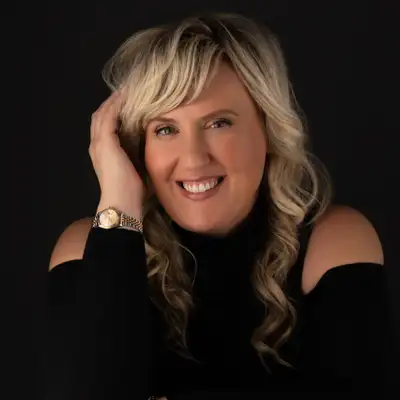
Ep. 340: Melissa Broughton - Embracing Flexibility and Purpose in Small Business Success
Hello, and welcome to Count Me In. I'm Adam Larson, your host. And today, I'm joined by Melissa Broughton, an accomplished author and founder and owner of Busy Bee Advisors. Melissa's journey is a powerful example of resilience and the importance of forging your own path. In today's episode, Melissa shares how her passion for accounting sparked early on, influenced by her family, and how that led her through the ups and downs of corporate lives.
Adam Larson:She opens up about her leap into entrepreneurship, growing Busy Bee Advisors from the ground up, and the rapid challenges of scaling a business. Melissa also discovers her latest initiative, One Hour Bookkeeper, which empowers stay at home parents and military spouses to build flexible, fulfilling careers in bookkeeping. So whether you're curious about leaving the corporate America, building a business, or just love hearing stories of perspective and growth, you're in the right place. Let's dive in to Melissa's story. Melissa, so excited to have you on the podcast.
Adam Larson:We're gonna talk about a number of different things, especially your story. And so maybe you can take us back to the beginning. Like, what kind of drew you to accounting in the first place? What was your kind of early career look like?
Melissa Broughton:So first, Adam, thanks for having me. We'll start with that. What drew me to accounting? You know? I mean, I think the story that I tell most people is that I fell in love with accounting when I was in high school.
Melissa Broughton:I had an extra period that I needed to fill, and there was a teacher who was going for given easy a's, and he was the, you know, the accounting instructor. And and that was, I would say, as a somewhat adult, if we can call high schoolers adults, somewhat as an adult really where my path started, but I think it started back further than that. I mean, I remember, you know, my my grandma was, was kind of the original single mom. I mean, back in the sixties when she was raising my mom and her three siblings, it was it was not normal to have a a, you know, a a solo parent supporting a household, and my grandma did, and she did it by she worked at the hospital. She was a radiologist at a hospital that was pretty close to the house, but then she also, you know, kind of bridge the gap, if you will.
Melissa Broughton:She did bookkeeping for a few small, I would say, local neighborhood businesses. And, you know, I remember she would either she didn't drive, so I remember either getting to ride the bus with her to go pick up papers, or she would have some some of her her clients would come and drop paperwork and stuff like that off at the house. But I just remember sitting and watching her kind of go through the whatever the monthly routine was. I didn't really have a clue, I think, at that point what it was that she was doing, but I I fell in love with paperwork very early on. And then my mom worked as a bookkeeper in a bank, so I do have very strong memories of getting to, like, sit on the floor under her desk, and it kind of funny.
Melissa Broughton:You know? I would sit on the floor under her desk anytime the boss was coming down, and, you know, of course, you weren't supposed to have your your child there at work. Well Yeah. Fast forward probably five years, and my mom and that boss ended getting married, and he was my, he was my stepfather for most of my life. But, you know, sitting on the floor and watching the calculator tape kind of fall over the back of the desk.
Melissa Broughton:And it's funny because I don't even know many bookkeepers that still have the 10 key anymore. I have one somewhere in my office, but it's you know, it hasn't been plugged in in years. So I come from a long line of of bookkeepers and and accountants, and it just really felt like on one side, it felt like it was kind of destined for me to fall into this role. But on the other side, really, when I took that class in high school, that was when I absolutely fell in love with it. And yeah.
Melissa Broughton:So so it's a great it's a great story, I think.
Adam Larson:That is a great story because it's interesting how you kind of saw it as a child, and and it kinda goes to show as parents, you never really know what your kids are gonna latch onto, what you're doing as a parent, and what they're gonna do in their lives, which is really interesting. How did that kind of mold as you went into college and then started working in, like, corporate America as you thought but as you think back to how your mom and your grandma were keeping books and then how you start had you had to do it probably differently as technology and things evolved as you started working?
Melissa Broughton:Sure. So, so I would say I saw that my mom worked far more in the, what you would call, the corporate structure. So for me, went to college, had an internship. The first internship was at one of the, you know, what big 10, I guess you would call it accounting firms, one of the massive accounting firms that had locations around the world essentially. And, I, you know, I thought, okay.
Melissa Broughton:This is this is the path I'm supposed to follow. That had been what, you know, my mom who really had a career in it had worked like her work style. And I hated it. I didn't like the big corporate environment. And so there was kind of a a moment of panic.
Melissa Broughton:And my husband and I laugh about this because he you know, his whole life, he had thought he would play professional ball. I mean, he had he had been groomed to play football from an early age. Right? Played ball in high school, played ball in college, and then, you know, junior year, he blew his knee out, and his football career was over. Well, here I'm you know, I've worked and put everything towards there was no backup plan.
Melissa Broughton:There was no if I don't like this, I'll do something else. This was what I had gone to school for. This is what I had really thought I would do. And here I'm interning for this company, and I hated it. And so there was a little bit of a moment of panic, I think, when I was in my very early twenties.
Melissa Broughton:And so I left the big firm, and I went to a smaller kind of more of a mom and pop shop and found that that was a lot better of a fit for me. But even with that, I still found that I didn't necessarily love the tax side of things. Although I do think the tax side of things is interesting, but I really love the bookkeeping side of things. So it's it's interesting how our path when we, when we find that we don't like things, how that can guide us to helping us make decisions rather than, you know, just just wanting to give up altogether. So I'm I'm certainly happy that I didn't just throw it all away.
Adam Larson:Yeah. I mean, obviously, we'd be having a much different conversation
Melissa Broughton:than We would you be. We would be.
Adam Larson:Decide to make a big different change. I think it's interesting how, like, when you were at the big the very big firm and then you switched to, like, a mom and pop firm, what was the difference between, like, as far as I mean, obviously, there's the the the normal corporate structure. Like, if you have a big a huge firm, you're more of just a number line item in the in the scrunch scheme of things and we're more mom and pops shop. You know, things are a little more down to earth and and more connected. But what was the what was the difference that you like?
Adam Larson:Because a lot of times people don't really talk about the difference between working at a huge firm and a more small and medium sized business.
Melissa Broughton:You know, I think the biggest difference was that with that larger firm experience, it was you were you were truly a cog in the machine, and you were doing one thing all day every day. Your day, Monday through Friday, really doesn't change. Like, you're just you're doing you know, for me, I think I was coding a certain, like, 15 line items of things, and that was it. So it was very specific just doing that all day every day versus when you're with that smaller firm and kind of that smaller experience. There's no day is the same.
Melissa Broughton:Every day is a little bit, you know, a little bit different. You have different interactions with different people. One of the things for me that I've always kind of noticed that's a little bit different about me is I really do like that people interaction. I like being able to explain things to people. I like being able to do that what that financial translation of sorts, you know, to to break it down to somebody who maybe doesn't understand it.
Melissa Broughton:And with that larger corporate firm experience, there was really never an opportunity to have that, you know, any kind of public interaction at all. So
Adam Larson:That's yeah. I like that. It's the the more connectedness of a small the more connectedness of a smaller a small organization sometimes is more helpful and less stressful. And sometimes you can slow down a little bit and learn a lot more. Obviously, it can be more stressful in other ways because you have to wear many hats when you're in a smaller organization.
Melissa Broughton:You do. You do. And it, you know, it becomes harder to take vacations, and there's just the difference of you know? So so worked for, an accounting firm and then went into kind of moving up my way with different companies in the corporate structure till I was really gosh. My last three positions, I was I was either in charge of the accounting department or I was you know, maybe it was myself and and an admin that was that was the accounting department.
Melissa Broughton:It really there's there's a lot of autonomy that comes with it. There's a lot of I mean, you you kind of get the inside track, and and it can be a positive or a negative, but you know all of the issues that are going on with the company. You know if there's, you know, stress that the owners are feeling. In some cases, you kinda feel like you're the cause of the stress if, you know, if you're in a position where the company is is operating, you know, at a loss or or in the red. You you you're feeling that stress a lot with the owners of the company.
Melissa Broughton:And, you know, I've I've been in the unfortunate position of having to get in, heated debates, I would say, with my bosses who are also the owners of the company because they're just you know, they're spending habits that are not being supported by the income of the business and having those hard conversations. But, you know, my my career has been, it's been very interesting. I've had a lot of fascinating opportunities. I went from working for an accounting firm to moving my way up to a controller of, of a company to then kind of going into, I would say, somewhat self employment where I would have companies that would hire me to do, I would call it, like, internal audits when they, when they felt that somebody was, you know, maybe stealing from the company myself. And I had two other people that worked with me that we would be brought in to kind of see if if the suspicions were correct and present them with the information.
Melissa Broughton:And I would say the only thing about that that was frustrating was that I would I would present the, you know, who, in my opinion, had been wronged with this information, and then they would, in most cases, not do anything with it. So that was always the, that was the that was the frustrating part about it. You know, I would spend two or three months piecing together this, essentially, this case for them, And then they would say, okay. You know, that's that's good information to know, and and then nothing would ever happen. Yeah.
Melissa Broughton:There's there's your face is exactly the face that my husband would get when I would be like, they're not gonna press charges. So it's, yeah. Yeah. I've had a I've had a very interesting career.
Adam Larson:Yeah. We could probably have a whole conversation going down that rabbit hole, but I won't do that today because I'm really curious about your current your current role because you you want to start your own organization. So maybe we can start with what was it like, you know, quitting and starting your own thing, like, moving from because, obviously, you you just mentioned you you had kind of been seeing how things work in the background. So you you were almost, like, preparing being prepared to kind of run your organization. But what was it like quitting and, you know, starting your own thing?
Melissa Broughton:It was like jumping off of the high dive blindfolded. Okay. No. It's it's true. I think the, you know, I think the scariest thing about starting your own starting your own business is that open calendar, and that's something that I, I will talk about to coaching students that I have and and things along those lines.
Melissa Broughton:But before we get there, so it was, yeah, it was scary, and it was exciting all at the same time. I took the took the leap. I bet on myself, which I think when we bet on ourselves, we're making the best bet out there. But I still had a family that was at least partially dependent on, you know, me, at least if we wanted to live a a comfortable lifestyle and have, you know, the opportunity to, you know, go on vacations or go out to dinner occasionally. I mean, yeah, we could we could've we could've I guess, you know, we could've been okay on just one income, but it's, you know, it's expensive, especially with two two kids who have desires to, you know, do all of the stuff.
Melissa Broughton:Right? All of the sports and all of the things. So me working was and I never minded it. And I liked working. I just didn't like necessarily working for somebody else and not having any flexibility.
Melissa Broughton:So I in, what was it, 2016, I left corporate America as I say and took the took the leap and branched out on my own. And, of course, you know, as most things go, it was not, it was not quite that straight path. Right? There was there was, some excitement along the way. But, yeah, but Brent branched out and opened Busy Bee Advisors in 2016, and that was a fantastic decision.
Adam Larson:What was kind of that first month like when you're starting a business? You know, because a lot of times we talk about you know, I talk to people who are entrepreneurs, and when I talk to people who are entrepreneurs and they've started their own their own thing, I don't always get to ask that question. Like, what was it like that for you know, those first few days, those early days as you're kinda getting your feet wet and kinda understanding how, like, you know, just getting things rolling?
Melissa Broughton:I think, you know, one of the one of the things it was it truly it truly was a little bit scary because first, I, you know, I had the support of my husband, but I did not want to I did not want to take that, you know, for granted. I didn't want
Announcer:to
Melissa Broughton:disappoint him. Of course, I didn't wanna disappoint my, you know, my kids either. They were everybody it felt like everybody was watching. And I think that's what a lot of entrepreneurs feel is they feel like, oh, everybody's watching me, and they're judging everything I'm doing. And and they kind of make up more stress than really that there that there really is because really what the people who are watching you want is they want you to be happy.
Melissa Broughton:And, you know, of course, they want you to be successful. But I knew one thing that would absolutely kill me was if I didn't have that structured schedule. So that was probably the first. If I could give anybody out there who's thinking about starting any type of a business, structure your schedule and live by your calendar. And and, you know, I I essentially treated my calendar or my date book as the same way as I would my boss at work.
Melissa Broughton:Right? I I held myself accountable to what was on the calendar. And I did that because I wanted to I wanted to avoid the panic setting in, you know, and that if I had time where there was really nothing going on, then I would, you know, maybe start to question how I made the right choice and and things like that. So I didn't want there to be a chance that that that negative thought could creep in, and so I I found that I just lived by my calendar.
Adam Larson:Wow. So let's talk about growth. You know, you're nine years in, you know, from 2016. And that when we're recording this, when this will be released, it'll be twenty twenty twenty six. And so, you know, you'll be ten years into your into your business.
Adam Larson:Let's talk about growth and trajectory. Like, what was that like as things were growing and how you scale? Because scaling is not easy, especially if you go too fast, too quickly. Sometimes, businesses can't keep up. What has it been like as you've kinda grown as an organization?
Melissa Broughton:So we did that. We grew way too fast. Okay. You know, as part of that calendar that I lived by, I knew that anytime I wasn't spending on, you know, working on clients' books, I needed to be spending on getting out there and promoting this this brand new company. Any networking event, anything possible that I could go to, was going to.
Melissa Broughton:And and my my objective for myself was to get out there and give out at least 300 cards a week. And so that, you know, I mean, sometimes I'll say that to people and they're like, yeah, that doesn't sound a little like a lot. And then in other times, I'll say it to people and they're like, oh my gosh. But to me, it was, you know, I I could get, I would I would grab a a stack of 300 business cards, and I would break it out to I would try to do, like, 10 events a week and 30 cards per event. And just my my objective when I when I first started was just to get as many cards out as I possibly could.
Melissa Broughton:Well, what happened was that probably two weeks into doing that, those people started reaching back out. And so our first month or my my I should say my first month in business because I there was nobody else working with me at the time. We closed the first month with 26 clients, and I had no processes in place. I had no like, every single every single step was kind of a figure it out as I went. Okay.
Melissa Broughton:So this has presented itself. I should figure it out. And one of the best pieces of advice that, you know, I'm sure it was some motivational speaker that said, if you're gonna do something more than once, document it. And so what I did was anytime there was something, whether it was an email or a letter or, anything that I thought I would ever have the potential of doing more than once, I documented it. And so I had all of these resource files that at first, it started to feel like, gosh, I'm crazy.
Melissa Broughton:I'm taking twice as much time to do things because I'm, you know, documenting everything. But then by about month two or three, I really started to see that now, you know, when I'm sending that same email over and over and over and over again, I'm just copying and pasting, and it's, you know, taking a tenth of the time. So that was a huge time saver for me when I first, when I was first, starting. By month two, that was when I knew, well, I mean, we were we were on our way to probably $500,000 in sales our first year in business, which was crazy.
Adam Larson:Yeah.
Melissa Broughton:By yeah. By the second month, I was like, okay. I'm working longer hours than what I was working for somebody else, so something has to something has to give here a little bit. So I I I hired my first, my first employee. And, again, that's a little bit of a a scary thing when you first, I was home based at the time.
Adam Larson:Mhmm.
Melissa Broughton:So that's kind of crazy up, hey. You should come work for me at my house, at my dining room table. It'll be great. I crossed it to a real job. So she was awesome.
Melissa Broughton:She she definitely grew with the company. But yeah. So so month two, I hired or three, right around there, I hired hired my first employee. As an admin, I knew that administrative help was what I needed more than than bookkeeping help. And then by our fifth month, that was when I really started building the team and started hiring bookkeepers and stuff like that.
Adam Larson:Wow. That's quite a story because not every business can say, hey. I started, and then I'm well on my way to almost $500,000 my first year. Not every business can say that. And then think of it a testament to the work you were doing.
Adam Larson:But also, you know, how did you so I wanna point back to what you were saying before when we first started talking, you're telling your story, how you hated the corporate work, how you hated those things. And how did you lay a different foundation so that your employees didn't end up like you were in the future as you're building your own organization?
Melissa Broughton:Well, I think the biggest thing I did first, I will say I'm probably one of the worst managers ever. I constantly have to, read books on how to be a better manager. I treat other people the way I wanna be treated, and I don't like to be micromanaged. So I will present the information, assume the person who I'm giving information to is an adult, and if they have questions, that they will ask questions. And if not, just trust that they're they're handling it.
Melissa Broughton:Now I will say I've been incredibly lucky. My team definitely works very well. I think my, you know, my office manager who's, like, the glue that holds our our whole company together, I think if I started, like, asking her questions about everything, she'd probably wanna strangle me. You know? It it's, it's it's it's not the right work environment, though, for everybody.
Melissa Broughton:So I think there was a lot of luck. I think a lot of things. There were there was just a lot of being in the right place at the right time. But, you know, one of the biggest things I can say was just trying something and being willing to say this isn't working. And that's, like, that's the benefit of a small and I'm you're probably gonna have to edit this.
Melissa Broughton:But that's the benefit of a small work environment. Right? Is that you can very quickly course correct. You can say on Monday, okay, here's the policies and procedures for doing x y z. And then on Wednesday, say, yeah, that's not working, and we're gonna change.
Melissa Broughton:You can't do it too much to your team. Otherwise, they tend to get very frustrated with you, but it is is pretty easy to course correct with a smaller company. And so we, we've just been very adaptable. We've looked at, okay. This is what clients are wanting.
Melissa Broughton:And if this is what they're wanting, you know, it's the find a need and fill it. So what I saw in the marketplace in 2016 was that there were lots of small businesses out there that could not justify the expense of having a full charge bookkeeper or a staff accountant or somebody even been a part time bookkeeper. They just couldn't justify the expense, or they didn't have the office space to have that person sitting there. And so my first few clients were, you know, were in the automotive industry because to me, it was very easy to say, okay. There's a mom and pop, you know, auto repair shop.
Melissa Broughton:Now I don't know anything. I probably know about as much about cars as I do about football, which is hilarious because I've been around the automotive industry for decades now. Some of my best friends own automotive, you know, repair shops, and it's like, nope. Not gonna learn any of it. But the truth of it is is that, you know, the ins and outs of money are money, and the pluses and minuses are the same no matter what the industry is.
Melissa Broughton:And what I saw was that it made sense that an auto shop would have a small desk at the front, probably not office space in the back. They would have all of their, you know, bays for fixing cars. And so that became an easy target of they would be the ideal client that would need my service is. And so I really started with that and had a few other very interesting kind of out of the way types of companies that needed, a remote bookkeeper, and that was how I went about finding my clients was by really selling the you don't have the space and you can't really justify the expense of $6,070,000 dollars or more a year for that person. And so why not give, you know, the company a try and and it worked.
Melissa Broughton:So that was our pitch when we first started.
Adam Larson:Yeah. Well, and I like how, you know, and you found the need. You found a need that your business could could could fulfill and especially organizations and tight and and potential clients. And that's that's kind of a model of, hey. These are ways for me to to get in the door.
Adam Larson:You, you know, you've mentioned that you started off in your house, and I know that you moved to an office space, and now you're fully remote. Maybe we could talk a little bit. What was that transition like leading your team through those different places of, you know, you know, you know, house, you know, office space, and then fully remote, you know, especially because of, obviously, probably COVID.
Melissa Broughton:Totally because of COVID that we that we moved back, but we we were at the height of it, there were 22 of us in the multiple office suites. We were in what you would call, like, a professional office building where they had small offices. And we as we would grow, we would just take over another suite and take over another suite and take over another suite. And what happened, the pandemic hit, and we realized that it was like our clients never were coming to the office even before then really weren't ever coming to the office to see us. We figured out early on that we were wasting so much time with the commuting back and forth to go to different client locations or wasting time by waiting for a client to come to us.
Melissa Broughton:And then, you know, five minutes before their appointment, they call and they say, oh, I'm not gonna make it or I'm gonna be, you know, late or whatever it was that there was. That was one of those issues that needed to be fixed. And so our our solution to it was, you know, to just be completely remote. Because if I know that, you know, I'm waiting for a Zoom meeting to start. It's very different than preparing an office or a space for, you know, a client coming in.
Melissa Broughton:Right? If somebody doesn't show up, there's gonna be other things that I can do to to fill that time. But the transitioning a team, so when we were home based originally, it was myself and my my admin. When we moved into the office, it became, it became huge opportunity. It became a huge opportunity for us to grow.
Melissa Broughton:We utilized that to hire. I think we hired three bookkeepers initially and then kind of continued growth from there. So I was super small as far as it was just one other person that worked with me when I was home based originally. We moved into the office. We pretty steadily grew.
Melissa Broughton:We developed a tax team. We had, you know, three administrative support people on staff, and then we had, you know, a whole bunch of bookkeepers that were on staff. What happened with the pandemic aside from us moving back to our house for our kind of our home base was that people, you know, people, of course, were told, okay. You shouldn't leave your house. You you can't go into work.
Melissa Broughton:You're gonna get in trouble. Even though it was very interesting that our business was considered, like, whatever it was, it was okay for us to stay open. We had a lot of people that were now saying, well, can I work from home? And so what had happened was rather than fight it, we just looked at it and went, okay. We're what happens if we don't fight this?
Melissa Broughton:If this is what every single one of our employees is asking for, and they are going to be irritated if we don't say yes because in some ways, I think employees are a lot like three year olds where if you don't give them what they want, they get very cranky, and then they become passive aggressive. And so it was how do we make it a yes? And we decided to just, you know, allow them to work remotely and have the same trust that they would be doing as good of a job working remotely as they would be if they were in an office, and we were not disappointed. So I guess by having that kind of hands off approach to management, it worked it worked really well because we had a team that was incredibly happy. And then, you know, and then some of those team members had opportunities that led them to go into other things.
Melissa Broughton:You know, our office manager at the time decided she wanted to go back to school to become a teacher. She had not much time to finish in her degree. She went back to school and then left to teach, and she's now a high school history teacher. And, we had some other people that, you know, that left as well. But at the same time, we had the opportunity now of not having to just look for people in our own backyard to hire from, but really from anywhere in the country.
Melissa Broughton:And so that was that that kind of led us to a, I don't know. A new a new opportunity, I'll say, as far as that goes. So so, you know, I I I love the expression on your face. So, you know, I think one of the things that my husband will often say that I am able to do is something will happen and I'll I'll see a situation and I'll go, oh, that's interesting. You know, that's an opportunity for something else and maybe something somebody hadn't even seen.
Melissa Broughton:So taking the same philosophy of if I'm gonna do something once, I should document it. What I started doing with any of the new bookkeepers that I was bringing on because we were probably training, I don't know, five to seven bookkeepers a month because we either had we either had enough new clients coming in that we needed to bring in a new bookkeeper, or maybe we would have one bookkeeper that had been with us for a while that was leaving, and so it would take two new bookkeepers to replace that one person. It seemed that we were constantly hiring and constantly training bookkeepers. And so I really carefully documented our our process for everything. Right?
Melissa Broughton:I mean, I just rather than it being in my brain and me having to be on Google Meet or Zoom meetings to train them, I started documenting it, creating videos, and then I'm looking at these videos and looking at this training and thinking, well, you know, I think that I truly could teach anybody how to become a bookkeeper. And the demand is out there. I mean, the demand was there when we started in 2016 that, you know, led us to, our second year in business hitting a million dollars in revenue. The demand is still out there today. The demand did not slow down for us during the pandemic, and that that sweet spot has always been for us, those small companies that
Adam Larson:Mhmm.
Melissa Broughton:Either don't have the space to hire an accounting person or don't really have enough need to have an accounting person on staff. Right? And so, if if I know that there's the demand and I can then teach you, how to do the skills, the skills of bookkeeping are simple. I mean, it's math, Right? Math is there's not many variables there.
Melissa Broughton:It's it's is the most consistent, wonderful thing there is. So marrying those two things together, I thought this is something where I can truly I don't know. I can truly do something that my kids are proud of, and I can help change people's lives. And I can show that, you know, that single mom out there that she has a choice or that person who's struggling with, you know, do I leave my kids to work and let somebody else raise my children? And they're struggling with that, that they actually do have a choice.
Melissa Broughton:And so we in August 2024, I launched the one hour bookkeeper, and we are proud to, train stay at home moms and dads and military spouses on how to become paid professional bookkeepers.
Adam Larson:Wow. That's quite a service, and it's a and it's amazing way for people who traditionally have trouble finding jobs because of their schedule is insane. And to be a bookkeeper is just doing the books whenever you have a moment to do it. And so being able to do that and to kind of teach a new a whole new generation of people how to fish or how to fish in their own way is I think it that's that's that's amazing. I love that.
Melissa Broughton:And that's what it is. It is teaching them how to fish in their own way. And in some cases, it's teaching them how to fish in their own backyards. But in other cases, it's really showing them that, you know, if if you're a military spouse, I mean, there's certain countries where maybe your husband or your wife, no judgment there, but, you know, your spouse is going to work on a base somewhere. There's certain countries where they're not allowed to work in that country.
Melissa Broughton:And so, you know, the jobs in that country are for citizens of that country, which is so crazy to me. And when I had first heard about that, it was, you know, it was a result of our oldest son decided when he graduated from high school. He wanted to go into the Marine Corps, and we fully supported him. And listening to his friends and their spouses and the challenges that they were having with, you know, their their living on this military salary that is, I mean, nobody's getting wealthy off of that. We'll just say that.
Melissa Broughton:And they're trying to make ends meet, but because of the schedules, it becomes almost impossible for that spouse to find a job. You know, it's either a location challenge or it's a or or it's a just the the hours that your spouse is working challenge. And so bookkeeping really fits in fits in quite quite nicely. And because they can be located in you know, my son's in South Carolina, and I'm in California. You're in New York.
Melissa Broughton:Right? You're in East Coast area. So I think about Northern California, and I think, well, there's, you know, job opportunities everywhere here. We're in Sacramento. We're in the state capital.
Melissa Broughton:I I just don't think about living in a rural town where there's really not opportunities. And most of these military bases are that's it. It's a military base. It's, you know, maybe if they go 30 miles, there's a town that has some jobs, but that's a significant commute. And so if there's something that they can do and they can be of service to clients anywhere, it becomes you know, it really becomes a it becomes a win win.
Melissa Broughton:And so I, you know, I I do trainings, and I'll have a few people who there's you know, we've got babies that are that are in the training meetings with us, and, you know, it's fine. You know, it doesn't mean just because you have a baby that your brain goes away. So it's helping think it's helping moms and dads to stay pretty sane too. I I'll I'll give myself credit for that as well.
Adam Larson:Well, and that'll be the next generation as they're watching their parents do it. They'll be sitting under their feet while they're doing their bookkeeping and watching them, and you never know. They may might be the next Melissa out there starting their own bookkeeping business.
Melissa Broughton:You know? I I would love that. I would I would love to, to hear about a, you know, a second generation or maybe even a third generation. But it's it's, it's just it's gratifying to share with people that they have a choice, And it's gratifying to have, you know, I I was when when my oldest son was born, I felt so torn between leaving him and going to work. And it felt like if there was something I could do so that another mom didn't have to feel torn in that way, that I've done good in the world.
Melissa Broughton:And maybe maybe that sounds a little bit silly, but I really feel I don't know. That's what that's what gets me up every morning, and that's what really motivates me. Because I also knew that I wasn't the mom who was gonna be happy with just being with just being at home and having my whole life be all about my kids. I knew that I needed something for me, and I think there's a lot of other people out there that are like that as well.
Adam Larson:Well, I think that's very admirable, and I love that you're doing that for these folks. And I and I encourage people, if you're interested or you know somebody to be interested, check out Melissa's website that in the show notes so that you can get them connected with these sessions that Melissa's doing. And, Melissa, thank you so much for coming on the podcast. This has been a great conversation. I hope our audience has learned as much as I've learned, and just thank you so much for sharing your story with us.
Melissa Broughton:Thanks, Adam.
Announcer:This has been Count Me In, IMA's podcast, providing you with the latest perspectives of thought leaders from the accounting and finance profession. If you like what you heard and you'd like to be counted in for more relevant accounting and finance education, visit IMA's website at www.imanet.org.