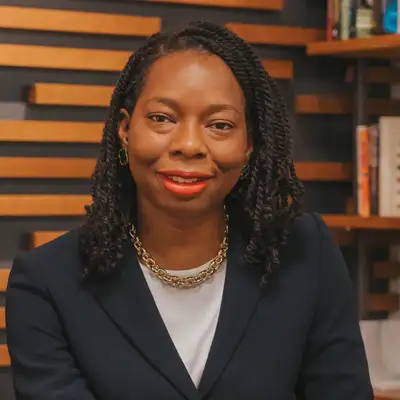
Ep. 339: Etinosa Agbonlahor - Secrets of Behavioral Pricing: What Every Accountant Needs to Know
Welcome to Count Me In. I'm Adam Larsen, and today I'm thrilled to bring you a conversation that will completely transform how you think about pricing. Joining me today is Etinosa Agbonlahor, CEO at Decision Alpha and a true expert in behavioral pricing. This is a topic we haven't really explored on the show, but I know everyone should be paying attention to. If you've ever relied on cost plus formulas or just matched competitors when setting your prices, you might be leaving real value on the table and missing powerful opportunities to connect with your customers.
Adam Larson:In today's episode, Etinosa reveals what behavioral pricing is all about, explains the psychology and emotion driving financial decision, and shares how you can use these powerful insights to design pricing strategies that communicate value and actually steer customer choices even as the economy shifts around us. We'll dive into everything from why undercutting the competition isn't a smart move to understanding how your customers really experience price changes and mapping out a pricing roadmap that's built on customer research and behavioral science. If you're ready to see pricing in a whole new light and want real actionable steps for your business, this episode is for you. Let's get started. Well, Etinosa, I thank you so much for coming on the podcast.
Adam Larson:I'm I'm glad to have you on here. I'm excited to talk about a topic we haven't really talked about, which is behavioral pricing. And that's something that, you know, I have to be honest, a lot of folks in our audience probably haven't heard about or talked about, you know, the psychology side of it. Now, so we could start with maybe, you know, what is behavioral pricing?
Etinosa Agbonlahor:Yep. And thank you for having me, Adam. I'm looking forward to the conversation. At the very root of it, behavioral pricing is just bringing the psychology behind how people make financial decisions into how you're pricing your products and services, how you're packaging them up, by putting them in front of your customers. So it's very simply when I set this price and when I show it to a customer, have I taken into consideration how that customer is gonna react to it, how they're gonna think about it, and how they're gonna evaluate it in the context in which I put them put it in front of them.
Adam Larson:That sounds so simple, but I get I don't think it's as simple as it sounds. And so maybe we can, you know, maybe we can start off by, like, painting a picture, like, why should accounting and financial professionals really care about this?
Etinosa Agbonlahor:Mhmm.
Adam Larson:How is it but is how is this different than how people are currently normally pricing their products?
Etinosa Agbonlahor:Absolutely. So the fact is that people make decisions emotionally first before they make it rationally. Right? You make the decision emotionally, oftentimes subconsciously, and then kind of justify it both rationally and with your conscious mind. So even in, like, a b to b context, accounting professionals, etcetera, if you're a finance leader and you're thinking through how do I set prices, it's not just cost plus.
Etinosa Agbonlahor:It's not just quantitative spreadsheet metrics. It really matters. How is the ultimate end user, how is the ultimate customer where to think about and interact with this price? Because your spreadsheet shows an aggregate. It shows your numbers.
Etinosa Agbonlahor:It shows your dollars. It shows as and it also has assumptions baked into it. When we talk about behavioral pricing, what we're saying is, like, let's get down to the root of we know people aren't making decisions in the way with the spreadsheet open in front of them, they are thinking through things from the emotional from the psychological side. Let's bring that into beer as we're designing this price. Right?
Etinosa Agbonlahor:Concrete example might look like. We know that the order in which you put decisions in front of people, in which you put options in front of people can influence what they choose. The number that they see first can also influence how much they end up paying for something. Right? We make decisions relative to a reference point.
Etinosa Agbonlahor:What is the reference point that your customer holds for your product in general, and how do you position your product or service relative to that? All of those kinds of conversations around the psychology and the decision making is what we refer to as the behavioral side of pricing and is critical when you want to set prices that will really act as what we call a steering wheel, meaning, like, it's not just a simple profit engine. It helps to guide customer choice. It helps to navigate to a steer past competitors, and then it also, yes, helps set the direction for the company.
Adam Larson:Yeah. I can imagine somebody's listening to this and saying, well, yeah, I just do my cost plus, and everything's fine. I don't I never let emotion get into that. And what from what you're saying is, like, whether we like it or not, emotion's gonna be a part of the conversation.
Etinosa Agbonlahor:Absolutely. Emotions will be a part of the conversation, but also assumptions going to our models as well. Right? We have biases. We have heuristics, and heuristics are just what we call decision making shortcuts.
Etinosa Agbonlahor:So heuristic might we might use might be we're gonna assume that everything that happened last year is what's gonna happen this year, and that goes into our cost plus assumptions when we're creating our cost plus model. Guess what happened this year? Completely random things, lots of events, things we could not predict. So what's happening with cost plus now? Your models are all upside down.
Etinosa Agbonlahor:But that's because you baked into it heuristics that are tied to how we make decisions in our minds. So when you understand some of those decision making processes and can go, okay, we need to be careful. We need to be on we need to understand how our customers are going to make decisions, what they're willing to pay for this product in general, the service, how they are thinking about it, then we use that to determine and define our pricing. It kind of protects you a little bit from some of the pitfalls of going through things without talking to the customer or thinking about things from their lines.
Adam Larson:Yeah. A lot of times, sometimes we make decisions, you know, without thinking about the customer, thinking about who's gonna be consuming our product or what we're giving to them, and we forget that they should have a voice in that somehow. How do you kind of go from your traditional cost plus to this behavioral pricing model where you're thinking about all those things? Because not every it's not natural to just say, oh, what what does somebody think about that? Or are they or if I put this price first, we'll give this decision.
Adam Larson:It's not it's not something that's naturally like, you don't have this behavioral pricing class in your business classes when you're coming
Etinosa Agbonlahor:in. Yeah. So at Decision Alpha, we have a pricing framework, and it's very simple four step framework. It starts, of course, naturally by understanding costs. So your fixed costs, your marginal costs, variable costs that we kind of take that as BAU, business as usual.
Etinosa Agbonlahor:Then we do what we call kind of mapping monetization zones. That's understanding what the different customer segments that you service, how do they interact with your product, how what are their buying patterns. Right? What do you sell and how do customers think about that? Then we move into the traditional kind of a willingness to pay study, which is where you really sit down with the customer.
Etinosa Agbonlahor:You understand for this product, for this service, what are the things you value about it? And that's where some of the psychological elements start to come to bear because it could be that you've always thought about this product as it's a time saving product. It's all about efficiency. And your customer says, but underneath efficiency is confidence. I will pay money to feel confident about the data that you're giving me.
Etinosa Agbonlahor:I'll pay money to feel confident about the insights you as an accounting professional are surfacing to me in a way that I wouldn't pay for other things. So we do that kind of value drivers, understand what are the things you value about the product, the service, what are you willing to pay for that, that kind of spits out a quantitative range of how your customer thinks about, I would pay between this and this for the product in general. And then we go into the fun part, which is the behavioral side of things. We take that number. We take those value drivers, and then we are able to sit down and start to play around with the different framings.
Etinosa Agbonlahor:What if we packaged it this way? What if we introduced loss aversion into the way we talked about the product? What if we introduced a decoy? What if we introduced a higher product that we know most people wouldn't want to buy, but it changes the way the customer evaluates the rest of the product sets within it? So we start to bring in some of the behavioral framings and test that to see which of these different frames and which of these different ways of positioning the product is more likely to drive customers to want to buy at what price point.
Etinosa Agbonlahor:And then all of that then goes into what we call the pricing road map, which is we tell people that pricing needs to be a feature, not a reaction. So instead of, you know, once a year, you sit down and you kind of look at your prices and you hope that, like, can we get away, they say, without changing anything with our price point? Sit down every quarter. I'm not saying change it every quarter, but every quarter, sit down, look at what is the additional value I've delivered over the last few months. What is what else have we shipped?
Etinosa Agbonlahor:Have we shipped new features? Are we now giving more insights to the partners who we work with, to the businesses that we that we work with? All of that value, being able to understand what more are we doing for our customers now, even if you're not gonna change your prices based on that value, just understanding that is very helpful for the future when you are ready to start changing or introducing new prices. So all of that basically makes up the decision of our pricing framework, and the key things that most people don't do is that with an SFA research and then also the behavioral framing.
Adam Larson:Yeah. It seems like you you can't just make it on a whim just based on this is, you know, I like this price or we did this. You know, and and, you know, a couple things I wanna touch on, you know, first value. You know, your price communicates a value. Right?
Adam Larson:What does that look like? Because, you know, what value are you trying to put forth? Because it feel like, you know, you're you you feel like it's one value, but then your consumer might think it's another value. You have to find to kinda find an in between to make sure that you're getting your money's worth to take care of your expenses, but also somebody might see it as enough of a value to actually to, you know, purchase it.
Etinosa Agbonlahor:Yes. And I'm glad that you said that because it reminds me of a study that was done at at INSEAD. And what they basically did was have participants taste wine. So they had lots of wine bottles with the price of the wines labeled on them. So imagine the same bottle, but, like, the prices are different.
Etinosa Agbonlahor:And they had the participants hooked up to FMRI machines so they could measure and see brain activity as the participants were actually tasting these wines. And what they found was that when participants were tasting higher priced wines, the pleasure centers of their brain lit up. They're literally having a more pleasurable experience. There was more activity, more brain activity going on compared to when they were drinking cheaper wines. Naturally, the crux is they were drinking the same wine.
Etinosa Agbonlahor:The only thing that was different was the prices. And yet just as that price being different was enough to simulate and drive a different visceral reaction to the wine. So when you say that price drives quality or what price drives value, truly, as business owners, we often think that people know our value inherently. Intuitively, they should know, like, this is what an accounting service should cost in general. And so we think that our customers walk around just with, like, prices in their heads for what our services should cost when the truth is is they reverse.
Etinosa Agbonlahor:They look at your price, and then they determine what the value is that they're gonna get from you. Right? And so going back to your question, most people don't necessarily, as you have assumptions of what we are worth, it just is not the way it works, they will look at your price. They might compare price to other people and then go, okay, higher price delivering more services. Maybe maybe this is, like, in a range I'm comfortable with versus thinking, oh, all accountants should charge x y z, and so anyone who goes who deviates from that, I'm not gonna work with.
Adam Larson:So how do all these measures kind of come into play, especially when the economy is in the crazy spiral and everything? Like, you know, like what's happening right now in our economy when, you know, there's tariffs, there's the big beautiful bill, there's all these different things that are happening that are affecting the prices of the goods and services that we pay for. Because if you talk to most consumers, they're like, okay. That's a decent price. That could be worth it.
Adam Larson:But if you talk to somebody who's living from paycheck to paycheck, they're like, okay. That's great. How can I get it cheaper? So there's all these other aspects that we have to take into consideration. So how do you put that in the equation?
Etinosa Agbonlahor:Absolutely. And part of that is a it's a mix of knowing your customer and being able to read the context. Right? We always say in an environment like this where things are changing dramatically for your customer or for your buyer, pick up the phone and have real conversations with them and offer them support. Right?
Etinosa Agbonlahor:Be that person who is the face, who is the voice. Because remember, we buy emotionally first. So be there. Let them see you. Let them feel like you care and that they you're you're there to be a guide and support in these times.
Etinosa Agbonlahor:That's critical before we even talk about pricing or what things change. I also always say that lack of confidence has a way of being reflected in our prices. Right? And so sometimes we see what's going on in the environment and we preempt the customer and we go and put in discounts. We go and change things around.
Etinosa Agbonlahor:We haven't yet received any lower buying signals from the customer. We're just preempted and going, based on my lack of confidence, based on what I'm seeing in the environment, I'm gonna go ahead and change my pricing of everybody discounts. Let start from the customer. Have those conversations with the customers, and then you can go, okay. I know that things are changing.
Etinosa Agbonlahor:What is the value? How are you seeing how what we're putting in front of you? Are you shopping around for, like, new products for new accountants? What does that look like? What and then you might be able to understand or come out with, we're not gonna change the because, example, now we see a lot of people doing the price is the same, but the amount that they offer for the price is a little bit different.
Etinosa Agbonlahor:So they've held the line in terms of pricing, but the value is a little bit different than they are offering. You have to do the customer research. You have to have those conversations with customers to understand what is it I offer that's critical to you? What is it I offer that you really value? And what are you willing to pay for it now that things have changed?
Etinosa Agbonlahor:Is it still the same? Is it is it a little bit different? So continuing to do that customer research, continue to have those conversations with customers is critical, especially when things are changing dramatically.
Adam Larson:Yeah. And another thing, like, we haven't really touched on too much is, like, you know, you look at your competitors and so, okay. Competitor has this price. They have this price. Let me let me go there.
Adam Larson:Let me go slow lower, something like that. Like, you see, you know, like, you see gas stations on one corner. It's $3.52, and the other corner is $3.49. You know, see who's going where. But it just doesn't based on everything you've been saying, it doesn't seem like that's a good move to go.
Etinosa Agbonlahor:It's not. I was having a conversation. I was at a VC event many months ago, and I was having a conversation with the founder. And a VC event is where, you know, people are there who want money and people are there who have money and want profit. So it's like elevator pitches kind of, like, swinging all around the air.
Etinosa Agbonlahor:And I was having a conversation with a founder about this, and she was basically describing this, like, incredible platform that she had built to help with, like, logistics and operations. And I asked, okay. What are you thinking about pricing it? Right? Every conversation goes back to pricing.
Etinosa Agbonlahor:And she basically said, well, we're thinking about just what our competitors are doing and then cut them by 10%, kind of gain market share. Right? And I was horrified because don't ever do that. Don't do that. There's two reasons you don't want to copy what competitors are doing.
Etinosa Agbonlahor:First one is you don't know if your competitor has made mistakes in their own pricing. You don't know if they're leaving value on the table because this conversation ultimately comes down to two things. One, you wanna make sure that you don't leave any value on the table. You wanna understand how much is a customer willing to pay for what you have to offer, how much of that can we recoup? Right?
Etinosa Agbonlahor:We plant seeds, how much of the harvest do we get? That's the first one. The second one is then understanding how much to making sure that of that value, we truly recoup the percentage that we know is possible for us to recoup. So coming back to it, you don't know how much of money your competitor is leaving on the table when you blindly copy their prices. You don't know if they've got, like, discounts baked in.
Etinosa Agbonlahor:You don't know if they are running a winner takes all kind of we're gonna we're gonna lose some money for a long time, and then once we push everybody out of the market, we're gonna raise the prices. We've seen a lot of big companies do that. You don't know your competitor strategy. You cannot assume that they are not making mistakes in their pricing. It could be they're leaving a lot of money on the table, and when you blindly follow them, you also then end up leaving a lot of money plus 10% on the table.
Etinosa Agbonlahor:Right? The other thing is that oftentimes, and we see this with service firms. Right? You're an accountant. You're a CPA.
Etinosa Agbonlahor:You're a bookkeeper, whatever. A lot of times our packages sound the same. We do bookkeeping. We do forecasting. We do monthly look backs, whatever that looks like.
Etinosa Agbonlahor:But you might be saying, hey. I do forecast and etcetera, or I help with taxes, and yet your package involves and delivers way more value. I don't just do taxes. I don't just do forecast. I do look ahead.
Etinosa Agbonlahor:I provide insights. I'm basically a strategic adviser to everybody who works with me, whereas your competitors truly only do the one thing that your package says it does. And yet because your package is called the same thing, you assume that they're delivering as much value as you. Right? So, essentially, for the same process, your competitor who's only doing forecast for $4,500 a month, you're doing six or seven other things.
Etinosa Agbonlahor:You basically undercut your own pricing by copying your competitor's pricing. So I always say you should take into consideration and you should know what your competitors are charging. Absolutely. Know what they are charging. Know what everybody else costs in your market, but that cannot become your anchor.
Etinosa Agbonlahor:You have to understand what are your own customers willing to pay for based on the value that you offer them.
Adam Larson:Yeah. It's understanding your own value and having the confidence to say, okay. Yes. My competitors might have this, but I'm charging this premium price because this is the premium product that we're offering. Knowing that maybe we won't get a bunch of people at first, but over time, you'll have to build that.
Adam Larson:So I guess, you know, it's not only just putting a good price out there, but being able to to market yourself in a way where they can understand what that value is.
Etinosa Agbonlahor:Yes. And, also, it's not always part of the joy of understanding and having the conversations with your customers is that you can make decisions such as, I'm gonna offer a heavy discount over the next quarter because I need to drive up that volume. But because I understand my costs and I understand my variable costs, my fixed costs, understand how my customers consider and play with my product, I can take that risk. I wanna see the volume. I know that I'm playing a larger game on the back end.
Etinosa Agbonlahor:I wanna get them locked into recurring contracts with me down the line, and so I'm willing to give them my product at a discount for the first three months. That's a strategy that I'm willing to implement. That's clearly thought about. It's tactical. Right?
Etinosa Agbonlahor:It's not that every single time we're looking to drive premium prices and have that premium position. And there's times when people take an alternative approach, but ultimately, it rests on, I've got a clear pricing strategy, and I've got the sound research behind it to back my confidence in that strategy.
Adam Larson:A lot of times the people that don't understand how this works, they'll think, hey. If I'm gonna raise the prices, I'm gonna lose my customers. Oh. In in new you know, a lot of things you've been saying, you've hinted at, like, that's not really how that works. Can I maybe we can kind of explain that for folks who are still probably thinking, like, but if I raise it, like, I'm gonna I don't I can't like, it's that constant back and forth that we I I think all business owners struggle with?
Etinosa Agbonlahor:Yep. And part of the reason for that, I'm I'll talk to two different angles of that. The first one is that we often wrongly believe that our customers are working with us because of the price. That's not the case. Oftentimes, your customer is working with you because they like you.
Etinosa Agbonlahor:They like the way you work. They see the value you deliver to them as being immensely more than you think you deliver to them. Right? Oftentimes, your customer isn't solely with you because you're the cheapest or you're the best at price. And if they are, they're not gonna be a customer for very long.
Etinosa Agbonlahor:Because somebody's gonna come along who inevitably be cheaper. Customers who grow with you and who progress with your business, usually, they are there not because you're the cheapest. They are there because there's something you offer them that they value, and they wanna keep working with you because of that, First thing. Second thing is we all, as business owners, suffer from what we call the spotlight effect. And I describe the spotlight effect as we all think our customers are work walking around with, like, microscopes, you know, just surveying your price very deeply and waiting for you to change one thing.
Etinosa Agbonlahor:You change one price asset. They're gonna flip the table. They're gonna walk away. That's it. Never coming again.
Etinosa Agbonlahor:Again, not the case, not reality. There was a study that was done a couple of years ago. It's a famous marketing study, actually, where they walked up to folks who are shopping at grocery stores. And so imagine that you're at your local what is it? Where where do you shop?
Adam Larson:Hanford Supermarkets. There you go.
Etinosa Agbonlahor:Okay. There you go. At your local supermarket, somebody walks up to you with a clipboard and goes, hey. That box of coffee that you just put into your basket, how much did it cost? Guess how many people were able to remember the cost of something they had literally just put into their baskets?
Adam Larson:10%.
Etinosa Agbonlahor:Less than half. Less than half could remember the cost of something they had just touched and put into their basket. Of the house that ventured a number, most of those guesses were not accurate within 10¢ of the actual price. And when the item was on sale, even smaller percentage remembered what it cost. All of that to tell you and this like, I want it let's be clear.
Etinosa Agbonlahor:This is an item they just touched. They just saw the price. Just put it into the basket. Nobody's walking around thinking, if Adam changes his prices, that's it. I'm gone.
Etinosa Agbonlahor:I'm leaving. That's just not the case. That is not reality. And so as a business owner, we sometimes use that. That excuse.
Etinosa Agbonlahor:It's almost like a blanket that, like, we can hang on to. It's, like, comforting, but it's not the truth. It's not reality. It's make believe. So the question then is not, will my customers leave if I raise my prices?
Etinosa Agbonlahor:The question is, how do I introduce a price raise raise in a way that helps my customers understand the value I'm delivering to them, understand that it has increased, and understand and rationalize this raise in their prices? Right? It's no longer should I, it's how do I do it properly? That's really the question more business owners should be asking.
Adam Larson:Yeah. It's more than just, you know, hey. This is the new price, but, like, hey. We had to raise our prices because the the increased cost of these things. Like, I've seen those notes sometimes where, like, hey.
Adam Larson:Your price is increasing, and these are the reasons. And most times you're like, okay. Or, wow. That's a lot. Maybe I should look around, but I'll probably stay with these guys because it's too much to change.
Adam Larson:You know, I a lot a lot of times customers are very finicky, and it's like I think internally, we always think when when we're try thinking about our prices, we're like, oh, no. Our customers are watching the microscope. They're keeping track of that. You know, we we think of those examples of, like, that extreme mom who is, like, couponing and keeping track of the individual prices. Like, that's, like, one in, like, a I don't even know the number, but it's very rare that you have those people.
Adam Larson:So, you know, when are people actually paying attention to those
Etinosa Agbonlahor:prices? So in behavioral economics, we talk about this idea of just noticeable differences. Right? There is a moment in time where your customer is evaluating, should I work with them or not? Should I renew or not?
Etinosa Agbonlahor:In those moments when they're making those renewal decisions or making those purchasing decisions, of course, they're looking at your price relative to the value that you're offering them, and they might be comparing you to other people as well. The trick, though, is if you are going to be introducing price races, we talk about the WebFX neural law, which is basically it's sort of when you increase a I always do this. I turn the dial because this is how I learned it. Nobody uses dials anymore. But when you increase the volume on your iPhone or whatever Yeah.
Etinosa Agbonlahor:There's a level to which you're increasing it where it slowly, slowly, slowly, and it slowly increases, but you never really it never feels jarring. Right? You're doing it very slowly, and so it's like get to adapt slowly so the volume increase. Whereas if you took it and you went zero to, like, a 100 right away, feels jarring. It feels like, woah.
Etinosa Agbonlahor:So when you think about price increases, it's for customers or your legacy customers. They've been with you for a while. How do you increase your price slowly? And it could be, hey. We're gonna do 10% internally.
Etinosa Agbonlahor:You could know, okay. I'm gonna I need to effect a 50% price raise. There's no way I can do that right away. I'm gonna start with 10% year over year until we get to that place. But for new customers, it can go up 50%.
Etinosa Agbonlahor:We can talk about that. Right? So just being careful about for legacy customers, how you introduce that price race and then the conversation you have with them around, this is the new value we're delivering. This is how much value you've gotten from me in that in the time that we've worked together. This is way you can look forward to moving forward.
Etinosa Agbonlahor:That is why now cost us much. You know? And it's small enough that it's not gonna freak your customer out.
Adam Larson:So, you know, I I like that I like that approach. It's very small. Like, like, hey. We do small increases. And and if you've provided great service, most times people are gonna be loyal to you because they're more they're there for more than just the price like you've been saying.
Adam Larson:You know? Is there is it like a
Etinosa Agbonlahor:go ahead. Go ahead. And also, you also you also mentioned this. Right? Inertia.
Etinosa Agbonlahor:We don't like to change things. We experience we're human beings. We experience what we call regret aversion. We would rather not do anything than do something and have it blow up in our faces. And so we always subconsciously are doing this mental calculation of, if I leave Adam and I go with this person and then it, like, blows up, oh my god.
Etinosa Agbonlahor:I'm gonna have to come back. It's even leaving is a hassle. Even transporting my data is already terrible. I don't wanna do that. Right?
Etinosa Agbonlahor:So we all experience deep amounts of inertia, which is why we always tell people it's easier to retain the customers you already have and drive down their sales with you up than it is to try and go out and get new customers. So just being cognizant of that as well.
Adam Larson:Now is there is there a wrong way? Like, are there red flags? Let's say you're working on a price increase strategy with your organization and the marketing team says, okay. Here's our here's our messaging. You know, what are some maybe some red flags people should look out for when what things not to do when trying to do a price increase?
Etinosa Agbonlahor:I actually just did a a LinkedIn post about this last week about how not to increase prices. First of all, please don't send out dramatically long emails justifying the price increase over a thousand words. Just don't. You're gonna drive people emailing you. You're gonna drive more inbound calls trying to figure out what it is you're talking about.
Etinosa Agbonlahor:Don't do it. Be succinct. Tell them what's happening. Be clear about it. Second of all, you're raising your prices.
Etinosa Agbonlahor:You are not committing a crime. Stop apologizing so much. So apologetic hand in your hand. Do you mind if we I'm so sorry if we this is a business exchange. They're getting a lot of value from you.
Etinosa Agbonlahor:You've done the research. You can justify the price increase. Let's be clear. This is the value you've gotten from us so far. This is what you're going to continue to get from us.
Etinosa Agbonlahor:Here's why the price is increasing in this manner. So no really long emails. No, like, apologetic. We're so sorry and etcetera, etcetera. It needs to be clear and concise.
Etinosa Agbonlahor:It needs to be precise. It it needs to be simple enough that your customer can read it and understand how does this apply to me, what is changing for me, and when is it changing. And to the point of when is it changing, don't send an email out today announcing that prices are going up in three weeks. Give them a lot of time to adjust and to get ready and to mentally prepare for the price increase as well.
Adam Larson:I like that. Yeah. I I have gotten those emails where it's this long paragraph, and you're, like, reading it like, okay. What's the point? Like, get to the point.
Adam Larson:You're, okay. You know, you scroll down and, like and if you can't find it within two seconds, you've kind of you've lost their you've lost
Etinosa Agbonlahor:their learning. Our attention spans are not that long anymore. Everyone is very, okay. Tell me what I need to know. Otherwise, I'm scrolling.
Etinosa Agbonlahor:I'm really not.
Adam Larson:Yeah. There's certain people when I email them, I I know I have to send it in bullet points. Like, hey. So and so, bullet one, bullet two, bullet three. That's all I need to send them.
Adam Larson:Because if I send them a paragraph, they're they're gonna miss it completely.
Etinosa Agbonlahor:I've become one of those bullet point people. I didn't mean to, but somehow I've become a if it's a chanty, I'm not gonna do it. I'm so sorry. I'm not going to read it. I have been known to respond back to people saying, can you just send me a summary?
Etinosa Agbonlahor:I just there's no way. There's absolutely no way I'm gonna this is just it's not gonna happen. I'm sorry. No.
Adam Larson:Yeah. Well, and and I think with our focus being pulled so many different ways, so many people's jobs are are are putting more on them, there's more we have to do throughout the day. We don't people consumers don't have the time to read a whole paragraph. You know, like, when you, like, watch a YouTube video, it's like, okay, guys. And they, like, spend ten minutes in an intro.
Adam Larson:I'm like, you lost me. If you wanted to get me a good point, you should have said it, like, way back when. Like, I don't need a ten minute introduction about what you're talking about.
Etinosa Agbonlahor:Yep. And what you were saying as well earlier about the economic situation that everybody's in and out to that point of people just being under more immense pressure than normal, where you as a business are saving people money in one way or another, like, tell that. Don't only announce price races. TransferWise does this really well where if you're able to save me some money on, like, exchange fees, they'll send an email saying, hey. It now costs a few dollars less to send money to whatever country you are sending money to.
Etinosa Agbonlahor:Mhmm. If in whatever maybe you're starting to deliver more value, we're providing you insights to clients every month, and we have valued this as a $1,200, like, a month service, we're giving to clients for free. Let them know. Communicate the value on that price differential. Communicate that to clients every time you're saving them money.
Etinosa Agbonlahor:Every so often, let clients know and have a dollar amount on the value that you're saving them too because that also helps foster loyalty, especially if you're doing something such as, oh, hey. Because of the economic climate, we are choosing not to raise our prices, and, also, we're adding this new thing to the service we give you for free. Send a message about them. Put a number on that service just so people can see and Yeah. Feel that you are feel feel more loyal to you.
Etinosa Agbonlahor:It drives your retention up when you can do things like that.
Adam Larson:Yeah. You got you have to find a way to connect with them. Now how does this behavioral pricing mindset how do you kind of get started within your organization? Like, hey. I wanna start having us think this way.
Adam Larson:And it can't just be like, okay. Today, we're doing this, and tomorrow, we're doing this way. I know it doesn't work that way.
Etinosa Agbonlahor:No. I like to start with two things. The first one is do a quick sanity check. Right? Pull your last couple of deals and just ask yourself or ask a team, what was the pain we saw for this client?
Etinosa Agbonlahor:Let's be very clear about what was the value we delivered and how much did the client value that solution as? Not what is it that they paid to us, but what did they say the value of it was to us. Right? And if you can't answer that, if your team doesn't know if all the components is, well, they paid this amount, then that tells you that there might be some money that you're leaving on the table in terms of not understanding that behavioral perspective. That's a trigger for you to start to do this work.
Etinosa Agbonlahor:Second thing that you can do is we have a behavioral pricing playbook. It's free. Anyone can download it. You can grab it. I'll send Adam the link to it.
Etinosa Agbonlahor:You can grab it, and that can help you start to understand by looking at my prices, how do I really start to do this customer research that TSI is talking about? What are the questions I ask them? Which customer do I reach out to? What does that conversation look like? And if I did wanna start to frame my prices up, bringing that behavioral economics to bear, what are some simple things I can do by myself?
Etinosa Agbonlahor:So the playbook will have some responses and some answers to those questions as well.
Adam Larson:That's awesome. Well, I encourage everybody to check out that link in the show notes to see that playbook and connect with Etinosa online as well and link through LinkedIn or through her website. That will be in the show notes as well. So, Etinosa, thank you so much for coming on the podcast. This is a wonderful conversation.
Adam Larson:I've learned a lot. I hope our audience has learned a lot as well.
Etinosa Agbonlahor:Thank you for having me out, and I enjoyed the conversation as well.
Announcer:This has been Count Me In, IMA's podcast providing you with the latest perspectives of thought leaders from the accounting and finance profession. If you like what you heard and you'd like to be counted in for more relevant accounting and finance education, visit IMA's website at wwwimanet.org.