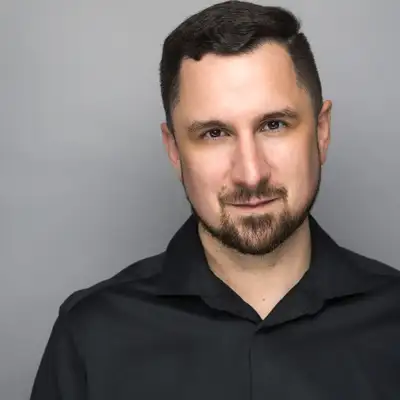
Ep. 338: David Frieder - From Traditional Payments To AI-Powered Security: Transforming the Banking Experience
Hey, everyone. Welcome to Count Me In. I'm Adam Larson, your host. Today, I'm joined by David Frieder, head of corporate payment systems at US Bank, who brings over two decades of experience to the table. In this episode, David shares his journey from college intern to leading US Bank's payment innovation.
Adam Larson:We dive into what's really happening with real time payments, how banks develop new products, and how the latest technology, including AI, is reshaping fraud prevention and customer service. We talk about the importance of leadership and trust, both in building products and managing teams, and David reveals how he fosters a culture of joy and purpose with his team. If you're interested in the future of banking or want practical insights on managing change, you won't wanna miss this conversation. Let's get started. Well, Dave, I thank you so much for coming on the podcast.
Adam Larson:I'm really excited to talk to you about the banking's perspective when it comes to working with accounting and finance team. But I wanted to start off just our conversation by just getting to know you a little bit. Maybe you can tell our audience kind of your a little bit of your journey to where you got to in US Bank now.
David Frieder:Yeah. Sure. Well, I'm I'm proud to be the head of our corporate payment systems group. And the journey started as a college intern who really had no idea where the future would take me. I'm old enough to have to be able to say I applied for a job that I saw printed in a Sunday paper for an internship, drove down to the bank, filled out a paper application in 1997.
David Frieder:And and I've been with US Bank for that entire time. And most of it has been, pardon me, in the in the payments, in the commercial payments, b to b payments space.
Adam Larson:Wow. That's that's quite a journey. It's not often that you get to talk to somebody who's kind of had their whole career in one place. What's that been like as you've seen the ups and downs of the economy and the and so many different things changing and still being at the same place as I'm sure policies and different things have changed throughout the years?
David Frieder:Yeah. It's it's been interesting. I think the main reason that I've stayed where I've stayed is because this bank happens to have weathered those storms particularly well. Yeah. We've always been prudent.
David Frieder:We've always been smart risk managers, but still allocated enough time and energy to the product side of things to be relevant. And just from a career perspective, there's always been something different to do. Being in payments over the last twenty years has been a has been a really cool place to be because there's been so much transformation. There's been so much change. It's just never felt like it's gotten stale.
Adam Larson:Yeah. Well, and payments are something that we all have to deal with, you know, whether it's getting paid for services that you've rendered or paying out a vendor, you know, all that stuff has to go through banks and things like real time payments. We're seeing a lot of changes, a lot of new technology coming, but yet adoption is not necessarily as fast as you would expect. What do you think is driving that?
David Frieder:Yeah. There's, you know, real there there's a lot of there's like you said, there's so many more options now. You've got the Fed now and and and the RTP rails, and they are being used. I would just say maybe not as widely as someone might have anticipated back when this was just an idea. The the use cases where they are being used are very valuable, but they're just Mhmm.
David Frieder:Not as broad as you might have expected. You know, instant access to payroll is a is a great example of a great use case. Insurance companies having to fund a you know, pay a policyholder in the face of an emergency, right, in order to say, boy, this person's house burned down, or they we're in the middle of a natural disaster. How can we disperse those funds real quickly? Where it's probably not caught on quite as much is just in the traditional business to business payment universe where, you know, a supplier rendered services to me or I bought some supplies or equipment from a supplier.
David Frieder:That's where you just haven't seen quite as much use on the instant payment side. I think the reason why that hasn't happened is, a, if I'm paying an invoice, I wanna hang on to my money as long as I can. And when I've sent a real time payment or something through the FedNow rails, right, that money's gone immediately. But if I send a check, I send an ACH, I use a card, you know, the the working capital benefits go away in an instant payment environment.
Adam Larson:So then what's the what's the value of the instant payment environment? You know, because what you're saying, a lot times, are trying to hold it on as long as possible because there's
David Frieder:Mhmm.
Adam Larson:So many moving parts when you're running a business.
David Frieder:Yeah. The value the value really is the instantaneous nature of the payment. Right? If you've got a supplier Mhmm. For example, who say, I won't release something to you until I know that I've been paid, and I need that thing right away in order to fix a piece of equipment or finish making something.
David Frieder:Yeah. Right? Then then it really does have value. That's kind of an emergency. Oh my gosh.
David Frieder:I I need to pay. Interestingly, in the card space, we'll see a number of our customers fund the payment of their commercial card or their corporate card or their T and E card via an instant payment because they wanna see that they wanna have that balance availability right away. Someone's on the road. A team is on on a trip, and, you know, just through nobody's fault, they reach their credit limit. Like, oh my gosh.
David Frieder:These people are all gonna be stranded. A great way to make sure they're not is to use an instant payment to pay down or to fund a card transaction.
Adam Larson:Yeah. That makes a lot of sense. Now, when it comes to banks developing new payment products, you know, maybe you can walk us through so we can understand from, you know, from last time from the business side, don't really understand how banks, you know, kinda develop those things. Like, is it customer jam, market pressure? Like, how does that work?
David Frieder:Yeah. There's a lot of things that kinda go into the top of the funnel. I I think the most important one is what your current customers are telling you. So Yeah. We try to have as many feedback points as possible, and I'll just give some examples so you can it makes more sense.
David Frieder:A, we have a variety of different client advisory panels or boards or teams, and they represent different types of customers. Right? One might be insurance companies. One might be middle market companies. Maybe it's in the public sector.
David Frieder:And at least a couple times a year, we like to get those customers together in one place, and we really spend focused time talking about what they like, what they don't like, what they wish was different. And it can be high level discussions, and it can also be like we're all logged in looking at a technology that the bank offers. And and someone might say, I'd rather put my mouse here than there. And can you get me to this place in in under less clicks than it takes me now? So direct feedback from customers informs a lot of it.
David Frieder:Second, I would say is we have teams of people that are out meeting with clients on a day to day basis. Right? That's their job. Their job is to be in their offices listening, asking questions, probing for what's working and what's not, and then it's important internally that my team feel comfortable providing that feedback to one another and and that we have the willingness to give the feedback from what a customer has said. And, also, if you're a product manager or product owner, you have to be open minded and willing to say, hey.
David Frieder:Yeah. This is my product, but someone's telling me about something they'd like to see change. So feedback from customers through those two channels is probably the most important thing. Obviously, we're all watching what our competitors are doing. Hearing from people that aren't clients, you know, we're trying to acquire new clients, and in the process of trying to acquire them, they'll tell you, and they'll help you compare and benchmark what you're doing against what else is commercially available to them.
David Frieder:And then lastly, I would say we encourage all of our employees to just be really creative. Right? And so you you have to keep an eye on what's going on in the industry. We pay you to have ideas about improving the customer experience and building something. And ultimately, you have to assume some of those things that you try to build will work, and they'll be adopted, and customers will like them.
David Frieder:And in some cases, they won't. But that's part of the process of product management and building things out is occasionally making a mistake or swinging and missing and then using that to inform how to do it better next time.
Adam Larson:What's that like from a bank's perspective when you create a product and and it fails? What is it like, you know, coming back from that and kind of taking those next steps to do the next better thing? Because Mhmm. It's probably not something that like, it's more publicly available when it's in a bank.
David Frieder:Yeah. That's a good question. I I think there's two kinds of failure probably when you're thinking about product. One is you try to build something and it it doesn't work the way you you thought it was going to. That's probably less common than building something that you thought there was gonna be a bunch of demand for and seeing it grow to the point where it's it's truly reached a point of of critical mass.
David Frieder:And what what's it like? I I think it's if you didn't fail once in a while, that would probably mean you're not experimenting and building enough. Right? That's it that's required. I think the hard the hardest part about about it when you often see things fail, it's not that it didn't work or maybe some of your customers couldn't get there.
David Frieder:It's just rallying the whole team around commercializing something that's new and figuring out who are the people within our customers who are really gonna be most interested in this. How do we communicate that to them? You know, that's changed a lot over the years too, the way the way banks are communicating with, you know, the kind of customers that are listening to your podcast has gone from what used to be largely analog, like, let me call you and schedule a meeting, and then we'll try to find time, and you can come and sit down, and I'll show you, you know, more to how do you make these products more self-service and make them eat more easily accessible. How do you how do you enable a customer to enroll and attempt to use something digitally? So a lot of what is happening when you're building a product today, you're thinking about how can we onboard the customer?
David Frieder:How can we make this more easily accessible where it doesn't require a team of people going out to meet with a team of people on their end and doing all kinds of implementation as well.
Adam Larson:And and something I was also thinking while you were chatting about it, you know, not only, like, being able to communicate properly, but maybe you can describe how you build that trust up. Because a lot of times, you know, accounting and finance professionals were, you know, were were more like, hey. I'm not gonna necessarily jump to the newest thing. Let me see how it's working first.
David Frieder:Mhmm.
Adam Larson:You know, how do you how do you get those first few people to get in there? And then, you know, especially if it's a payment technology, if it's something's not broke, a lot of times you don't wanna don't wanna change it.
David Frieder:Yeah. Yeah. That's true. You have to balance between you have a lot of customers who like what they currently have, and then you have some others who'd like to see improvement, and how do you strike that balance? And, you know, we've got all kinds of user experience people and testers that work around here, and it's their job to to strike that balance.
David Frieder:Sometimes you get it exactly right. Sometimes you don't. I would say, normally, when you're building something new, you've got a core group of customers who have already said, look. If you give if you come out with this, I'm willing to be one of the people who who give it a try. I I can't think of an example where we were doing something meaningful with a new product or a product enhancement where the team who was building it knew exactly who the beta clients were going to be.
David Frieder:Maybe you could do that, but I think that'd be be pretty risky. Usually have some customers that you know that you can trust who've helped you get as far as you can and have said, Chip, we'll we'll be the ones who give this a try and give you feedback about it when it moves on. And those are usually the clients who, you know, the the use case that you're building around or the experience you're building, you know, is something they've been asking for for a long time.
Adam Larson:I love that. I love, you know, having those relationships. And it's funny because as we have this conversation, you know, we're talking about products that, you know, a bank is offering. It's very much like talking a conversation where somebody's offering some other SaaS service or somebody's building something that somebody can use. It's all like, we all kinda have that same mindset, and I love that, you know, you guys are continuing to build relationships in trying these new these new, are there these new these new payment methods or or whatever technologies?
Adam Larson:You know? And as and as new technologies are coming up, you know, are there are there different challenges that you're facing when you're trying to encourage the Calians? I know we've talked about some of them, but are there other key challenges that you have to walk through with your team each time?
David Frieder:Yeah. I I think so there's the challenge in terms of the customer's adoption, and that's and I would say that is it's all it's it's never just one person at a customer who's using the product. I suppose that could be the case if you're dealing only with, you know, small or medium sized businesses. But usually, it requires your customer to change, and it requires teams of people, you know, to do so. And Yeah.
David Frieder:That's not easy. Right? It's whether, hey. We we need more people using it, or we have five people that interact with this thing that the bank offers us, and one person loves it, one person would like it to change, and one maybe doesn't care because it's the part of their job that they enjoy the least. So we have to spend a lot of time building, you know, enduring relationships with people that we know are gonna help be champions for our products and our relationships within within their companies.
David Frieder:So there's there's that side of it. And then there's the side of, you know, what I think you were asking about, like, internally, how do you make sure you do it differently or or better each time? You know, there's a few ways. One is, you know, product management is a vocation for a lot of people. Right?
David Frieder:This is their job. This is what they do. So they stay in tune to the latest developments. Right? We have a a community, a product manager community of practice at US Bank, for example, where anyone who's working in and around payments product management gets together once a month, and they talk about the products that they've launched or the enhancements they've released, what the reaction has been.
David Frieder:They probably spend a little bit more time on what the challenges were, and you might get feedback from someone who works with an entirely different type or set of customers that they can help you. So, you know, having that community, so to speak, at a larger company like this is very helpful.
Adam Larson:What's it like building relationships with, you know, accounting and finance teams within organizations, the ones that you're working directly with or these new products?
David Frieder:Mhmm.
Adam Larson:You know you know, a lot of times banks banking and finance don't always speak the same language sometimes when they're talking to each other. And how do you bridge that gap as you're building those relationships?
David Frieder:Yeah. That's a great question. I wish I had some perfect answer. I I think the way we look at it on my team is, first of all, you have to be present and available. Right?
David Frieder:If your customer needs something, you need to make sure that when they need need you, you're there. Right? And and that means different things to different customers. Right? Some people, like, I wanna text my person, and that's the way I like to interact with.
David Frieder:Some people say, nope. You need to come out here once a month and meet with me. People like email. So it's up to our relationship teams to first understand how did how do our clients wanna be treated? It's it's a little bit of a twist on the golden rule.
David Frieder:It's like treat others the way you'd wanna be treated, but we like to think of it as treat people the way they would like to be treated. And it's our relationship manager's job to understand what that customer's expectation is. And if if you if you're present and you listen and you're reliable about following up, I mean, that's the main way that you you build trust with a customer. It's a it is relationship management. Secondly, like, your products need to be available and useful.
David Frieder:And when you when it comes to technology and payments, like, you know, uptime and availability are key. Right? If you're a merchant who's trying to accept someone's credit card, you you don't want your merchant processing system to be down because you literally can't transact. Right? If you're a cardholder who's trying to check out of a hotel, you need that card to work so you can get home to your family.
David Frieder:If you're a accounts payable person who's got a critical supplier on the phone saying, I I need to get paid. This invoice is overdue. Right? The technology has to be available. So you build credibility by making sure that the products that you have are and especially in payments, like, extraordinarily reliable and and always on, and you lose credibility to to be frank when you don't have that that reputation.
Adam Larson:So, you know, talking about things like fraud, cyber security risk, all those things are getting more and more great. And and with all the new technologies, the fraudsters and the people who are hackers are are keeping up with those things. How do you how do you stay current, and are there newer trends and tactics that, you know, that, you know, teams should be aware of? And and, like, how how are you guys staying
David Frieder:Yeah. It's it can
Adam Larson:up on those things.
David Frieder:It's a good it's a hot topic. And when we have customers together, this is the one thing they ask us to talk to them about the most. In fact, last last week or two weeks ago, we were in Savannah, Georgia with a group of customers, and I think the session in which these clients were most engaged was when we had people from our fraud teams come in and talk about this landscape. And you're correct in that the numbers of bad actors are increasing and not decreasing. The prevalence of technology and AI, you know, gives them theoretically more horsepower to come at you.
David Frieder:So first of all, we're spending a lot of time, and I think our clients are as well, training and talking to employees about their behavior because the the most critical things that can go wrong will generally involve an employee who did something they weren't supposed to, fell for a phishing attack or what have you. So training and communication are really important. We do it a lot with our own employees. We encourage our customers Mhmm. And give them best practices for how to communicate and and train employees about how to detect and avoid fraud.
David Frieder:And it's becoming more and more a problem. We you have deepfakes and videos, and you've probably seen some of the stories yourself, Adam, where companies have fallen victim to things because the person on the receiving is like, I saw the CFO's face. Like, he and it was his voice, and it came right through. And I was looking at it, and he told me I needed to switch my bank account for this supplier from one thing to the next. So all the employees remain the frontline on defending companies against cyber attacks.
David Frieder:And thanks, obviously, this is very important, and it's a it's a it's a topic we need to invest a lot of time, energy, money into having defenses that help protect our clients when they're interacting with our products. And, you know, Fortune, I think we do a a pretty good job of it. We take it very seriously and, you know, are doing everything we can to protect our clients from, like you said, an increasing number of threats that are unfortunately out there right now.
Adam Larson:With all these with all the new technology, you know, we we haven't mentioned the famous word AI, you that we seem to talk about. Every time we're talking about, you know, new innovations, especially in the payment space, how is what part is AI playing in the
David Frieder:Yeah. It it it has a big part to play, and I think it's in a number of areas. If you think about, you know, transactions, and there's inherently a lot of them out there. So when you know, learning models work best when there's a lot of data for them to look at. So if I think about it from the standpoint of an is someone in accounting or accounts payable or an audit role.
David Frieder:Right? You can use AI to look at transaction history and say Mhmm. If a certain transaction meets these criteria, in the last 100 times, a transaction had these characteristics, it ended up in this place in our GL, or it ended up being approved by someone. So I think there's the looking at large volumes of transaction data to help decision what might need to happen next. Does something require a manual approval?
David Frieder:Can the system approve it? If you think about, you know, like, corporate card expense reporting, there's a lot of AI that could go in there. Like, should someone really be coming back to their desk after a trip and looking at receipts and typing it into the system? So we were deploying AI in in that part of the process. Fraud detection is a is a big thing that we see AI use cases around is, like, we're looking at these transactions and deciding, you know, does it have characteristics that make it appear valid, or are there things about this that flags it as as fraud?
David Frieder:So we see it being used in a ton of different places. We'll we'll continue to see AI become embedded more and more in products that are being offered, you know, by banks, and you you also use it to augment how you service clients. Right? We're we're not going to stop supporting clients the way we've always supported them. But if someone who is supporting a customer can have AI help them help that customer even faster than they could have before, we certainly wanna make that available.
Adam Larson:So does that change what your workforce is doing if you're, like, suddenly using AI to, you know, help customers faster?
David Frieder:Mhmm. Does it yeah. I think the short answer is yes, but the nuanced answer is, you know, that I think this is what everyone starts to fear. It's like, is my job at risk? And, you know, we we don't we haven't seen AI replacing, you know, US Bank employees.
David Frieder:We've seen AI do things that more efficiently than someone used to do so that person can go do do something else. So I don't think the people that work here come to work every day worried that they're gonna be replaced by AI. I think it seems to me they come to work more excited about learning what AI can do to help make them better. And there's this huge demand Yeah. From our employees to learn more about it, and they're coming to us as their employer saying, help me.
David Frieder:You know, give me resources. Provide me support. And, you know, we're certainly doing as much of that as we can.
Adam Larson:I think that's amazing because if we don't if we don't empower our employees to test, to play, to get in there and try these new things, then, you know, as the market continues to change, then our teams will be left behind, and we need to keep them up to speed so that we can upskill them and keep it going.
David Frieder:For sure. And you have to recognize, like, there's different types of employees. Like, I I'm interested in AI, but I'm not passionate about it. Maybe it's because I'm 50 years old now, and I'm, like, not as it's my I don't know. But and so there's people like me that we we as an employer have to, you know, not let me be apathetic because it's important.
David Frieder:And there's other people who are truly, truly interested in this, and they have real passion around it. So you also need to kind of figure out where your employees are in their own evolution and how they think about it and be able to match kinda their level of interest with what resources you're providing to them. And, fortunately, I think we've got, you know, a great mix of people here who are passionate about this and working on it and and consider it to be, you know, a big, big, big part of their job. And there's others who maybe don't quite feel that same passion, but we're still helping make sure that they know what's going on out there.
Adam Larson:Yeah. That's really cool. So I wanted to bring up you do lead a large team. And when you and I were first chatting a few weeks ago, you know, you mentioned to me how important it was to making sure that your team finds joy in their work. And so I wanted to I wanted to kind of bring this conversation to a close talking about that.
Adam Larson:You know, what does that look like in practice day to day with your your team?
David Frieder:Yeah. Yeah. It's a it's a good question, and it's true. I think I think most people no one no one would disagree with me when they'd say, hey. We want your employees to be, like, joyful and happy, you know, while while they're here.
Adam Larson:Yeah.
David Frieder:There's a few ways that you you go about it. One, you try to be mindful of whatever barriers exist that prevent employees from sort of being their best. And, like, part of my job is to be thinking about what those things might be. It might be a process. It might be a something they have to fill out.
David Frieder:It might be an annoyance they have. Say, I could service my client better if we just did something differently. We always like to say, like, ask why. You know? And if you don't know the answer, then you better keep asking because a lot of times, employees get frustrated by things, and they never stop to say, well, why why why do we even do it this way at all?
David Frieder:Right? So we all try to be, and we try to encourage in my group, you know, this this encourage people to ask why things are. Right? So it's not just someone who was here ten years ago who designed something they never would have thought what it was gonna be like, and they probably wouldn't have wanted it to be that way ten years from now. Yeah.
David Frieder:So you have to you have to be, like, proactive about identifying those things that would prevent people from being happy at work and and do your best to solve them. I think also you you we we go we go, I think, as far as we can to connect everyone's job to what success means. Right? So when someone comes to work every day, they kinda know what their job is, and and they kinda know from talking to their manager for the most part, like, what what does success mean in this job? But if you can connect how and my my team happens to be around nine nine hundred people.
David Frieder:If I can have 900 people coming and they all feel like that their job is important, and and they are, to the overall objectives of the organization, like, connecting each individual's work to a larger purpose, I think helps, you know, you feel proud about what you're doing. So to get there is not easy, but it requires a lot of communication from leaders and senior leaders about what our priorities are. It it it requires, you know, getting that voice of the customer, you know, pushed as deeply into the organization as possible. You know, people tend to be more passionate about their work when they're really aware of how it's impacting someone who's on the other side of the computer, on the other side of the transaction, or using the product. I think that that helps.
David Frieder:And, also, just, like, freeing people up when you can to have a little bit of choice in what they do and say, yeah, you have a job, and 85% of the time, you you're gonna be working on that. But maybe 15% of the time, you're gonna get to go do something that you wanna do. You know? Whether it go learn about AI or join a project team that's working on something that's more of a passion to you than you'd maybe get. So we try.
David Frieder:We're not perfect at this, but we try to enable that kind of flexibility so that people feel more in control of of their destiny or their career.
Adam Larson:That's I I love I love that. I mean, I think it's it's one of those things that you always hope that an organization you're working for desires and wants for you as an employee that you're more than just a number, more than just Mhmm. You know, somebody who's helping us make our bottom line better. And I think sometimes sometimes companies will say the right thing, but in actual practice, it doesn't actually get there. And I know it's a hard balance because you do have to worry about the bottom line and you do have to but, like but in helping your people have a sense of purpose, it eventually gets to that bottom line and helps that
David Frieder:too. Yeah. And it's I mean, it we I'll do this thing when I'll talk to people, and I'll I'll say, what are you working on? And then I'll tell them what I'm working on, and we try to figure out a way where those two things connect. And sometimes it takes creativity, and it's sort a four or five degrees of separation, but you can always do that with anyone.
David Frieder:It's like, here's what I'm doing. Here's what you're doing. Where do where do those two things intersect, and, like, what does that intersection mean to us? It's a fun little exercise to go through, but it helps people realize that in in some way, within the same company or the same team or the same division of the bank, we are all interconnected, and our work does intersect in meaningful way.
Adam Larson:Yeah. That's that's awesome. And and I love your passion about it too because it's not always that you can get somebody who's passionate about making sure, hey. I want you guys to be successful, and I want you to be joyful while you're here at work and connect to that purpose.
David Frieder:Yeah. I mean, I've everyone has bad days. Right? I've had some.
Adam Larson:Of course.
David Frieder:But not many. You know, I've worked here at the same place for a long time, so the the good days far outnumber the bad. And, you know, I I come to work every day with a sense, like, I really wanna be here. I really like to do this, and, you know, I want everyone else to feel that while understanding, you know, no no nothing no no one's gonna be perfect. You are gonna have some roadblocks here or there, but you can Mhmm.
David Frieder:Find ways to get through them for sure.
Adam Larson:Well, I appreciate you, you know, sharing how you meet lead your team in that way, and I I hope others find some inspiration in that, especially when leading with their own teams. I wanted to end our conversation with just one final question. Just Mhmm. You know, what kind of excites you? If you're looking at crystal ball and you're like, what excites you about your technology and the banking sphere, you know, as we're heading into the next few years?
David Frieder:Yeah. I I think that the what I would say is the ongoing increasing availability for transactions to be more touchless. Right? If you think about Yeah. Whether it's any transaction you have, whether it's a consumer or business to business transaction, a card, an ACH, a check, a real time payment, there's still a lot of points where someone is in there having to having to touch something, to initiate it, to review it, to approve it, to get it, you know, allocated to the correct GL, maybe get it put into an an accounting system.
David Frieder:I think I'm excited about seeing more friction less friction, less manual touch points, you know, when it comes to payments and and transactions and technology being used to achieve that goal.
Adam Larson:Well, I'm sure we'll all be seeing that in the near future because I know we're heading in that direction. And, David, thanks so Dave, thanks so much for coming on the podcast. It was great chatting with you today.
David Frieder:Thank you, Adam. It's great meeting you. Great being here.
Announcer:This has been Count Me In, IMA's podcast, providing you with the latest perspectives of thought leaders from the accounting and finance profession. If you like what you heard and you'd like to be counted in for more relevant accounting and finance education, visit IMA's website at www.imanet.org.