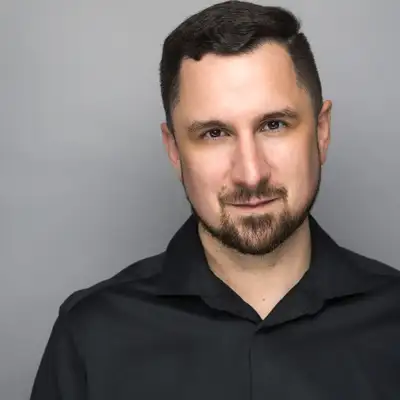
Ep. 337: Isabelle Massaad - The Future of Finance: Automation, AI, and Advice for Next-Gen Leaders
Welcome to Count Me In. I'm your host, Adam Larson. And today, I'm excited to bring you an inspiring conversation with Isabelle Massaad, the CFO of DSV, a global leader in transport and logistics. Isabelle's career journey is nothing short of remarkable. She started working professionally at just 17 and quickly rose through the ranks to lead at the executive level.
Adam Larson:In this episode, Isabelle shares how her early experiences shaped her leadership style, and we dive into what it takes to be a transformative leader in today's fast evolving finance landscape. We talk about the importance of curiosity, empathy, and continuous learning, and how certifications like the CMA and CSCA have influenced the way she thinks strategically. We also explore the art of storytelling with numbers, building business partnerships, and the critical role that adaptability and upscaling play for finance professionals today. So whether you're just starting out in your career or you've been in the field for years, I think you'll find Isabelle's perspective both practical and motivating. Let's jump right in.
Adam Larson:Well, Isabelle, thank you so much for coming on the podcast. I'm so happy to have you on, and we're just gonna talk about leadership, about your career journey. And I figured a nice start would be, you know, you've had a remarkable career. You're you're a CFO at a at a quite young age in the grand scheme of what businesses usually expect to have a CFO. You know, what drew you to the world of finance to start off?
Isabelle Massaad:Thank you, Adam, for the opportunity. It's my pleasure to be with you on this podcast today. So, as I see it, I have been always curious about to see how money works, how economies evolve, how actually company grows. And I was able to find this in finance where it helps me to understand these dynamics and even at some point be part of it. So, as a as a person, I define myself as a logical person and a person who is actually curious and practical.
Isabelle Massaad:And, eventually, I like puzzles and patterns, and I would like I've I've seen the world of finance involving numbers and logic, planning, and strategic decision making, and I found myself enjoying it and being satisfied with it. So it allowed me really to make a lasting impact and to find myself in that industry. So this is how I decided that, yes, I think I need to be part of finance one day, and, yes, this is how it all started.
Adam Larson:So you started you started when we we first chatted, you started working in your professional career at age of 17. A lot of there's a lot of reasons that people start working so early. You know, what did you learn from those earlier early experiences? Because when you start working at that age, you see things from a different light, a younger perspective, but you're able to bring some fresh perspectives and and learn from from lots of different people.
Isabelle Massaad:Yeah. Yeah. Yeah. I totally agree on that. I think I have been I might have been lucky enough, to start my career that very early age and eventually in the industry that I studied in.
Isabelle Massaad:And some people sometimes people get the chance to start working early, but might might not be in an industry or a role that fits in their future goals. Right? So I think I have been lucky enough to do that. And, eventually, life pushed me in a way to take responsibilities at a very early stage. That's why I started working at that early early age, as you said now.
Isabelle Massaad:So I looking back at that at that experience, I think that it helped me shape my personality today. It helped me understand and take accountability and responsibility of things from the even the smallest thing that I used to take, like waking up very early, making sure to me to be on time, managing your timeline between my work and my university studies. So it all helped me to understand in-depth responsibilities and accountability. As well, it helped me understand the workplace etiquette at very early, at very early stage, like how to address people in emails, how to be how to communicate. Because eventually, if I communicate with you on a personal matters, I need to tweak it a little bit when I go and communicate with you on something being on a professional side.
Isabelle Massaad:So all of these kind of things helped me, and I'm happy that I have was able to build that experience from very early age. Otherwise, I wouldn't be here today. But eventually, if I look really back at that, Adam, I think that the most important thing that I learned is attitude. And, being a person that is very curious and looking up for things, I think that positive attitude is very important. And managing that attitude at a very early age will help you unlock potentials in the future.
Isabelle Massaad:Always maintain a positive attitude. At first, I was someone who was very enthusiastic and want to go into all of the areas, but I learned that, calmness and positive attitude even in the most stressful times is very important to manage, and eventually things will flow smoothly as you go.
Adam Larson:Did you have any mentors that you were able to rely on as you were starting and getting into the industry and and starting to figure a way out in your career?
Isabelle Massaad:I was actually lucky to have quite some good managers, I would say, that helped me that I used to have some nice discussions after work. Or even during the working time, I used to go for a half an hour with a cup of coffee, having and talking about things. I think this really helped me to better shape this the my personality and my look up to things. And, yeah, I'm thankful for these guys.
Adam Larson:So what were some of the challenges you faced as moving up in your career? And then how did those experiences kinda shape your leadership style that you have now?
Isabelle Massaad:Well, as someone as as eager to learn, and I'm a perfectionist by nature, I I it was challenging for me to actually delegate as I grow the ladder. So delegation was something that I struggled at the beginning. But eventually, once you try to start building trust and confidence with the people around you, you will be able to give more and to delegate more. And, eventually, it will allow you to grow further. That helped me to look into other areas of the aspect of the business.
Isabelle Massaad:And, eventually, as you grow in the in the ladder of corporate, you will notice that at some point, you need to really make decisions pressure and even when you don't have insufficient information. And that's for for me, that is someone who's logical, as I said, and someone who really likes to plan. That was a hard time. But eventually, you need to trust the process, and you need to understand the business aspect, and then you'll be able to better base your decision making. And as a young person in such a big role, I would say, I think one of the most important aspect that I challenge and I keep on being keeps on being a challenge for me as of today is how to manage people.
Isabelle Massaad:Because at some point in my team today, I have people that are very older than me. I have people from different cultures, from different nationalities, and, trying to relate to those people, trying to speak to them in their language, and for them to understand or to accept me as their manager was a little bit of a challenge. But eventually, things went slow as we speak.
Adam Larson:Could you share some examples on on what that took to kind of gain their respect? I remember one of the first leadership roles I was in, everybody was, like, twice my age, and I was like, how do I how do I do this? And there was some different things that I I was able to do. Like, I I kind of learned what they were doing and sat down with them, they saw that I respected their process, and then I started learning and helping improve processes. Know, what what step some what were some of the steps that you had to take to kind of gain their respect?
Isabelle Massaad:Well, indeed, as you said, I think, first is to show them that you listen to them and you respect them. And you're not here to teach them what they do. You're here to help them build build something meaningful together. The first thing I at the beginning, I just said that set sight, set aside, and then kept on listening and learning. And then I'll I led my actions and the outcome of my actions me give earn me my respect.
Isabelle Massaad:So, because I can speak to you with every sense, I can give you so much of theories. Right? And even someone who's out of the university today can come and give a one session with theories. But practice and experience is what actually allows you to take respect. And at a young age, I need to prove that I have that experience, and I have what it takes to be in that role.
Isabelle Massaad:So I just let my actions and my my decision makings take the take the show, and eventually, this came next.
Adam Larson:That's awesome. Yeah. It's it's it's quite a challenge, but continuing to be persistent and saying, hey. I'm here. I'm not going anywhere, and I'm doing the work with you, and we're and proof is in the pudding, proof is in what you know, your actions.
Adam Larson:I think that that speaks a lot louder than just a lot of words because we can say many, many things, but what actually happens is the real, like, is the real proof.
Isabelle Massaad:Yes. I do agree. And I people and some people understand it faster than the others. Some people take more of chances to learn it. So I think we need to I need to be calm, and we all need to be calm because eventually, maybe one person, one senior manager can can learn your capabilities within one month, but the other person can understand it with it might take him another five months.
Isabelle Massaad:So things can flow, but eventually, we will reach there.
Adam Larson:That's great. Now when we we were first talking, you mentioned something about being a transformative leader. And I was maybe you could you could define that for our audience. What does it mean to you to be a transformative leader, especially in practice?
Isabelle Massaad:Yeah. So it goes along, if you want to say, with the leadership concept. Like, for me, a leader is not only someone who who goes and manage the day to days and the processes. It needs to go far beyond than that. So it's about inspiring change.
Isabelle Massaad:Right? About motivating people to do more, about creating a lasting impact within the team, not only the small team that you have, but the wider company or the wider team and even the wider society. That means how to take always to to challenge the status quo that we have, to always think differently outside of the box, try to find different ways to work around it, more efficient manners, more meaningful times. So that makes I think that makes any leader beast stand out from the crowd. And, I believe I think that's becoming the reality of today's, leaders that eventually people seek seek being managed or seek being mentored by someone that pushes them to do more and pushes them to go over and beyond.
Adam Larson:How do how do things like empathy and understanding, how do you use that especially in your leadership style? Because everybody, we live in a crazy world. There's so many different things happening every day. You turn on the news and there's some other, like, shocking thing that's happening. How do you use that in balancing with the workplace?
Adam Larson:Because, you know, we're humans first before we are employees of a company. And so how do you balance that when you're when you're when you're working with your employees?
Isabelle Massaad:Yeah. So I think the key of this is simple, but eventually, it's something that takes it is hard to maintain, and we need consistency in that. It's simple things that we do on daily basis that makes an impact. So first is I do I for sure have something called, and everyone is aware of it, is the open door policy. I make sure that my door is always available not only for my direct reports, but everyone in the organization that might seek advice, whether it's related to the company or it's related to some personal personal matter.
Isabelle Massaad:So, eventually, I tend to listen actively. I tend to make sure that when someone enters my office, I keep everything aside. I give the attention that it's needed. Because if you look into these things, I think that there's so much of things that not only meant to be said by words. If you really focus on the people or you give the attention for the someone that sits in front of you, you would notice things that he cannot express in words.
Isabelle Massaad:He would like to express it by his face, impressions or by his eyes. So these kind of things, when you actually start listening actively, you would notice these kind these these matters. Right? And eventually, each person is different. So I make sure that I tailor my approach to each and each and every person in my team differently because, for example, might someone be motivated by x while other another person in front of me, his motivation, the drivers is something totally different.
Isabelle Massaad:So you cannot we cannot approach people with the same tailor or with the same, method, and that's what I make sure that I do because I might think something different. The other person might understand the same thing in a different manner. And most important, the one and as I as I said it, Adam, it's to be human. And that takes energy, but it really takes time and empathy. And as you said, make sure that the company is here for the employee not because they want from them something as from nine to six and deliverables.
Isabelle Massaad:They are here to support them even during challenges and during during their personal problems. So I always make sure that I'm there to support my team, not only in their day to day, but even if they needed support outside of the office. Because if you really think of it, I'm spending or we are all spending out of the seven days in the week, five days in the office. From nine to six, you barely see your family. When you arrive home, your kids might be asleep already.
Isabelle Massaad:So if you think of it, most of your time you are spending with these people that are your team. And it's really important to make sure that you build connections and you build human human relationships and human interactions with them because that goes even beyond the tasks. And we've seen it. So much of good relationships started at the office and came out of that office. Right?
Isabelle Massaad:So it's I for me, it's really important that that this also happens at the managerial level because that creates lasting impact on your employees that goes beyond financial or any other benefits.
Adam Larson:It really does. I I appreciate that that mindset. Along with, you know, being empathetic and and and understanding where your employees are at, we we need con to continuously learn. You know? You shared with me that, you know, you try to learn something new every day.
Adam Larson:Do you try to share that with your employees as well to try to say, hey. As to create a culture of learning?
Isabelle Massaad:Yes. Yes. Yes. Definitely. You know?
Isabelle Massaad:I'm someone that I would like to be contagious in the things I I I do, at least the positive thing that I believe they can make a difference. And I always push my team toward the things that I would see that they can benefit from. And, like, for example, I always make sure that we go out regularly. And during our discussions, we discuss some things about more interesting aspect, not not people, not something's happening in the office. We'd like to disconnect, discuss more, like, about markets, about what's going on in the economy, about how this is in our competition with our industries.
Isabelle Massaad:Usually, we have a group on WhatsApp that's we send we send that links or articles that might be interesting and about the new trends in the in the industry that might be helpful to anyone. Like, for example, one of the articles when we were actually having the income tax updates in The UAE, we all made sure that everyone who is aware of any updates about the matter shares that on on the WhatsApp group. So even the even the people that are not working on tax on their day to day, but they have the access to the information the same way the other people would have it because everyone should be aware of what's happening in the industry as a finance profession.
Adam Larson:Yeah. It's it's it's not easy to stay on top of things. So I think having that community, that that community inspiration to say, hey. Let's learn together because as finance professionals, you kinda have to stay adaptable. You it's a fast changing environment.
Adam Larson:How do you help your employees kinda continuously upscale, especially with all the different changes? You know, we could talk about AI. We could talk about all the different things that are happening within the finance and accounting organization. And and you just in in the society in general, you know, how how do you help help encourage your employees to kinda stay adaptable?
Isabelle Massaad:See, as you said, the world is or the industry is fast changing. Right? And if you don't catch the wave now, you will be drowned later on. So you need to be as as fast, and you need to be adaptive to change as much as possible to be able to always be up to date. So I always push the teams to go and attend webinars or even to go and attend conferences.
Isabelle Massaad:And there are plenty of it here, especially in The UAE or through or through professional bodies like the IMA, for example, where you'll always have these kind of continuous learning, continuous learning sessions that will even help you to always stay up to date whether on what's coming next or what is actually the current market challenges. So giving that time, making sure that they go to the, to attend conferences, even, even company sponsored conferences as well. Like, we always go make sure to go attend trainings, attend some webinars, making sure that, they are always, we have some some external parties coming in and giving us a little bit of training or information. This all helps to do it. And, keeping motivating the people around of you that to stay up to date.
Isabelle Massaad:And from from what I learned over these years is that if you have someone in your team that's actually doing that, he sets the example. And setting the example for the team will help them seeing, look at this guy, for example, he's always always aware of everything. He's always up to date. Why not why not we be the same way? So, yeah, these kind of small things that you do will help them stay up to date.
Adam Larson:So let's talk about certifications, you know, because you have the CMA and the CSCA. You know, how have how have certifications like that influenced the way you you think, make decisions as a leader?
Isabelle Massaad:Sure. So, if you really look at these certifications, it helps you to be to be kind of a proactive person and a forward looking decision maker. Right? And these kind of certifications help you to have this kind of mindset and the skills and the and the set of tools that will allow you to be that person. So the in order to be proactive, you really need to understand the business, and you really understand the financial planning and the risk management and even to be able to sharpen your ability to analyze data.
Isabelle Massaad:And, eventually, that's what helps you at the CMA. The CMA would help you to look into the data the way a senior manager that is in the business side would understand it. It will help you to understand the corporate finance, how how how a CEO would look into the numbers. It goes beyond just looking into analyzing the numbers. It goes goes to the storytelling and how you would actually be able to translate these numbers into a language that even a nonfinanced person will be able to understand and build its actions based upon.
Isabelle Massaad:So, if I look at how the CMA shaped my way of thinking, it helped me understand the numbers from as a bird view, I would say, from the top, how a CEO or a senior management or a board of director would look at the performance and be able to judge. And on top of that, when I actually pursued the CSCA and it's such an interesting certification because it goes and gives you another set of tools which actually allows you to be able to analyze the market, the extra the the outside world of the company. And it helps you understand how you look into competitive edges. How do you under how do you weight your strength and your, capabilities as a company and to outgrow the market? So it helped me not only look internally, it also helped me to understand the external environment and better be able to to, to recommend and do a decision making.
Adam Larson:So let's talk about the the CSCA, the certified, strategy and competitive analysis. You know, how has that helped you especially when, you know, as a CFO, you know, have a seat at the table, you know, you're you're helping drive that strategy from a from that finance perspective. You know, how has that helped you kind of shift your way of thinking because we have to be more strategic in looking at the ever changing markets.
Isabelle Massaad:Totally agree. So if you really look into how finance is evolving nowadays, we are becoming a business partner as we move. And a business partner requires a deep understanding of the business that you are working on because if we are having the opportunity as a finance leader or as a CFO to sit on the table with the senior management and the board of directors, I need to be able to speak a language different than just the language of the numbers. Right? And to be able to understand that language, I need to understand the market and the competition that we have around that shapes the decision of a CEO, for example.
Isabelle Massaad:The CSCA helped me understand how I can actually shape this and take it link it to the numbers. So as I said, the CMA is something that allows me to look as an internal management of the company. The CSA CSCAs goes beyond that and allows me to understand the market and the competition and how to position myself as a company compared to the other and to benchmark my company compared to the others and be able to recommend more meaningful decisions or more action plans to the CEO that not even helps him succeed internally, but even succeed against his peers. So it it helps you to translate these complex strategics analysis into more business analysis and business decisions.
Adam Larson:So as you're taking that strategic analysis and putting into business decisions, one thing that you mentioned and one thing that we've talked about here on this podcast is about the importance of storytelling, especially as a as a CFO, as a leader. Talk about how what storytelling how it's been in learning to be a storyteller about talking about the numbers in a way that's just not just a, hey. Here's this beautiful spreadsheet on this PowerPoint, but actually painting the whole picture.
Isabelle Massaad:Yeah. So, you know, I used to when I started started my career, I used to I'm someone who loves numbers. Right? I look so actually, when I used to when I used to get asked for a report, I used to submit a report that has six sheets, and it's the most detailed report that you will ever see that I make sure that I cover all the aspect of the business. But as I grew and I started working with leaders and the leader's senior management of the company, I I understood that these kind of people will not be will not have the time or the the same interest that I have to open that sheet and go into each and every number.
Isabelle Massaad:They just want there is the only one conclusion is full small summary that just concludes everything in that six sheets that I had sent. Just a small summary, whatever is the meaningful need needs that I need the most important ideas that needs to be there, and the conclusion of it. Right? For so this is how actually you start building your storytelling. You need to understand what is the person in front of you is expecting to hear and how he can understand it.
Isabelle Massaad:Because I can come to you in the board meeting today, and I can come and start my meeting my board meeting saying that the revenue of the year is x million dirhams or x million dollars. My EBIT is 6,000,000 or $1,000,000. This is how I'm I'm against the variance against last year. But that's eventually, that's still I'm still citing or I'm still saying numbers, and that doesn't doesn't resonate with the board. So we need to shift it to something different maybe.
Isabelle Massaad:Maybe we can start with we were able to manage 6,000,000 dirhams of revenue because of the contribution from x customer, because of the new warehouse that we have opened in one city, because of the expansion of the business in the new market. And when you start talking when you start linking that number to a reality of a business action that happened, you'll gain attention of the business people that sits on that table, and eventually you will be able to be telling them a story that they will hear. And then they will focus with you because if you stick on numbers, they will you lose their attent in a matter of two minutes. Right? So as a as a funny example, my CEO comes whenever I need to speak to my CEO, for example.
Isabelle Massaad:He comes to me and say, you have five minutes. I whenever try add thousand items, he'll tell me, you have purely five minutes. Otherwise, you will lose my attention. And I can understand because he has so much of things to manage. I need to give him the essential in that five minutes to deliver.
Isabelle Massaad:So it's important to understand how these people or the senior management looks into it because you're eventually you are a partner, and you need to be their local adviser to the business. And you need to gain the respect and attention to be able to reach what where you want to be.
Adam Larson:I really like that that approach of of even when you're you're talking to the board, you know, what can I tell you in five minutes that's gonna really be truly impactful as opposed to, you know, six pages of spreadsheets, which there's always that one person who likes to dig into that and will ask you those interesting questions? But the rest of the folks, they don't they they might not have the 10 to span or the the possibility to connect with that. And so when looking at that true business partnership, what does that what does that look like when you're looking being a true business partnership between finance and the other functions in the business? What does that look like in your view as you're as you're thinking about that holistically from your role?
Isabelle Massaad:So the most important, of side of it and what I would I would I have mentioned it, I believe, earlier is first to really understand the business. And that goes beyond the these three words. It goes to the fact that we need to actually cooperate not only with the operational side of the business, with even the IT guys, the the marketing personnels, the HR. Because if you look into it, the business is is a mix of all of these. And each and every department will help you learn something that can accumulate into your knowledge about that business and link things.
Isabelle Massaad:So first, the deep understanding of the business is really essential, and that's the key for us to move ahead. And second is the collaboration between these department and not the isolation. We tend to have and the the if the traditional way of looking into finance was like it was a business number crunching, this support function that you go there and just make sure that they have their spreadsheets under control, everything is accurate. But eventually, nowadays, that function need to start collaborating, not being isolated as it used to be. We need to start collaborating in decision makings, not not necessarily something that is really have a financial result, but collaborating in any decision that might impact the organization as a whole because a small action at it at in a place that might not have immediate financial result can eventually lead later on to a financial impact.
Isabelle Massaad:So all of these will allow you to start influencing decision making. And as we said earlier, have a have a place on the table to be able to be a local adviser to the management, to be able to to be part of their brainstorming of the strategic planning and be able to be part of that decision making that will shape the form of the organization in the future.
Adam Larson:I like that point of view, and I think that it's it's super important to have that perspective that as a CFO, as a finance leader, you're not just thinking about the numbers, but you're partnering with the right organization, understanding how it all works so that way you can kind of connect. Talk to, you know, some other folks who like to say, you know, the CFO is wearing many different hats. And there's so many different hats you have to wear because you have to understand so many different aspects of the business, not only a finance, but a lot of times the the ITs IT is reporting to the CFO because there's so much that involved in that. And so it's it's there's a lot of there's it's there's so many different many faceted elements that you have to learn and have to be a part of to be a CFO.
Isabelle Massaad:Agree. Totally agree. Eventually, as I said, each and every part, it's it's like a puzzle. The company is like a puzzle. Each and every department has a has a role to play.
Isabelle Massaad:And when you put it all together, it makes the entire picture. So as as you will learn something from the operational day to day, you will learn another thing from the sales. You will learn another thing from the HR, another piece of information from the IT. And in today's world, finance is here to put all this together and put some and put it into meaning and put it into an action plan.
Adam Larson:So if you had if you had the opportunity to speak to, the next generation of accounting and finance professionals, they're coming up in college, they're learning new things, they're learning about AI, what advice would you give them as they're looking to get into the career and maybe say, hey, I want to be where she's at someday?
Isabelle Massaad:Yeah. So the most important piece of advice is to always stay curious about anything and everything that's happening around you because everyday things are evolving and things are changing. And we always I started with dreaming big, and I think the the main motivator that I had in my career is that I wanted to reach a place where for some people it was crazy, but for me, I can't I see I saw it as an achievable goal. And then because I was dreaming big and I was staying curious all the time, it really allowed me to embrace continuous learning and to always make sure that I'm always trying to stay up to date with the markets, trying to always seek ways of attending webinars or attending a piece of sessions that can help me learn something new. And eventually, as we move, we need to always make sure that we're always adapting to the change and adapting to the fast paced changing environment and to always be understanding the technology that's going on.
Isabelle Massaad:So in today's world, I would say that the young people should really focus on how to develop their technology knowledge and making sure that they are always up to date. I know that most of them like it, but the the importance of it is to know how to use it in the most efficient way. And eventually, as all the as aspects, I think finance is also being being impacted by this change in technology, whether by analytics, whether by AI. And I believe these automation kind of things are now the new language in finance. So these kind of things are really important to be able to focus on, not only on these aspects, but all the aspect that might impact the new or the future of finance as we speak.
Isabelle Massaad:And eventually, and since we're talking here about all these kind of technical skills, I would say that importance of all, and as I said in the beginning, is your soft skills. So it is really important to be technically, good. It's really important to know about what's going on in the in the industry, but it is also important to know how to communicate, how to be able to, be accountable, how to be responsible, how to be able to do to have an emotional intelligence. All these soft skills that can differentiate you from the market today as a as a young as a young leader, as a young person, are really essential to be able to complete your portfolio of skills and be able to be there on the on the new in the in the new market.
Adam Larson:I think that's great, you know, because as we look as we look into the future and as a leader, I'm sure this is weighing on you. There's, you know, there's the markets are changing. Technology is rapidly changing. Now what are what are me what is what are some of the biggest opportunities that you think that are coming? Now if you you really look into, like, you know, a crystal ball and say, oh, this is what the future is.
Adam Larson:I mean, what are what are some of those biggest opportunities that are coming down the road?
Isabelle Massaad:I think the most thing that's coming, and it's something really interesting, is, specifically in finance, is the automation of FP and As and the AI agent in that aspect. Today, in so much of recent conferences, I have seen new tools that are being developed, and I think that they are coming very soon into the market. It's the tool that will eventually substitute the way we we forecast and the way we budget for the next years. The, the artificial intelligence in today's world of finance is very important because it's shaping the way things data is actually generated and data is forecasted. So that's a really important aspect of it.
Isabelle Massaad:There is some another one, Adam, that already started and is becoming now a more and more important is the automation of the routine tasks in finance, like bank reconciliations, payments that are going out, invoices booking, invoice interfaces. So all these already started long back years back and eventually are becoming now a really a a standard in the market. So these two aspects I can see that are coming directly. They are on the table now. And, I'm not sure where is the future is heading, but it seems that is a very interesting future in technology, and I'm looking forward to see where are we going to be from here till five years.
Adam Larson:Isabelle, thank you so much for coming on the podcast. This has been a great conversation. We I think we've covered a lot of things, and I've learned a lot from you, and I hope that our audience has learned a lot as well. And I just you know, thank you again for coming on.
Announcer:Thank you so much, Adam, once again for the opportunity. It was my pleasure, and then I really enjoyed it. This has been Count Me In, IMA's podcast, providing you with the latest perspectives of thought leaders from the accounting and finance profession. If you like what you heard and you'd like to be counted in for more relevant accounting and finance education, visit IMA's website at www.imanet.org.
Creators and Guests